
How to Use Organization Tools for the Family Effectively
Over 60 percent of american families say household organization is their biggest ongoing struggle. Juggling busy schedules, lost homework, and forgotten bills can create stress for everyone at home. Tackling family organization with a clear, collaborative plan makes daily life smoother and helps each person feel more involved. This guide breaks down practical strategies and proven steps to help your american household find solutions that stick.
Table of Contents
- Step 1: Assess Family Needs And Set Priorities
- Step 2: Select The Best Organization Tools For Your Needs
- Step 3: Create Shared Family Systems And Routines
- Step 4: Assign Responsibilities And Involve Everyone
- Step 5: Track Progress And Adjust Strategies Regularly
Quick Summary
| Key Takeaway | Explanation |
|---|---|
| 1. Identify Family Needs Together | Host a family meeting to discuss personal organizational challenges and prioritize them collectively. |
| 2. Choose Suitable Organizational Tools | Evaluate tools that align with your family’s needs and test them before committing. |
| 3. Establish Consistent Routines | Create and visualize shared daily routines to enhance family harmony and efficiency. |
| 4. Assign Responsibilities Fairly | Involve everyone in assigning tasks based on strengths, ensuring accountability and engagement. |
| 5. Regularly Review and Adjust | Hold monthly meetings to track progress and adapt strategies as family dynamics change. |
Step 1: Assess Family Needs and Set Priorities
Organizing your family starts with understanding what your unique household actually requires. According to the RAND Corporation, identifying specific family needs is crucial for improving overall family well-being and creating effective systems.
Begin by gathering everyone together for a family meeting. Each family member should share their personal organizational challenges and priorities. Look for patterns and common pain points. Are schedules constantly chaotic? Do bills get misplaced? Are kids struggling to manage homework or chores? Write everything down where everyone can see it. The NYC Family Participation Assessment Tool suggests creating a visual board or chart that captures these insights.
Pro tip: Prioritize needs by creating a simple impact versus effort matrix. Items that have high impact but require low effort should be tackled first. This might mean starting with a shared digital calendar or a centralized mail sorting station. Remember that successful organization is a team effort where everyone feels heard and involved. By setting clear priorities together, you transform organization from a chore into a collaborative family project.
Step 2: Select the Best Organization Tools for Your Needs
Once you understand your family’s specific organizational challenges, it is time to explore tools that can help streamline your processes. According to North Dakota State University, selecting the right organizational tools requires careful consideration of your unique family dynamics and requirements.
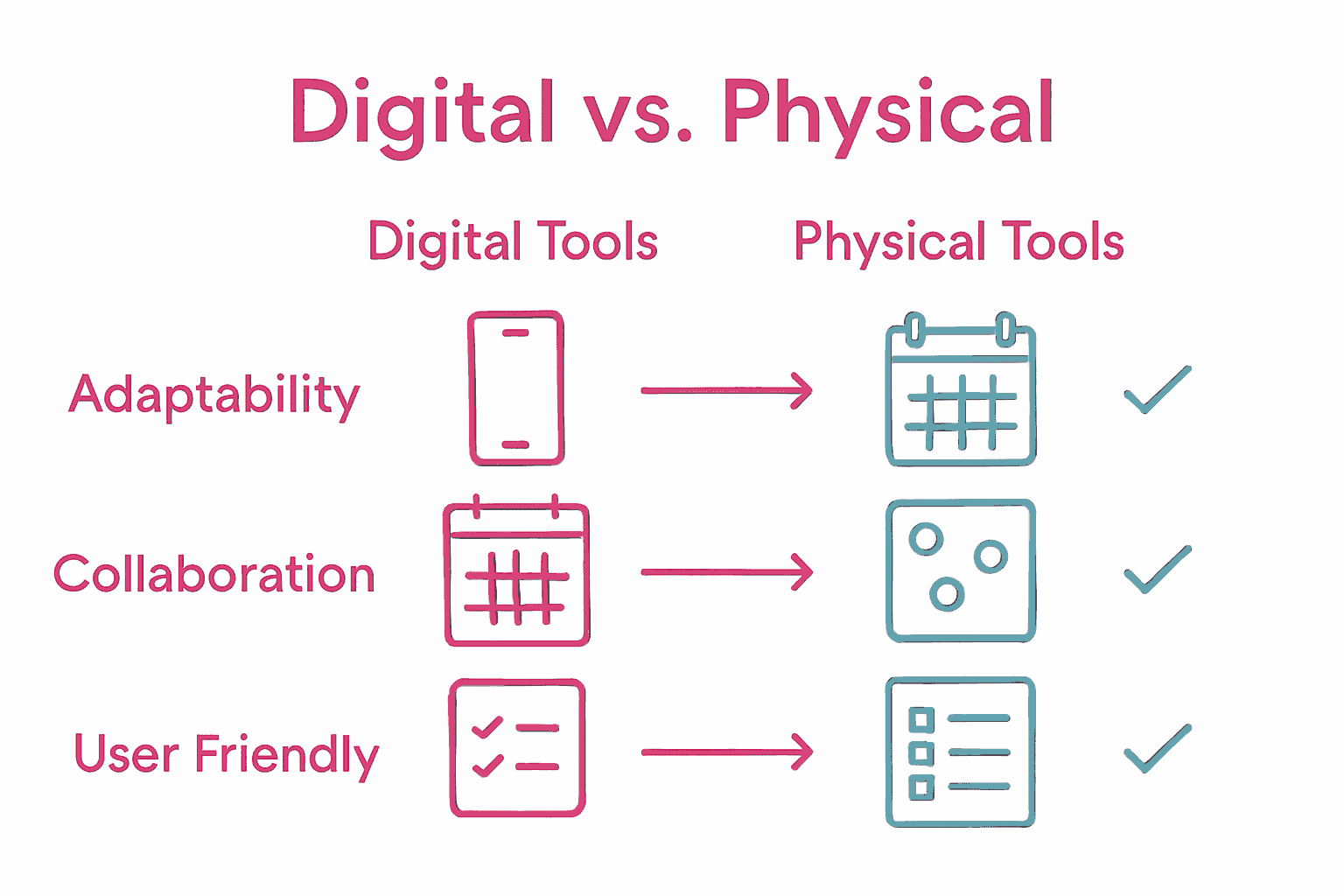
Start by categorizing your needs into specific areas such as time management, task tracking, financial planning, and communication. Look for tools that offer flexibility and can integrate smoothly with your family’s existing routines. The Family-Run Executive Director Leadership Association recommends evaluating tools based on adaptability, user friendliness, and potential for collaboration. Digital options like shared calendars, task management apps, and cloud storage platforms can be particularly effective for families with multiple schedules and responsibilities.
Pro tip: Before committing to any tool, take advantage of free trials or basic versions. This allows your family to test the tool’s compatibility with your lifestyle without significant financial investment. Learn more in our guide on time management tools for parents, which can help you navigate the wide range of organizational solutions available today. Remember that the best tool is not always the most expensive or complicated one, but the one that your entire family will actually use consistently.
Step 3: Create Shared Family Systems and Routines
Establishing consistent systems and routines transforms family organization from a challenge into a collaborative adventure. According to the School Community Network, developing shared systems requires intentional planning and commitment from all family members to support mutual goals and smooth daily operations.
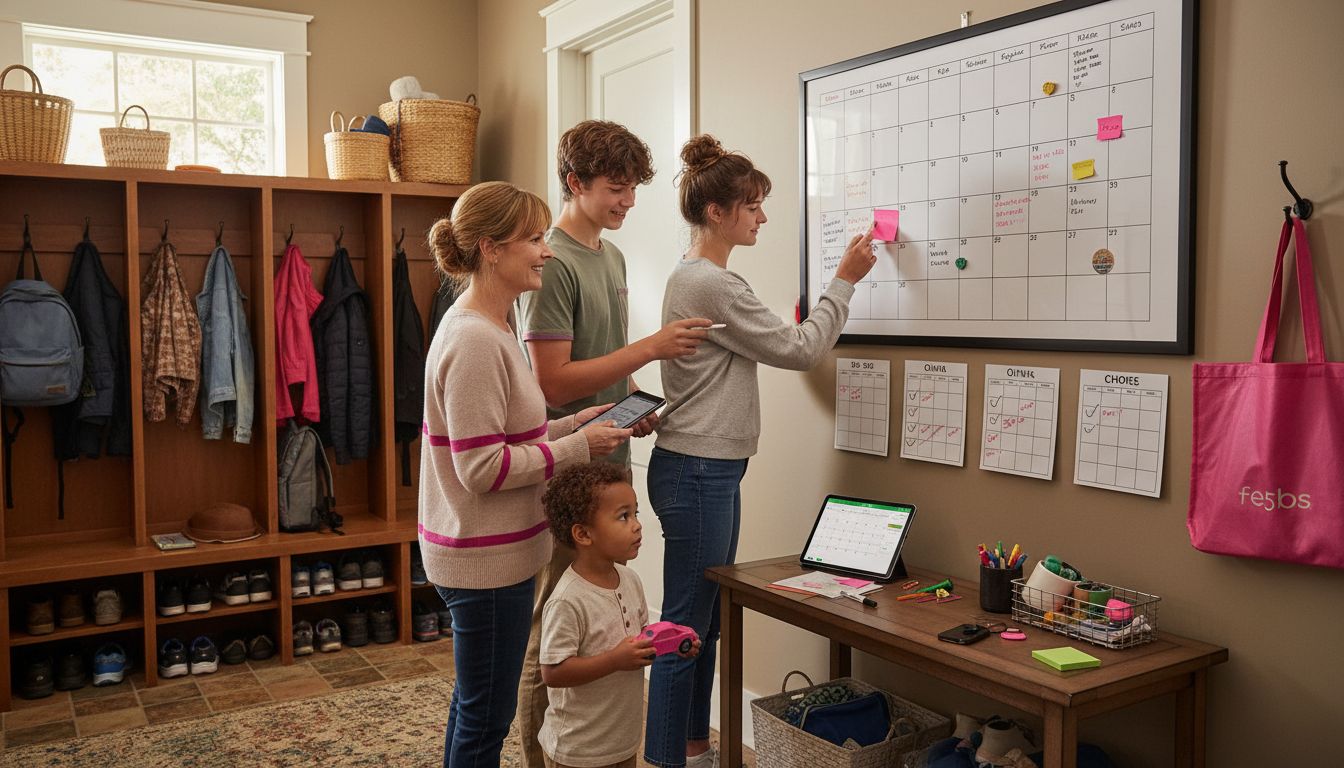
Start by mapping out your family’s recurring responsibilities and creating a visual representation that everyone can understand. This might include a large wall calendar, a digital shared planner, or a centralized bulletin board where each family member has designated space. Family Voices recommends developing systems that are flexible yet structured, allowing room for individual needs while maintaining overall family harmony. For instance, create standard protocols for morning preparations, after school activities, meal planning, and weekend chore distributions. Learn more about managing family time with our time management tips, which can help you design more effective family routines.
Pro tip: Review and adjust your family systems quarterly. What works brilliantly now might need tweaking in a few months as children grow, work schedules shift, or family dynamics change. The key is maintaining open communication and being willing to experiment until you find systems that genuinely work for everyone.
Step 4: Assign Responsibilities and Involve Everyone
Creating a successful family organization system means ensuring everyone feels invested and accountable. According to the NYC Family Participation Assessment Tool, effective responsibility assignment requires active involvement from all family members, regardless of their age or role.
Begin by hosting a family meeting where each person can contribute ideas about their potential responsibilities. Match tasks to individual strengths and interests while also introducing age appropriate challenges. Younger children might handle simple tasks like setting the table or sorting laundry, while teenagers could manage more complex responsibilities such as meal preparation or scheduling family events. FREDLA recommends creating a rotating responsibility chart that allows family members to experience different roles and develop versatile skills. Learn more about managing family activities effectively with our planning guide, which can help you design engaging task distribution strategies.
Pro tip: Build in accountability with a reward system that celebrates consistent effort and improvement. This might mean weekly recognition, special privileges, or a family fun activity for those who consistently meet their responsibilities. The goal is not perfection but progress and mutual support.
Step 5: Track Progress and Adjust Strategies Regularly
Successful family organization is a dynamic process that requires consistent monitoring and flexibility. RAND Corporation research highlights the importance of developing systematic approaches to track progress and make informed adjustments to family management strategies.
Implement a monthly family review meeting where everyone comes together to discuss what is working well and what needs improvement. Use visual tracking methods like progress charts or digital dashboards that allow family members to see their achievements and areas for growth. Family Voices recommends creating a collaborative assessment process where each member can provide honest feedback and suggest modifications. This might involve rating current systems on effectiveness, discussing challenges, and brainstorming creative solutions together. Explore our time management tips for additional strategies to keep your family organized, which can provide additional insights into tracking family progress.
Pro tip: Approach these review sessions with a spirit of curiosity and continuous improvement rather than criticism. Celebrate small wins, acknowledge effort, and remember that organizational skills are learned over time. The goal is not perfection but steady progress and growing together as a team.
Unlock Your Family’s Full Potential with Effective Organization Tools
Struggling to keep schedules, chores, and communication flowing smoothly is one of the biggest challenges busy families face. This article highlights how selecting the right tools and creating shared systems can turn chaos into harmony. If you want to move beyond frustration and build routines that everyone feels excited to follow, focusing on team involvement and flexible solutions is key. Remember that starting small with high impact changes will create lasting family success.
Discover practical, easy-to-apply strategies and time management tips designed specifically for families just like yours. Explore proven organization hacks, simple living techniques, and budgeting systems that empower you to regain control over your days. Take the next step to transform your household by visiting our main site and explore time management tips for families to learn how to track progress and adjust routines seamlessly. Ready to create peaceful, productive spaces everyone loves Join us now at It’s a Southern Life Y’all and make family organization your strongest team asset.
Frequently Asked Questions
How can I effectively assess my family’s organizational needs?
To effectively assess your family’s organizational needs, hold a family meeting where everyone can share their challenges and priorities. Take notes on common issues, and create a visual board to capture insights. This will help you prioritize areas that need improvement.
What types of organization tools should I consider for our family?
Consider tools that cater to areas such as time management, task tracking, and communication. Look for options that are flexible and can be easily integrated into your family’s routine, such as shared calendars or task management apps, to streamline your daily activities.
How do I create shared systems and routines among family members?
To create shared systems and routines, map out your family’s responsibilities and visualize them with a large calendar or digital planner. Establish protocols for daily activities, such as morning routines or chore distributions, so that everyone knows their role and can contribute effectively.
How can I assign responsibilities to each family member effectively?
Assign responsibilities by discussing individual strengths and interests in a family meeting. Match tasks to family members accordingly and consider implementing a rotating chart for tasks, allowing everyone to participate while developing various skills over time.
How do I track progress and adjust our organization strategies regularly?
Track progress by holding monthly family review meetings to discuss what is working and what isn’t. Use visual tools like progress charts to monitor achievements, and encourage open feedback to make necessary adjustments and improvements over time.
What should I do if our organizational system stops working?
If your organizational system stops working, assess it together as a family to identify the challenges. Be open to experimenting with new strategies and adjust existing tools and routines within a few weeks to enhance effectiveness and keep everyone engaged.
Recommended
- 7 Effective Types of Home Organization Systems – It’s a Southern Life Ya’ll
- Family Finance Organization Guide – It’s a Southern Life Ya’ll
- 7 Time Management Tips for Families to Balance Life – It’s a Southern Life Ya’ll
- Time Management Tools for Parents – A Comparison 2025 – It’s a Southern Life Ya’ll
- Cozee Bay – Bamboo Home Organization Guide: Stylish Eco-Friendly Solutions
- How to Have Difficult Conversations About Estate Planning with Family – Law Office of Eric Ridley
Want a little more help with this? The Home Rhythm Planner pulls the tools together into one weekly rhythm the whole family can actually follow.