
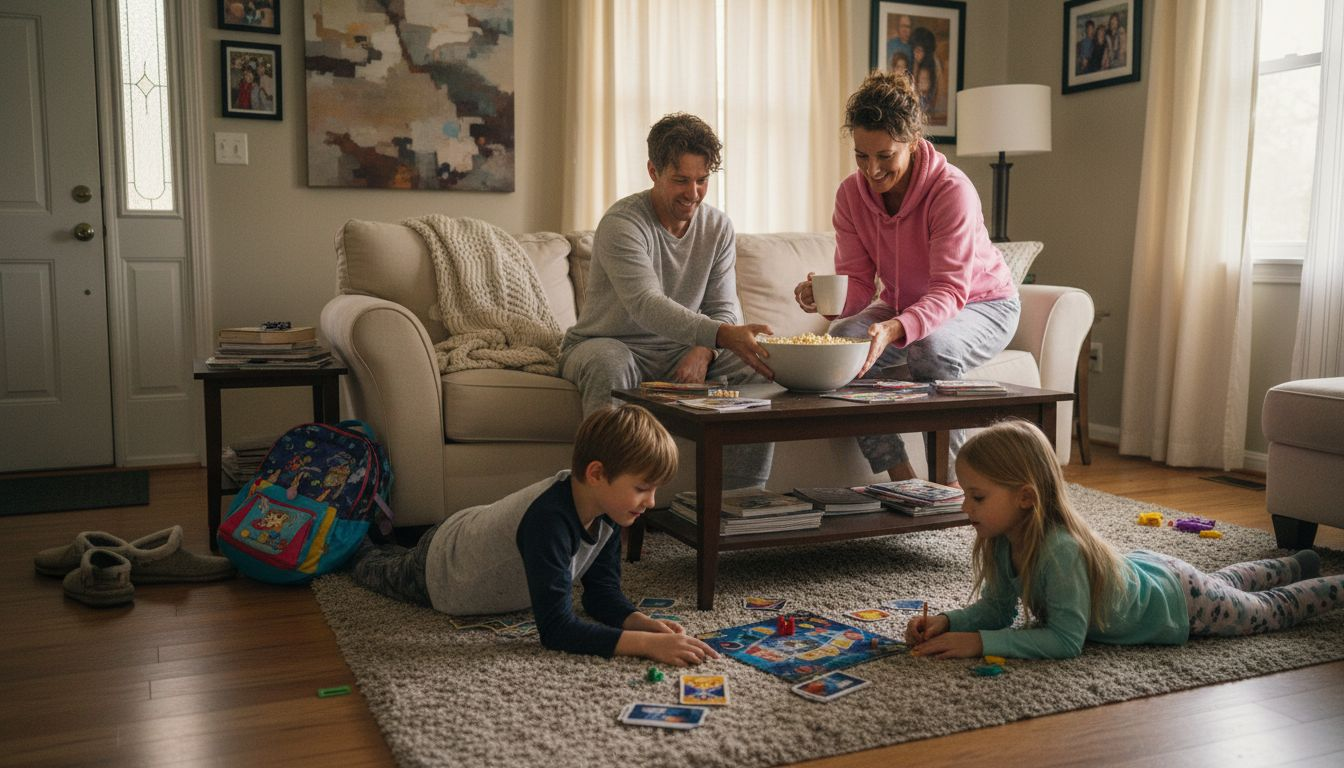
Family Staycation Planning for Stress-Free Savings
Every parent faces that moment when vacation dreams clash with real-life budgets and busy calendars. With the rise of the staycation across the United States and Canada, more families are discovering creative ways to enjoy quality time without leaving their local area or breaking the bank. By choosing a staycation, you gain both calm and savings, since a staycation offers cost savings and convenience while letting you focus on what matters most—fun and connection with your kids. This guide reveals how intentional planning turns any staycation into a memorable family break.
Table of Contents
- Defining A Family Staycation Experience
- Types Of Staycations And Key Differences
- Building A Family-Friendly Staycation Budget
- Creative Activity Ideas For Home And Local Fun
- Time Management For Peaceful Family Enjoyment
- Avoiding Common Pitfalls And Overspending
Key Takeaways
| Point | Details |
|---|---|
| Staycation Definition | A staycation is a recreational break spent at home or nearby, focusing on local experiences rather than travel. |
| Types of Staycations | Families can choose from at-home activities, local explorations, hotel stays, and hybrid options to suit their needs and budgets. |
| Budgeting Effectively | Plan a realistic budget for your staycation by categorizing expenses and identifying areas to save while ensuring meaningful experiences. |
| Creative Activities | Maximize family engagement by using available resources for enjoyable activities like game nights or local outings without incurring significant costs. |
Defining a Family Staycation Experience
Let’s be real for a second. The word “staycation” might sound like a consolation prize when you can’t afford a trip to Disney World or a beach resort. But here’s what’s actually happening: a staycation is simply a recreational break spent at home or in your local area without traveling far or staying overnight. That’s it. No fancy definition needed. And honestly? It might be exactly what your family needs right now.
A staycation can include anything from visiting local parks and museums to exploring neighborhoods you’ve never seen before, trying new restaurants within driving distance, or even just unplugging from your regular routine while staying put. The beauty of this approach is that it removes the stress and expense of travel planning, airport lines, and expensive hotel stays. When you’re planning a staycation, you’re not trading relaxation for savings—you’re actually gaining both. The research shows that staycations became increasingly popular during uncertain times because families recognized the real benefits: cost savings, convenience, and the ability to create meaningful memories without the travel headache. That’s powerful stuff when you’re juggling a tight budget and busy schedules.
What makes a staycation different from just staying home is the intentionality behind it. You’re still creating space for family connection and new experiences. You’re still stepping away from work emails and household chores (mostly). You’re still building the kind of family traditions that kids remember for years. The difference is you’re doing it without the financial pressure of expensive flights, resort fees, and overpriced vacation meals. Your staycation might mean spending quality time together doing things that genuinely interest your family—not activities that Instagram says you should do. Maybe that’s a movie marathon with homemade popcorn. Maybe it’s a scavenger hunt through your own city. Maybe it’s finally tackling that hiking trail you’ve talked about for three years. The point is, a staycation puts you in control of the experience and the budget.
Here’s something worth considering: staycation benefits include reduced expenses and convenience, making it an increasingly practical choice for families. When you remove travel costs, you can actually spend more on experiences that matter to you—maybe that’s a nice dinner out, entry fees to attractions, or supplies for a backyard camping adventure. You’re not compromising on fun. You’re redirecting your money toward what your family actually values. And that shift in perspective can transform how you see a staycation from “something we’re settling for” to “something we’re choosing because it works better for us.”
Pro tip: Start your staycation planning by asking each family member (yes, even the quieter kids) what they’d genuinely enjoy doing, then build your week around those interests instead of trying to recreate an expensive resort experience at home.
Types of Staycations and Key Differences
Not all staycations look the same, and that’s actually great news for your family. Some families are perfectly happy staying home and creating their own activities, while others want to venture out to local spots or even book a hotel room in their own city. Understanding the different types helps you figure out what actually works for your budget, your kids’ ages, and your energy levels. The key is knowing that staycations exist on a spectrum, and you get to pick where you land.
At-Home Staycations
This is the classic version where you stay right in your house (or maybe your backyard). You’re creating a vacation atmosphere without leaving your address. Think game nights, movie marathons, DIY pizza making, or finally tackling that backyard camping setup you bought last summer. At-home staycations require zero travel time and minimal expense, which means you can spend that saved money on activities you actually do. Some families use this time to deep clean and reorganize (yes, some people find that relaxing), while others treat it like a total screen-free break from normal life. The beauty here is flexibility. Rain on Saturday? No problem. You pivot to an indoor activity without disrupting plans.
Local Exploration Staycations
This type involves staying home but exploring your community like tourists. You’re hitting up museums, parks, local festivals, hiking trails, or that restaurant across town everyone talks about. Many families underestimate how much their own area has to offer. You might discover a new farmer’s market, a hidden playground, or a community theater production that becomes an annual tradition. These staycations still keep you close to home but add variety and discovery. Your kids see their community differently when you’re deliberately exploring instead of just passing through on your way to work.

Hotel or Local Accommodation Staycations
Some families book a room at a local hotel or resort in their city or nearby town. Yes, you’re paying for accommodation, but it’s dramatically cheaper than traveling hours away. Various staycation types include themed stays and pet-friendly accommodations, giving families options that match their specific needs. Maybe your kids think staying at a hotel with a pool is the height of luxury, even if it’s 20 minutes from home. This type offers a change of scenery and the novelty of a different space without the exhaustion of real travel. Plus, many local hotels offer deals during slower seasons, making this surprisingly affordable.
Slow Tourism and Sustainable Staycations
This newer approach aligns with staycations supporting sustainable local tourism development, meaning you’re intentionally supporting local businesses and communities. You’re eating at neighborhood restaurants, shopping at local boutiques, booking tours from local guides, and generally keeping your money circulating in your area. This type of staycation feels more purposeful because you know your spending is actually helping people in your community. Your kids learn about where things come from and how communities work. It’s a staycation that does good while giving you a break.
Hybrid Staycations
Most families actually blend these types together. You might stay home for two days, explore local attractions on day three, splurge on one night at a nice hotel, then return home for the final days. You’re mixing budget friendly with occasional treats, staying put with getting out. This approach keeps things interesting without committing to just one type all week.
Pro tip: Pick one staycation type as your primary plan, then add one or two elements from other types to create variety without overwhelming your schedule or budget.
Here’s a comparison of popular staycation types for families:
| Staycation Type | Typical Cost Level | Key Benefits | Ideal For |
|---|---|---|---|
| At-Home | Very Low | Maximum savings, no travel | Families wanting comfort and flexibility |
| Local Exploration | Moderate | Community discovery, variety | Those seeking adventure near home |
| Hotel/Accommodation | Higher | Change of scenery, simple luxury | Families wanting novelty without leaving town |
| Slow/Sustainable | Flexible | Supports local businesses, cultural learning | Families valuing community impact |
| Hybrid | Customizable | Mixes savings with special treats | Those wanting a balanced experience |
Building a Family-Friendly Staycation Budget
Here’s the truth about budgeting for a staycation: it’s actually easier than you think, but only if you approach it intentionally. Most families fail at staycation budgets because they either wing it completely or try to recreate a luxury vacation experience on a shoestring budget. Neither approach works. What you need is a realistic plan that accounts for what your family actually spends, where you’re willing to splurge, and where you can cut back. The good news? A staycation is inherently cheaper than traveling, so you’re already winning before you even start.
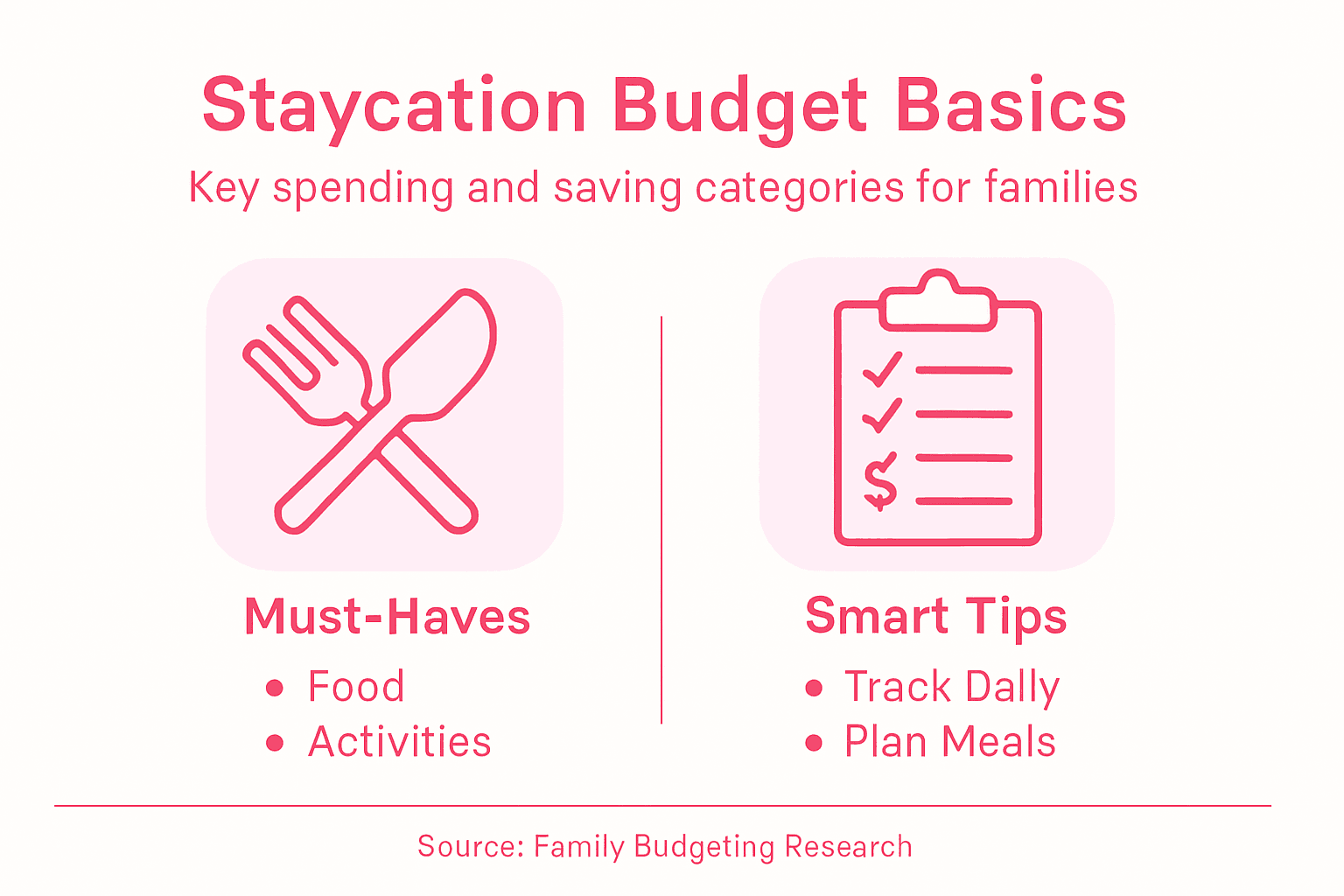
Start by assessing what your family can realistically afford. This means looking at your overall monthly budget and deciding what portion you want to allocate to your staycation week. Are you working with $300? $800? $1,500? Your number doesn’t matter as much as knowing it upfront. Once you’ve set your total, break it into categories: activities and attractions, meals and dining, any accommodation costs (if you’re booking a local hotel), transportation, and a buffer for unexpected expenses. Planning expenditures for activities, dining, and transportation prevents overspending and keeps your staycation actually affordable instead of just theoretically affordable. Most families find that meals and activities are their biggest expenses, so these are where your budget decisions matter most.
Breaking Down Your Budget Categories
- Activities and attractions: Research free and paid options in your area. Many cities offer free museum days, outdoor concerts, or community events. Budget for maybe one or two paid activities if your kids want them.
- Meals and dining: This is where families overspend fastest. Decide how many meals you’ll eat out versus cooking at home. Restaurant meals add up quickly with a family of four or five. Maybe plan for two nice dinners and the rest home cooked?
- Local transportation: Do you need gas money for exploring? Public transportation passes? This often gets forgotten but can add up.
- Surprises and treats: Ice cream runs, that spontaneous activity everyone wants to try, or the snacks the kids beg for. Budget for this so it doesn’t derail your plan.
Here’s where it gets practical: understanding your family’s cost of living helps create realistic budgets customized to your local area. What costs $50 in one city might cost $75 in another. What your family considers essential might differ from another family’s priorities. Your staycation budget should reflect your actual circumstances, not some generic template. If you have teenagers with big appetites, food costs more. If your kids are into outdoor activities, park passes matter. If you live in an expensive area, even “affordable” activities cost more. Acknowledge these realities instead of pretending they don’t exist.
Use this summary to guide your staycation budgeting priorities:
| Budget Category | Typical Importance | Challenge | Smart Tip |
|---|---|---|---|
| Activities & Attractions | High | Overbooking paid events | Use free local options first |
| Meals & Dining | High | Restaurant overspending | Plan home-cooked meals |
| Transportation | Medium | Forgotten gas costs | Budget small local trips |
| Surprises & Treats | Medium | Impulse buys | Pre-set spending limit |
| Accommodation | Optional | Added cost for hotels | Choose only if it adds value |
Smart Spending Tactics That Actually Work
Using local deals and free activities is your secret weapon. Many cities have activity passes that bundle multiple attractions at a discount. Websites and apps show free events happening in your area. Local libraries often offer free or discounted passes to museums. Outdoor activities like hiking, park picnics, and neighborhood exploration cost nothing. Free outdoor activities aren’t boring filler—they’re often where families create the best memories because there’s less pressure and more genuine connection.
Track your spending as you go. Pull out your phone and jot down what you spend each day. This prevents the “Wait, where did all our money go?” moment at the end of the week. You’ll see patterns quickly. Maybe you realize dining out is costing way more than you expected, so you adjust for the remaining days. Maybe you discover that attractions are cheaper than planned, so you can splurge on a nice family dinner without guilt. Tracking gives you control and flexibility.
One more thing: be honest about what your family actually needs to have a good time. Some families need restaurants and paid activities to feel like they’re on vacation. Other families are perfectly happy with home-cooked meals and free exploration. Neither is wrong. Your budget should match your family’s values, not Instagram’s idea of a staycation. If your kids genuinely come alive at a nice hotel pool, maybe that’s worth budgeting for. If they’d be just as happy camping in the backyard, save that money elsewhere. The goal is a staycation that feels like a break for your family, not a financial stress.
Pro tip: Set your total budget first, then work backward through categories rather than adding up expenses as you plan—this prevents scope creep and keeps you grounded in what’s actually affordable.
Creative Activity Ideas for Home and Local Fun
The biggest fear parents have about staycations is that their kids will get bored. Bored kids mean stressed parents, which defeats the entire purpose of a staycation being relaxing. But here’s the thing: boredom is actually a good problem to have because it forces creativity. Your family doesn’t need expensive entertainment or complicated plans. You need ideas that work with what you already have access to. The beauty of a staycation is that you can create memorable experiences right in your own space and neighborhood without spending a fortune, and our family bucket list of 25 adventures is full of ideas to fill your week.
Start with what you have at home. Most families underestimate how much entertainment already exists in their houses. Over 50 creative bonding activities like prank games, affirmation webs, themed dinners, and backyard campouts create fun and connection without leaving home. Think about a movie marathon with homemade snacks where everyone votes on what to watch. A themed dinner night where each person picks the menu and you actually make it happen. A blanket fort that becomes your family’s base camp for the day. A baking competition where kids create their own recipes and judge each other’s creations. These aren’t complicated activities, but they’re intentional, which makes them feel special.
At-Home Activity Ideas That Actually Engage Everyone
- Game tournaments: Set up brackets and spend an afternoon playing board games, card games, or video games. Keep score and announce a champion at the end.
- Art projects: Grab whatever craft supplies you have and let kids create without pressure. No Instagram-perfect results required.
- Dance-offs and karaoke: Put on music and let loose. This sounds silly but kids genuinely love it, and you’ll laugh harder than you have in months.
- Indoor scavenger hunts: Hide items around your house and have family members race to find them. Make clues funny or tricky.
- Cooking projects: Let kids help prepare dinner or bake something from scratch. The mess is part of the fun.
- Reading aloud together: Pick a book or series everyone enjoys and read chapters aloud during meals or before bed.
Local Exploration Activities That Cost Little or Nothing
Your community has more to offer than you realize. Activities like nature walks, outdoor play, and imaginative games support family connection while keeping costs low. Hit up your local parks and actually spend time there instead of just passing through. Pack a picnic and make an afternoon of it. Go on a neighborhood walk and play “I Spy” or a scavenger hunt where you look for specific things (colors, shapes, animals). Visit your library for free events, story times, or simply to explore the children’s section together. Many libraries also have passes to museums and attractions you can check out for free.
Check what’s happening in your area that week. Most cities have free outdoor concerts, farmers markets, community festivals, or neighborhood events. These are gold for staycations because they feel like going somewhere without the travel. Take your kids to a local splash pad on a hot day. Explore a walking trail and stop to observe nature. Visit a local farm or petting zoo if your area has one. Go to the park and actually use the equipment instead of sitting on a bench. These activities cost nothing or very little, but they break up the week and give you something to do that feels purposeful.
The Secret Ingredient: Minimal Planning
Here’s what makes these activities work: you don’t need to plan every minute. Have a list of 8 to 10 ideas that appeal to your family, then let the week unfold. Kids have a say in what happens each day. Bad weather forces a pivot. Someone’s not feeling an activity, so you switch it up. This flexibility is actually what makes staycations less stressful than real vacations. You’re not committed to being at a specific place at a specific time. You’re not paying for activities whether the family enjoys them or not. You’re creating space for connection and letting it happen naturally.
The goal isn’t to fill every second of the week with structured activities. The goal is to create enough engaging options that boredom rarely strikes, while also leaving room for spontaneity, rest, and just being together. That’s the staycation sweet spot. That’s also what kids actually remember: not the perfectly planned itinerary, but the afternoon they spent playing games with you, the meal they helped cook, or the neighborhood discovery they made.
Pro tip: Create a staycation activity jar by writing 15 to 20 activity ideas on slips of paper before the week begins, then let family members draw one randomly each morning to add an element of surprise and avoid decision fatigue.
Time Management for Peaceful Family Enjoyment
Here’s something that catches most families off guard: a staycation can actually be more stressful than a regular week if you don’t manage your time intentionally. You’re home, so everyone assumes you should be available for everything. The kids think they can interrupt your relaxation. You feel guilty taking a real break. Meanwhile, you’re trying to squeeze in activities, meals, and actual downtime all at once. The result? A week that feels just as chaotic as normal life, except you were expecting it to be different. The secret to a peaceful staycation isn’t having more time. It’s using the time you have more deliberately.
Think about what actually makes a staycation feel relaxing. It’s not the activities. It’s the absence of constant rushing and decision fatigue. It’s knowing that you’re not going to miss something important because you planned it that way. It’s having blocks of uninterrupted time with your family instead of fractured attention throughout the day. Effective time management positively influences well-being and reduces distress by helping families balance activities with genuine rest. This means your staycation needs structure, but the kind of structure that creates freedom, not the kind that creates pressure. You’re not scheduling every minute like a corporate retreat. You’re creating enough framework that the week flows smoothly and nobody’s anxious.
Structuring Your Staycation Week Without Overdoing It
Start by dividing your week into blocks. Morning, afternoon, evening. Some days are activity days. Some days are chill days. Some days blend both. This isn’t a minute-by-minute schedule. It’s a loose framework that prevents decision paralysis. Maybe Monday is your “get out and explore” day. Tuesday is a home day with cooking and games. Wednesday might be a quick outing plus relaxation time. This pattern lets everyone know what to expect without locking you into specific activities or times.
Build in buffer time between activities. Parents often underestimate how long things take with kids. You need time to gather everyone, transition, handle bathroom breaks, and just move through the day without constant rushing. If you plan an activity for 2 p.m., don’t schedule something else for 3:30 p.m. Life happens in between. You might run longer than expected, or everyone might be tired and need downtime. Buffer time prevents the cascade of “We’re late so now we’re stressed” that can derail your peaceful intentions.
Designate specific times for unstructured time. This sounds counterintuitive, but it works. If you know that 10 a.m. to noon is free time for everyone to do whatever they want, it actually feels more restful than having free time scattered randomly throughout the day. Kids can get bored and antsy when they don’t know what the day holds. You feel guilty trying to relax. When free time has a name and a place on the loose schedule, everyone settles into it better. Same goes for family time. If you schedule “dinner and games 6 to 8 p.m.,” everyone knows this is the anchor of the day and plans around it.
Protecting Your Own Peace During Family Time
You cannot pour from an empty cup, and parents often sacrifice their own rest during staycations because they feel they should be “on” the entire time. You don’t have to be. Build in actual breaks for yourself. Maybe that’s an early morning quiet hour before anyone wakes up. Maybe that’s after the kids go to bed. Maybe that’s a 30-minute stretch where your partner watches everyone and you genuinely step away. Your staycation includes your peace, not just the family’s activities. If you’re exhausted and running on fumes, that energy transfers to everyone, and suddenly a relaxing week becomes another stressful one.
Set boundaries about what “home” means during staycation time. Yes, you’re staying home, but you’re still on vacation. That means not doing the deep cleaning, not catching up on all the laundry, not tackling projects that have been on your list for months. Keep it simple. Cook good meals, do basic cleanup, but don’t use staycation as an excuse to finally reorganize the garage. Those projects will still be there next week. Your mental break matters more than checking things off a to-do list.
Communicate the rhythm to your family. Kids do so much better when they understand the structure. “On activity days, we go out in the morning and do something fun. On chill days, we stay home and everyone picks an activity they want to do. Every evening we have dinner together and then free time.” When kids know what to expect, they settle into it instead of constantly asking “What are we doing now?” and “When can we do something fun?”
Pro tip: Use time blocking by designating specific activities to specific time slots so your brain isn’t constantly making decisions about what comes next, which frees up mental energy for actually enjoying your family.
Avoiding Common Pitfalls and Overspending
The irony of a staycation is that it can cost more money than you planned if you’re not paying attention. You’re home, so you think you’ll save money. Then you eat out more often than usual because cooking feels like work during vacation. You discover a new attraction and spontaneously buy tickets. The kids ask for souvenirs. You grab coffee and snacks while you’re out. By the end of the week, you’ve spent almost as much as a real trip would have cost. This happens because staycations feel casual and low-stakes, which makes spending feel casual too. But casual spending adds up fast, especially when kids are involved.
The biggest pitfall is treating a staycation budget as optional or flexible. You’ve already decided to stay home to save money, so why would you suddenly ignore your budget? Yet that’s exactly what happens. Families set a budget, then think “It’s just a coffee,” or “It’s just one extra activity,” without adding those up. Before you know it, you’ve blown through your planned spending. Families need to plan and track spending carefully to avoid overspending on activities, dining, and local transportation because even small expenses accumulate. The solution isn’t being miserable or never spending money. It’s being intentional about where your money goes and sticking to it.
The Spending Traps That Get Most Families
- Dining out more than planned: This is the number one money killer for staycations. You think you’ll cook at home, but by day three everyone’s tired of home-cooked meals and suddenly you’re eating out for lunch and dinner. Three restaurants a day adds up to hundreds of dollars.
- Impulse attractions: You pass something cool, the kids beg to go, and you think “Why not, we’re on vacation?” Then you’re paying $50 for admission to something you didn’t budget for.
- “Just one more thing” shopping: Gift shops at attractions, ice cream runs, snacks at outdoor activities. Each item seems small, but they multiply.
- Entertainment subscriptions and fees: Paying to stream movies during downtime, mini golf, bowling, or arcade games that weren’t on the original plan.
- Gas and transportation costs: If you’re exploring your area, driving costs add up faster than you’d think, especially if you’re making multiple trips.
- Special requests from kids: That toy they saw, the activity a friend mentioned, the restaurant they really want to try. Kids have excellent timing for asking for things during vacation.
Real Strategies That Actually Prevent Overspending
Set a separate budget for “fun money” that’s distinctly different from your core staycation budget. This prevents the fuzzy thinking where you’re not sure if you already spent money or not. Maybe you allocate $100 for spontaneous stuff, and that’s it. Once it’s gone, it’s gone. This removes the constant decision-making about whether something is worth it. Kids know what they have to work with. You don’t feel guilty about small purchases because they’re already budgeted.
Use cash for discretionary spending. There’s something about handing over actual bills that makes spending feel real in a way that cards don’t. If you have $80 in cash for the week and you spend $20 on ice cream, you physically see that you have $60 left. It’s immediate and concrete. Credit cards and apps make it too easy to keep spending without feeling the weight of it.
Track every single expense, even the small ones. Pull out your phone and note what you spent and where. Yes, it sounds tedious, but it takes 30 seconds and prevents the “I have no idea where our money went” conversation at the end of the week. You’ll see patterns. Maybe you notice you’re spending more on dining than activities, so you adjust. Maybe you realize certain days are more expensive, so you plan accordingly.
Including all family members in budgeting discussions builds awareness and more disciplined spending, which prevents overspending at the source. Talk to your kids about the budget. Let them know what you’re working with and why. “We have $50 for attractions this week. If we spend it all on Monday, we can’t go anywhere else.” When kids understand the constraint, they make better choices. They also feel part of the decision-making process instead of feeling like you’re just saying “no” to everything.
Plan your meals before the week starts. Write down what you’re cooking and when. Go to the grocery store with that list. This prevents the “Let’s just grab something” decision that leads to restaurant spending. Yes, plans change and that’s okay. But having a foundation prevents constant trips to eat out.
Pro tip: Understand psychological spending triggers and compulsive shopping patterns so you can recognize when you’re about to make an impulse purchase versus a planned one, and pause to ask yourself if it aligns with your staycation budget.
Make Your Family Staycation Truly Stress-Free and Memorable
Planning a family staycation brings its own set of challenges like managing budgets, keeping kids entertained without overspending, and creating a relaxed but engaging schedule. This article highlights key pain points such as avoiding impulsive spending, balancing activities with genuine rest, and using intentional time management to prevent staycation stress. If you want to transform those staycation headaches into smooth, enjoyable experiences that strengthen family bonds and save money, you need practical tools that fit your busy lifestyle.
At Its a Southern Life Yall, we offer proven organization hacks, budgeting systems, and time management strategies designed especially for busy families. Our easy-to-follow home management and productivity tips help you create peaceful, organized spaces where your family can thrive. Whether you need help planning your daily staycation schedule or want to set a realistic family budget without feeling overwhelmed, our resources provide exactly what you need. Take control now and turn your next staycation into a refreshing break full of connection and calm by exploring our expert advice at Its a Southern Life Yall. Start mastering your family time today and keep your staycation stress-free and joyful.
Frequently Asked Questions
What is a family staycation?
A family staycation is a recreational break spent at home or in your local area without the need for extensive travel. It allows families to create enjoyable experiences and connect without the financial burden of a traditional vacation.
How can I create a budget for a staycation?
To create a budget for a staycation, start by determining your overall spending limit based on your monthly expenses. Then, break down your budget into categories like activities, meals, and any potential accommodation costs, ensuring you plan for both expected and unexpected expenses.
What are some fun activities to do during a staycation?
Fun activities during a staycation can include game nights, cooking competitions, local explorations, themed movie marathons, or outdoor adventures like hiking or picnics at parks. The key is to engage the family in activities everyone enjoys.
How can I avoid overspending during a staycation?
To avoid overspending, set a specific budget for fun activities, use cash to manage discretionary spending, and keep track of all expenses throughout the week. Involve the family in budgeting discussions to ensure everyone understands the financial limits.
Recommended
- How to Plan Family Activities for Memorable Fun – It’s a Southern Life Ya’ll
- 20 Time-Tested Family Hacks to Break the Paycheck-to-Paycheck Cycle (Strategies That Actually Work with Kids) – It’s a Southern Life Ya’ll
- Stress-Free Holiday Shopping Tips – It’s a Southern Life Ya’ll
- How to Host an Amazing Family Party for 30 People Without Breaking Your Budget – It’s a Southern Life Ya’ll
- Family Therapy – ReviveHealthTherapy
Want a little more help with this? First Budget in 30 Minutes walks you through your family’s first budget from scratch, for when a spreadsheet feels like too much.