

What Is a Financial Calendar? Organizing Family Budgets
Most American families discover that nearly 60 percent of households miss at least one bill payment each year, often due to disorganized financial routines. Managing money as a family can easily turn stressful when juggling paychecks, expenses, and goals without a clear plan. By learning how to set up a financial calendar, families can take control of their finances, reduce anxiety, and create a more predictable path toward meeting their financial priorities.
Table of Contents
- Defining A Financial Calendar For Families
- Common Types And Their Key Differences
- How A Financial Calendar Organizes Budgets
- Setting Up Personal And Family Calendars
- Common Pitfalls And How To Avoid Them
Key Takeaways
| Point | Details |
|---|---|
| Create a Financial Calendar | Establish a system to track income, expenses, and financial goals, transitioning from reactive to proactive financial management. |
| Choose the Right Calendar Type | Select a financial calendar format that aligns with your family’s income frequency and complexity for optimal efficiency. |
| Regularly Update Your Calendar | Schedule consistent reviews to maintain accurate financial tracking and avoid unexpected financial challenges. |
| Engage the Whole Family | Foster collaboration by discussing financial plans and updates with all family members during regular meetings. |
Defining a Financial Calendar for Families
A financial calendar is a strategic planning tool that helps families track and organize their monthly income, expenses, bill payments, and financial goals in one centralized system. Unlike a standard calendar, this specialized resource focuses specifically on mapping out your family’s financial landscape, allowing you to visualize money coming in and going out throughout the year.
At its core, a financial calendar serves as a comprehensive budget tracking tool that provides a clear roadmap for your household’s financial health. By assigning specific dates to income sources, bill due dates, savings targets, and potential expenses, you create a proactive approach to managing your family’s finances. This method transforms financial management from a reactive task into a structured, intentional process that helps prevent missed payments and unexpected financial stress.
The primary components of an effective financial calendar typically include tracking monthly income, listing all recurring bill due dates, noting important financial milestones, and creating spaces for unexpected expenses. Some families prefer digital spreadsheets, while others enjoy physical calendars or specialized budgeting apps. The key is finding a system that works seamlessly with your family’s lifestyle and communication style.
Pro Tip for Financial Success: Create a monthly “money date” where you and your partner review the financial calendar together, discussing upcoming expenses, adjusting goals, and ensuring you’re both aligned on your family’s financial strategy.
Common Types and Their Key Differences
Financial calendars come in several distinct variations, each designed to meet different family financial planning needs. Digital financial calendars represent the most flexible modern approach, offering real-time tracking and synchronization across multiple devices. These digital platforms typically integrate with banking apps and budgeting software, allowing families to automatically update income, expenses, and financial milestones with minimal manual input.
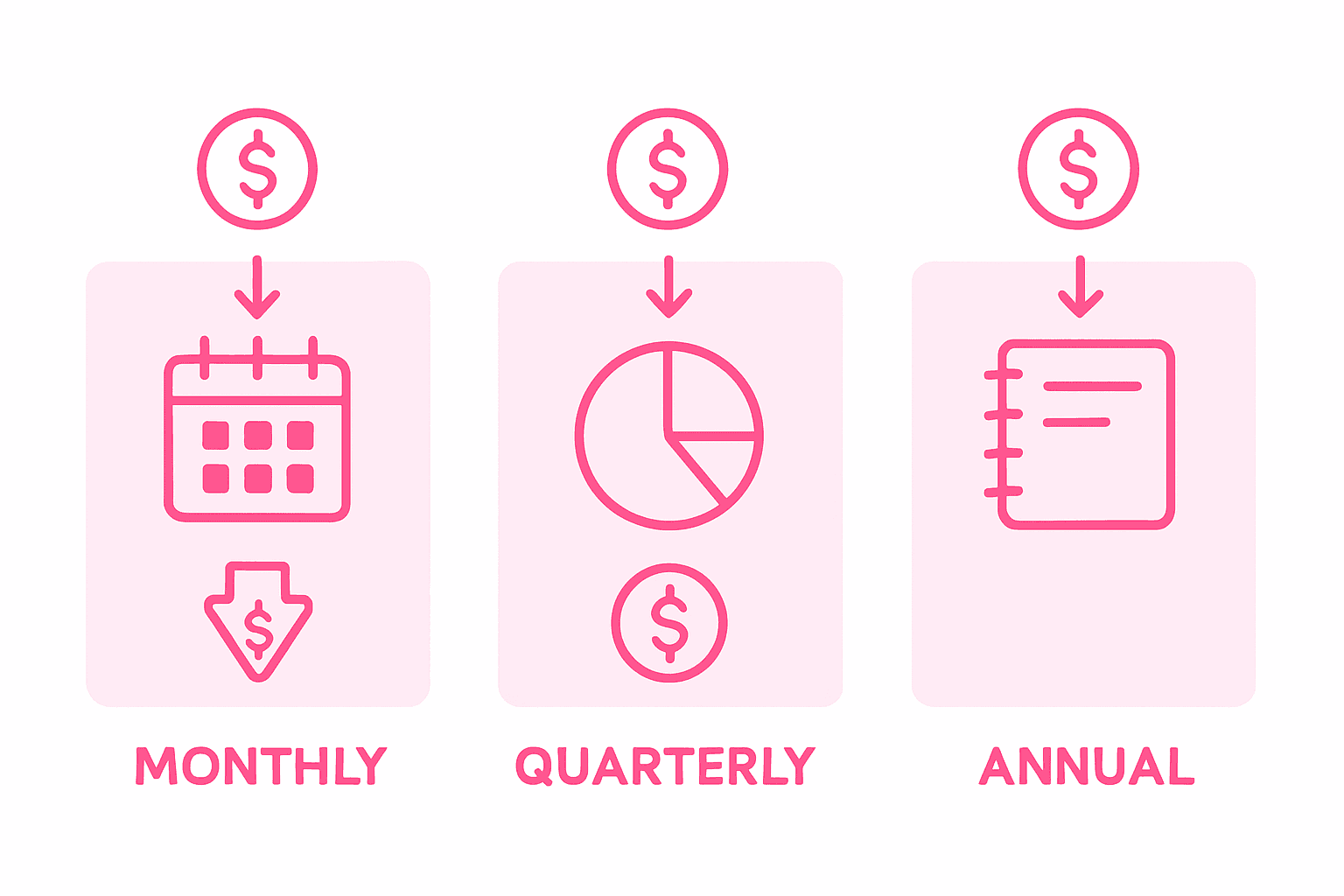
Traditional financial calendars can be categorized into three primary types: monthly, quarterly, and annual financial tracking systems. Monthly calendars provide the most granular view, helping families monitor short-term cash flow and immediate financial obligations. Quarterly calendars offer a broader perspective, enabling strategic planning for larger expenses like tax payments or insurance renewals. Annual calendars serve as comprehensive financial blueprints, helping families map out long-term financial goals and potential life changes.
Unlike standard calendars, financial calendars differentiate between calendar years and fiscal years. Calendar years follow the traditional January to December cycle, while fiscal years can be customized to align with specific financial reporting periods or unique family financial patterns. Some families choose fiscal years that match their primary income sources, such as aligning with academic employment cycles or seasonal business revenues.
Pro Tip for Calendar Selection: Select a financial calendar type that matches your family’s income frequency and financial complexity. If you have irregular income or multiple revenue streams, a more flexible digital calendar might serve you best.
Here’s a comparison of financial calendar types and their most suitable uses:
| Calendar Type | Best For | Example Features |
|---|---|---|
| Digital | Tech-savvy families, irregular income | Real-time sync, automatic updates |
| Monthly | Short-term planning and cash flow monitoring | Tracks bills, paydays, flexible adjustments |
| Quarterly | Planning for larger, periodic expenses | Includes tax payments, insurance renewals |
| Annual | Long-term financial goal setting | Maps out yearly milestones, major purchases |
How a Financial Calendar Organizes Budgets
A financial calendar transforms budget management from a chaotic process into a structured, strategic system by mapping out income and expenses on specific dates. This approach allows families to create a visual roadmap of their monthly financial landscape, revealing patterns, potential shortfalls, and opportunities for savings that might otherwise go unnoticed. By breaking down complex financial information into a clear, chronological format, families can anticipate challenges and make proactive financial decisions.
The organization process typically involves several key strategies. First, families categorize all income sources by their specific deposit dates, including paychecks, freelance payments, investment returns, and any additional revenue streams. Next, they map out fixed expenses like mortgage payments, utility bills, insurance premiums, and loan repayments. This systematic approach helps identify potential cash flow gaps and ensures critical bills are paid on time. Families can also track variable expenses such as groceries, entertainment, and discretionary spending, giving them a comprehensive view of their monthly financial commitments.

Beyond simple tracking, a well-designed financial calendar becomes a powerful planning tool. It enables families to anticipate seasonal expenses, plan for upcoming major purchases, and set realistic savings goals. By color-coding different expense categories or using digital tools with visual indicators, families can quickly understand their financial health at a glance. The calendar also serves as a collaborative platform, allowing all family members to stay informed and engaged in financial decision-making.
Pro Tip for Budget Organization: Color-code your financial calendar with green for income, yellow for fixed expenses, and red for discretionary spending to create an instant visual understanding of your monthly financial flow.
Setting Up Personal and Family Calendars
Setting up a financial calendar requires a strategic approach that combines gathering income and expense information with selecting an appropriate tracking method. The process begins with comprehensive information collection, where families compile all sources of income, including regular paychecks, freelance earnings, investment returns, and any additional revenue streams. This initial step provides a clear baseline for understanding the family’s total financial picture.
Personal financial calendars typically involve creating separate sections for different financial categories. These often include dedicated areas for income tracking, fixed expenses like mortgage or rent payments, variable expenses such as groceries and entertainment, savings goals, and upcoming financial milestones. Digital tools offer significant advantages, allowing real-time updates, automatic categorization, and shared access for family members. Some families prefer color-coded physical calendars or spreadsheets, while others opt for sophisticated mobile apps that integrate banking and budgeting features.
For families with multiple income earners or complex financial situations, creating a collaborative calendar becomes crucial. This might involve regular family financial meetings where everyone reviews the calendar, discusses upcoming expenses, and aligns on financial goals. Technology can facilitate this process, with cloud-based calendars allowing simultaneous access and updates. Some families use shared digital platforms that send notifications for bill due dates, savings milestones, and potential budget overruns, ensuring everyone stays informed and accountable.
Pro Tip for Calendar Setup: Schedule a monthly “financial family huddle” where all family members review the calendar together, discussing upcoming expenses, celebrating savings achievements, and making collaborative financial decisions.
Common Pitfalls and How to Avoid Them
Financial calendars can quickly become ineffective when families neglect regular updates and fail to account for irregular expenses. One of the most significant challenges is the tendency to create a calendar and then abandon it, treating it as a one-time exercise rather than an ongoing financial management tool. Consistent maintenance is crucial, requiring families to set aside dedicated time each week or month to review and update their financial tracking system.
Another common pitfall involves underestimating the importance of comprehensive expense tracking. Many families make the mistake of only recording fixed expenses like mortgage payments and utility bills, overlooking variable and unexpected costs. These might include seasonal expenses, emergency repairs, medical costs, or occasional family celebrations. By creating flexible categories and maintaining a contingency fund within the calendar, families can build financial resilience and prevent unexpected financial stress.
Technology can both help and hinder financial calendar management. While digital tools offer incredible convenience, they can also create a false sense of security. Families might rely too heavily on automatic tracking and notifications, forgetting to manually review and validate their financial data. This passive approach can lead to missed transactions, incorrect categorizations, or overlooked spending patterns. The most successful financial calendars combine technological tools with active, intentional human oversight and regular family discussions about financial goals and challenges.
This summary highlights common financial calendar pitfalls and strategies to avoid them:
| Pitfall | Consequence | Effective Solution |
|---|---|---|
| Irregular updates | Missed payments, outdated info | Set recurring review reminders |
| Ignoring variable expenses | Unexpected financial shortfalls | Create flexible budget categories |
| Overreliance on technology | Missed errors or spending patterns | Combine digital tools with manual checks |
Pro Tip for Avoiding Pitfalls: Set a recurring monthly reminder in your phone or digital calendar to spend 30 minutes reviewing and updating your financial calendar, ensuring accuracy and maintaining your financial tracking momentum.
Take Control of Your Family’s Financial Future Today
If managing a family budget feels overwhelming or keeping track of bills and income dates leads to stress you are not alone. This article highlights how creating a financial calendar can transform your approach to money by providing organization, clarity, and peace of mind. Overcoming challenges like missed payments, irregular updates, and variable expenses requires a reliable system that fits your family’s lifestyle.
At Its A Southern Life Yall, we understand the importance of turning financial chaos into calm. Our proven organization hacks and simple budgeting systems are designed for busy families who want to achieve work-life balance without sacrificing control over their finances. Explore practical tips to set up your personal or family calendar, maintain regular reviews, and make informed spending decisions. Don’t wait to build a budget management routine that keeps your family on track.
Ready to create your most efficient and peaceful home? Start now with our expert advice and productivity tools at Its A Southern Life Yall. Take the first step toward financial confidence and a beautifully organized life.
Frequently Asked Questions
What is a financial calendar?
A financial calendar is a strategic planning tool that helps families track and organize their income, expenses, bill payments, and financial goals in a centralized system, providing a clear overview of their financial landscape.
How can a financial calendar help me manage my family budget?
A financial calendar transforms budget management into a structured process by mapping out income and expenses on specific dates, allowing families to anticipate challenges, make proactive decisions, and avoid missed payments or unexpected financial stress.
What are the different types of financial calendars?
There are several types of financial calendars, including digital calendars for real-time tracking, as well as traditional monthly, quarterly, and annual calendars, each serving different planning needs based on frequency and complexity of income and expenses.
How do I set up a financial calendar for my family?
To set up a financial calendar, gather all sources of income and expenses, choose a suitable tracking method (digital or physical), and categorize the information, allowing for regular updates and family discussions to keep everyone aligned on financial goals.
Recommended
- Family Finance Organization Guide – It’s a Southern Life Ya’ll
- Understanding What is a Family Budget: A Clear Guide – It’s a Southern Life Ya’ll
- Why Use Budgeting Systems: Complete Family Guide – It’s a Southern Life Ya’ll
- How to Track Family Expenses: A Simple Guide for 2025 – It’s a Southern Life Ya’ll
- How to Access Financial Investment Aid
Want a little more help with this? First Budget in 30 Minutes is the quickest way to get the numbers on paper before you map the calendar.