

How to Use a Financial Calendar for Family Budgeting Success
Families who regularly track their spending save an average of 15 percent more each year. Staying on top of your money habits has never been more important, as unexpected costs can pop up at any time. Building a financial calendar gives your family a clear view of every dollar coming in and going out, so you can set goals and avoid surprises. The right steps turn scattered expenses into a plan you can actually follow.
Table of Contents
- Step 1: Choose The Right Financial Calendar Format
- Step 2: Set Up Recurring Bills And Income Sources
- Step 3: Add Family Expenses And Financial Events
- Step 4: Review And Adjust Calendar Entries Monthly
- Step 5: Monitor Progress Toward Savings Goals
Quick Summary
| Key Point | Explanation |
|---|---|
| 1. Choose a compatible calendar format | Select a financial calendar that suits your tracking style, whether digital or paper, for consistent use. |
| 2. List recurring bills and income | Document all regular income sources and monthly bills to manage cash flow effectively and track your finances accurately. |
| 3. Categorize family expenses | Organize expenses into fixed and variable groups to gain clarity on spending patterns and financial planning. |
| 4. Review your calendar monthly | Regularly evaluate your financial calendar to adjust your budget based on actual spending and planned expenses. |
| 5. Track savings progress visually | Break down savings goals into smaller milestones and use visual tracking to stay motivated and engage your family in financial success. |
Step 1: Choose the Right Financial Calendar Format
Choosing the perfect financial calendar format is like picking the right pair of shoes for a long journey. Your goal is to find a tracking system that fits your family’s unique lifestyle and spending patterns. According to NerdWallet, a budget calendar helps you track payment amounts and dates while estimating monthly cash flow.
You have several format options to consider. Digital calendars work great for tech savvy families who prefer smartphone accessibility. Traditional paper calendars are perfect if you enjoy physically writing down expenses and prefer a tangible tracking method. Some folks even use specialized finance apps like CalendarBudget that organize finances directly on a calendar interface.
When selecting your financial calendar format, think about your personal tracking style. Are you someone who loves color coding and detailed annotations? Or do you prefer a minimalist approach with just key dates and dollar amounts? The best calendar is the one you will actually use consistently.
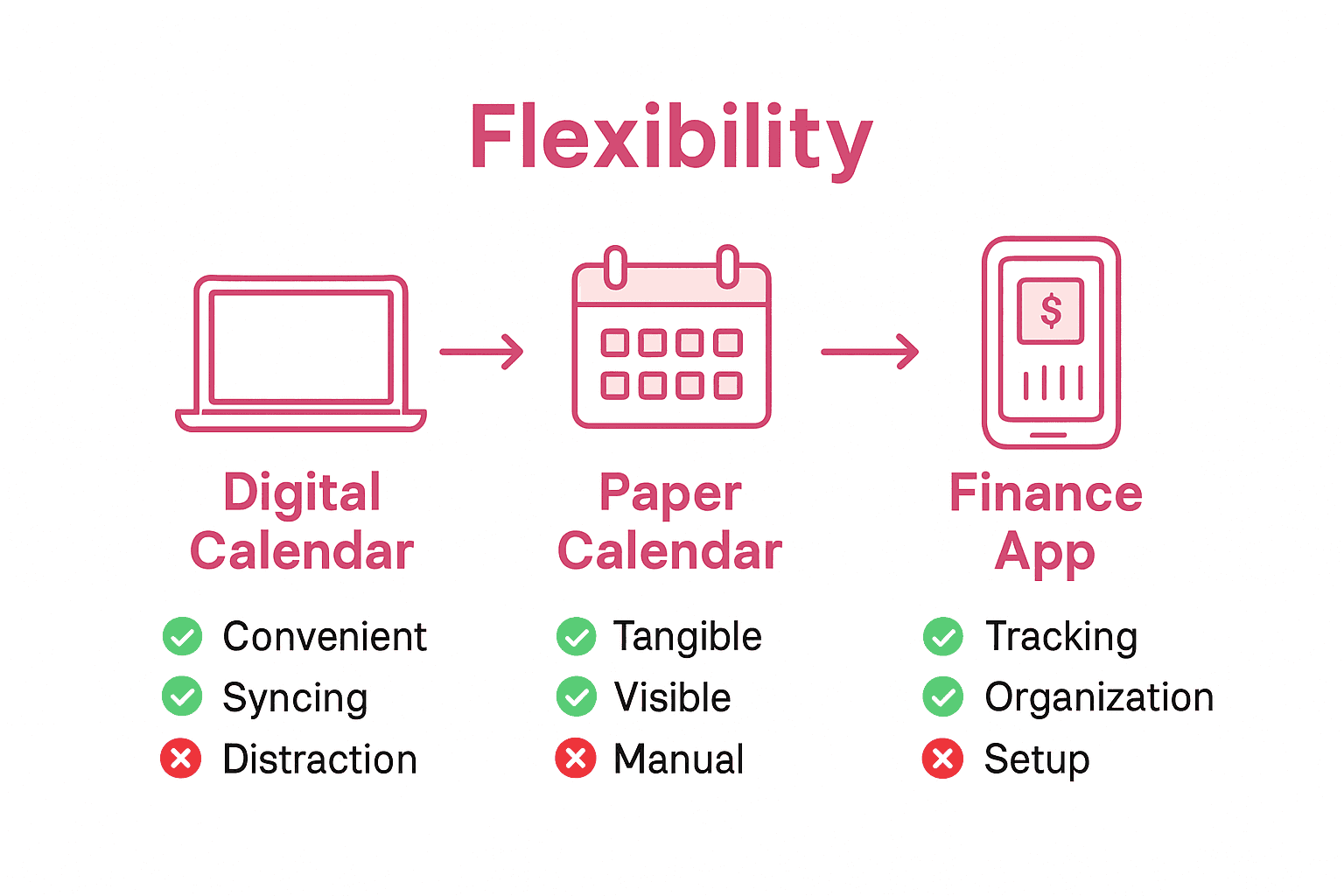 Pro tip: Test out different formats for a month and see which feels most natural and helps you stay motivated about tracking family finances.
Next up? You will learn how to set up your chosen financial calendar and start mapping out your family’s money journey.
Step 2: Set Up Recurring Bills and Income Sources
Now that you have chosen your financial calendar format, it is time to map out your family’s financial heartbeat. According to NerdWallet, including regular paydays and monthly expenses like rent, utilities, and credit card bills will help you manage cash flow effectively.
Start by gathering all your financial documents bank statements, pay stubs, and recurring bill statements. Make a comprehensive list of your monthly income sources first. This might include your primary job salary, side hustle earnings, investment income, or any other regular money coming into your household. Then list out all recurring expenses sorted by their due dates. Pro tip: Use How to Track Family Expenses as a companion guide to ensure you capture every single expense.
Remember the goal is not just tracking numbers but understanding your family’s financial rhythm. As recommended by EMUCU, document monthly income and estimated expenses to track spending and identify areas for potential adjustment. Color code or highlight different types of income and expenses to make your financial calendar more visually intuitive and easier to understand at a glance.
With your recurring bills and income sources mapped out, you are now ready to dive deeper into creating a strategic budget that works for your family.
Step 3: Add Family Expenses and Financial Events
With your recurring income sources mapped out, it is time to bring your financial calendar to life by adding all your family expenses and important financial events. Understanding your complete financial landscape helps you anticipate cash flow and plan strategically.
Start by categorizing your expenses into fixed and variable groups. Fixed expenses are predictable monthly costs like mortgage payments, insurance premiums, and car loans. Variable expenses include groceries, entertainment, and utility bills that can fluctuate. Understanding What is a Family Budget can help you distinguish between these expense types and create more accurate financial projections.
Do not forget to mark special financial events on your calendar school tuition payments, annual insurance renewals, tax filing deadlines, and potential bonus or commission dates. Creating a comprehensive view helps prevent surprises and allows you to save proactively. Pro tip: Use different colors or symbols to distinguish between income sources, fixed expenses, variable expenses, and significant financial milestones.
 This visual approach makes your financial calendar intuitive and easy to review at a glance.
With your expenses and financial events clearly mapped, you are now ready to develop a strategic budget that reflects your family’s unique financial rhythm.
Step 4: Review and Adjust Calendar Entries Monthly
Monthly review of your financial calendar is like performing routine maintenance on your family’s financial engine. According to N2N, you should monitor your spending throughout the month and evaluate your decisions at months end, making any needed adjustments to meet your personal budget goals.
Schedule a dedicated time each month typically during a calm weekend afternoon to sit down and review your financial calendar in detail. Look for patterns in your spending, identify areas where you might have overspent, and compare your actual expenses against your projected budget. Understanding Budget Tracking Guide for Families can provide additional insights into this process. As EMUCU recommends, tracking your expenses is critical and will help identify areas where you may be underestimating your spending.
During your review, be honest with yourself about your financial habits. Did unexpected expenses pop up? Were there categories where you spent more or less than anticipated? Use these insights to make proactive adjustments to future months budgets. Pro tip: Consider creating a small buffer category for miscellaneous expenses to help absorb unexpected costs without derailing your entire financial plan.
With consistent monthly reviews, you will transform your financial calendar from a simple tracking tool into a powerful strategy for family financial success.
Step 5: Monitor Progress Toward Savings Goals
Tracking your savings progress is like being the coach of your family’s financial team. According to Finances Extension, setting specific and attainable financial goals and tracking your progress using a financial calendar can help you stay motivated.
Break down your larger savings goals into smaller monthly milestones that feel achievable. For example, if you are aiming to save $6000 in a year, set a target of $500 per month. Types of Savings Strategies for Families can provide additional insights into creating realistic savings plans. As recommended by Comerica, calculate your income and expenses carefully to structure your budget in ways that make monitoring progress effective.
Visual tracking can be incredibly motivating. Consider creating a simple progress bar or chart in your financial calendar where you can color in or mark your savings achievements. Pro tip: Celebrate small wins along the way to keep your entire family engaged and excited about your financial journey. This might mean a family movie night when you hit a quarterly savings milestone or a special treat that does not break your budget.
By consistently monitoring your savings goals, you transform abstract financial targets into tangible family achievements.
Take Control of Your Family’s Finances with Smart Organization
Feeling overwhelmed by tracking bills, income, and expenses each month is a common challenge for families trying to build a successful budget. The article “How to Use a Financial Calendar for Family Budgeting Success” highlights how choosing the right calendar format and regularly reviewing your financial entries can bring clarity and confidence to your money management. If you want to move beyond just tracking to actually mastering your family finances, you need tools and strategies that fit your busy lifestyle.
Discover proven hacks and simple systems designed to help you stay organized and stress free. Visit Its a Southern Life Yall for practical advice on budgeting systems and time management that empower busy families. Explore our easy-to-follow guides on how to track family expenses and understanding what is a family budget to create a financial calendar that works for you. Don’t wait for another month of confusion and missed bills. Start transforming your family’s financial rhythm today with expert resources at Its a Southern Life Yall and take the first step toward a peaceful, organized home.
Frequently Asked Questions
How can I choose the right financial calendar format for my family?
Selecting the right format involves considering your family’s lifestyle and preferences. Evaluate whether a digital calendar, paper calendar, or finance app works best for your tracking style, and test each for a month to identify what you enjoy using.
What recurring bills should I include in my financial calendar?
Include fixed expenses like mortgage payments, utilities, and insurance, as well as variable costs like groceries and entertainment. Create a comprehensive list based on your current financial documents to enhance your cash flow management.
How do I categorize family expenses in my financial calendar?
Start by grouping expenses into fixed costs (predictable monthly bills) and variable costs (fluctuating expenses). This categorization helps in understanding your financial landscape and allows for better budgeting decisions.
When is the best time to review my financial calendar for adjustments?
Schedule a review at the end of each month, ideally in a calm setting, to analyze your spending patterns and assess your budget performance. By addressing overspending or underspending immediately, you can make necessary adjustments for the upcoming month.
What is the best way to monitor progress toward savings goals using my financial calendar?
Break down larger savings goals into smaller monthly targets to track progress effectively. For instance, if you aim to save $6,000 a year, set a target of $500 each month and visualize your progress in the calendar for motivation.
How can I motivate my family to engage with the financial calendar?
Involve your family by celebrating small wins related to your budget and savings goals. For instance, plan a family movie night when you reach a quarterly savings milestone to keep everyone motivated and engaged in the financial planning process.
Recommended
- Family Finance Organization Guide – It’s a Southern Life Ya’ll
- Understanding What is a Family Budget: A Clear Guide – It’s a Southern Life Ya’ll
- How to Track Family Expenses: A Simple Guide for 2025 – It’s a Southern Life Ya’ll
- 7 Time Management Tips for Families to Balance Life – It’s a Southern Life Ya’ll
- Financial Planning for Single Moms: Build Wealth Step-by-Step – Prosperual
Want a little more help with this? The Budget and Savings Planner has the month-by-month pages ready to fill in.