

Creating a Family Budget Workflow for Financial Harmony
More than 60 percent of American families say they feel anxious about managing their household budget. With prices rising and unexpected expenses popping up, understanding where your money goes each month matters more than ever. This guide lays out the practical steps to help every American family confidently organize income, define spending categories, and build healthy financial habits your whole household can share.
Table of Contents
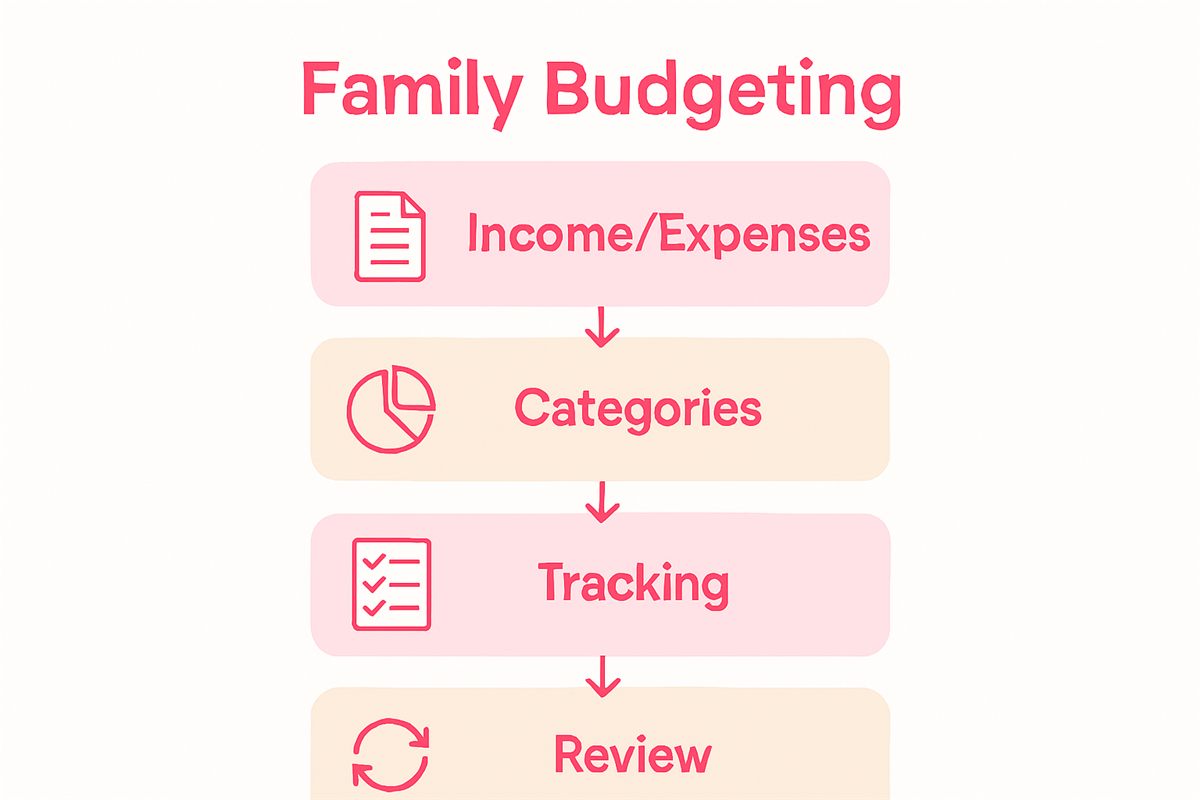
- Step 1: Assess Family Income And Expenses
- Step 2: Define Budget Categories And Set Limits
- Step 3: Organize A Shared Tracking System
- Step 4: Review Progress And Adjust As Needed
Quick Summary
| Essential Insight | Clear Explanation |
|---|---|
| 1. Assess All Income and Expenses | Gather detailed records of every income source and expense to understand your family’s financial situation clearly. |
| 2. Set Realistic Budget Categories | Divide expenses into essential and discretionary categories while setting practical spending limits based on your household income. |
| 3. Use a Shared Tracking System | Implement a collaborative budgeting tool that allows all family members to contribute and stay informed about financial progress. |
| 4. Regularly Review Financial Progress | Schedule monthly financial meetings to analyze spending patterns and make informed adjustments to your budget as needed. |
Step 1: Assess Family Income and Expenses
Assessing your family’s financial landscape is like taking a snapshot of your monetary world. In this crucial first step, you’ll gather all the pieces that make up your financial puzzle and understand exactly where your money comes from and where it goes.
Start by tracking every single income stream your household generates. This means collecting pay stubs, freelance earnings, investment returns, and any additional revenue sources. Tracking family expenses requires detailed documentation. Pull out bank statements, pay records, and create a comprehensive spreadsheet that lists each income source with its exact amount. Pro tip: Use digital tools or spreadsheet apps to make this process easier and more accurate.

Next, categorize your expenses meticulously. Divide them into fixed expenses like mortgage or rent, utilities, insurance, and car payments, and variable expenses such as groceries, dining out, entertainment, and discretionary spending. The goal is to create a crystal clear picture of your financial flow. Some expenses might surprise you when you see them lined up. By understanding your complete financial landscape, you’ll be ready to make informed budgeting decisions that can help your family save and invest more strategically.
Warning: Be completely honest during this assessment. Hidden or forgotten expenses can derail even the best budgeting plans. Grab every receipt, check every transaction, and leave no financial stone unturned.
Step 2: Define Budget Categories and Set Limits
Now that you have a clear picture of your family’s income, it’s time to create a strategic roadmap for your spending. Defining budget categories helps transform financial chaos into organized, purposeful money management.
Budgeting systems often recommend breaking down expenses into specific, trackable categories. A proven approach is the 50-30-20 rule, which allocates your after-tax income into three primary buckets: 50% for essential needs like housing, utilities, groceries, and transportation, 30% for wants such as entertainment and dining out, and 20% dedicated to savings and debt repayment. This framework provides a flexible yet structured method for understanding where your money goes and ensuring balanced financial health.
Start by listing all your recurring expenses and sorting them into major categories. Essential categories typically include housing, transportation, food, utilities, insurance, and healthcare. Discretionary categories might cover entertainment, dining, personal care, and hobbies. For each category, set realistic spending limits based on your total household income. Be honest about your spending patterns and create buffers for unexpected expenses. The key is finding a balance between strict financial discipline and allowing some flexibility for quality of life spending.
Warning: Avoid the common mistake of setting unrealistically low limits that are impossible to maintain. Your budget should be challenging yet achievable, motivating your family to make smart financial choices without feeling overly restricted.
Step 3: Organize a Shared Tracking System
Creating a unified system for tracking your family’s finances transforms budgeting from a solo mission into a collaborative adventure. Your goal is to design a method that keeps everyone informed and engaged in your financial journey.
Budget tracking strategies work best when they are transparent and accessible to all family members. Choose a digital platform that allows real time updates and shared access such as collaborative spreadsheets or dedicated budgeting apps. These tools enable every family member to input expenses, view spending patterns, and understand financial goals. Consider creating a central dashboard where everyone can see income, expenses, savings progress, and upcoming financial milestones.
Set regular family financial meetings to review your tracking system. During these sessions, discuss recent spending, celebrate savings achievements, and make collective adjustments. This approach not only keeps everyone accountable but also transforms financial management from a chore into a shared family mission. Younger family members can learn valuable money management skills by participating in these conversations and understanding how tracking works.
Warning: Select a tracking method that matches your family’s technological comfort level. An overly complicated system might discourage participation, so prioritize simplicity and ease of use over complex features.
Step 4: Review Progress and Adjust as Needed
Budgeting is not a one time event but an ongoing process of monitoring, learning, and adapting. Your financial journey requires regular checkups to ensure you are staying on track and making progress toward your family’s goals.
Comparing expected costs against actual spending helps you identify areas of success and potential improvement. Schedule monthly family finance review sessions where you analyze your tracking system data, discuss spending patterns, and celebrate wins. Look for trends such as consistent overspending in specific categories or unexpected expenses that repeatedly derail your budget. These insights will help you make informed adjustments to your financial strategy.
Be flexible and compassionate with your family during these reviews. Recognize that budgeting is a skill that improves with practice, and unexpected challenges will arise. Create a culture of open communication where everyone feels comfortable discussing financial concerns without judgment. Consider implementing a quarterly reset where you comprehensively evaluate your budget categories, savings goals, and overall financial health. This approach transforms budgeting from a restrictive process into a collaborative family growth opportunity.
Warning: Avoid making drastic changes based on a single month’s data. Look for consistent patterns and trends before significantly restructuring your budget to maintain stability and motivation.
Achieve Financial Harmony with Family Budgeting Made Simple
Struggling to create a family budget workflow that everyone understands and follows can feel overwhelming. This article highlights key challenges like tracking every expense honestly, setting realistic spending limits, and maintaining open communication through shared tracking systems. If managing your family’s income and expenses feels like a constant uphill battle, you are not alone.
Discover practical strategies to bring balance to your home finances while nurturing cooperation and transparency among family members. At Its A Southern Life Yall, you will find proven budgeting systems and budget tracking strategies designed to simplify your financial management and keep your whole family involved. Take control now to reduce stress and build lasting financial confidence with solutions tailored for busy families. Explore our full range of tips and tools at Its A Southern Life Yall and start creating the financial harmony your home deserves today.
Frequently Asked Questions
How can I start assessing my family’s income and expenses?
To start assessing your family’s income and expenses, gather all financial documents, including pay stubs and bank statements. Create a spreadsheet to track each income source and expense category to understand your financial landscape clearly.
What budget categories should I define for my family budget?
You should define budget categories such as fixed expenses (housing, utilities, insurance) and variable expenses (groceries, entertainment). Aim to allocate your after-tax income using a framework like the 50-30-20 rule to help prioritize your spending and savings effectively.
How do I create a shared tracking system for my family’s finances?
To create a shared tracking system, select a digital platform that allows all family members to update and monitor finances transparently. Set regular family meetings to review the tracking system, discuss spending patterns, and celebrate financial achievements together.
How often should we review our family budget and make adjustments?
You should review your family budget monthly to analyze spending patterns and celebrate any wins. Be flexible and open to adjustments, recognizing that budgeting is an ongoing process that will improve with practice.
What should I do if we consistently overspend in certain budget categories?
If you notice consistent overspending in specific categories, identify the reasons and adjust your budget or spending habits accordingly. Consider creating buffer zones within those categories to prepare for occasional overages without derailing your overall budget.
Recommended
- Understanding What is a Family Budget: A Clear Guide – It’s a Southern Life Ya’ll
- How to Track Family Expenses: A Simple Guide for 2025 – It’s a Southern Life Ya’ll
- Family Finance Organization Guide – It’s a Southern Life Ya’ll
- Why Use Budgeting Systems: Complete Family Guide – It’s a Southern Life Ya’ll
- Comprehensive Cannabis Business Budgeting Guide – Cannabis Business Minds
Want a hand with this part? First Budget in 30 Minutes gets the first pass done before the kids are up.