

Essential Tips for Simplifying Schedules in 2025
Most people believe they know exactly how their days are spent and think a busy schedule is simply a fact of modern life. Yet studies show that tracking your activities for even one week can reveal hidden time drains and misplaced priorities. The real shock comes when you realize that nearly two hours a day often disappear on tasks that add no real value at all. Instead of accepting a packed calendar as unavoidable, a few simple shifts can actually create surprising freedom and clarity in your routine.
Table of Contents
- Step 1: Assess Your Current Schedule
- Step 2: Identify Priority Activities
- Step 3: Create A Weekly Overview
- Step 4: Allocate Time Blocks Efficiently
- Step 5: Implement Regular Check-Ins
- Step 6: Adjust And Optimize As Needed
Quick Summary
| Key Point | Explanation |
|---|---|
| 1. Track Your Time for a Week | Monitor every task you do for a week to uncover how you spend your time accurately. |
| 2. Identify Your Priority Activities | Determine which tasks align with your personal goals and well-being for better focus. |
| 3. Create a Flexible Weekly Overview | Design a visual plan that supports your commitments and reduces decision fatigue. |
| 4. Implement Time Blocking Strategies | Group similar tasks together to protect focused periods for increased productivity. |
| 5. Regularly Check and Optimize Your Schedule | Conduct weekly and monthly reviews to adapt your schedule to your evolving needs. |
Step 1: Assess Your Current Schedule
Before you can simplify your schedule, you need to understand what your current routine actually looks like. Think of this as taking a snapshot of your daily and weekly activities. Most people think they know how they spend their time, but the reality often surprises them.
Start by tracking everything you do for one full week. You can use a simple notebook or a time tracking app to record your activities. Write down exactly what you do, including how long each task takes. This means everything from work meetings and household chores to scrolling social media and watching television. Be honest with yourself.
While tracking, pay special attention to activities that drain your energy or feel unproductive. Look for patterns of time waste or unnecessary commitments. Are you spending two hours per day on activities that don’t align with your goals? Do you find yourself repeatedly multitasking without completing important tasks?
Our guide on productivity tracking can help you understand how to document your time most effectively. The goal isn’t to judge yourself but to gain clear insights into your current schedule.
After collecting a week’s worth of data, sit down and review your findings. Create three categories for your activities:
- Essential Tasks: Work, childcare, necessary household maintenance
- Productive Activities: Exercise, learning, skill development
- Time Wasters: Excessive social media, unproductive meetings, aimless browsing
This assessment provides the foundation for your schedule transformation.
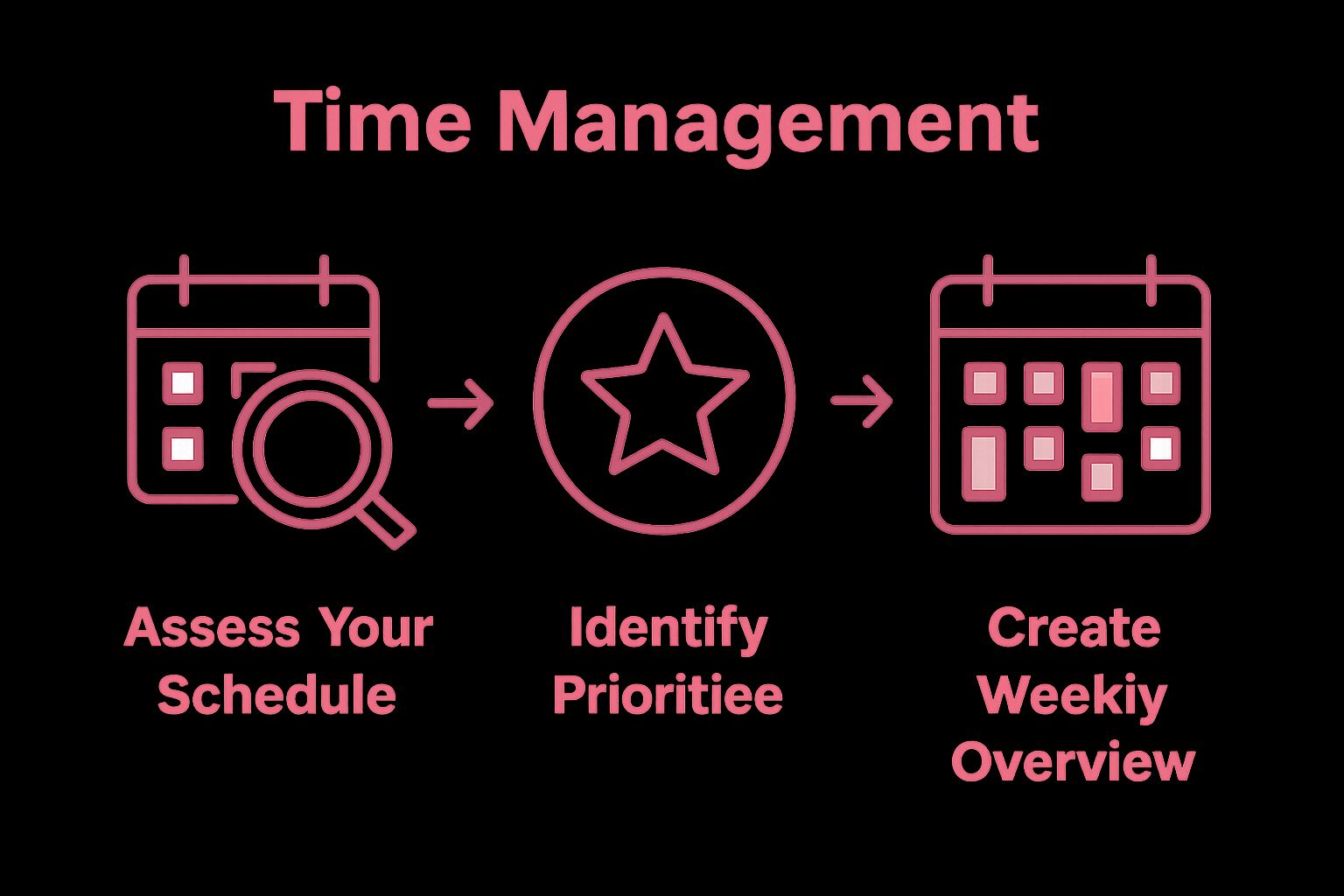 By understanding where your time currently goes, you can start making intentional choices about how to redesign your routine for maximum efficiency and personal satisfaction.
Step 2: Identify Priority Activities
After tracking your time, the next critical step is understanding which activities truly matter in your life. Not all tasks are created equal, and learning to distinguish between what must get done and what can wait is crucial for simplifying your schedule.
Start by asking yourself some hard questions. What activities align with your personal and professional goals? Which tasks contribute to your long term happiness and growth? This isn’t about being perfect, but about making intentional choices that support your overall well being.
Our home organization strategies can help you systematically evaluate your priorities. Consider creating a matrix that ranks activities by two key factors: importance and urgency. This visual tool helps you see which tasks deserve your primary focus.
Think about your core life roles. For most people, these include family, work, personal health, and personal development. Within each role, identify 1-2 critical activities that move you toward meaningful progress. These are your non negotiable priorities.
For working parents, this might look like:
- Dedicated quality time with children
- Meeting critical work deadlines
- Personal health maintenance
- Ongoing skill development
Remember that priority setting isn’t about doing more things, but about doing the right things. Your goal is to create space for activities that genuinely matter, not to pack your schedule with busy work. Be ruthless about eliminating or delegating tasks that don’t serve your larger life objectives.
Verify your priority identification by asking: If I could only accomplish three things today, what would they be? Those are likely your true priorities. This approach transforms your schedule from a cluttered list of obligations into a strategic roadmap for personal success.
Below is a summary table outlining each main step involved in simplifying your schedule, including the purpose and key result for each stage.
| Step | Purpose | Key Result |
|---|---|---|
| 1. Assess Current Schedule | Gain awareness of how time is truly spent | Identified patterns, time drains, and categorized activities |
| 2. Identify Priority Activities | Focus on actions important to goals and well-being | Shortlist of core high-priority tasks |
| 3. Create Weekly Overview | Structure commitments and reduce decision fatigue | Flexible roadmap allocating space for priorities |
| 4. Allocate Time Blocks Efficiently | Enhance productivity with focused periods | Dedicated blocks for similar and important tasks |
| 5. Implement Regular Check-ins | Continuously refine scheduling effectiveness | Schedule improvements based on weekly/monthly reviews |
| 6. Adjust and Optimize as Needed | Adapt schedule to evolving needs and life changes | Schedule remains aligned with values and reduces stress |
Step 3: Create a Weekly Overview
Transforming your schedule begins with creating a clear, visual roadmap for your week. This isn’t about micromanaging every minute, but about establishing a flexible framework that supports your priorities and reduces daily decision fatigue.
Our blocking time strategies can help you design an effective weekly overview. Start by selecting a planning method that works for you. Some people prefer digital calendars, while others love physical planners. The key is choosing a system you’ll actually use consistently.
Begin by blocking out your non negotiable commitments. These include work hours, children’s school schedules, recurring meetings, and essential family responsibilities. Think of these as the structural beams of your weekly schedule – they provide the foundational support for everything else.
Next, allocate specific time blocks for your identified priority activities. If personal fitness is important, schedule dedicated workout times. If family dinner matters, protect that time from other potential interruptions. Intentional scheduling means giving your priorities actual space in your calendar.
Consider creating these strategic time blocks:
- Deep Work Hours: Uninterrupted time for complex tasks
- Family Connection Time: Dedicated moments for relationships
- Personal Recovery: Breaks and self care activities
- Flexible Buffer Time: Space for unexpected needs
Remember that a good weekly overview is living document. Build in flexibility and avoid over scheduling. Leave room for spontaneity and unexpected opportunities. Your goal is creating structure that supports your goals, not a rigid prison of endless tasks.
Verify your weekly overview by asking: Does this schedule reflect my true priorities? Can I realistically accomplish these tasks? If the answer is yes, you’re on the right track to a simplified, more intentional life.

Step 4: Allocate Time Blocks Efficiently
Time blocking transforms how you approach daily tasks by grouping similar activities and protecting focused work periods. This strategy goes beyond simple scheduling by creating intentional spaces for specific types of work and personal activities.
Our time blocking guide can help you master this technique. Start by understanding your personal energy rhythms. Most people have peak productivity windows during specific times of day. Some are morning powerhouses, while others hit their stride in the afternoon. Align your most challenging tasks with your highest energy periods.
When creating time blocks, group similar activities together. For instance, batch all your email responses, phone calls, or household chores into dedicated windows. Batching reduces mental switching costs and helps you maintain focus. Think of it like meal prepping for your productivity – you’re creating efficiency by handling similar tasks in concentrated bursts.
Consider establishing these strategic time blocks:
- Focus Blocks: Uninterrupted work on complex tasks
- Maintenance Blocks: Emails, administrative work, planning
- Personal Care Blocks: Exercise, meditation, skill learning
- Family Interaction Blocks: Quality time with loved ones
Protect these blocks fiercely. Treat them like important appointments you cannot reschedule. Turn off notifications, communicate your unavailability to colleagues and family, and create physical or digital boundaries that support your concentrated work.
Remember that flexibility is key. Not every block will go exactly as planned, and that’s okay. The goal is creating a framework that guides your day, not a rigid structure that causes stress. Build small buffer periods between blocks to accommodate unexpected interruptions or tasks that take longer than anticipated.
Verify your time blocking success by tracking your productivity and energy levels. Are you feeling more focused? Are important tasks getting completed more consistently? Those are signs your time blocking strategy is working effectively.
Step 5: Implement Regular Check-ins
Schedule simplification isn’t a one time event, but an ongoing process of refinement and adjustment. Regular check ins are your strategic tool for ensuring your schedule continues to serve your evolving needs and priorities.
Our home organization tracking methods can support your monitoring process. Plan two levels of review: a quick weekly assessment and a more comprehensive monthly evaluation. The weekly check in should take no more than 15 minutes, while the monthly review might require 30-45 minutes of focused reflection.
For your weekly check in, pull out your schedule and ask yourself critical questions. Which time blocks worked smoothly? Where did you encounter friction or unexpected challenges? Look for patterns of resistance or inefficiency. Maybe certain tasks consistently take longer than anticipated, or you’re struggling to maintain boundaries around specific time blocks.
During your monthly review, take a broader perspective. Assess whether your current schedule aligns with your larger personal and professional goals. Are you making progress on key priorities? Have your life circumstances changed, requiring schedule adjustments? Be honest about what’s working and what isn’t.
Consider tracking these key metrics during your reviews:
- Completed priority tasks
- Time spent on non essential activities
- Energy levels and overall satisfaction
- Progress toward personal goals
Don’t view these check ins as opportunities for self criticism, but as strategic planning sessions. Your schedule is a living document that should adapt to your changing life. Some weeks will flow perfectly, while others might feel more chaotic. The goal is continuous improvement, not perfection.
Verify the effectiveness of your check ins by noticing tangible changes. Are you feeling more in control of your time? Are important goals moving forward more consistently? These are clear indicators that your schedule management strategy is working effectively.
Use the checklist below during your weekly and monthly check-ins to verify your schedule remains effective and aligned with your goals.
| Verification Item | What to Check | Frequency |
|---|---|---|
| Completed Priority Tasks | Were top priorities accomplished? | Weekly |
| Time on Nonessential Activities | Did you minimize low-value tasks? | Weekly |
| Energy and Satisfaction | Are you energized and satisfied with your routine? | Weekly/Monthly |
| Progress on Personal Goals | Are key goals advancing as planned? | Monthly |
| Schedule Alignment | Does your routine fit your current life and priorities? | Monthly |
| Areas for Optimization | What can be eliminated, delegated, or improved? | Monthly |
Step 6: Adjust and Optimize as Needed
Schedule simplification is not a destination, but a continuous journey of adaptation and refinement. Your ability to remain flexible and responsive to changing life circumstances determines the long term success of your organizational strategy.
Our scheduling optimization techniques can help you develop a dynamic approach to schedule management. Start by understanding that perfect schedules do not exist. Instead, focus on creating a system that can gracefully evolve with your personal and professional needs.
Consider your schedule like a living organism that requires regular nourishment and pruning. Some strategies that worked brilliantly six months ago might feel constraining now. Life changes rapidly – new job responsibilities, shifting family dynamics, personal growth, and unexpected opportunities can all necessitate schedule adjustments.
When evaluating your schedule for optimization, look beyond surface level productivity. Pay attention to your emotional and physical energy. A schedule that looks efficient on paper but leaves you exhausted is not truly effective. Watch for signs of burnout, persistent stress, or consistent feelings of being overwhelmed.
Think about these potential optimization strategies:
- Eliminate low value activities
- Delegate tasks when possible
- Negotiate flexible work arrangements
- Create stronger boundaries
- Invest in skill development that reduces time consumption
Remember that optimization is not about cramming more activities into your day, but about creating meaningful space for what truly matters. Sometimes this means saying no to good opportunities to make room for great ones. Be ruthless about protecting your time and aligning your schedule with your core values and long term goals.
Verify your optimization efforts by monitoring key indicators: improved work quality, increased personal satisfaction, reduced stress levels, and a sense of control over your time. If these elements are improving, you’re on the right track to a simplified, more intentional schedule.

Ready to Simplify Your Schedule and Your Space?
Struggling to keep your schedule under control can leave you drained and stuck in a cycle of time wasters and unfinished tasks. The article highlights the challenge of identifying true priorities, battling energy-draining habits, and building a system that finally feels manageable. You deserve a life where your calendar fuels your goals, not your stress.
We make it easy to build that efficient, peaceful lifestyle with proven tools for time management, practical organization hacks, and simple living solutions designed for busy families. If you want real results—better routines, more family time, and less chaos—visit Transform Your Home and Life to discover expert home management strategies and actionable productivity tips that complement every step discussed in this guide. Take control of your schedule right now and start building the calm, focused days you and your family need.
Frequently Asked Questions
How can I assess my current schedule effectively?
To assess your current schedule, track all your activities for one week using a notebook or time tracking app. Categorize your tasks into essential, productive, and time-wasting activities to gain insights into how you spend your time.
What are the steps to identify my priority activities?
Start by evaluating which activities align with your personal and professional goals. Create a matrix ranking activities by importance and urgency, focusing on core roles such as family, work, and personal health to identify 1-2 critical tasks for each role.
How do I create a weekly overview of my schedule?
To create a weekly overview, select a planning method that fits your style, whether digital or physical. Block out non-negotiable commitments and allocate time for your priority activities. This framework should offer flexibility and space for spontaneity.
What is time blocking and how can it improve my productivity?
Time blocking involves grouping similar tasks together and allocating specific periods for focused work. By aligning demanding tasks with your most productive times and batching similar activities, you can reduce mental switching and enhance overall efficiency.