
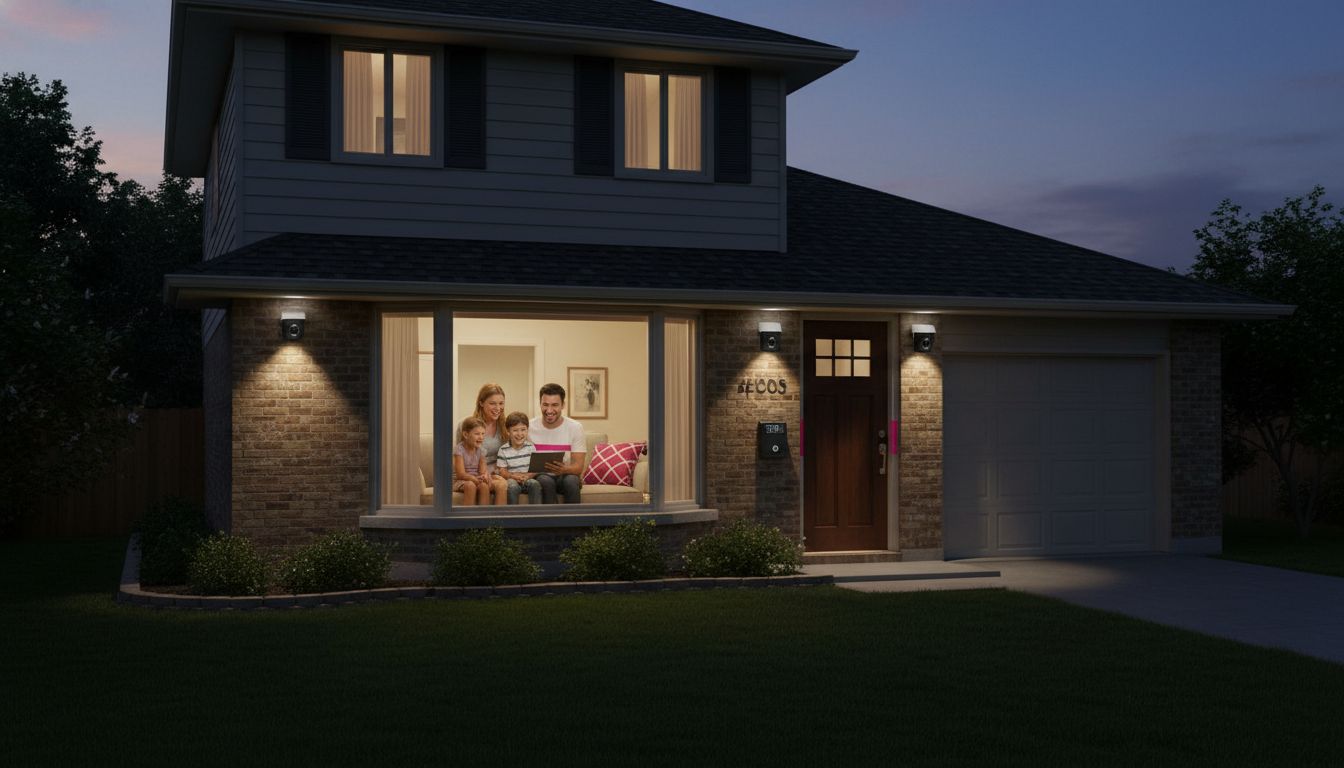
Complete Guide to Protecting Your Home from Break-Ins
Every minute, a home burglary takes place somewhere in the world. With so much at stake, understanding home security is more urgent than ever for families who want to protect both their loved ones and their peace of mind. From innovative technology to smart daily habits, effective security goes far beyond locks and cameras. Discover how the right strategies can transform your home into a true safe haven.
Table of Contents
- What Home Security Against Break-Ins Means
- Types of Home Security Solutions Explained
- How Modern Security Technology Works
- Practical Family Habits for Home Safety
- Legal Rights and Responsibilities for Homeowners
- Common Mistakes and How to Avoid Them
Key Takeaways
| Point | Details |
|---|---|
| Comprehensive Home Security | Home security requires a multi-layered approach, combining physical, technological, and environmental strategies to effectively deter and respond to potential break-ins. |
| Modern Security Solutions | Solutions range from professional monitoring to DIY systems, tailored to meet various household needs while considering factors like budget and comfort with technology. |
| Legal Considerations | Homeowners must understand their legal responsibilities regarding privacy, local regulations, and liability to ensure their security measures are lawful and effective. |
| Avoiding Common Mistakes | Regularly assess and update security systems; neglecting research, maintenance, and family training can severely compromise home safety. |
What Home Security Against Break-Ins Means
Home security is about creating a comprehensive strategy to protect your family and property from potential intrusions. According to Wikipedia, a security system ranges from simple noisemakers to complex setups that integrate computer monitoring, CCTV, and access control technologies.
At its core, home security involves multiple layers of protection designed to deter, detect, and respond to potential break-ins. These layers include physical barriers, technological solutions, and strategic environmental design. Crime Prevention Through Environmental Design (CPTED) emphasizes creating an environment that naturally discourages criminal activity through smart spatial planning.
Key components of effective home security include:
- Perimeter protection with secure doors and windows
- Alarm systems that alert you to unauthorized entry
- Strategic lighting around your property
- Visible security measures that discourage potential intruders
- Smart technology integration for remote monitoring
Understanding home security isn’t just about installing equipment. It’s about creating a holistic approach that makes your home a challenging target for potential criminals. By combining physical deterrents, technological solutions, and strategic environmental design, you can significantly reduce the risk of break-ins and protect what matters most: your family and your peace of mind.
Types of Home Security Solutions Explained
Home security solutions have evolved dramatically, offering families multiple ways to protect their homes and loved ones. Cybernews highlights that modern security systems range from professional monitoring services to DIY installations, each with unique features tailored to different household needs.
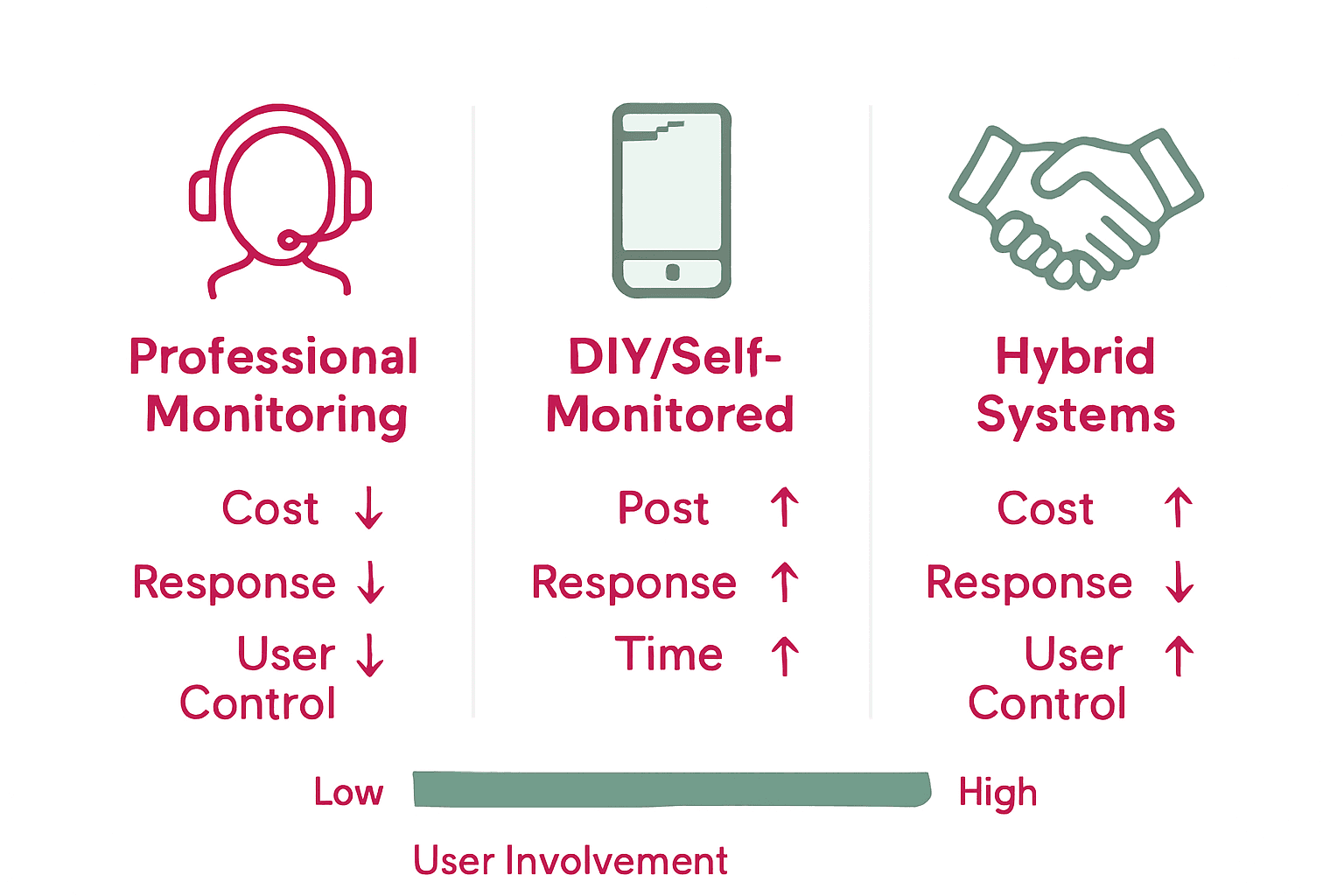
Home security solutions can be broadly categorized into three main types:
- Professional Monitoring Systems: Comprehensive services with 24/7 professional surveillance
- Self-Monitored Systems: Technology-driven solutions controlled via smartphone apps
- Hybrid Security Setups: Combining professional and personal monitoring strategies
Security.org suggests that security cameras play a crucial role in modern home protection. These systems offer varied features like motion detection, night vision, and remote viewing capabilities. Advanced cameras now integrate artificial intelligence to distinguish between potential threats and normal household movement.
Choosing the right home security solution depends on several factors: your budget, home layout, neighborhood safety, and personal comfort level with technology. While professional systems offer comprehensive protection, they often come with higher monthly fees. Self-monitored systems provide flexibility and lower costs but require more personal involvement.
 The key is finding a balance between robust protection and practical implementation that makes you feel genuinely secure.
How Modern Security Technology Works
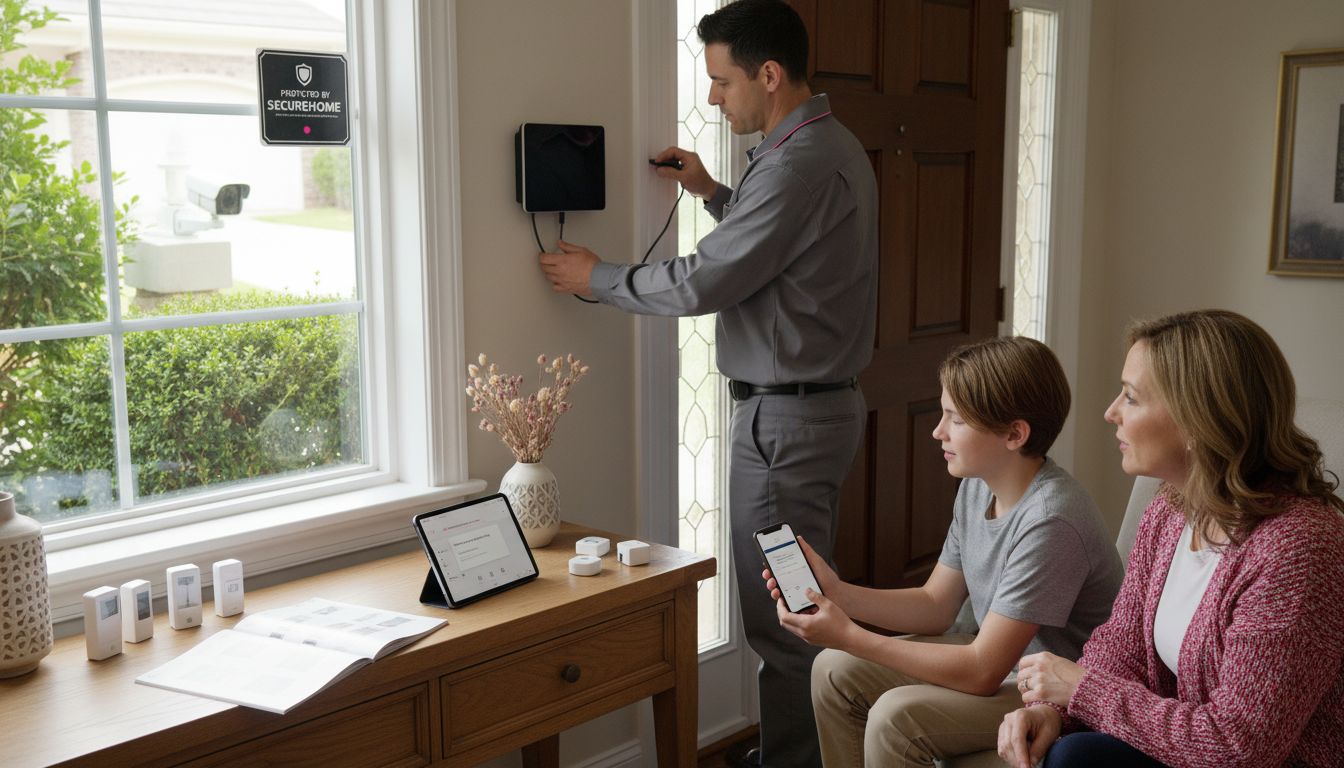
Home security technology has transformed from simple alarms to sophisticated, intelligent systems that can predict and prevent potential threats. ArXiv research highlights the development of multi-sensor intrusion detection systems that combine various sensors like PIR motion detectors and magnetic switches to create comprehensive security networks.
Modern security systems operate through a complex network of interconnected technologies. These systems typically include:
- Motion sensors that detect unexpected movement
- Microcontroller-based analysis that processes sensor data in real-time
- Communication modules that instantly alert homeowners
- Smart device integration for remote monitoring
Research from ArXiv introduces the ‘Aegis’ framework, a context-aware security system that goes beyond traditional monitoring. This advanced approach observes the states of connected devices and user activities, creating intelligent models that can distinguish between normal household behavior and potential security threats. By using artificial intelligence and machine learning, these systems can now learn and adapt to your home’s unique patterns.
The magic of modern security technology lies in its ability to provide intelligent, proactive protection. Instead of simply reacting to break-ins, these systems now predict, prevent, and provide comprehensive security solutions. From GSM modules that send instant alerts to AI-powered cameras that can differentiate between a family member and an intruder, home security has evolved into a smart, responsive guardian for your most precious assets.
Practical Family Habits for Home Safety
Protecting your home requires more than just technological solutions. Wikipedia highlights the importance of Crime Prevention Through Environmental Design (CPTED), which focuses on creating an environment that naturally discourages criminal activity through strategic planning and awareness.
Effective family safety habits include:
- Always locking doors and windows, even during short absences
- Establishing a consistent communication routine about home security
- Teaching children basic safety protocols
- Maintaining clear visibility around your property
- Creating the appearance of an occupied home when away
Security.org suggests regularly reviewing and updating your home security approach. This means staying informed about the latest technologies and consistently evaluating your current safety measures. When we create a peaceful home naturally, we’re not just protecting physical spaces but cultivating an environment of safety and security.
The most powerful security system is an engaged, informed family. By developing shared habits like checking entry points, understanding emergency protocols, and maintaining open communication about potential risks, you transform your home from a potential target to a well-protected sanctuary. Remember, home safety is a collective effort that requires everyone’s participation and commitment.
Legal Rights and Responsibilities for Homeowners
Marc Weber Tobias, a renowned security expert and attorney, emphasizes that homeowners have both legal rights and critical responsibilities when implementing home security measures. Understanding these nuanced legal considerations is crucial for protecting your property while avoiding potential legal complications.
Key legal responsibilities for homeowners include:
- Ensuring security systems do not infringe on neighbors’ privacy
- Maintaining proper documentation of installed security equipment
- Understanding local regulations regarding surveillance and security measures
- Obtaining necessary permits for advanced security installations
- Protecting vulnerable individuals from potential security system risks
Dorothy E. Denning, a prominent information security researcher, highlights the delicate balance between security implementation and privacy protection. When we create a peaceful home naturally, we must carefully navigate the legal landscape to ensure our safety measures are both effective and compliant.
Homeowners must also be aware of potential liability issues. This means understanding your legal obligations if your security system causes unintended harm, respecting legal boundaries with surveillance technology, and ensuring that your security measures do not violate local, state, or federal regulations. Consulting with a local legal professional can provide specific guidance tailored to your unique circumstances and help you develop a comprehensive, legally sound home security strategy.
Common Mistakes and How to Avoid Them
Cybernews reveals that homeowners frequently make critical security mistakes that compromise their family’s safety. Understanding these common pitfalls is the first step in creating a robust home protection strategy that genuinely keeps your loved ones secure.
Top home security mistakes to avoid include:
- Selecting security systems without thoroughly researching installation requirements
- Underestimating ongoing monitoring and maintenance costs
- Placing security cameras in ineffective or predictable locations
- Failing to regularly update and test security equipment
- Neglecting to train family members on proper security protocols
Security.org emphasizes the importance of strategic camera placement and consistent maintenance. When we create a peaceful home naturally, we must approach security as an evolving system that requires ongoing attention and strategic thinking.
The most dangerous mistake is assuming that simply installing equipment guarantees protection. True home security is a dynamic process that demands continuous learning, adaptation, and family involvement. Regularly assess your security setup, stay informed about technological advances, and maintain open communication with family members about safety protocols. Remember, the most sophisticated security system is only as effective as the people who understand and use it.
Secure Your Home and Simplify Your Life Starting Today
Protecting your home from break-ins requires more than alarms and cameras. As the article highlights, combining physical security, smart technology, and family habits is essential to build a truly safe environment. If you feel overwhelmed by juggling home safety and daily responsibilities, you are not alone. Many families struggle to maintain peace and security while managing busy lives.
At Its A Southern Life Y’all, we understand the importance of creating a peaceful home naturally through effective organization and simple living strategies. Discover practical tips on how to declutter your space, establish routines, and manage your home with ease. These fundamental systems free up your time and energy so you can focus on protecting your family and maintaining security without added stress.
Are you ready to build a safer, more peaceful home that works for your busy lifestyle? Take control today and transform your home into a sanctuary where safety and serenity go hand in hand.

Frequently Asked Questions
What are the key components of an effective home security system?
Key components include perimeter protection with secure doors and windows, alarm systems for unauthorized entry, strategic lighting, visible security measures, and smart technology for remote monitoring.
How do modern home security technology systems work?
Modern home security systems utilize interconnected technologies, including motion sensors, microcontroller-based analysis, and communication modules for real-time alerts. Many also feature AI integration to learn and adapt to typical household behavior.
What common mistakes should homeowners avoid in home security?
Homeowners should avoid selecting systems without research, underestimating monitoring costs, ineffective camera placements, neglecting equipment maintenance, and failing to train family members on security protocols.
How can I create practical family habits for home safety?
To enhance home safety, families should lock doors and windows consistently, establish communication routines about security, teach basic safety protocols to children, maintain clear visibility around the property, and create the appearance of occupancy when away.
Recommended
- Complete Guide to Overlooked Storage Space – It’s a Southern Life Ya’ll
- Tips for Elevating Your Home on a Budget: Easy Upgrades for a Fresh Look – It’s a Southern Life Ya’ll
- 15 Brilliant Frugal Hacks to Finally Break Free from Living Paycheck to Paycheck (Without Feeling Deprived) – It’s a Southern Life Ya’ll
- Where To Put Your Money If You Don’t Trust Banks! –
- Child-Proofing Windows & Stairs: Chicago Home Inspection Guide
- Understanding Home Safety Check: Ensuring Your New Home Is Safe | Chicago Home Inspect LLC
Want a little more help with this? I made a free Mental Load Kit that pairs right up with this post — y’all can grab it over on my Free Resources page.