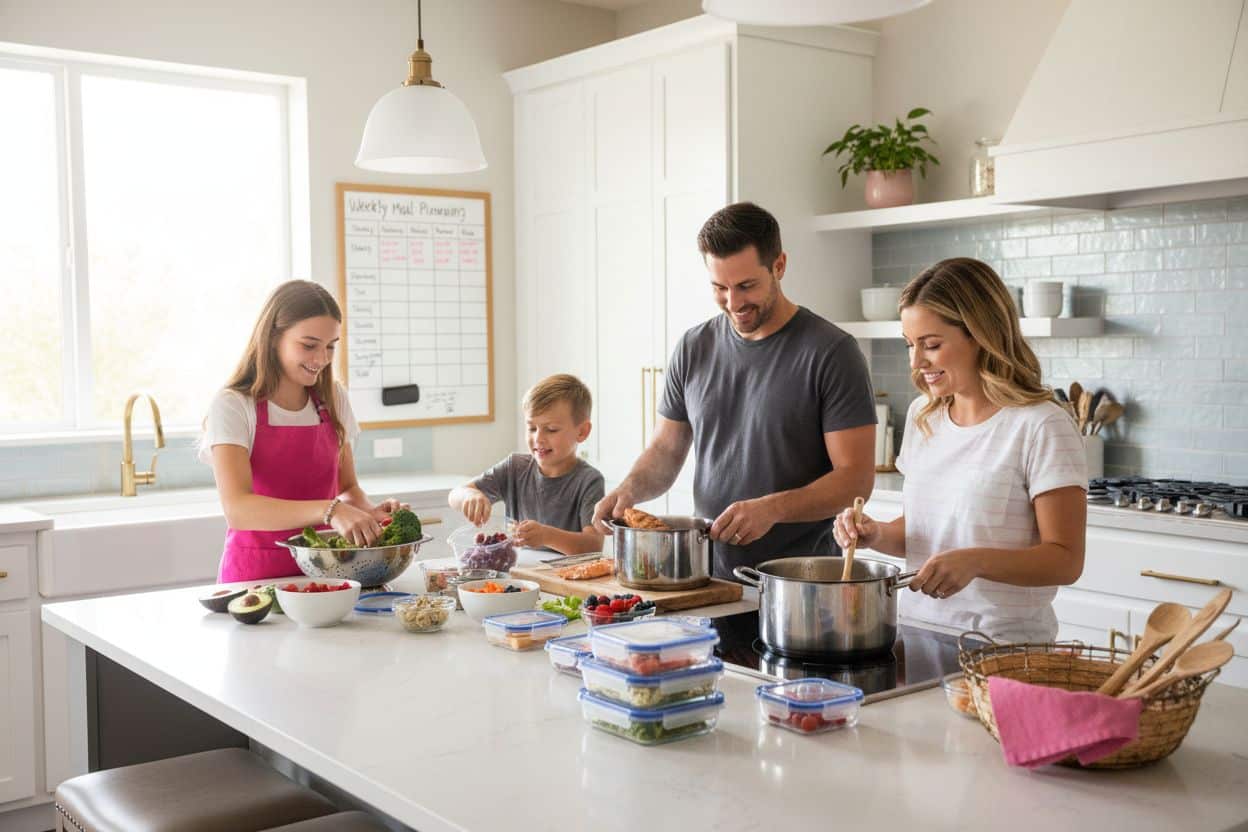
What Is Meal Prepping? Complete Guide for Families
Did you know that families who meal prep regularly report saving up to 2.5 hours each week on cooking and cleanup? With busy schedules and rising food costs, every minute and dollar counts. Meal prepping simplifies dinnertime, cuts down on stress, and helps families eat healthier together. Discover simple strategies that make eating well at home feel effortless instead of overwhelming.
Key Takeaways
| Point | Details |
|---|---|
| Meal Prepping as Strategy | Meal prepping simplifies family meals by preparing ingredients and planning in advance, reducing daily cooking stress. |
| Flexibility in Approach | Families can start small with various meal prepping methods tailored to their schedule and preferences, avoiding burnout. |
| Significance of Family Care | Meal prepping fosters connections and nurtures family relationships, transforming cooking into a heartfelt expression of care. |
| Avoiding Common Pitfalls | It’s essential to maintain flexibility and avoid rigid planning, focusing instead on progress and variety in meals. |
Table of Contents
- Meal Prepping Defined And Common Misconceptions
- Types Of Meal Prepping For Families
- Step-By-Step Meal Prepping Process
- Safe Food Storage And Preparation Tips
- Benefits, Challenges, And Mistakes To Avoid
Meal Prepping Defined and Common Misconceptions
Meal prepping isn’t just about cooking massive batches of food for an entire week—it’s a strategic approach to making family meals easier and more intentional. Meal prepping involves preparing ingredients, planning menus, and creating portions ahead of time to reduce daily cooking stress. According to research from family nutrition experts, it’s about working smarter, not harder.
Many families mistakenly believe meal prepping requires an entire weekend and rigid meal plans. The reality? You can start small and be flexible. Experts emphasize creating realistic goals that fit your family’s unique rhythm. Some families prep protein, chop vegetables, or make base sauces that can be mixed and matched throughout the week. This approach prevents burnout and makes meal preparation more manageable.
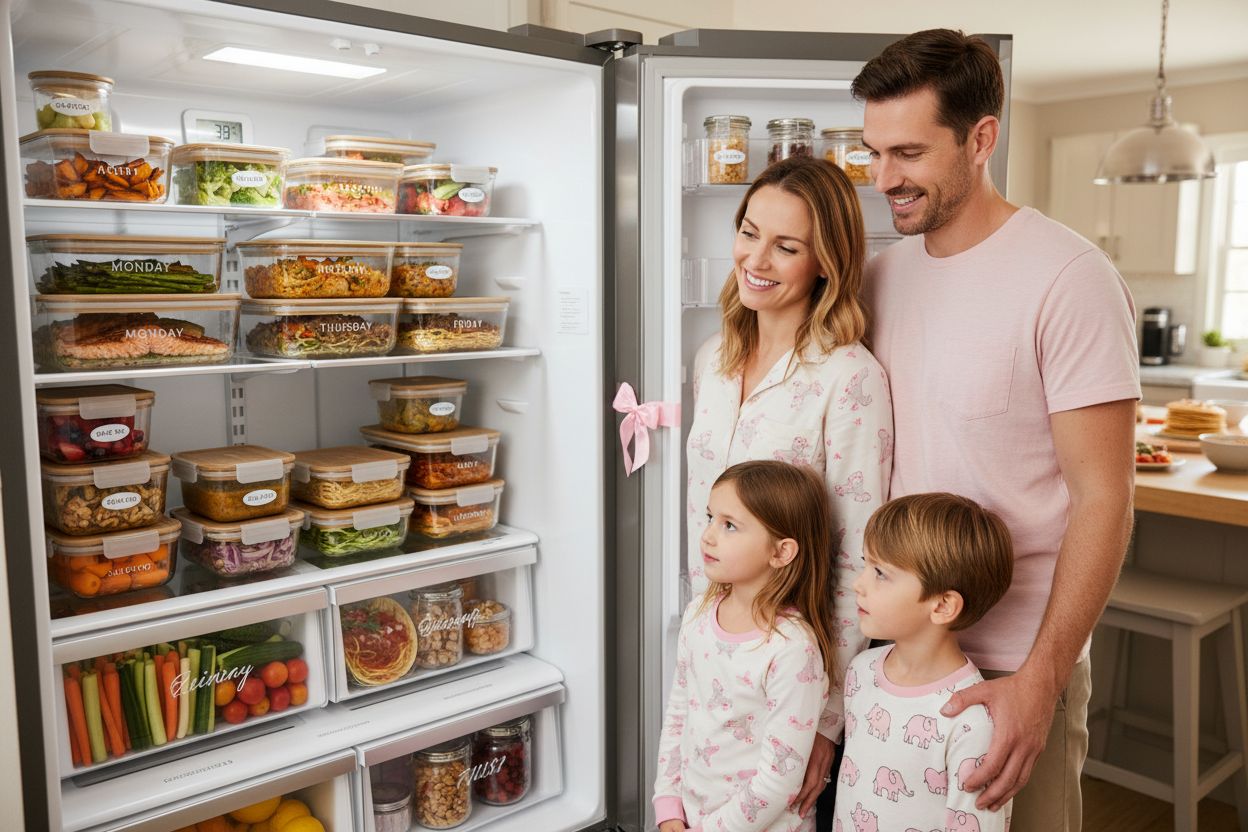
Beyond just logistics, meal prepping carries deeper significance. Academic research highlights that meal preparation is a profound form of family caregiving. It’s not just about food—it’s about creating connections, showing love, and nurturing your family through thoughtful meal planning. As research from family dynamics studies suggests, meal prepping transforms from a mundane task into an emotional expression of family care.
Common misconceptions about meal prepping include:
- It takes too much time
- You must cook everything at once
- Meal prepped food is boring
- It’s only for single people or fitness enthusiasts
In truth, meal prepping is a flexible strategy that can be customized to any family’s lifestyle, dietary needs, and schedule. Read more about pre-planned meals for families to discover how this approach can revolutionize your family’s eating habits.
Types of Meal Prepping for Families
Meal prepping isn’t a one-size-fits-all strategy—families can choose from several approaches that match their lifestyle, time availability, and cooking preferences. Batch cooking stands out as the most popular method, where families prepare multiple meals or meal components simultaneously. Read our weekly meal prep guide to understand how this technique can transform your family’s meal planning.
According to research from budget-friendly meal planning experts, batch cooking strategies include preparing large quantities of versatile proteins, soups, casseroles, and freezer-friendly dishes. Smart families buy ingredients in bulk, use seasonal produce, and creatively stretch proteins by incorporating plant-based foods. This approach not only saves time but also reduces food waste and cuts grocery expenses.
Another innovative meal prepping approach involves communal meal assembly services. Commercial meal prep services like Dream Dinners allow families to assemble pre-planned meals in shared kitchens, which can then be frozen and cooked at home. This method provides convenience for busy families who want structured meal planning without spending entire weekends cooking.
Common types of meal prepping include:
- Full meal batch cooking
- Ingredient prep (chopping vegetables, cooking proteins)
- Individually portioned meals
- Frozen meal components
- Mix-and-match meal building blocks
The key is finding a meal prepping style that fits your family’s unique rhythm, schedule, and culinary preferences. Experiment with different approaches to discover what works best for your household.
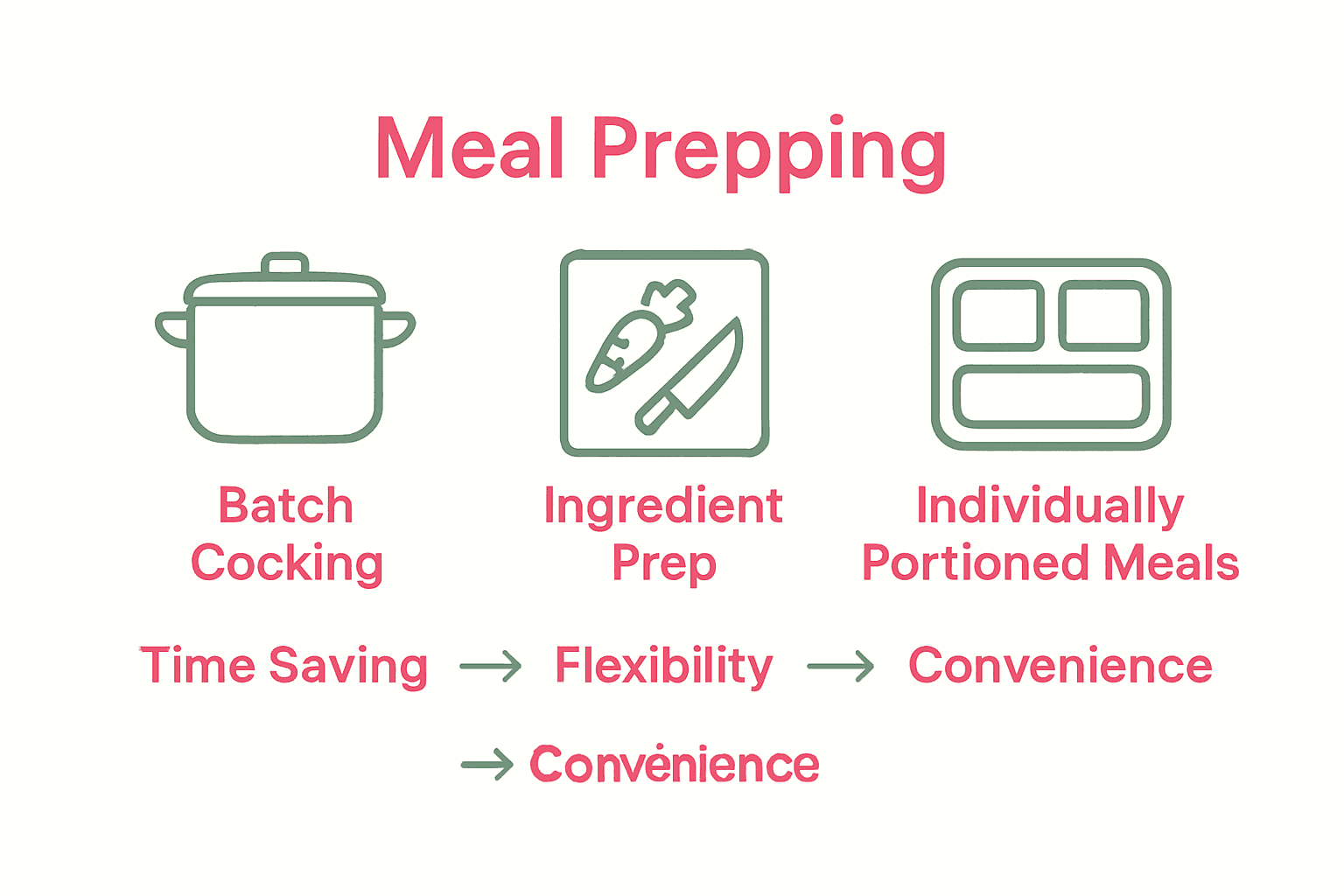
Here’s a comparison of common meal prepping approaches for families:
| Method | Key Features | Best For |
|---|---|---|
| Batch Cooking | Large batches Freezable meals |
Saving time Reducing waste |
| Ingredient Prep | Chopped veggies Cooked proteins |
Flexibility Mix-and-match meals |
| Individually Portioned | Meals in containers Custom serving sizes |
Busy schedules Lunches-on-the-go |
| Meal Assembly Services | Pre-planned menus Shared prep space |
Extra convenience Minimal planning |
| Mix-and-Match Components | Base sauces Grains Proteins |
Variety Custom family tastes |
Step-By-Step Meal Prepping Process
Successful meal prepping doesn’t happen by accident—it requires a strategic approach that transforms cooking from a daily chore into a smooth, efficient process. Meal preparation is like creating a roadmap for your family’s nutrition, ensuring you have delicious, healthy meals ready with minimal daily stress. Learn more about pre-planned meal strategies to streamline your cooking routine.
Here’s a comprehensive process to help you master meal prepping for your family:
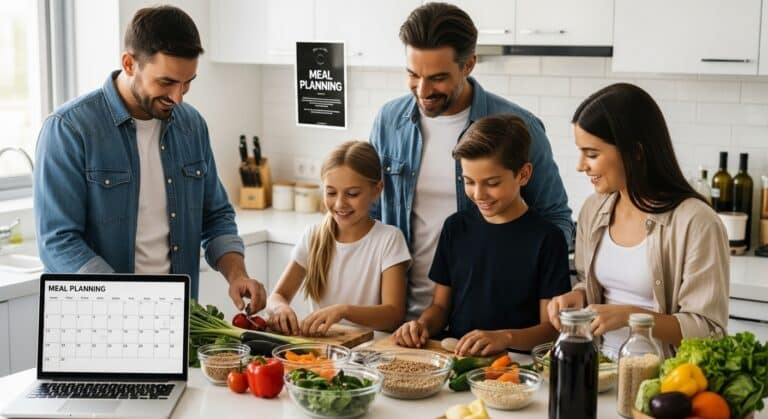
- Planning Stage
- Review your family’s weekly schedule
- Check your pantry and refrigerator inventory
- Select recipes that are versatile and family-friendly
- Consider dietary preferences and restrictions
- Shopping Stage
- Create a detailed grocery list
- Buy ingredients that can be used in multiple dishes
- Purchase storage containers for meal prep
- Choose fresh, high-quality ingredients
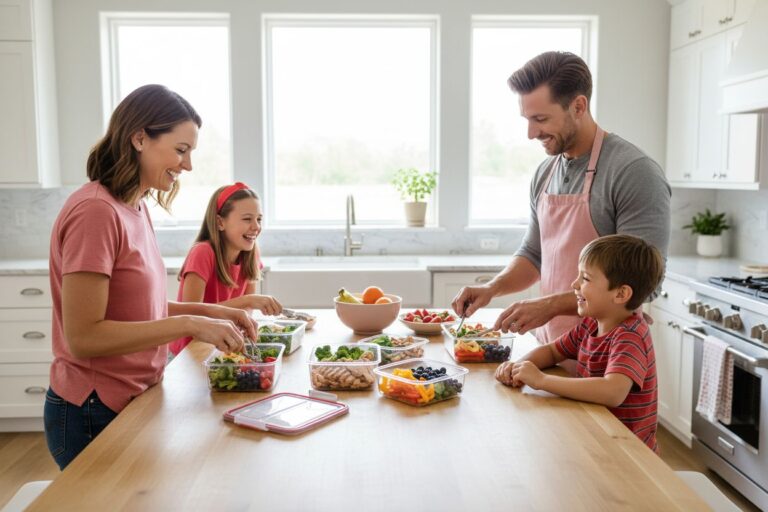
- Preparation Stage
- Set aside a dedicated meal prep time (2-3 hours)
- Wash and chop vegetables
- Cook proteins in bulk
- Prepare base sauces and marinades
- Portion meals into containers
The key to successful meal prepping is flexibility. Not every meal needs to be completely cooked—sometimes partially prepped ingredients can be a lifesaver during busy weeknights. Think of meal prepping as building blocks that give you cooking freedom, not a rigid system that creates more stress.
Remember, the goal isn’t perfection but progress. Start small, be patient with yourself, and gradually develop a system that works for your family’s unique lifestyle and culinary preferences.
Safe Food Storage and Preparation Tips
Food safety is the foundation of successful meal prepping, protecting your family from potential foodborne illnesses while ensuring your hard-prepared meals remain delicious and nutritious. Learn more about reducing food waste and keeping your meal prep efficient and safe.
According to food safety experts, maintaining proper temperature is crucial. Refrigerators should be kept at or below 40°F (5°C), while freezers need to stay at 0°F (−18°C). When preparing meals, cook meats to an internal temperature of 165°F (75°C) to eliminate harmful bacteria. Cooked foods should be refrigerated within two hours and can be safely stored in the refrigerator for 3–4 days or in the freezer for 3–6 months.
Critical food preparation and storage tips include:
- Wash hands thoroughly before handling food
- Use separate cutting boards for raw and cooked foods
- Sanitize surfaces and utensils between uses
- Use airtight, BPA-free containers
- Label and date all prepared meals
- Portion meals into single servings
- Thaw frozen meals in the refrigerator
- Reheat meals only once, ensuring internal temperature reaches 165°F (74°C)
Remember, meal prepping is about making your life easier, not creating additional stress. Take your time, follow safety guidelines, and trust your instincts. With practice, you’ll develop a smooth, safe meal preparation routine that keeps your family healthy and well-fed.
Benefits, Challenges, and Mistakes to Avoid
Meal prepping can be a game-changer for busy families, but it’s not without its learning curve. Learn how to turn challenges into opportunities as you develop your meal preparation skills.
According to research from family nutrition experts, meal prepping offers substantial benefits for families. These include significant time savings, reduced weekly stress, lower food costs through bulk purchasing and seasonal produce selection, and decreased food waste by creatively repurposing leftovers and freezing meals. The approach provides enhanced routine and flexibility in weekly meal planning.
Common challenges and mistakes families encounter include:
- Making meal prep too rigid or time-consuming
- Spending entire days preparing meals
- Neglecting to plan for snacks
- Overlooking storage and reheating logistics
- Prepping without a clear menu plan
- Failing to align prep with actual family schedules
- Lacking variety in meal textures and colors
As food preparation researchers highlight, the key is finding a balanced approach. Start small, be flexible, and remember that meal prepping is a skill that improves with practice. Don’t aim for perfection—aim for progress. Some weeks will be smoother than others, and that’s completely okay. The goal is to make your family’s meal routine easier, not to create additional stress.
Make Meal Prepping Easy with Proven Home Management Solutions
You just discovered how meal prepping can save your family time, lower your stress, and create more meaningful moments around the table. Still, organizing busy schedules and managing meal planning can feel overwhelming. Common pain points like burnout, lack of system, and wasted time often make it tough for families to stick with meal prepping routines. Our article highlighted how a flexible and simple approach is key to overcoming these challenges.
Imagine pairing those meal prep strategies with streamlined home organization and time management tools designed especially for busy families. Explore more actionable ideas at Its A Southern Life, Y’all where you will find practical decluttering solutions and home management tips to keep your kitchen, meals, and daily routines on track. Ready to make every meal and every week less stressful? Visit our website now and discover how you can create a more peaceful and efficient family life today.
Frequently Asked Questions
What is meal prepping?
Meal prepping is a strategic approach to preparing ingredients, planning menus, and creating portions ahead of time to reduce daily cooking stress and simplify family meals.
How can meal prepping benefit busy families?
Meal prepping can save significant time, reduce weekly meal planning stress, lower food costs through bulk purchasing, and decrease food waste by effectively using leftovers and freezing meals.
What are common types of meal prepping methods?
Common types of meal prepping include batch cooking, ingredient preparation, individually portioned meals, meal assembly services, and creating mix-and-match components for flexibility in meal planning.
What are some tips for successful meal prepping?
To ensure successful meal prepping, plan your meals according to your family’s schedule, buy versatile ingredients, dedicate specific prep time, practice food safety, and be flexible with your meal flow to accommodate changes.
Recommended
- Understanding What is “Pre-Planned Meals” for Families –
- Understanding the Weekly Meal Prep Guide for Families –
- meal prep –
- meal prep tips –
- Efficient Baby Meal Prep Process for Busy Parents | Parent Kitchen Lab
Want a hand with this part? Meal Genie turns all of that into one plan and one grocery list.