
Understanding What is “Pre-Planned Meals” for Families
Pre-planned meals are taking over family kitchens and for good reason. Families that stick to meal planning can actually cut food waste by up to 30 percent and bring down weekly grocery costs. Most people think this kind of organization is strict and time-consuming but the true surprise is how much freedom and sanity it gives back to your day. That small shift in planning dinner early can do more for your family’s peace of mind than you’d ever expect.
Table of Contents
- What Are Pre-Planned Meals? A Simple Definition
- The Importance Of Pre-Planned Meals For Families
- How Pre-Planned Meals Work: The Process Explained
- Key Concepts Behind Pre-Planned Meals: Nutrition And Convenience
- Real-World Examples: Families Using Pre-Planned Meals
Quick Summary
| Takeaway | Explanation |
|---|---|
| Strategize meal planning for less stress | Pre-planned meals reduce daily meal decision-making stress, allowing families to enjoy mealtime instead of facing uncertainty. |
| Boost nutrition with intentional choices | Planning meals ahead helps ensure balanced nutrition, aligning family diets with health goals and dietary needs. |
| Save time and money efficiently | Strategic meal preparation can cut grocery costs by minimizing waste and optimally using ingredients, enhancing budget management. |
| Adapt meal prep to family needs | Pre-planned meals should be flexible to fit unique household dynamics and individual nutritional requirements, supporting diverse lifestyles. |
| Enhance family connections through meals | Pre-planned meals encourage family bonding by creating predictable, stress-free dining experiences, fostering shared moments and emotional well-being. |
What Are Pre-Planned Meals? A Simple Definition
Pre-planned meals represent a strategic approach to meal preparation that helps families streamline their cooking and eating routines. At its core, pre-planned meals involve deliberately selecting, organizing, and preparing food in advance to reduce daily stress and improve overall nutritional intake.
The Basic Concept of Pre-Planned Meals
Think of pre-planned meals like creating a roadmap for your family’s nutrition. Instead of wondering “What’s for dinner?” every evening, you strategically decide meals ahead of time. This method transforms random cooking into a purposeful process. Check out our guide on meal planning strategies to understand how this approach can revolutionize your kitchen management.
Pre-planned meals can take various forms, including:
- Completely prepared meals stored in containers
- Partially prepped ingredients ready for quick assembly
- Batch-cooked dishes that can be easily reheated
- Individually portioned meals for quick grab-and-go options
Why Families Choose Pre-Planned Meals
Families gravitate towards pre-planned meals for compelling reasons. According to research from the American Dietetic Association, families who plan meals are more likely to consume balanced nutrition and reduce food waste. The benefits extend beyond just convenience.
By investing a few hours in meal planning and preparation, you create a system that saves time, reduces stress, controls food expenses, and ensures your family receives nutritionally balanced meals. Pre-planned meals are not about rigid schedules but about creating flexibility and intentionality in your family’s eating habits.
The beauty of pre-planned meals lies in their adaptability. Whether you’re a busy parent, a working professional, or managing a household with complex schedules, this approach provides a structured yet flexible solution to daily meal challenges.
The Importance of Pre-Planned Meals for Families
Pre-planned meals go far beyond a simple cooking strategy. They represent a holistic approach to family nutrition, wellness, and household management that can transform daily living and long-term health outcomes.

Emotional and Mental Benefits
Meals are more than just food – they are moments of connection and stability for families. The mental load of constant meal decision-making creates significant stress. By removing daily uncertainty about meals, families experience reduced anxiety and increased emotional bandwidth. Learn more about our weekly meal prep guide to understand how planning can create psychological breathing room.
The psychological benefits include:
- Reduced daily decision fatigue
- Increased sense of family organization
- More predictable and calm household environments
- Enhanced feelings of preparedness and control
Financial and Nutritional Advantages
Economically, pre-planned meals are a powerful strategy for budget management. According to research from the USDA, families that plan meals strategically can reduce food waste by up to 30% and cut grocery expenses significantly.
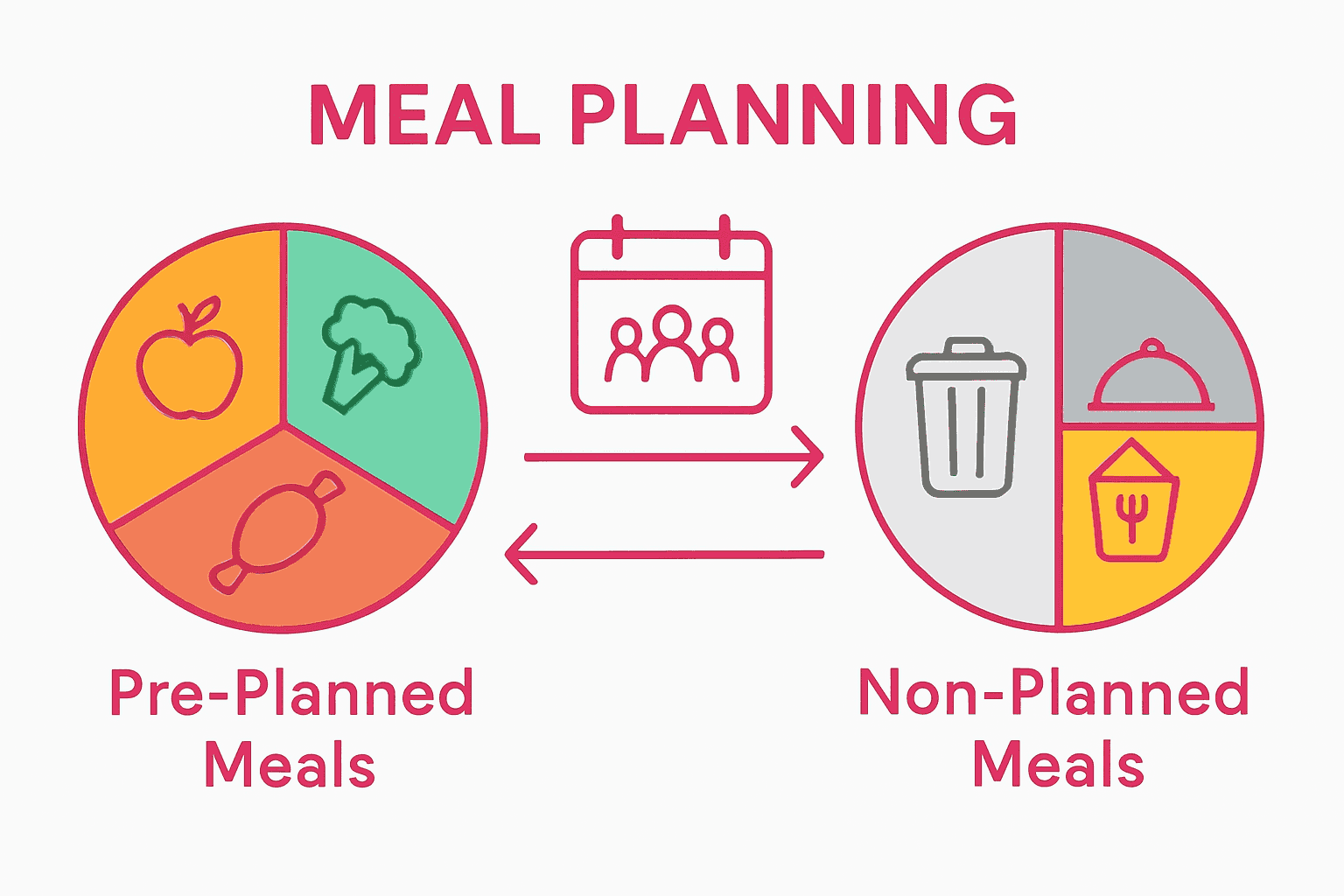
Nutritionally, pre-planned meals allow families to be intentional about balanced eating. Instead of making rushed, potentially unhealthy food choices, families can craft meals that meet specific dietary needs and health goals. This approach supports better overall nutrition and helps establish healthy eating patterns for children.
Pre-planned meals transform meal preparation from a daily stressor into a strategic, empowering process that supports family well-being across multiple dimensions – emotional, financial, and nutritional.
The following table organizes emotional, financial, and nutritional benefits of pre-planned meals for families to illustrate the broad impact of this strategy across daily life.
| Benefit Type | Examples/Advantages |
|---|---|
| Emotional/Mental | Reduced decision fatigue, more predictable home environment, greater sense of control |
| Financial | Up to 30% less food waste, lower grocery costs, improved budget management |
| Nutritional | Balanced meals, tailored to dietary needs, fewer unhealthy last-minute food choices |
How Pre-Planned Meals Work: The Process Explained
Pre-planned meals transform the traditional approach to cooking by introducing strategic preparation and intentional organization. This method is less about rigid scheduling and more about creating a flexible framework for family nutrition.
The Planning Foundation
Successful pre-planned meals start with comprehensive meal planning. This isn’t just about selecting recipes but understanding your family’s nutritional needs, preferences, and weekly schedules. Get budget-friendly wellness recipe strategies to make your planning more efficient and cost-effective.
Key elements of effective meal planning include:
- Assessing family dietary requirements
- Considering individual taste preferences
- Evaluating weekly time constraints
- Checking ingredient availability
- Budgeting for groceries
Preparation and Execution Strategies
According to nutrition experts at the Academy of Nutrition and Dietetics, successful meal preparation involves multiple strategic steps. The process typically includes selecting recipes, grocery shopping with a precise list, batch cooking, and storing meals in appropriate containers.
Pre-planned meals can be prepared using different techniques:
- Complete meal preparation on a dedicated day
- Partial ingredient preparation throughout the week
- Cooking large batches of versatile base ingredients
- Packaging meals in portion-controlled containers
The magic of pre-planned meals lies in their adaptability. Families can customize the approach to match their unique lifestyle, whether that means preparing full meals in advance or simply having key ingredients ready for quick assembly. This flexibility ensures that meal planning becomes a supportive tool rather than a restrictive system.
Below is a table summarizing the different preparation strategies for pre-planned meals, helping families choose an approach that matches their schedule and preferences.
| Preparation Strategy | Description | Best For |
|---|---|---|
| Complete Meal Preparation | Cooking full meals in advance to store for the week | Families preferring ready-to-eat options |
| Partial Ingredient Preparation | Prepping ingredients (chopping, marinating) for quick assembly | Those short on time during weekdays |
| Batch Cooking Versatile Ingredients | Cooking base items (like rice or proteins) for multiple meals | Households seeking menu flexibility |
| Portion-Controlled Packaging | Dividing meals into grab-and-go containers | Busy families or individuals on the move |
| Flexible Prep Throughout the Week | Spreading prep tasks across several days for adaptability | Families with unpredictable schedules |

Key Concepts Behind Pre-Planned Meals: Nutrition and Convenience
Pre-planned meals represent a sophisticated approach to family nutrition that balances health objectives with practical lifestyle demands. Understanding the core principles behind this strategy can help families maximize their benefits and transform their eating habits.
Nutritional Science and Intentional Eating
Nutrition isn’t about random food choices but deliberate, strategic selections. Pre-planned meals allow families to approach eating with scientific precision. Read our comprehensive guide on wellness recipes to dive deeper into nutritional planning.
Key nutritional considerations include:
- Balanced macronutrient distribution
- Varied micronutrient intake
- Age and activity level specific caloric needs
- Addressing individual health conditions
- Preventing nutrient deficiencies
Convenience as a Strategic Framework
According to research published in the Journal of Nutrition Education and Behavior, convenience is not about shortcuts but about intelligent meal management. Pre-planned meals convert time-consuming cooking processes into efficient, streamlined systems.
Convenience in pre-planned meals manifests through:
- Reducing daily cooking time
- Minimizing last-minute food decisions
- Creating consistent meal quality
- Supporting work-life balance
- Enabling healthier eating patterns
The intersection of nutrition and convenience transforms pre-planned meals from a mere cooking technique into a holistic lifestyle approach. By understanding these fundamental concepts, families can create meal strategies that nourish both body and schedule, turning daily nutrition into an intentional, empowering experience.
Real-World Examples: Families Using Pre-Planned Meals
Pre-planned meals are not theoretical concepts but practical solutions that diverse families implement in unique ways. Understanding real-world applications can provide inspiration and practical insights into how different households adapt this approach to their specific needs.
Diverse Family Scenarios
Each family brings distinctive challenges and requirements to meal planning. Some families focus on dietary restrictions, while others prioritize budget management or time efficiency. Learn more about budget-friendly meal planning strategies to understand how families customize their approach.
Family scenarios demonstrating pre-planned meal adaptations include:
- Working parents with limited evening cooking time
- Families managing multiple dietary restrictions
- Single-parent households balancing work and childcare
- Families with athletes requiring high-protein nutrition
- Households managing chronic health conditions
Success Stories and Strategies
According to nutrition researchers at Harvard’s School of Public Health, successful meal planning requires personalization. Real families have developed innovative strategies that go beyond basic recipe selection.
Effective pre-planned meal approaches showcase:
- Collaborative meal planning involving entire family
- Using technology for recipe tracking and grocery lists
- Batch cooking during less busy weekend hours
- Creating flexible meal templates adaptable to changing schedules
- Establishing meal prep as a shared family activity
These examples illustrate that pre-planned meals are not about perfection but about creating sustainable, supportive nutritional systems that evolve with family dynamics. The goal is progress, not impossible standards.
Bring More Ease to Your Family’s Meal Times With Proven Organization Solutions
Are you feeling stressed by the daily question of what to eat and how to fit meal preparation into your family’s busy schedule? If you connected with the article’s focus on pre-planned meals, you already understand how meal planning can reduce anxiety, save money, and ensure healthier choices for your loved ones. But achieving this level of organization across all areas of home and life can feel overwhelming when you are juggling work, parenting, and everything else.
At It’s a Southern Life Y’all we transform household chaos into calm with proven strategies designed for real families just like yours. Our expert time management tools, simple budgeting systems, and game-changing organizational hacks help you go beyond meal prep to create a peaceful, productive home environment. Ready to turn stress into confidence and reclaim valuable family time? Visit our main site right now to discover powerful yet realistic methods for simplifying family meals and much more. Make today the turning point — embrace the practical support you deserve and start your journey to a more balanced family life.
Recommended
- Understanding the Weekly Meal Prep Guide for Families –
- Understanding the Advantages of Meal Planning –
- meal prep –
- Meal Planning on a Budget: Wellness Recipes That Save Time and Cash –
- Understanding Why Private Chefs for Families Matter – Taking Stock Private Chefs + Catering