

Time Blocking Guide for Parents
Time management feels impossible for parents who juggle dozens of roles every single day. Research shows that switching tasks frequently can drop productivity by up to 40 percent. Most people assume more multitasking or bigger to-do lists will fix the chaos, but the real breakthrough comes from doing less at once and carving up your day with purpose. This surprising shift is at the heart of time blocking, a strategy that works with your family’s unique rhythm—not against it.
The quick version, y’all: Time blocking just means giving each chunk of your day a specific job instead of reacting to whatever’s loudest. Group similar tasks together, assign them real windows on your calendar, and protect those blocks like appointments. It works because deciding “what now?” all day long is exhausting — time blocking makes the decision once, ahead of time.
Quick Summary
| Takeaway | Explanation |
|---|---|
| Time blocking enhances productivity | This strategy allows parents to structure their day, improving focus and reducing distractions. |
| Create dedicated time slots | Assign specific times for tasks to maximize effectiveness and ensure all responsibilities are addressed. |
| Involve family in scheduling | Collaborative planning fosters better communication and helps everyone in the family understand the schedule. |
| Allow for flexibility and buffer time | Incorporate margins between activities to adapt to unexpected disruptions without derailing the entire schedule. |
| Review and adjust weekly | Regular reassessment helps keep the time blocking system relevant and effective for the family’s evolving needs. |
What is Time Blocking and How Does it Work?
Time blocking is a powerful productivity strategy that transforms how parents manage their daily schedules by intentionally organizing time into specific, dedicated segments for different tasks and responsibilities. Unlike traditional to-do lists that simply catalog activities, time blocking creates a structured blueprint for your day, helping you allocate precise windows for work, family care, personal time, and household management.
The Core Concept of Time Blocking
At its heart, time blocking is about deliberate scheduling.
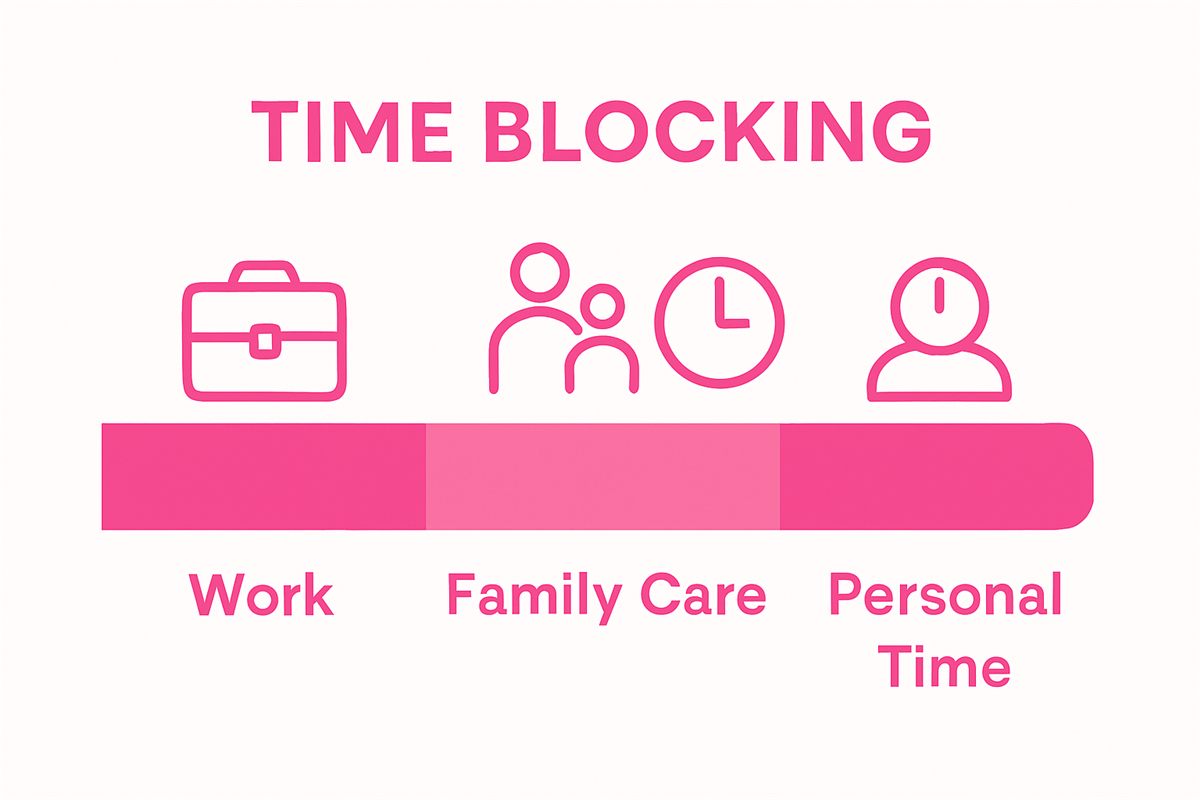 Instead of letting your day control you, you take control of your day by assigning specific tasks to predetermined time slots. This approach prevents the common pitfall of constant task switching, which research shows can significantly reduce productivity.
According to research published in the International Journal of Environmental Research and Public Health, time management strategies like time blocking are particularly effective for individuals managing multiple responsibilities. For parents, this means creating a framework that allows you to focus completely on one activity during its designated time.
How Time Blocking Works in Real Life
Implementing time blocking requires a strategic approach. Here are the fundamental steps:
- Identify Your Primary Tasks: List all recurring responsibilities like work, childcare, household chores, and personal activities.
- Estimate Time Requirements: Determine how long each task typically takes.
- Create Dedicated Time Slots: Assign specific times of the day for each task, ensuring realistic and flexible scheduling.
Parents can further optimize their time blocking by exploring our detailed time blocking schedule guide, which provides practical templates and strategies tailored to family life.
Time blocking isn’t about rigid perfection but creating a flexible system that adapts to your family’s unique rhythm. By consciously designing your day, you reduce stress, increase productivity, and create more meaningful moments with your loved ones.
The Importance of Time Blocking for Family Life
Time blocking isn’t just another productivity technique. For families, it’s a transformative approach that brings structure, harmony, and intentionality to daily life. By creating a thoughtful framework for managing time, parents can reduce stress, improve family communication, and create more meaningful interactions with their children.
Below is a table summarizing the practical advantages that time blocking brings specifically to family life, allowing readers to compare benefits at a glance.
| Advantage | Description |
|---|---|
| Reduced Family Stress | Lower stress by removing ongoing negotiations about chores, tasks, and daily responsibilities. |
| Increased Quality Time | Designated blocks create intentional opportunities for focused family engagement. |
| Better Work-Life Balance | Clear divisions between work, caregiving, and personal time aid mental and emotional health. |
| Improved Communication | Collaborative scheduling clarifies expectations and family members’ roles. |
| Consistent Routines | Predictable routines help children feel secure and teach valuable time management skills. |
Emotional and Psychological Benefits
The psychological impact of time blocking extends far beyond simple task management. Predictable routines create a sense of security for children, helping them feel more confident and emotionally stable. When parents implement consistent schedules, children learn valuable lessons about time management, prioritization, and personal responsibility.
Research from child development experts suggests that structured environments contribute significantly to children’s cognitive and emotional development. Time blocking provides this structure while allowing flexibility essential for family dynamics.
Practical Advantages for Family Dynamics
Time blocking offers several critical advantages for family life:
- Reduced Family Stress: By eliminating constant negotiation about tasks and schedules
- Increased Quality Time: Creating intentional windows for focused family interactions
- Better Work-Life Balance: Helping parents segment professional and personal responsibilities
Parents can discover more strategies for managing home schedules that complement time blocking techniques.
Ultimately, time blocking is about creating a rhythm that works for your unique family. It’s not about perfection but about designing a system that brings more peace, productivity, and presence to your daily life. By consciously allocating time for work, personal care, family activities, and rest, parents can transform chaotic household management into a harmonious, intentional experience.

Key Concepts Behind Successful Time Blocking
Successful time blocking isn’t simply about filling calendar slots randomly. It’s a sophisticated approach to personal productivity that requires understanding several fundamental principles. By mastering these core concepts, parents can transform their daily schedules from chaotic to controlled, creating space for both responsibilities and personal fulfillment.
This table provides a quick reference to the main elements behind an effective time blocking system for parents, helping clarify the distinguishing features of the approach.
| Key Element | What It Means |
|---|---|
| Intentionality | Consciously allocate each time block based on goals and family priorities |
| Realistic Task Estimation | Accurately predict the time required for various activities and responsibilities |
| Buffer Time | Build in flexibility and margins to handle the unexpected |
| Prioritization | Organize tasks based on their importance and the energy required |
| Flexibility | Adapt to shifting family needs rather than sticking to a rigid, immovable structure |
The Foundational Principles
Intentionality stands at the heart of effective time blocking. This means every minute is consciously allocated, not just reactively scheduled. Parents must approach their day with a strategic mindset, recognizing that time is a finite resource that demands thoughtful investment.
According to research exploring time management strategies, parents experience significant challenges balancing multiple responsibilities. Time blocking emerges as a powerful solution, offering a structured method to navigate complex daily demands.
Critical Elements of Effective Time Blocking
Successful time blocking relies on several key elements:
- Realistic Task Estimation: Accurately predicting how long activities truly require
- Buffer Time: Including flexible margins between scheduled activities
- Prioritization: Organizing tasks based on importance and energy levels
Parents looking to enhance their scheduling skills can explore advanced productivity techniques that complement time blocking strategies.
Time blocking is not about creating a rigid, inflexible system but developing a responsive framework that adapts to your family’s evolving needs. By understanding these fundamental concepts, parents can design a personalized approach that brings structure, reduces stress, and creates meaningful space for both work and family life.
Real-World Applications of Time Blocking for Parents
Time blocking transforms from theoretical concept to practical strategy when parents implement it thoughtfully in their everyday lives. Unlike generic productivity techniques, this approach provides a customizable framework that adapts to the unpredictable nature of family dynamics and individual household needs.
Designing Family-Specific Time Blocking Strategies
Successful time blocking requires personalization. Each family has unique rhythms, responsibilities, and energy patterns that demand a tailored approach. Parents must consider factors like work schedules, children’s ages, school commitments, and personal wellness when crafting their time blocking system.
According to research exploring parental time management, effective scheduling involves understanding individual family members’ needs while maintaining overall household structure.
Practical Implementation Across Different Family Scenarios
Time blocking strategies can be adapted for various family situations:
- Working Parents: Creating distinct segments for professional tasks, childcare, and personal recovery
- Single Parents: Maximizing efficiency by batching similar activities and building support networks
- Families with School-Age Children: Developing consistent routines for homework, extracurricular activities, and family time
Parents seeking deeper insights can explore our comprehensive scheduling resources designed to simplify complex family management.
Ultimately, time blocking is about creating intentional spaces that honor both collective family needs and individual growth. By approaching scheduling as a dynamic, evolving process, parents can transform daily chaos into meaningful, structured experiences that support everyone’s well-being and personal development.

Overcoming Challenges in Time Blocking Family Schedules
Time blocking represents an excellent organizational strategy, but implementing it consistently across family dynamics presents unique challenges. Parents must develop resilient approaches that accommodate unexpected disruptions while maintaining the core principles of intentional scheduling.
Identifying Common Time Blocking Obstacles
Flexibility is crucial when managing family schedules. The most common barriers include unpredictable child behaviors, work emergencies, spontaneous family needs, and varying individual energy levels. Recognizing these potential interruptions allows parents to design more robust time blocking systems that can adapt without completely falling apart.
According to research from the University of Minnesota Extension, successful time management strategies should only schedule 75-80% of available time, creating essential buffer zones for unexpected events.
Strategic Approaches to Scheduling Resilience
Parents can overcome time blocking challenges through several strategic methods:
- Intentional Margin Creation: Building flexible time buffers between scheduled activities
- Collaborative Family Planning: Involving all family members in schedule development
- Regular Schedule Reassessment: Reviewing and adjusting time blocks weekly
Parents seeking additional support can explore our comprehensive scheduling resources designed to simplify complex family management.
Successful time blocking isn’t about perfection but about creating a responsive system that grows and changes with your family. By approaching scheduling as a dynamic process and maintaining a growth mindset, parents can transform potential chaos into structured, intentional family experiences.
Unlock Calm, Control, and Family Balance With Our Proven Tools
Time blocking can feel overwhelming when you are juggling work, family responsibilities, and your own well-being. Maybe your days spiral into chaos or you find it hard to carve out true quality time for yourself and your kids. If trying to stick to a rigid routine leaves you feeling more stressed than organized, you are not alone. Many parents struggle to design schedules that really work—especially when everyday life is full of interruptions. Our site is dedicated to helping families like yours solve those exact challenges. We offer simple, actionable time management tips and home systems that make structure possible, even for the busiest parents.
Why wait for tomorrow to enjoy calmer mornings or smoother evenings? Visit our homepage now and see our proven organization hacks and time-saving resources designed to help you create a peaceful, balanced home. Discover our step-by-step work at home schedule guides to help you put time blocking into action right away. Start making each day less stressful and more meaningful—because your family deserves an organized, joyful life.

Frequently Asked Questions
What is time blocking?
Time blocking is a productivity strategy that involves organizing your day into specific segments dedicated to different tasks, helping you focus on one activity at a time.
How can parents effectively implement time blocking?
Parents can implement time blocking by identifying their primary tasks, estimating how long each task takes, and creating dedicated time slots in their schedules for each activity.
What are the benefits of time blocking for families?
Time blocking helps reduce stress, improves family communication, and increases quality time by creating a structured framework for managing daily responsibilities.
How can I overcome challenges in time blocking?
To overcome challenges in time blocking, create intentional margins for flexibility, involve family members in the planning process, and regularly reassess and adjust your time blocks as needed.
Recommended
- Time Blocking Schedule – simplify your day | It’s a Southern Life Y’all
- How To Time Block Your Day –
- Create a Work at Home Schedule and Save Your Sanity –
Want a little more help with this? I made a free 30-Minute Reset that pairs right up with this post — y’all can grab it over on my Free Resources page.
Keep reading: more home & productivity help