

Transform Home and Life Balance with Daily Planning
Over 80 percent of American parents say daily planning is their main tool for keeping chaos away, yet misconceptions hold many back from real results. Managing a family while working full time leaves little room for complicated systems or hours of preparation. This article clears up common myths and shows practical strategies any busy household can use for better organization, peace, and family connection while balancing every demand.
Table of Contents
- Daily Planning Defined And Common Myths
- Popular Daily Planning Methods For Families
- How Daily Planning Improves Productivity And Peace
- Integrating Planning Tools Into Busy Routines
- Common Pitfalls And How To Avoid Them
Key Takeaways
| Point | Details |
|---|---|
| Daily planning is strategic | It involves organizing time and priorities, focusing on consistency rather than complex systems. |
| Family planning systems are adaptable | Implementing methods like digital tools or rotating responsibilities fosters collaboration and reduces chaos. |
| Flexibility enhances productivity | Allowing room for changes and setting realistic goals mitigates stress and increases effectiveness. |
| Avoid common pitfalls | Limiting daily tasks and building buffer time can prevent burnout and improve overall planning success. |
Daily Planning Defined and Common Myths
Daily planning is more than just writing a to-do list. It’s a strategic approach to organizing your time, energy, and priorities that can transform how you manage home and work responsibilities. Research from comprehensive studies reveals planning is fundamentally about creating intentional structure in your day.
Common myths about daily planning often prevent people from developing effective strategies. Many believe planning requires complex systems or hours of preparation. In reality, successful daily planning is about consistency and realistic goal setting. Evidence-based research demonstrates that individuals who develop straightforward, repeatable planning habits achieve more sustainable results than those attempting elaborate tracking methods.
At its core, daily planning involves three key elements: prioritization, time allocation, and reflection. You want to identify your most important tasks, estimate realistic time requirements, and create a flexible framework that allows for unexpected changes. Effective planners understand that perfection isn’t the goal – progress is. This means building a system that adapts to your unique lifestyle and energy patterns, rather than trying to conform to a one-size-fits-all approach.
Pro tip: Start your daily planning routine by spending just 10 minutes the night before mapping out your top three priorities for the next day, which will help you focus and reduce morning decision fatigue.
Popular Daily Planning Methods for Families
Family planning systems have evolved dramatically, offering multiple approaches to help busy households stay organized. Comprehensive research highlights that successful family planning isn’t about perfection, but creating adaptable strategies that work for unique household dynamics.
Families today have several popular daily planning methods. The digital collaborative approach involves shared online calendars and apps that allow every family member to track and update schedules in real time. Comparative studies of digital and analog platforms show these tools can significantly improve communication and reduce scheduling conflicts. Some families prefer traditional methods like centralized wall calendars or planning whiteboards placed in high-traffic home areas, which provide a visual reference everyone can easily see and interact with.
Another effective method is the rotating responsibility system, where different family members take turns managing specific planning tasks. This approach teaches children organization skills while distributing planning workload. Younger children can handle simple tasks like tracking weekly chores, while teenagers might manage more complex scheduling involving extracurricular activities and family commitments. The key is creating a system that feels collaborative rather than hierarchical.
Pro tip: Select a consistent weekly family planning time where everyone gathers to review upcoming schedules, discuss priorities, and make collaborative adjustments to maintain smooth household operations.
Here’s a summary of popular daily planning methods for families and their main benefits:
| Planning Method | Key Features | Primary Benefits |
|---|---|---|
| Digital Collaborative Tools | Online calendars, shared apps | Real-time updates, improved communication |
| Centralized Wall Calendars | Visual reference in home | Easy access, increases visibility |
| Planning Whiteboards | Physical task boards in shared areas | Interactive, encourages engagement |
| Rotating Responsibility System | Family members manage tasks by turns | Teaches organization, distributes workload |
How Daily Planning Improves Productivity and Peace
Daily planning is more than just checking off tasks—it’s a powerful strategy for creating mental clarity and reducing stress. Research exploring planning habits demonstrates that intentional organization directly correlates with improved personal well-being and reduced anxiety. When you systematically map out your day, you’re not just managing time, you’re creating a sense of control and predictability in an often chaotic world.
Productivity experts have long recognized that structured planning significantly enhances performance. Comprehensive studies synthesizing evidence reveal that individuals who implement consistent planning techniques experience substantial improvements in both professional and personal domains. This isn’t about creating rigid schedules, but developing flexible frameworks that adapt to changing circumstances while maintaining core priorities.

The psychological benefits of daily planning extend far beyond task completion. By breaking down complex goals into manageable steps, you reduce overwhelm and create momentum. This approach helps combat decision fatigue, allowing your brain to focus on execution rather than constant re-prioritization. Successful planning involves understanding your energy patterns, identifying your most productive hours, and aligning your most challenging tasks with those peak performance windows.
Pro tip: Create a simple evening planning ritual where you spend 10 minutes reviewing your day, celebrating small wins, and preparing a realistic task list for tomorrow.
Integrating Planning Tools Into Busy Routines
Planning tools are not one-size-fits-all solutions—they’re adaptable strategies that can transform how families manage their complex daily lives. Practical family routine guidelines emphasize the importance of creating flexible systems that accommodate individual family members’ unique needs and schedules.
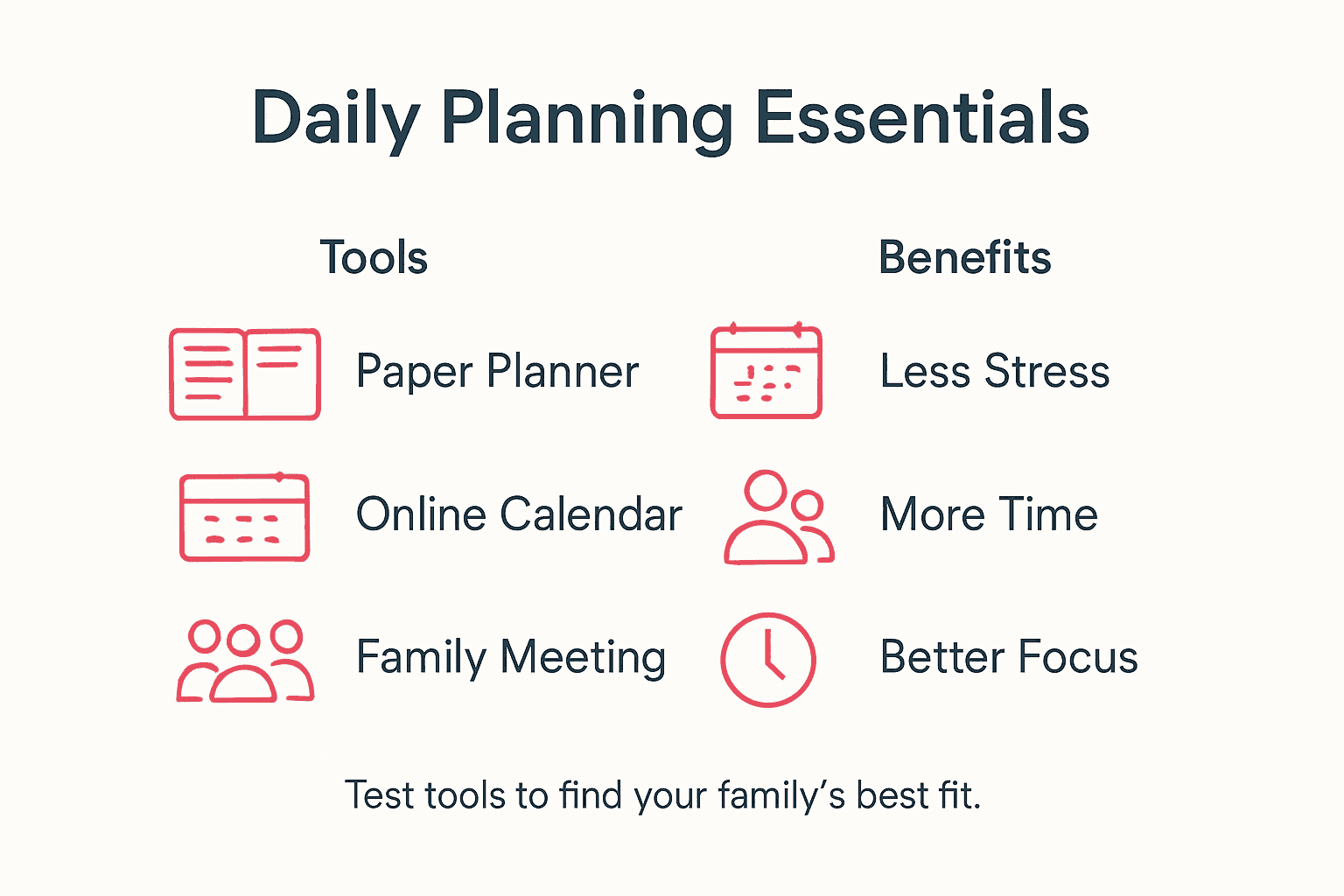
Successful integration of planning tools requires a collaborative approach. Community engagement resources suggest involving all family members in the planning process, which helps build shared responsibility and commitment. Digital tools like shared online calendars, smartphone apps, and centralized family command centers can streamline communication and reduce scheduling conflicts. Physical tools such as color-coded wall planners or magnetic refrigerator calendars also provide visual organization that everyone can easily access and understand.
The key to sustainable planning is finding the right balance between structure and flexibility. Start by identifying your family’s specific pain points—whether it’s morning chaos, after-school activities, or weekend logistics—and design your planning approach around solving those challenges. Some families find success with morning check-ins, while others prefer evening planning sessions. The most effective system is one that feels natural and fits seamlessly into your existing routine, reducing stress rather than creating additional complexity.
Pro tip: Experiment with different planning tools for two weeks, then have a family meeting to discuss what worked and what didn’t, allowing everyone to contribute to refining your organizational system.
Common Pitfalls and How to Avoid Them
Daily planning can easily become overwhelming when approached without strategy. Comprehensive analysis of planning mistakes reveals that most people sabotage their own productivity through predictable and avoidable errors. Recognizing these patterns is the first step toward creating more effective and sustainable planning systems.
One of the most significant planning pitfalls is overplanning or creating unrealistic expectations. Many individuals load their schedules with too many tasks, leading to frustration and burnout. Evidence-based project management research suggests implementing a realistic buffer time between tasks and being honest about your actual capacity. This means carefully selecting 3-5 meaningful priorities instead of cramming 15-20 tasks into a single day, which typically results in minimal actual progress.
Another critical mistake is rigid planning that doesn’t account for life’s inherent unpredictability. Successful planners understand the importance of flexibility—creating structures that can bend without breaking. This involves developing contingency plans, learning to reschedule without guilt, and understanding that perfect execution is less important than consistent effort. Consider using techniques like time blocking with built-in margin, allowing space for unexpected interruptions or moments of inspiration without derailing your entire system.
Compare common pitfalls in daily planning and recommended solutions:
| Common Pitfall | Impact on Productivity | Solution Strategy |
|---|---|---|
| Overplanning | Leads to burnout, low progress | Set 3–5 realistic priorities |
| Rigid Scheduling | Increases frustration, wasted time | Build flexibility, allow rescheduling |
| Lack of Buffer Time | Frequent task overruns | Add 25% schedule margin |
Pro tip: Create a daily “grace quota” by intentionally leaving 25% of your schedule open for unexpected events, spontaneous opportunities, or needed rest.
Take Control of Your Day and Transform Your Home Life
If you find yourself overwhelmed by daily chores, unpredictable schedules, or conflicting family priorities the article perfectly highlights the true challenge faced by many families: creating a flexible daily planning system that actually works. You want to reduce stress and chaos while focusing on what truly matters. That means embracing simple, realistic planning methods like prioritization and reflection instead of overloading your day with endless tasks.
At Its A Southern Life Yall we understand how critical it is to have practical tools and strategies tailored for busy households seeking work-life balance. Discover proven organization hacks, productivity tips, and home management systems designed to help you build daily routines that stick. From managing digital calendars to organizing family responsibilities with rotating systems explore our expert advice that turns planning myths into peaceful, productive days.
Start today and see how small changes in your approach can lead to big improvements in your family’s harmony and happiness.
Frequently Asked Questions
What is daily planning and how can it benefit my life?
Daily planning is a strategic approach to organizing your time and priorities, which can significantly enhance your productivity, reduce stress, and create a sense of control in your life. It helps in identifying key tasks, allocating time effectively, and reflecting on your progress, ultimately leading to improved balance between home and work responsibilities.
How can I integrate daily planning into my busy routine?
You can integrate daily planning by selecting tools that suit your family’s needs, such as shared online calendars or wall planners. Establish regular planning sessions, whether in the morning or evening, to discuss schedules and priorities among family members. This ensures everyone is on the same page and helps distribute responsibilities effectively.
What are some common pitfalls in daily planning, and how can I avoid them?
Common pitfalls include overplanning, rigid scheduling, and lack of buffer time. To avoid these, set realistic priorities, build flexibility into your schedule, and leave portions of your day open for unexpected events. This can help prevent burnout and maintain a sustainable planning system.
What daily planning methods work best for families?
Popular daily planning methods for families include digital collaborative tools like shared calendars, centralized wall calendars, planning whiteboards, and the rotating responsibility system. Each method offers unique benefits, such as improved communication, enhanced visibility, and teaching organization skills among family members.