Why planners are essential for busy families in 2026
TL;DR:
- Families who plan together experience less chaos and stronger communication.
- Hybrid planners combining paper and digital tools suit different family needs best.
- Proper planning should include family input, weekly reviews, and built-in flexibility.
Most parents assume that adding a planner to their already full lives will just create one more thing to manage. But here’s what the research actually shows: families who plan together experience less chaos, stronger communication, and more time for the moments that matter most. Think of a planner not as another to-do list, but as a compass that points your whole family in the same direction. This guide walks you through the science behind planning, the best planner types for real family life, how to build routines that stick, and how to avoid the trap of over-scheduling. You deserve a home life that feels peaceful, not frantic.
Table of Contents
- The science behind planning success for families
- Types of planners: Paper, digital, and hybrid strategies
- How planners transform daily routines for busy families
- Avoiding the pitfalls: How not to over-plan and raise anxiety
- The uncomfortable truth: Most ‘planning’ advice misses what really matters
- Level up your family organization with proven systems
- Frequently asked questions
Key Takeaways
| Point | Details |
|---|---|
| Evidence-based benefits | Using planners measurably boosts family engagement, performance, and stress reduction. |
| Choose your style | Paper, digital, or hybrid planners all offer unique advantages for busy families. |
| Apply to real life | Planners help coordinate routines, track priorities, and minimize friction in daily tasks. |
| Beware over-scheduling | Too many activities can create stress—use planners to create healthy boundaries. |
| Family buy-in matters | Success comes from shared priorities and flexibility, not simply buying a new tool. |
The science behind planning success for families
Let’s be honest. Most of us are running on instinct, reacting to whatever the day throws at us. But proactive planning changes that pattern in measurable ways. When families build intentional planning habits, the results show up not just in productivity but in emotional wellbeing too.
A meta-analysis of 32 studies found that time management, including planning and prioritization, correlates with academic performance at r=0.38 and engagement at r=0.29. While those numbers come from academic research, they translate directly into family life. When everyone knows the plan, kids engage more, parents stress less, and the whole household runs smoother.
Think of it like planting seeds. You cannot grow a garden by scattering seeds randomly and hoping for the best. You plant with intention, water consistently, and watch things bloom. Planning works the same way. It is the intentional act that makes growth possible.
“Empirical data links planning and time management to better engagement and performance. Families can apply this by aligning goals through shared planning.” PMC study
Here is a quick look at what the data shows when families plan versus when they do not:
| Outcome | With planning | Without planning |
|---|---|---|
| Family communication | Consistent and clear | Reactive and fragmented |
| Missed commitments | Rare | Frequent |
| Child engagement | Higher | Lower |
| Parental stress | Reduced | Elevated |
| Goal alignment | Shared and visible | Unclear or individual |
The evidence-backed benefits for families who embrace time management for families are real and repeatable:
- Improved harmony and communication because everyone sees the same plan
- Higher personal achievement for both kids and adults who track goals
- Less confusion and stress when routines are written down and shared
Planning is not about control. It is about creating space for your family to breathe, connect, and thrive together.
Types of planners: Paper, digital, and hybrid strategies
Understanding why planners work leads us to a critical question: which type fits your family? Not every family is the same, and the best planner is the one your family will actually use.
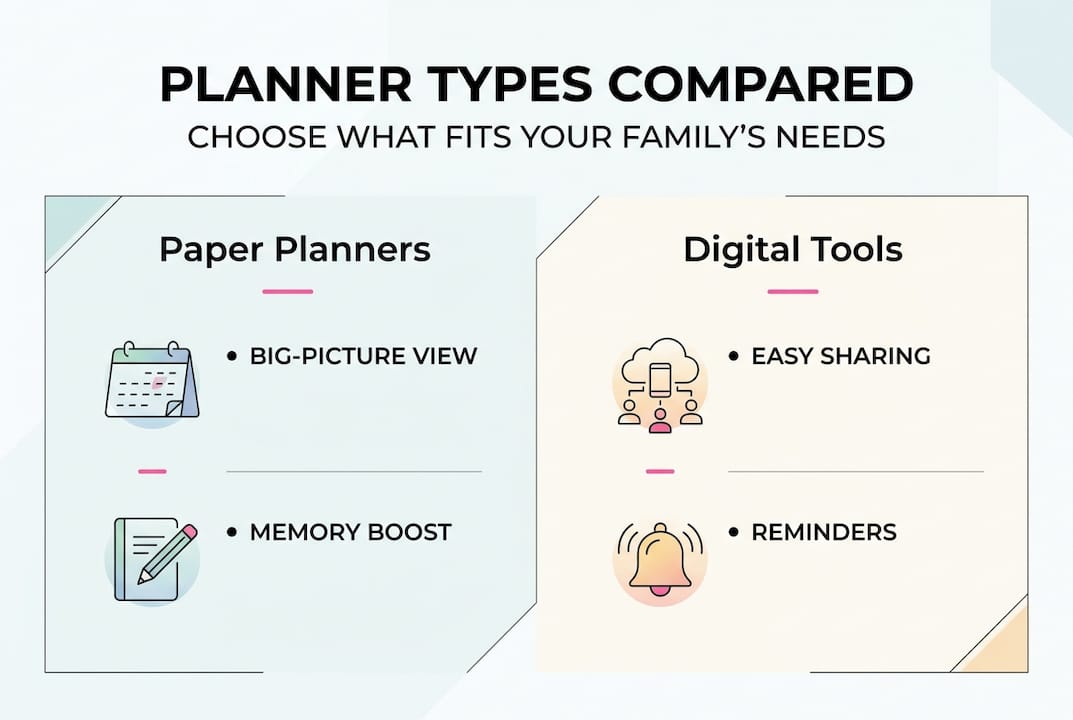
Paper planners support visual big-picture thinking and improve memory retention. Writing things by hand engages the brain differently than typing, which means kids and adults are more likely to remember what they have written. Digital planners, on the other hand, excel at real-time sharing and automated reminders, though they do carry the risk of screen distraction pulling attention away from the task at hand.
A hybrid approach, using a physical planner for weekly overviews and a digital calendar for shared alerts, gives your family the best of both worlds. Many families find that visual planner collaboration keeps everyone on the same page without the overwhelm of a purely digital system.
Pro Tip: Try a hybrid setup for 30 days before committing. Use a paper planner for Sunday planning sessions and a shared digital calendar for weekday reminders. Most families find this combination reduces missed appointments by a noticeable margin.
Here is a simple comparison to help you decide:
| Feature | Paper planner | Digital planner | Hybrid |
|---|---|---|---|
| Big-picture thinking | Excellent | Moderate | Excellent |
| Shared access | Limited | Excellent | Excellent |
| Memory retention | High | Lower | High |
| Distraction risk | Low | Higher | Low to moderate |
| Flexibility | Moderate | High | High |
When does each style work best? Here is a quick guide:
- Paper planners shine during busy morning routines when you need a quick visual check without unlocking a phone
- Digital planners are ideal for managing after-school chaos with real-time updates across multiple devices
- Hybrid systems work beautifully for vacation planning, big family events, and long-term goal setting
Explore time management tools to find the right fit, and consider how advantages of meal planning can be built right into your chosen system for even greater efficiency.
How planners transform daily routines for busy families
Once you know your ideal planner format, the next step is applying it to real family life. Let’s look at what this actually looks like day to day.
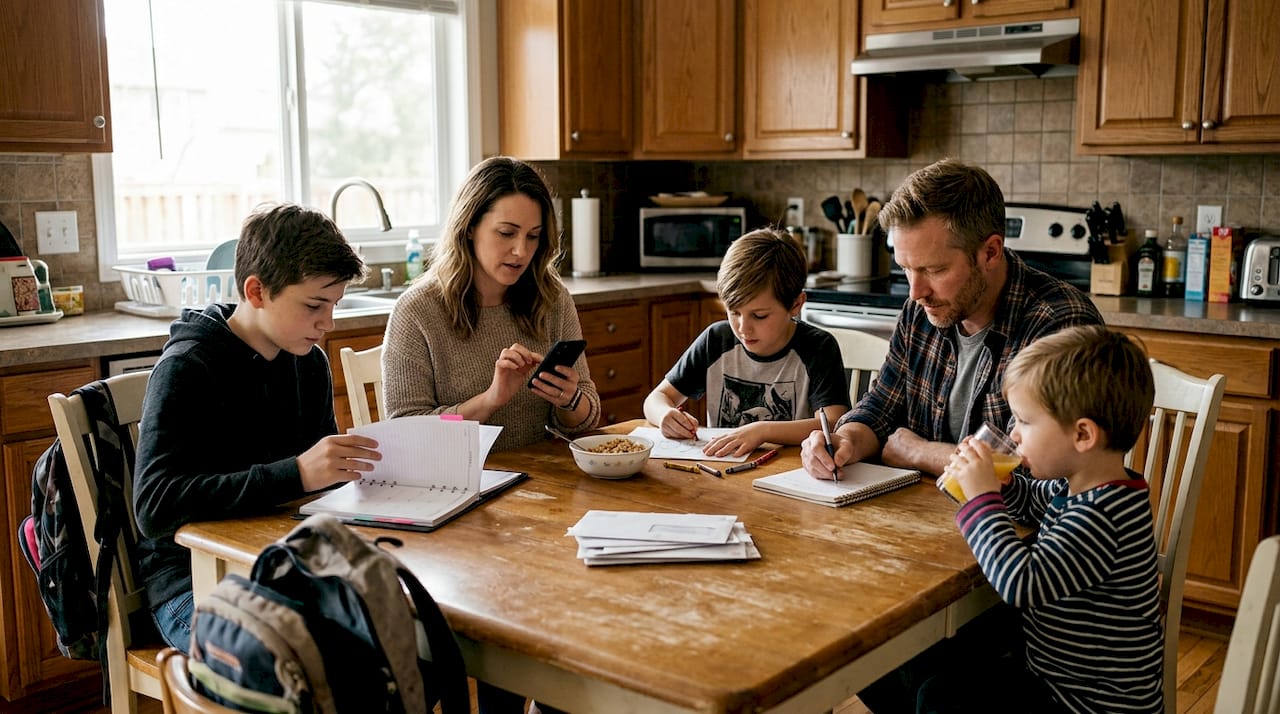
Imagine a family with three kids, two working parents, soccer practice, homework, and a weekly grocery run. Without a planner, mornings are a scramble, evenings are reactive, and someone always forgets something. With a planner, that same family has a morning checklist, a shared weekly calendar, and a rhythm that reduces friction before it starts.
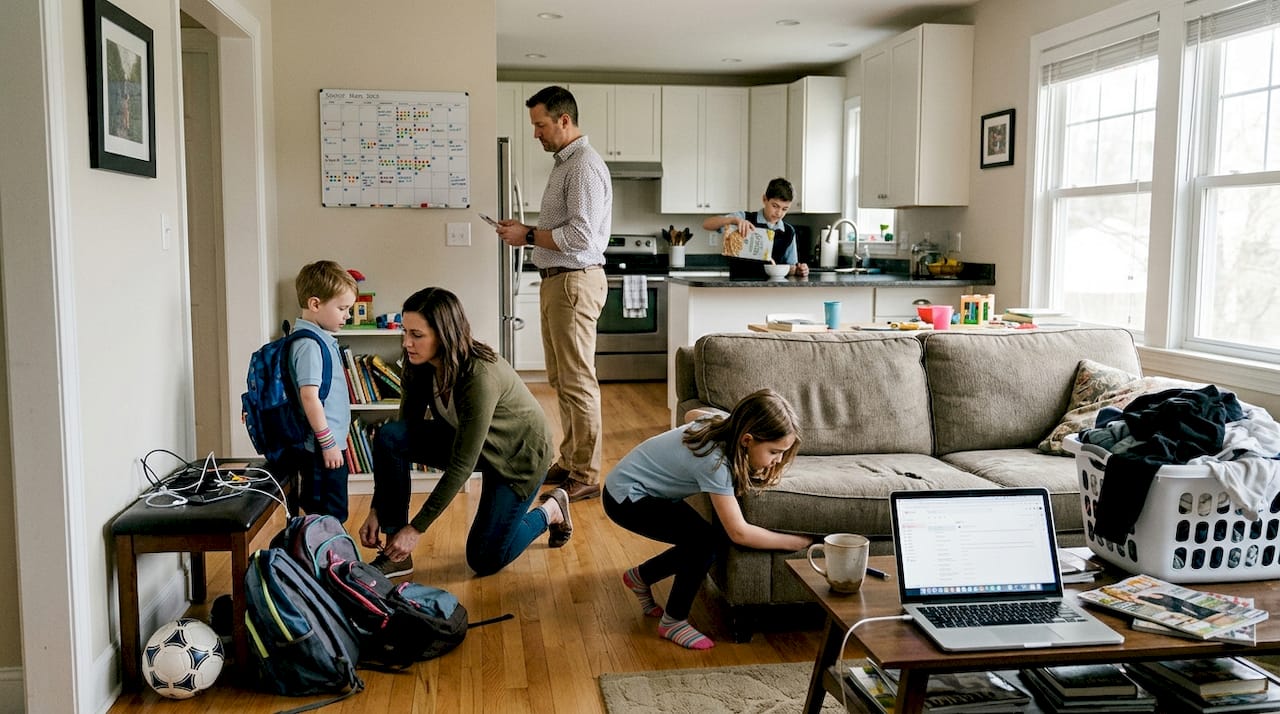
As Cleverly Kindred notes, multiple kids require layered scheduling and progress tracking, and a high workload without planning tools amplifies family conflict. The planner becomes the peacemaker in your home.
Here are the key steps for setting up family routines with planners:
- Start with a weekly family meeting. Review the upcoming week together every Sunday. Let each person share their priorities.
- Map out non-negotiables first. School, work, and recurring appointments go in before anything else.
- Add in buffer time. Leave at least one open slot per day for the unexpected, because life always brings surprises.
- Assign ownership. Each family member, including kids, should have at least one task they are responsible for tracking.
- Review and adjust weekly. What worked? What did not? Adjust without guilt.
Pro Tip: Use your weekly review to sync big-picture goals with daily tasks. A morning planning routine of just 30 minutes can set a calm, intentional tone for the entire day.
You can also use block scheduling to group similar tasks together, and build in dedicated time for meal planning for families so dinner does not become another daily decision that drains your energy.
Avoiding the pitfalls: How not to over-plan and raise anxiety
But planners only bring balance if used wisely. Here is what to watch out for.
There is a real danger in turning your planner into a pressure machine. Over-scheduling can actually heighten anxiety even when your calendar looks organized. The goal is not a full schedule. It is a purposeful one.
Watch for these warning signs that your family is over-scheduled:
- Kids are consistently exhausted or irritable after activities
- You feel guilty on days when nothing is planned
- Family meals together have become rare
- There is no unstructured play or downtime in the week
- You are saying yes to everything out of obligation, not joy
“A packed calendar is not the same as a productive life. Prioritize ruthlessly, and protect your family’s white space.”
The antidote is intentionality. Use your planner to say no just as much as you use it to say yes. Block out rest time the same way you block out soccer practice. Protect it.
Here is how to use your planner to create balance rather than burnout:
- Prioritize by values, not urgency. Ask what truly matters to your family this season.
- Delegate tasks. Kids can own their own schedules with a little guidance.
- Build white space. Empty slots are not wasted time. They are breathing room.
- Review boundaries weekly. If a commitment no longer serves your family, give yourself permission to let it go.
Resources on simplifying schedules and time blocking can help you design a week that energizes rather than depletes your family.
The uncomfortable truth: Most ‘planning’ advice misses what really matters
Here is a hard-won perspective most articles will not tell you. The planner itself is not the solution. We have seen families buy the most beautiful, color-coded, leather-bound planners and still feel completely overwhelmed two weeks later. Why? Because the tool never had family buy-in.
Real planning success comes from three things most advice skips entirely. First, everyone in the family needs a voice in the plan. Second, weekly reviews are non-negotiable, not optional. Third, flexibility must be built in from the start, because rigid plans break under the pressure of real life.
Most productivity advice focuses on systems and tools. But what families actually need is agreement on shared priorities and the grace to recalibrate when things shift. Choose simplicity over what I call “productivity theater,” the performance of being organized without the peace that should come with it. A planner that serves your family looks different from one that impresses other people. Build the one that works for you.
Level up your family organization with proven systems
If you are ready to make planning work for your family, here is how to start. Our site is built for exactly where you are right now: busy, well-meaning, and ready for a system that actually sticks. Whether you want to stay organized with a full home management approach or explore the types of home organization that fit your family’s lifestyle, we have practical, tested resources waiting for you. You can also identify and eliminate the productivity killers quietly draining your family’s time and energy. Start with one system, build from there, and watch your home transform.
Frequently asked questions
What’s the main benefit of using a planner for families?
Planners help families reduce confusion, remember important tasks, and improve communication, resulting in smoother everyday routines. Research across 32 studies confirms that planning directly correlates with better engagement and performance at home and in school.
Which is better for families: paper or digital planners?
Paper planners support big-picture thinking and memory retention, while digital planners excel at sharing and reminders. Most families benefit most from a hybrid approach that combines both strengths.
How do I avoid over-scheduling my family when using a planner?
Prioritize what truly matters, protect open time in your schedule, and use your planner to set boundaries and say no when needed. Over-scheduling raises anxiety even when the calendar looks organized, so less is genuinely more.
What’s one quick step to get started with successful family planning?
Hold a weekly family meeting to review the calendar together, set shared priorities, and make sure every family member’s needs are heard and considered.
Recommended
- Guide to the Role of Proactive Planning –
- Role of automation at home for busy families in 2026 –
- How to Start a Family Blog for Busy Parents in 2026 –
- Meal Planning for Families: Your Guide –
- Storage solutions in moving: your 2026 family guide
Looking for the planner to start with? The Sunday Blueprint is the simplest place to begin, and it takes about an hour a week.