

Parental Time Management Types for Busy Families
Over 80 percent of American parents say managing their family’s schedule is one of their biggest daily stressors. Juggling work, school, activities, and self care can leave even the most organized mothers feeling stretched thin. Smart time management is not just about lists and calendars—it is about creating systems that help families thrive. Discover how proven methods can make family life run smoother and help American parents reclaim precious moments together.
Table of Contents
- Defining Parental Time Management Methods
- Popular Time Management Types For Parents
- Key Tools And Techniques For Families
- Common Challenges And How To Overcome Them
- Mistakes Parents Often Make With Time Management
Key Takeaways
| Point | Details |
|---|---|
| Effective Time Management | Parental time management involves structured scheduling, flexible adaptation, and priority-based allocation to create balanced family dynamics. |
| Role of Technology | Digital tools such as shared calendars and task management apps enhance coordination and streamline family responsibilities. |
| Common Challenges | Parents often face emotional overload and communication breakdowns that complicate time management, requiring proactive strategies to overcome. |
| Avoiding Mistakes | Common mistakes include overcommitting, neglecting self-care, and failing to establish consistent routines, which can lead to burnout and family stress. |
Defining Parental Time Management Methods
Parental time management is more than just scheduling activities. It’s a strategic approach to organizing family life, allocating resources, and creating intentional experiences that support both parent and child development. Time investment strategies reveal that how parents structure their time significantly impacts family dynamics and individual well-being.
At its core, parental time management involves three fundamental methods: structured scheduling, flexible adaptation, and priority-based allocation. Structured scheduling means creating predictable routines where specific times are designated for work, family activities, personal care, and children’s needs. Flexible adaptation recognizes that no plan is perfect and requires parents to adjust schedules dynamically based on unexpected events or changing family circumstances.
Research from Harvard University’s Faculty Resources highlights that successful time management for parents isn’t about rigidity, but about creating systems that support both productivity and family connection. Priority-based allocation means consciously choosing activities that align with family values and individual growth, rather than simply filling time with random tasks.
Pro Tip: Realistic Planning: Create a weekly family schedule that includes buffer time between activities, allowing for unexpected moments and reducing stress when plans inevitably shift.
Key components of effective parental time management include:
- Clear communication about schedules
- Shared responsibility among family members
- Realistic goal setting
- Regular schedule review and adjustment
- Intentional quality time allocation
Popular Time Management Types for Parents
Parents today face unprecedented challenges in balancing work, family, and personal responsibilities. Time management strategies for online learners reveal several key approaches that can help families navigate complex schedules and competing priorities.
Four primary time management types emerge for parents: the Structured Planner, Flexible Adapter, Prioritization Expert, and Technology Integrator. The Structured Planner creates detailed schedules with specific time blocks for work, childcare, personal activities, and household tasks. They rely on calendars, color-coded systems, and rigorous routine maintenance to maintain family efficiency.
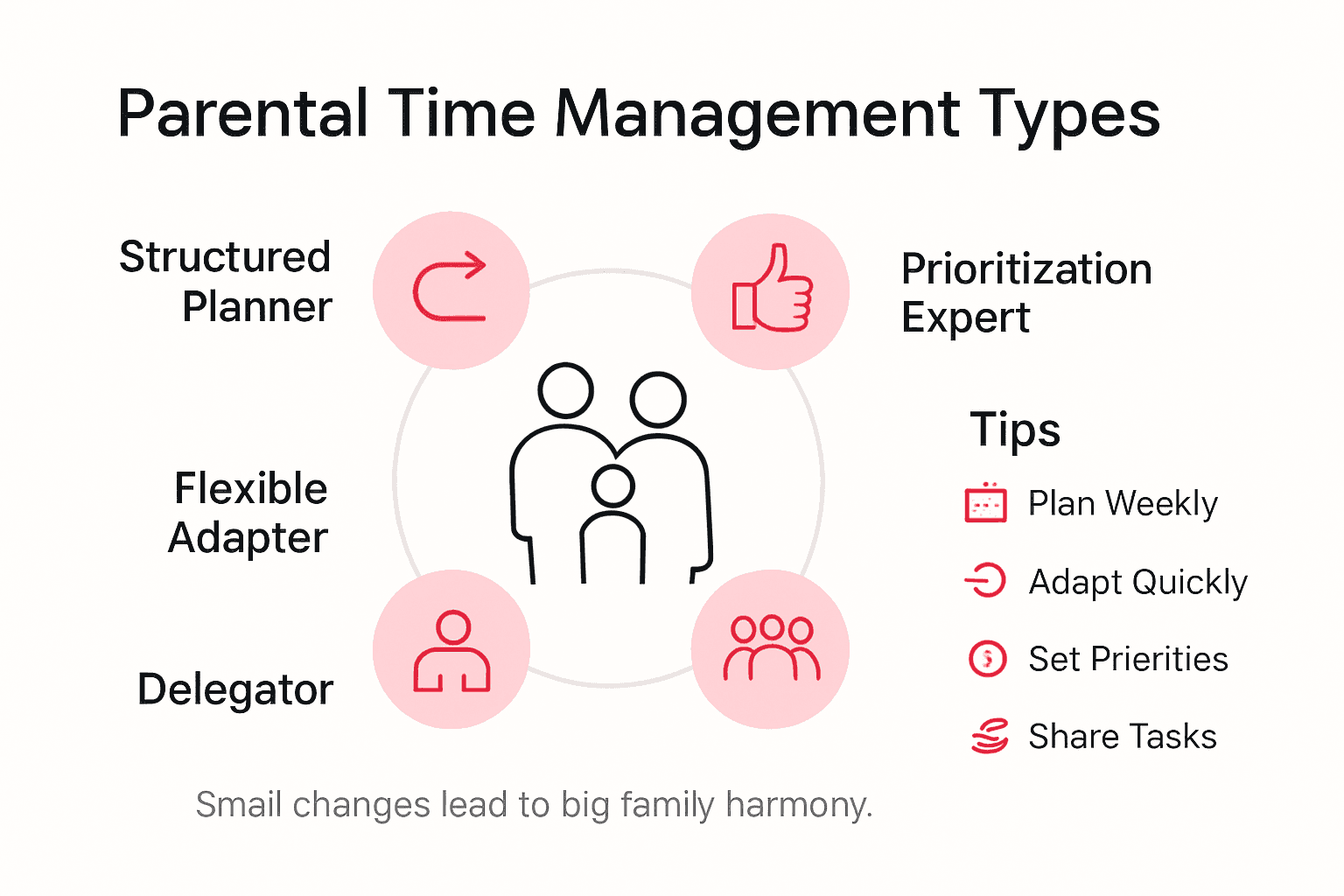
The Flexible Adapter recognizes that family life rarely follows a perfect script. Effective time management techniques emphasize the importance of building adaptable systems that can shift quickly when unexpected challenges arise. These parents maintain core routines while remaining open to spontaneous adjustments, ensuring family needs are met without becoming overwhelmed.
The Prioritization Expert focuses on strategic decision making, consciously selecting activities that align with family values and individual growth. They constantly evaluate time investments, ensuring that each commitment serves a meaningful purpose. The Technology Integrator leverages digital tools, apps, and shared platforms to streamline communication, track schedules, and distribute family responsibilities.
Pro Tip: Strategic Flexibility: Design a weekly family schedule with 20% buffer time, allowing room for unexpected events without completely disrupting your planned routine.
Key characteristics of successful parental time management include:
Here’s a comparison of popular parental time management types and their distinctive strengths:
| Time Management Type | Key Advantage | Common Tool or Technique |
|---|---|---|
| Structured Planner | Predictable daily routines | Color-coded digital calendars |
| Flexible Adapter | Quick response to change | Adjustable weekly templates |
| Prioritization Expert | Focus on what matters most | Task ranking apps |
| Technology Integrator | Streamlined coordination | Shared family productivity apps |
- Consistent communication
- Realistic goal setting
- Shared family responsibilities
- Adaptable planning systems
- Regular schedule review and adjustment
Key Tools and Techniques for Families
Successful family time management requires a strategic approach that combines technological tools, communication strategies, and intentional planning. Time management best practices for parents demonstrate that the right combination of techniques can transform chaotic family schedules into streamlined, productive systems.

Digital tools play a crucial role in modern family time management. Shared Calendar Applications allow families to synchronize schedules, track appointments, and coordinate activities in real time. Collaborative apps like Google Calendar or Cozi enable multiple family members to input and view schedules, ensuring everyone stays informed and aligned. Task Management Platforms such as Trello or Asana can help families distribute household responsibilities, track chores, and maintain accountability.
Effective time management techniques emphasize the importance of creating dedicated spaces and establishing clear communication channels. Physical tools like color coded whiteboards, magnetic family planners, and centralized command centers can provide visual tracking of family schedules and responsibilities. These analog systems complement digital tools, offering a tangible way to manage family logistics.
Communication technologies have revolutionized family coordination. Group messaging apps, shared note platforms, and family communication hubs allow instant updates, quick check-ins, and seamless information sharing. Parents can leverage these tools to delegate tasks, send reminders, and maintain consistent family alignment.
Pro Tip: Digital Detox Strategy: Designate one hour each evening as a technology free family time, allowing for genuine connection and reducing digital overwhelm.
Key tools for family time management include:
The following table provides examples of effective technology tools and their main benefits for busy families:
| Tool Type | Example Application | Main Benefit |
|---|---|---|
| Shared Calendar | Google Calendar | Unified family event tracking |
| Task Organizer | Trello | Visual household task management |
| Communication App | GroupMe | Instant updates for all members |
| Visual Planning Board | Magnetic wall board | At-a-glance daily planning |
- Shared digital calendars
- Family communication apps
- Task tracking platforms
- Visual planning boards
- Collaborative productivity software
Common Challenges and How to Overcome Them
Parental time management presents complex challenges that extend far beyond simple scheduling. Psychological research on working parents reveals profound emotional struggles that impact families’ ability to effectively organize their time and maintain productivity.
One primary challenge is Emotional Overload. Parents frequently experience overwhelming feelings of guilt, stress, and inadequacy when attempting to balance professional responsibilities with family needs. This emotional burden can create paralysis, making time management seem impossible. Many parents struggle with unrealistic expectations, comparing themselves to seemingly perfect social media representations of family life and feeling constantly behind.
Parental time investment research highlights significant variations in how families approach time management based on education levels and personal resources. Common obstacles include unpredictable work schedules, competing family member needs, limited personal time, and insufficient support systems. Parents often find themselves caught in a continuous cycle of reactive management rather than proactive planning.
Communication breakdowns represent another substantial challenge. When family members operate with misaligned expectations and inconsistent communication strategies, time management becomes exponentially more difficult. Successful families develop collaborative approaches that involve all members in planning, responsibility sharing, and mutual accountability.
Pro Tip: Emotional Reset Strategy: Schedule a weekly 30-minute family meeting where everyone can openly discuss schedules, challenges, and potential adjustments without judgment.
Key strategies for overcoming time management challenges include:
- Establishing clear family communication protocols
- Creating flexible but consistent routines
- Developing shared responsibility models
- Practicing self compassion
- Regularly reassessing and adjusting family systems
Mistakes Parents Often Make with Time Management
Time management techniques for busy parents reveal that most parental scheduling challenges stem from fundamental misconceptions about organization and personal capacity. Parents frequently underestimate the complexity of managing multiple competing priorities while maintaining individual and family well-being.
One significant Overcommitment Trap involves saying yes to every opportunity without considering total family bandwidth. Parents often volunteer for school activities, work projects, and social commitments without realistically assessing time and energy requirements. This leads to chronic exhaustion, reduced quality of interactions, and increased family stress. The inability to set clear boundaries transforms time management from a strategic process into a reactive survival mechanism.
Productivity strategies for parents highlight another critical mistake: failing to establish consistent routines. Many families operate in constant emergency mode, jumping from one urgent task to another without developing sustainable systems. This approach creates unpredictability, increases mental load, and prevents families from developing efficient long-term organizational strategies.
Additionally, parents often neglect personal time and self-care, mistakenly believing that constant sacrifice equals effective parenting. This misconception leads to burnout, decreased patience, and reduced overall family effectiveness. Successful time management requires recognizing that personal restoration is not selfish but essential for maintaining family harmony.
Pro Tip: Boundary Setting: Create a monthly family calendar review where everyone discusses upcoming commitments and collectively decides what activities truly align with family goals.
Common time management mistakes include:
- Overcommitting without assessing capacity
- Lacking consistent family routines
- Ignoring personal self-care needs
- Failing to delegate responsibilities
- Neglecting regular schedule reassessment
Master Parental Time Management and Reclaim Family Harmony
Balancing the demands of parenthood with work and personal life can feel overwhelming when you’re caught in the cycle of emotional overload and overcommitment. This article highlights key challenges like unpredictable schedules and the need for flexibility through concepts such as the Flexible Adapter and Prioritization Expert. If you are striving to create clear communication, shared responsibilities, and adaptable routines in your household, understanding these parental time management types is the first step toward lasting change.
Discover proven organization hacks and productivity tips designed specifically for busy families. Here you will find practical home management systems, time management tools, and simple living strategies that turn chaotic days into peaceful, streamlined family experiences. Start transforming your home environment and daily routine right now by exploring time management tools and easy-to-implement productivity tips. Your family deserves a calm, organized life that supports every member’s growth and happiness.
Frequently Asked Questions
What are the different types of parental time management?
There are four primary types of parental time management: Structured Planner, Flexible Adapter, Prioritization Expert, and Technology Integrator. Each type has its own strategies for managing time effectively within family life.
How can structured scheduling benefit busy families?
Structured scheduling helps families create predictable routines, allowing them to allocate time for work, personal care, and family activities. This predictability reduces stress and enhances family efficiency.
What tools can parents use to streamline family time management?
Parents can use shared calendar applications, task management platforms, and visual planning tools. Digital tools like Google Calendar and Trello help families coordinate schedules and responsibilities effectively.
How can families overcome communication challenges in time management?
Establishing clear family communication protocols, involving all members in planning, and holding regular schedule reviews can help address communication breakdowns and improve time management within the family.
Recommended
- Time Blocking Guide for Parents – It’s a Southern Life Ya’ll
- 7 Time Management Tips for Families to Balance Life – It’s a Southern Life Ya’ll
- Understanding Productivity Tips for Parents Guide – It’s a Southern Life Ya’ll
- Effective Ways to Manage Homework Time for Families – It’s a Southern Life Ya’ll
- Understanding the Role of Time Management Tools – Optio Station: Best Project Management App for Prioritization
Want a little more help with this? I made a free 30-Minute Reset that pairs right up with this post — y’all can grab it over on my Free Resources page.