How to Create a Peaceful Home for Your Family
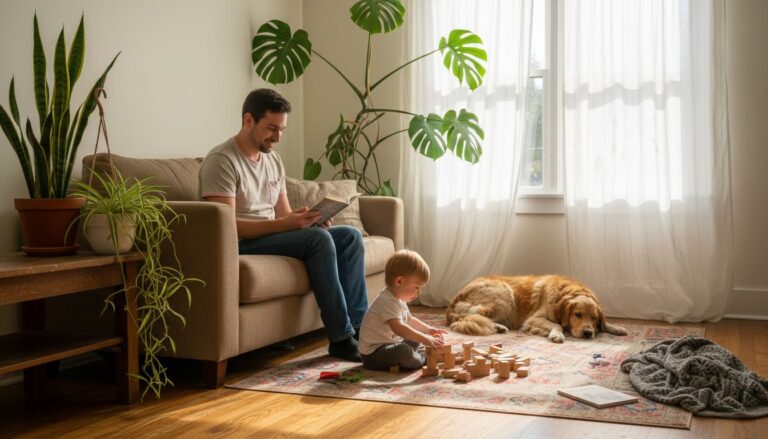
Family life at home should feel like a safe retreat, yet so many households are stuck in cycles of clutter, stress, and constant chaos. Here’s something surprising. Research shows that just decluttering can significantly cut stress levels and improve family connection. Turns out, small changes to your home’s setup do not just make your space look better. They can actually transform how your whole family feels together.
The short answer: A peaceful home comes from fewer things and steadier rhythms, not a bigger house. Clear the clutter first, give the family one calm space that stays that way, then anchor the day with a simple morning and evening routine. Small changes to the setup do more for how everyone feels than any single deep clean.
Table of Contents
- Step 1: Assess Your Current Home Environment
- Step 2: Declutter And Organize Your Space
- Step 3: Create Calming Spaces For Family Activities
- Step 4: Establish Peaceful Routines For Daily Life
- Step 5: Incorporate Natural Elements For Serenity
Quick Summary
| Key Point | Explanation |
|---|---|
| 1. Assess your home environment | Evaluate emotional and physical landscapes to identify stress points and create a soothing atmosphere in your home. |
| 2. Declutter strategically | Focus on one area at a time to remove clutter, enhancing mental clarity and tranquility in your space. |
| 3. Design calming spaces | Create areas that invite connection, utilizing soft colors, comfortable seating, and appropriate lighting. |
| 4. Establish daily routines | Develop consistent family routines to reduce chaos and improve communication, making transitions smoother for everyone. |
| 5. Integrate natural elements | Bring in plants, natural colors, and textures to foster calmness and enhance overall well-being in your home. |
Step 1: Assess Your Current Home Environment
Creating a peaceful home starts with an honest evaluation of your current living space. Understanding the emotional and physical landscape of your home provides the critical first step toward transforming your environment into a sanctuary of calm and connection. Read our guide on family dynamics to support this assessment process.
Begin by walking through each room in your home with a fresh perspective. Observe the emotional energy present in each space. Do conversations feel tense? Are there areas that consistently trigger stress or conflict? Notice the physical clutter, wall colors, furniture arrangement, and how these elements might contribute to family dynamics. Some spaces might feel chaotic while others feel more peaceful.
Carefully document your observations. Consider creating a simple home environment journal where you record your findings. Note areas of tension, potential sources of stress, and moments of existing harmony. Pay attention to how family members interact in different rooms. The kitchen might be a hub of connection, while the living room could feel disconnected. Your goal is to develop a comprehensive understanding of your home’s current emotional and physical landscape.
Here is a checklist table to help you assess the current emotional and physical state of your home environment, ensuring a thorough and mindful review.
| Assessment Area | What to Look For | Notes/Questions to Ask |
|---|---|---|
| Emotional Energy | Is the space tense, peaceful, or chaotic? | How do conversations feel in this room? |
| Physical Clutter | Is clutter present on surfaces or floors? | Which items create the most mess? |
| Wall Colors & Lighting | Are colors and lighting soothing or harsh? | Does lighting feel comfortable? |
| Furniture Arrangement | Does arrangement support connection or barriers? | Can people easily interact here? |
| Family Interactions | Do people connect or argue in this space? | Which rooms feel disconnected? |
| Individual Perspectives | How does each member feel about this space? | Any specific requests or sensitivities? |
| Moments of Peace | Are there spaces that already feel calming? | What makes these areas work better? |
Listen to your family members during this assessment. Ask open ended questions about how they experience the home environment. What makes them feel comfortable? What areas create stress? Their perspectives will provide invaluable insights that your personal observations might miss. Some family members might feel overwhelmed by clutter, while others might be more sensitive to noise levels or lighting.
According to the American Psychological Association, understanding home functioning is crucial for creating a supportive environment. By systematically assessing your current home atmosphere, you’re laying the groundwork for meaningful, positive changes that will benefit everyone in your household.
Successful completion of this step means you have a clear, compassionate understanding of your home’s current state. Your assessment should reveal:
- Specific areas of emotional and physical stress
- Potential sources of family tension
- Existing moments of connection and peace
- Individual family member perspectives on home environment
Remember, this assessment is not about judgment but about understanding. Approach the process with curiosity and openness, recognizing that every home has room for improvement and healing.
Step 2: Declutter and Organize Your Space
Decluttering transforms your home from a chaotic space into a peaceful sanctuary. After assessing your environment, it’s time to strategically reduce physical and emotional clutter that disrupts family harmony. Learn more about clearing home clutter to support this transformative process.
Start by establishing a systematic approach to decluttering. Select one room or area at a time, preventing overwhelm and creating manageable progress. Avoid tackling the entire house simultaneously, which can lead to frustration and abandoned efforts. Instead, create a realistic timeline where you dedicate focused periods to specific spaces. For most families, dedicating 2-3 hours on weekends works effectively.
Research from the National Institutes of Health indicates that cluttered environments significantly increase stress levels. By methodically removing unnecessary items, you’re not just organizing physical space but creating mental clarity for your entire family. Begin with visible surfaces like countertops, tables, and floors.
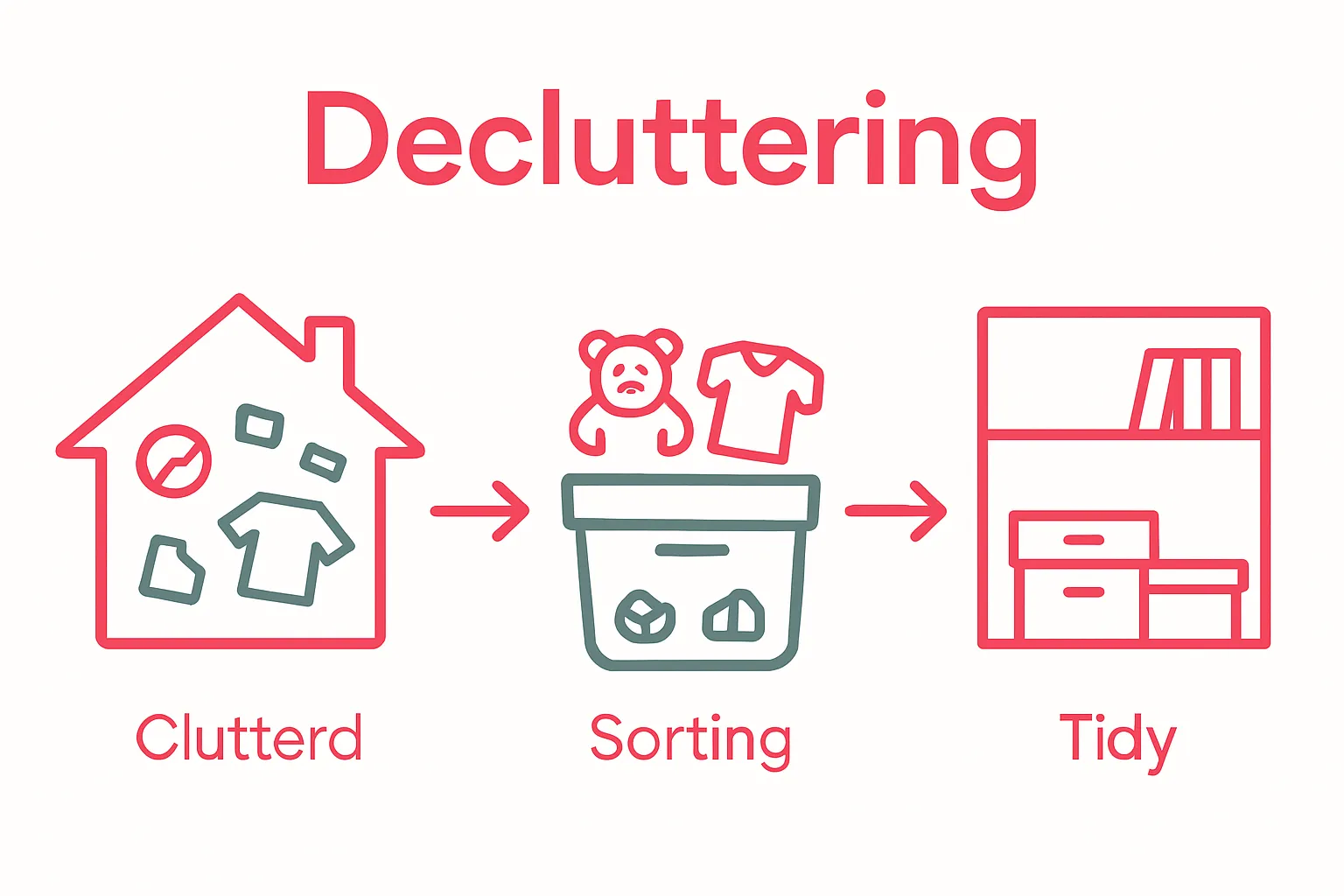 Sort items into three primary categories: keep, donate, and discard.
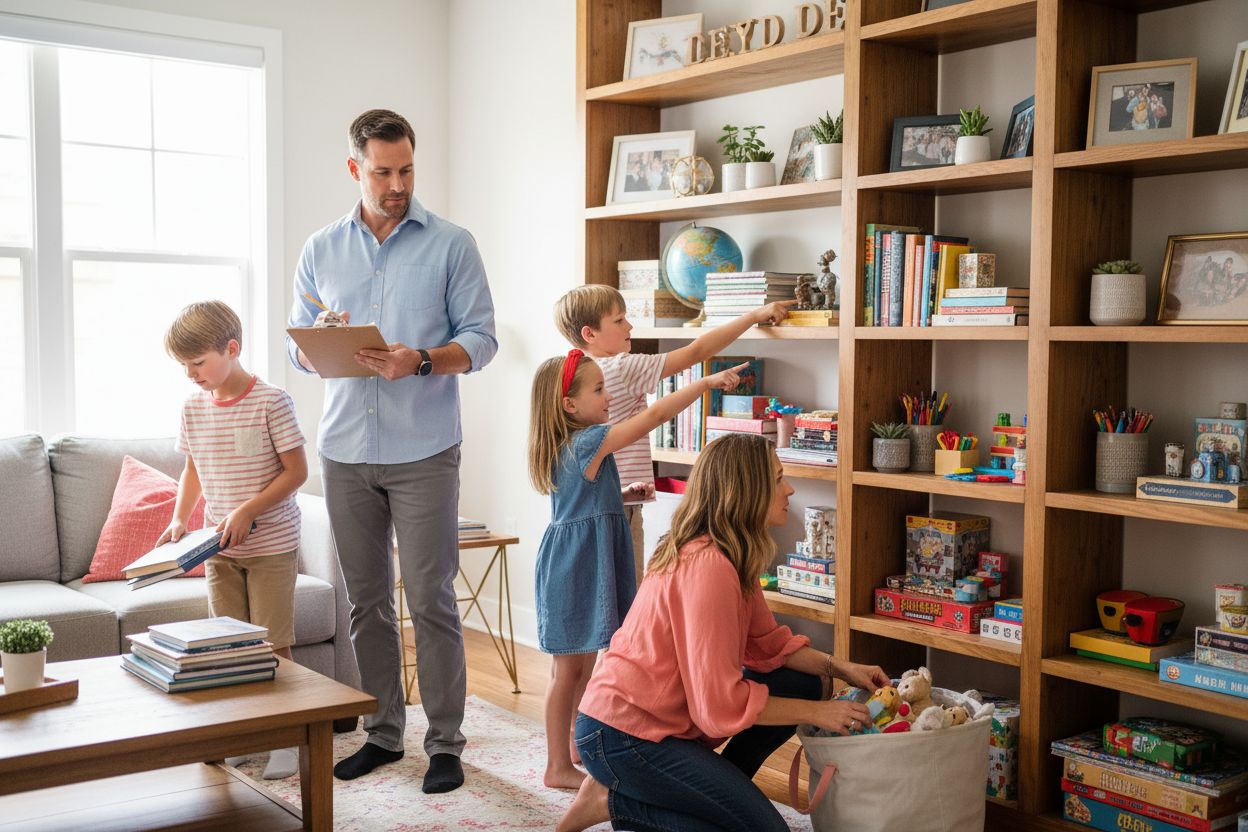
Involve your entire family in this process to create shared responsibility and understanding. Make decluttering a collaborative activity where each family member contributes. Younger children can help sort toys, while teenagers might tackle their personal spaces. Establish clear guidelines about what qualifies as clutter in each category. Some items might hold sentimental value, so approach the process with sensitivity and open communication.
Create designated storage solutions that make organization intuitive. Invest in matching storage containers, labeled boxes, and functional furniture that supports tidiness. The goal is to make maintaining order easier than creating chaos. Consider vertical storage options like shelving units and wall-mounted organizers that maximize space without feeling crowded.
Your decluttering process is complete when you can confidently say:
- Each room feels more spacious and intentional
- Family members can easily find and access their belongings
- Storage solutions are practical and visually appealing
- The space feels lighter and more peaceful
Remember that decluttering is an ongoing practice, not a one-time event.
 Maintain your newly organized spaces by implementing quick daily and weekly maintenance routines that prevent clutter from re-accumulating.
Step 3: Create Calming Spaces for Family Activities
Transforming your home into a peaceful sanctuary requires intentionally designing spaces that encourage connection, relaxation, and meaningful family interactions. Explore our guide on family time activities to inspire your space design approach.
Begin by identifying areas in your home that can be transformed into intentional gathering spaces. This might mean reimagining your living room, creating a dedicated family game corner, or establishing a cozy reading nook that invites quiet conversation and shared experiences. Think beyond traditional room functions and focus on creating environments that naturally encourage togetherness.
Color plays a crucial psychological role in creating calm. Select a palette that promotes relaxation and emotional well-being. Soft, neutral tones like warm grays, muted blues, and gentle greens can create a soothing atmosphere. Avoid harsh, bright colors that might stimulate anxiety or overstimulation. Consider painting walls or adding textiles in calming shades that make everyone feel comfortable and secure.
Research from environmental psychology demonstrates that physical space significantly impacts emotional states. Incorporate natural elements like plants, wooden furniture, and soft textiles to create a sense of warmth and connection. Strategically place comfortable seating that allows family members to interact easily. Avoid arrangements that create physical barriers or make conversation uncomfortable.
Lighting is another critical factor in creating peaceful spaces. Use a combination of ambient and task lighting that can be adjusted based on the activity and mood. Soft, dimmable lights create a more relaxed environment compared to harsh overhead illumination. Consider adding table lamps, floor lamps, and string lights that provide gentle, layered lighting options.
Design spaces with flexibility in mind. A family activity area should easily transition between different types of interactions – from quiet reading to board game nights, from homework sessions to relaxed conversations. Invest in versatile furniture like modular seating, folding tables, and storage ottomans that can quickly adapt to your family’s changing needs.
Your calming space creation is successful when you can observe:
- Family members naturally gravitate to the space
- Conversations flow more easily
- The area feels inviting and comfortable
- Multiple activities can happen simultaneously without conflict
Remember that creating peaceful spaces is an evolving process. Be patient with yourself and remain open to adjusting your design as your family’s needs change.
Use this summary table to compare the main goals for creating calming family activity spaces and specific design strategies you can use for each.
| Calming Space Goal | Design Strategy Example | Key Benefit |
|---|---|---|
| Encourage family connection | Arrange comfortable seating together | Makes conversation and bonding easier |
| Promote relaxation | Use soft, neutral colors | Reduces stimulation and stress |
| Support flexible activities | Choose modular furniture | Adapts space for games, reading, or work |
| Boost warmth and coziness | Add soft textiles and throw blankets | Increases comfort and inviting feel |
| Enhance tranquility and focus | Incorporate plants and natural light | Creates a calming, fresh atmosphere |
Step 4: Establish Peaceful Routines for Daily Life
Creating predictable, supportive daily routines transforms family dynamics from chaotic to harmonious. Routines provide structure, reduce uncertainty, and help every family member feel secure and supported. Learn more about creating effective daily routines to guide your implementation process.
Begin by mapping out your family’s current daily rhythm. Observe the natural flow of activities, identifying moments of stress and potential opportunities for smoother transitions. Morning and evening periods typically require the most strategic planning. Design routines that minimize rush, frustration, and last-minute scrambling. This might mean preparing school bags the night before, setting out clothing in advance, or establishing a consistent bedtime wind-down sequence.
Research from the American Psychological Association highlights that consistent family routines significantly reduce children’s anxiety and improve overall family communication. Create a visual family schedule that everyone can reference. This could be a large wall calendar, a digital shared calendar, or a whiteboard in a central location. Include not just logistical details like school and work schedules, but also dedicated family time, chore responsibilities, and personal activities.
Encourage individual and collective responsibility within these routines. Assign age-appropriate tasks to each family member, rotating responsibilities to prevent monotony. Young children can help set the table, while teenagers might manage meal preparation or laundry. The goal is not perfection, but consistent participation and mutual support. Make these responsibilities feel like contributions to the family’s well-being rather than burdensome chores.
Build flexibility into your routines. While structure is important, rigidity can create additional stress. Allow for spontaneity and understanding when unexpected events disrupt plans. Create backup strategies and communicate openly about schedule changes. Develop a family culture that values adaptability and mutual support during transitions.
Consider implementing a daily or weekly family check-in time. This could be a short morning meeting or a Sunday evening discussion where everyone shares their upcoming week’s challenges and highlights. These intentional communication moments help align expectations, address potential conflicts proactively, and reinforce family connection.
Your peaceful routine establishment is successful when you observe:
- Reduced morning and evening stress
- Increased family communication
- More predictable daily transitions
- Shared responsibility and mutual support
Remember that establishing new routines takes time and patience. Be kind to yourself and your family during this process of creating a more harmonious home environment.

Step 5: Incorporate Natural Elements for Serenity
Bringing nature into your home creates a powerful pathway to tranquility and emotional balance. Natural elements have an extraordinary ability to reduce stress and promote a sense of calm that permeates every family interaction. Learn about stress-reducing natural strategies to complement your serene home design.
Start by introducing living plants throughout your home. Select low-maintenance varieties that thrive indoors and require minimal care. Plants like snake plants, pothos, and spider plants not only purify air but also add a vibrant, calming presence to your living spaces. Place them strategically in areas where family members spend significant time – near living room seating, home office spaces, and bedroom corners. Choose containers that complement your existing decor, creating a seamless integration of natural beauty.
Research from environmental psychology confirms that indoor plants significantly reduce stress and improve overall mental well-being. Beyond greenery, incorporate natural textures and materials that evoke a sense of connection with the outdoors. Wooden furniture, stone coasters, woven baskets, and natural fiber textiles can transform your space. Select materials with soft, organic textures that invite touch and create a sense of warmth.
Maximize natural light in your home, which plays a crucial role in creating a serene environment. Rearrange furniture to allow maximum sunlight penetration. Remove heavy curtains or replace them with lightweight, translucent options that filter light beautifully. Consider adding mirrors strategically to reflect and amplify natural light, making spaces feel more open and connected to the outside world.
Create dedicated nature-inspired zones within your home. This might be a small indoor herb garden in the kitchen, a meditation corner with natural elements, or a reading nook positioned near a window with a pleasant outdoor view. These spaces serve as gentle reminders of nature’s inherent peace, providing family members with quick moments of restoration throughout their day.
Incorporate natural sounds that promote relaxation. This could mean a small tabletop water fountain, wind chimes near an open window, or soft background recordings of rainfall or ocean waves. These subtle auditory elements can significantly reduce household tension and create a more harmonious atmosphere.
Your natural elements integration is successful when you observe:
- Increased sense of calm throughout living spaces
- Improved air quality and indoor environment
- Family members feeling more relaxed and connected
- Spaces that feel alive and rejuvenating
Remember that bringing nature indoors is an ongoing, evolving process. Stay open to experimenting with different plants, textures, and natural elements that resonate with your family’s unique spirit.
Take the Next Step Toward a Calm and Connected Home
You care deeply about turning your home into a peaceful sanctuary but the path from stress and clutter to calm and harmony can feel overwhelming. If you have struggled with untidy spaces, disorganized routines, or a home atmosphere filled with tension instead of comfort, you are not alone. The strategies in this article — from guided de-cluttering to routine building and creating calming spaces — show that true serenity at home is possible with a few targeted changes.
Ready to move from learning to lasting change? Explore our collection of de-cluttering solutions and organization hacks designed for busy families. Each practical tip and tool will help you structure your home routines, clear the mental and physical clutter, and build lasting family peace. Take your first step now check out our other articles where you will find proven systems for simplifying home management and reclaiming joyful family time. Your peaceful, organized home can start today with the right support.
Frequently Asked Questions
What are the first steps to creating a peaceful home environment?
Begin by assessing your current home environment. Walk through each room, noting emotional energy, areas of stress, clutter, and family dynamics. Document these observations to understand what changes may be beneficial.
How can de-cluttering impact family relationships?
De-cluttering reduces physical and emotional clutter, which can decrease stress and improve communication within the family. A systematic approach to organizing can create a more harmonious living space, fostering better relationships among family members.
What elements should I incorporate to create calming spaces in my home?
To create calming spaces, focus on design elements like soft color palettes, comfortable seating arrangements, and adequate lighting. Adding natural elements like plants and cozy textiles can also enhance the tranquility of your home.
How can I establish peaceful routines for my family?
Establish peaceful routines by mapping out daily activities and identifying stress points. Create a visual schedule that includes both logistical details and dedicated family time, allowing for flexibility while promoting shared responsibility among family members.
Recommended
- 7 Types of Family Time Activities You Can Enjoy Together
- How to Plan Family Activities for Memorable Fun
- Understanding Why Set Family Traditions Matters
- Must Have Items For A Cozy Bedroom
Want a little more help with this? I made a free Mental Load Kit that pairs right up with this post — y’all can grab it over on my Free Resources page.