

Home Management Systems: How Families Stay Organized
< More than half of American families say household chaos leaves them feeling stressed and disorganized every week. With busy schedules, growing to-do lists, and endless meals to plan, finding effective ways to keep daily life running smoothly matters more than ever. Home management systems offer real solutions using a blend of technology and traditional organization, giving modern American households the power to reclaim their time and create a more peaceful home environment.
Table of Contents
- Home Management Systems Defined
- Digital Physical Hybrid Options
- How These Systems Actually Work
- Meal Planning And Declutter Routines
- Task Sharing And Family Roles
- Pitfalls And Flexible Scheduling
Key Takeaways
| Point | Details |
|---|---|
| Home Management Systems Enhance Efficiency | Implementing home management systems can streamline household operations and reduce stress through organized scheduling and task management. |
| Digital-Physical Hybrid Systems Offer Flexibility | These systems combine technology and traditional methods, allowing families to customize their home management experiences. |
| Meal Planning and Decluttering Reduce Stress | Integrating tools for meal planning and organization can create structured, efficient living environments and promote healthier lifestyles. |
| Task Sharing Improves Family Dynamics | Employing digital platforms for task management fosters equity and flexibility, helping families manage responsibilities effectively. |
Home Management Systems Defined
Home Management Systems are comprehensive strategies and technological solutions designed to help families organize, streamline, and optimize their daily household operations. These systems integrate various tools, technologies, and approaches to create more efficient living environments.
At their core, home management systems combine digital and physical organizational methods to track schedules, tasks, finances, and household responsibilities. Modern systems often utilize building automation technologies that can centralize control of home functions like lighting, security, temperature, and energy management. Think of these systems as digital command centers that help families maintain order and reduce daily stress.
Typical home management systems include multiple components such as:
- Digital calendars and scheduling tools
- Shared task management applications
- Budget tracking and financial planning software
- Smart home device integrations
- Chore tracking and assignment platforms
- Meal planning and grocery management tools
The primary goal of these systems is transforming household chaos into structured, manageable processes. By centralizing information and creating transparent communication channels, families can dramatically reduce time wasted on coordination and increase overall household efficiency.
Pro Family Organization Tip: Start small by selecting one digital tool that addresses your family’s biggest organizational challenge, then gradually expand your home management system as you become more comfortable with the technology.
Digital Physical Hybrid Options
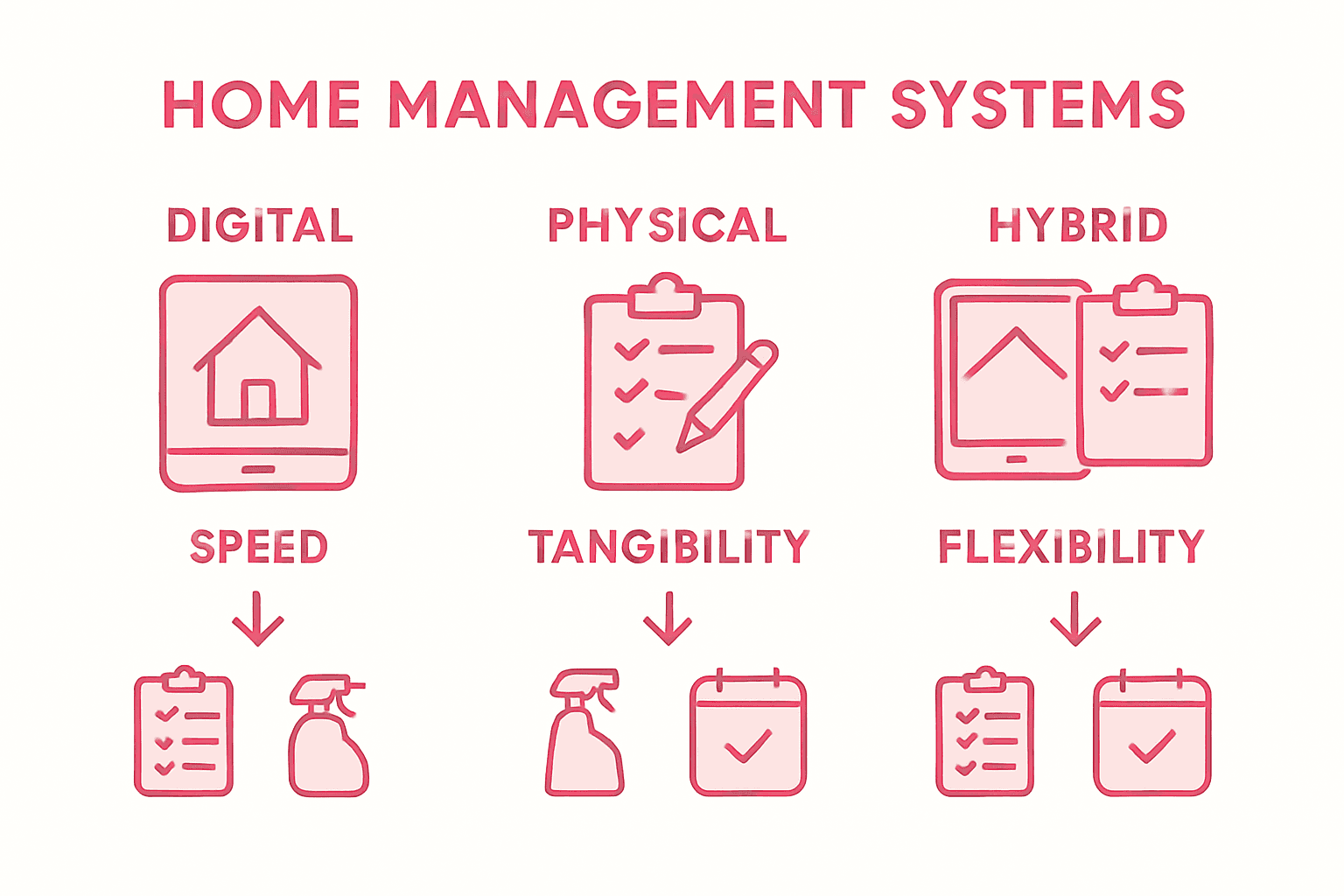
Digital Physical Hybrid Systems represent the cutting-edge intersection of technology and traditional home management, blending digital tools with hands-on organizational strategies. These innovative approaches allow families to leverage both technological advantages and personal touch in managing household operations.
One compelling example of this hybrid approach is the knowledge-driven smart home framework that combines machine learning algorithms with manual user inputs. This system creates dynamic services that adapt to family needs while maintaining user control. Families can now customize their home management systems to reflect their unique lifestyles, integrating automated tracking with personalized decision-making.
Key characteristics of digital physical hybrid home management systems include:
- Seamless integration of digital tools and physical organization methods
- Adaptive technologies that learn from user behavior
- Customizable interfaces that blend technological efficiency with personal preferences
- Real-time tracking and manual override capabilities
- Flexible systems that can adjust to changing family dynamics
Advanced hybrid systems, such as Digital Twin-based home management platforms, create virtual replicas of physical spaces. These systems continuously collect data from sensors and user interactions, enabling real-time monitoring and simulation-based automation. This technology allows families to optimize everything from energy consumption to daily scheduling with unprecedented precision.
Pro Hybrid System Tip: Start your hybrid home management journey by selecting one digital tool that complements your existing organizational methods, then gradually integrate more advanced technologies as you become comfortable with the system.
The following table compares digital-only, physical-only, and hybrid home management systems to help you select the right approach for your family:
| System Type | Main Advantage | Key Limitation | Best For |
|---|---|---|---|
| Digital-Only | Real-time syncing, automation | May lack personalization, tech barriers | Tech-savvy families |
| Physical-Only | Tangible, easy to understand | Hard to update, prone to losing info | Those preferring simplicity |
| Digital-Physical Hybrid | Balanced, adaptable, customizable | Potential complexity, higher setup effort | Families seeking flexibility |
How These Systems Actually Work
Home management systems operate through a complex network of interconnected technologies and strategic organizational approaches. These intelligent systems transform how families coordinate daily activities by creating seamless communication channels between digital platforms and physical spaces.
At the core of these systems is a sophisticated Web of Things framework that manages and shares information produced by both physical devices and family members. This approach enables context-aware services that adapt to the unique rhythms and requirements of each household. Imagine a system that understands not just what needs to be done, but how and when it matters most to your specific family dynamics.
The technological infrastructure of home management systems typically includes multiple integrated components:
- Sensor networks that track home activities and usage patterns
- Cloud-based storage and synchronization platforms
- Machine learning algorithms that predict and suggest organizational strategies
- User interfaces accessible across multiple devices
- Security protocols to protect family data
- Customizable dashboards for tracking tasks, schedules, and household metrics
Moreover, mobile edge cloud technologies are revolutionizing how these systems process information. By creating localized cloud infrastructures within the home, these systems can process sensor data rapidly and efficiently, reducing energy consumption and improving response times. This means faster, more responsive home management that feels almost intuitive.
Pro System Setup Tip: When implementing a home management system, start by mapping out your family’s specific needs and selecting technologies that can be easily integrated into your existing routines, rather than forcing dramatic changes all at once.
Meal Planning And Declutter Routines
Meal planning and decluttering are critical components of effective home management that can significantly reduce daily stress and improve family efficiency. These interconnected strategies help families create structured environments that promote both physical organization and nutritional wellness.
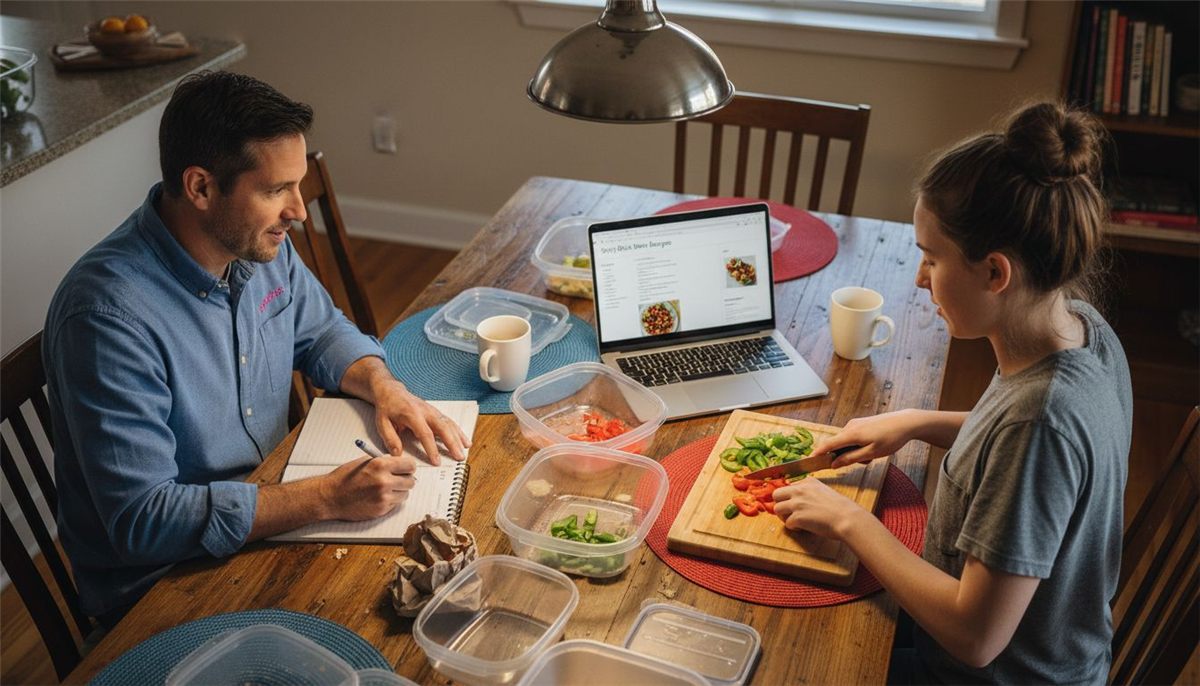
Digital technologies have revolutionized how families approach these essential household tasks. Digital home health technologies now provide sophisticated tools for organizing meal preparations and maintaining clutter-free living spaces. These systems enable families to track nutritional needs, schedule meal preparations, and systematically manage household spaces with unprecedented precision.
Key strategies for integrated meal planning and decluttering include:
- Utilizing shared digital calendars for meal scheduling
- Creating weekly meal prep routines
- Implementing systematic storage solutions
- Developing regular decluttering intervals
- Using inventory tracking apps for kitchen management
- Establishing family-wide organization protocols
Digital technology integration has transformed traditional home management approaches by providing structured routines that support healthier lifestyles. Modern families can now leverage smart technologies to create seamless systems that reduce mental load, optimize kitchen spaces, and ensure consistent nutritional planning. These tools help transform chaotic household environments into well-organized, efficient living spaces.
Pro Organization Tip: Develop a weekly family meeting where you collectively plan meals, review household organization goals, and assign specific decluttering responsibilities to each family member.
Here is a summary of benefits gained by using integrated meal planning and decluttering routines:
| Benefit | Impact on Family Life | Digital Enhancement Example |
|---|---|---|
| Reduced Stress | Less last-minute decisions | Automated grocery list creation |
| Nutrition Improvement | Healthier, consistent meals | Apps with nutritional tracking |
| Organized Spaces | Easier cleaning, less clutter | Smart inventory and storage reminders |
| Family Engagement | More shared responsibilities | Collaborative meal planners |
Task Sharing And Family Roles
Task sharing and defined family roles are fundamental to creating a harmonious and efficient household. Modern families are moving beyond traditional role assignments, leveraging digital technologies to create more equitable and flexible task distribution strategies.
Digital ecosystems in modern households have transformed how families approach task management. These innovative systems allow families to break down household responsibilities in ways that consider individual strengths, schedules, and personal development, rather than relying on outdated gender-based or age-specific expectations.
Effective task sharing strategies include:
- Using shared digital task management platforms
- Rotating responsibilities on a regular schedule
- Creating transparent accountability systems
- Matching tasks to individual family member skills
- Implementing age-appropriate chore assignments
- Developing a point or reward system for task completion
Management accounting principles applied to family systems reveal that structured approaches to task distribution can significantly reduce household friction. By treating family task management like a collaborative enterprise, families can create systems that distribute labor fairly, build individual responsibility, and foster a sense of collective achievement.
Pro Family Coordination Tip: Conduct a monthly family meeting where you review task assignments, celebrate completed responsibilities, and collaboratively adjust the system to ensure everyone feels valued and heard.
Pitfalls And Flexible Scheduling
Home management systems are powerful tools, but they are not without potential challenges. Understanding these potential pitfalls is crucial for families seeking to implement effective organizational strategies that truly enhance their daily lives.
Data-driven building management systems reveal several key challenges families must navigate, including complex privacy concerns and system integration difficulties. These technological solutions require careful implementation to ensure they truly simplify rather than complicate household management.
Common pitfalls in home management systems include:
- Overwhelming complexity of digital interfaces
- High initial setup and technology costs
- Privacy and data security risks
- Resistance from family members to adopt new systems
- Technical compatibility issues between different platforms
- Potential over-reliance on technological solutions
Digital facility management research emphasizes the critical importance of flexible scheduling mechanisms. Successful home management systems must adapt to changing family dynamics, individual schedules, and unexpected life events. This means creating frameworks that are robust yet malleable, allowing families to adjust their organizational strategies as their needs evolve.
Pro Adaptation Tip: Start with a simple, minimally invasive home management system and gradually expand its complexity, ensuring each new feature genuinely adds value and is embraced by all family members.
Take Control of Your Family’s Home Management Today
Struggling with balancing family responsibilities, meal planning, and managing daily household chaos can leave anyone feeling overwhelmed. This article highlights how home management systems, including digital physical hybrids and clear task sharing, can transform your family routines, reduce stress, and improve efficiency. If you find yourself juggling schedules, chores, and decluttering without a clear plan, you are not alone. Key challenges like complexity, technology barriers, and adapting to changing family dynamics require simple, effective solutions that fit your unique lifestyle.
Discover how you can implement practical organization hacks and budgeting systems designed specifically for busy families. Our site offers easy-to-follow tips on meal planning, declutter routines, and flexible scheduling that align perfectly with modern home management principles. Don’t wait until the chaos builds up—start creating peaceful, organized spaces and a balanced life for your family now.
Frequently Asked Questions
What are home management systems?
Home management systems are organizational strategies and technological solutions designed to help families streamline their household operations. They integrate digital tools with physical methods to efficiently manage schedules, tasks, finances, and responsibilities.
How can a digital-physical hybrid home management system benefit my family?
A digital-physical hybrid system merges technology with traditional organization methods, allowing customization and adaptability. It makes household management more efficient by integrating automated features while still enabling personal control over daily tasks.
What are some key components of effective meal planning and decluttering routines?
Effective routines include using shared digital calendars for scheduling meals, creating weekly meal prep plans, implementing systematic storage solutions, and establishing regular decluttering intervals to maintain organized living spaces.
How should task sharing be approached in modern families?
Task sharing should utilize digital task management platforms that promote equitable distribution of household responsibilities based on individual strengths and schedules. Establishing transparency and accountability, along with rotating tasks and implementing rewards, can enhance family engagement and responsibility.
Recommended
- 7 Effective Types of Home Organization Systems
- 7 Family-Friendly Examples of Productivity Hacks That Work
- How to Declutter Home Naturally for Busy Families
- 7 Time Management Tips for Families to Balance Life –
- Maintain Your Home After Your Cleaning Service: Step-by-Step Guide
Want a little more help with this? I made a free Mental Load Kit that pairs right up with this post — y’all can grab it over on my Free Resources page.