Over 80 percent of families admit clutter adds stress at home. Tackling mess can feel overwhelming, especially with everyone’s busy schedules and unique habits. A thoughtful, step-by-step approach makes it possible to turn chaos into calm. This guide reveals practical ways for the whole family to get involved, set goals, and finally enjoy clear, organized spaces together.
Table of Contents
- Step 1: Assess Family Needs And Set Decluttering Goals
- Step 2: Sort Belongings By Category And Room
- Step 3: Remove Unnecessary Items With Family Input
- Step 4: Organize Remaining Items For Easy Access
- Step 5: Maintain A Clutter-Free Home With Simple Habits
Quick Summary
| Key Point | Explanation |
|---|---|
| 1. Set realistic decluttering goals | Break down large tasks into achievable objectives to avoid overwhelm and create a sense of accomplishment. |
| 2. Sort belongings by category | Group similar items together to gain a clear understanding of what you own and make better decluttering decisions. |
| 3. Involve the whole family | Collaborative decluttering fosters shared responsibility, making the process engaging and educational for all members. |
| 4. Create effective organization systems | Use practical storage solutions to ensure items are easily accessible and encourage everyone to maintain order. |
| 5. Establish daily decluttering habits | Implement simple routines to keep clutter at bay and teach valuable life skills about responsibility and organization. |
Step 1: Assess Family Needs and Set Decluttering Goals
Assessing your family’s decluttering needs is the critical first step in transforming your home from chaotic to calm. According to Kiplinger, evaluating your living spaces can help you gain a sense of control and significantly reduce household stress.
Start by walking through each room with a notebook and honest eyes. Which spaces make you feel overwhelmed? Where do arguments about mess frequently happen? Purdue Extension recommends identifying specific areas causing family tension. Maybe it is the overflowing closet that starts morning arguments or the kitchen counter constantly buried under paperwork.
Create targeted goals that feel realistic and achievable. Instead of a vague “clean everything” mission, break it down. Example goals might look like “Organize master bedroom closet in one weekend” or “Clear kitchen counters every evening before bedtime.” Remember that small consistent steps create massive transformation. Your entire family will feel the difference when you approach decluttering as a team with clear objectives.
Your next move? Gather your family and discuss these goals together. Make it collaborative and keep the mood light. Decluttering does not have to feel like a chore when you approach it with creativity and shared purpose.
Step 2: Sort Belongings by Category and Room
Sorting your belongings by category instead of location is a game changing approach to decluttering your family home. The Tidy Lark emphasizes that this method allows you to truly understand the volume of items you own and make more intentional decisions about what stays and what goes.
Following the strategy popularized by Marie Kondo, start by gathering all similar items together before sorting. Begin with clothing. Pull every single piece of clothing from every closet, drawer, and storage bin into one massive pile. This visual mountain might shock you but creates an honest picture of your actual wardrobe. Do the same with books, papers, kitchen items, and sentimental objects. Sort items into clear categories: keep, donate, trash, and maybe.
Be ruthless but kind with yourself. Ask key questions for each item: Have I used this in the past year? Does this bring me joy or serve a practical purpose? Would I buy this again today? Involve your family members in the process to make it collaborative and educational. Kids can learn valuable lessons about intentional ownership and letting go. Pro tip: create a fun sorting game where everyone gets points for items they decide to donate or remove from the household.
Once sorted, you will have a clear roadmap for your next decluttering steps.
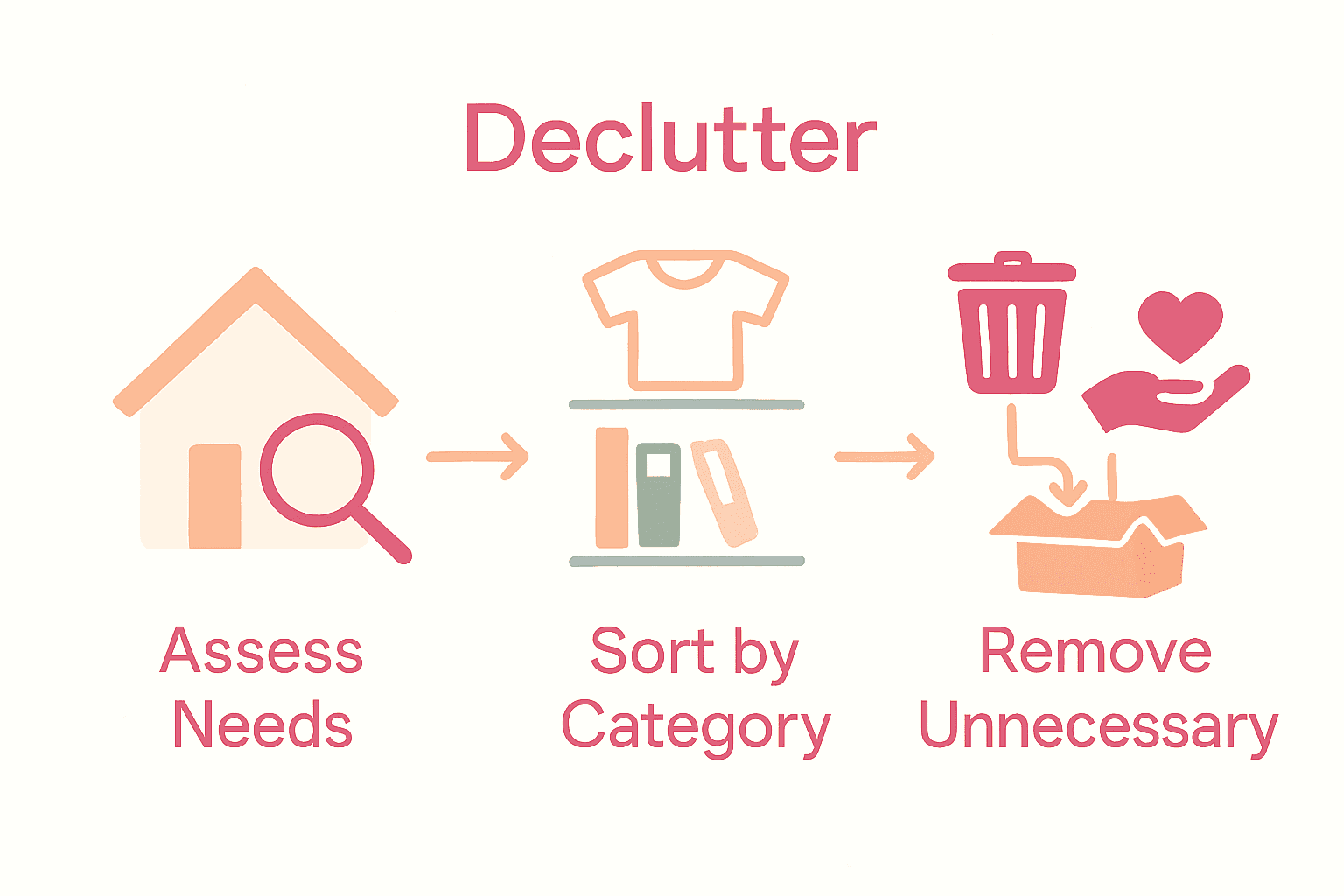 Your categories will help you understand exactly what you own and make more strategic decisions about storage and organization.
Step 3: Remove Unnecessary Items with Family Input
Removing unnecessary items is a critical step in decluttering, and involving your entire family makes the process more effective and meaningful. When everyone participates, you create a shared sense of purpose and responsibility for maintaining a tidy home. Reusing items creatively can also help reduce waste and make the decluttering process more engaging.
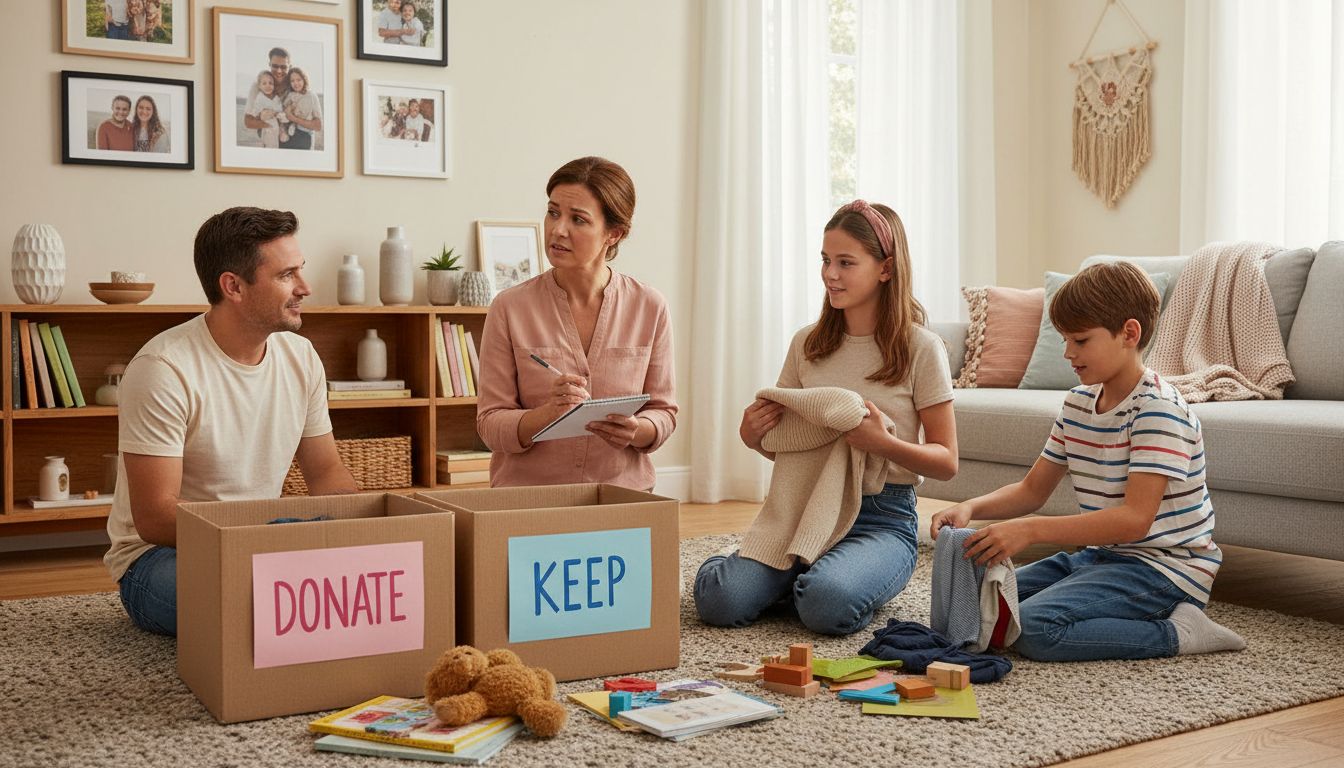
Set up a family sorting session where everyone gets a voice. Create three main piles: keep, donate, and trash. For kids, make it a game. Challenge them to find items they have outgrown or no longer use. Teach them about the value of letting go and helping others through donation. For clothing and toys, ask questions like: When was the last time you used this? Does it still fit? Does it make you happy? This approach helps family members make intentional choices about their belongings.
Establish some ground rules to keep the process smooth. Set a time limit for sorting to prevent overwhelm. Make it fun with background music or snacks. Offer small rewards for participation. Remember that the goal is not just clearing space but teaching valuable life skills about mindful ownership. Your next step will be organizing the items you choose to keep and finding new homes for donations.
As a bonus tip, take before and after pictures. Seeing the transformation can be incredibly motivating for the whole family and help build momentum for future decluttering efforts.
Step 4: Organize Remaining Items for Easy Access
Organizing your remaining items is about creating a system that works for your family and makes everyday life smoother. Explore effective home organization systems to find strategies that match your household’s unique needs and lifestyle. According to Empress of Dirt, the key to successful organization is storing items visibly and neatly to facilitate easy access and return.
Start by investing in practical storage solutions that match each space. Use clear containers for items like craft supplies or kids school materials. Install shelf dividers in closets to create designated zones. Consider vertical storage options like wall mounted shelves or over the door organizers to maximize space. Group similar items together and label everything. This approach helps family members quickly find what they need and equally important put things back in their proper place.
Make organization a family habit by creating simple routines. Designate a 10 minute evening cleanup time where everyone returns items to their assigned spots. Create a visual chart showing where things belong for younger children. Teach the concept that every item has a home and should return there after use.
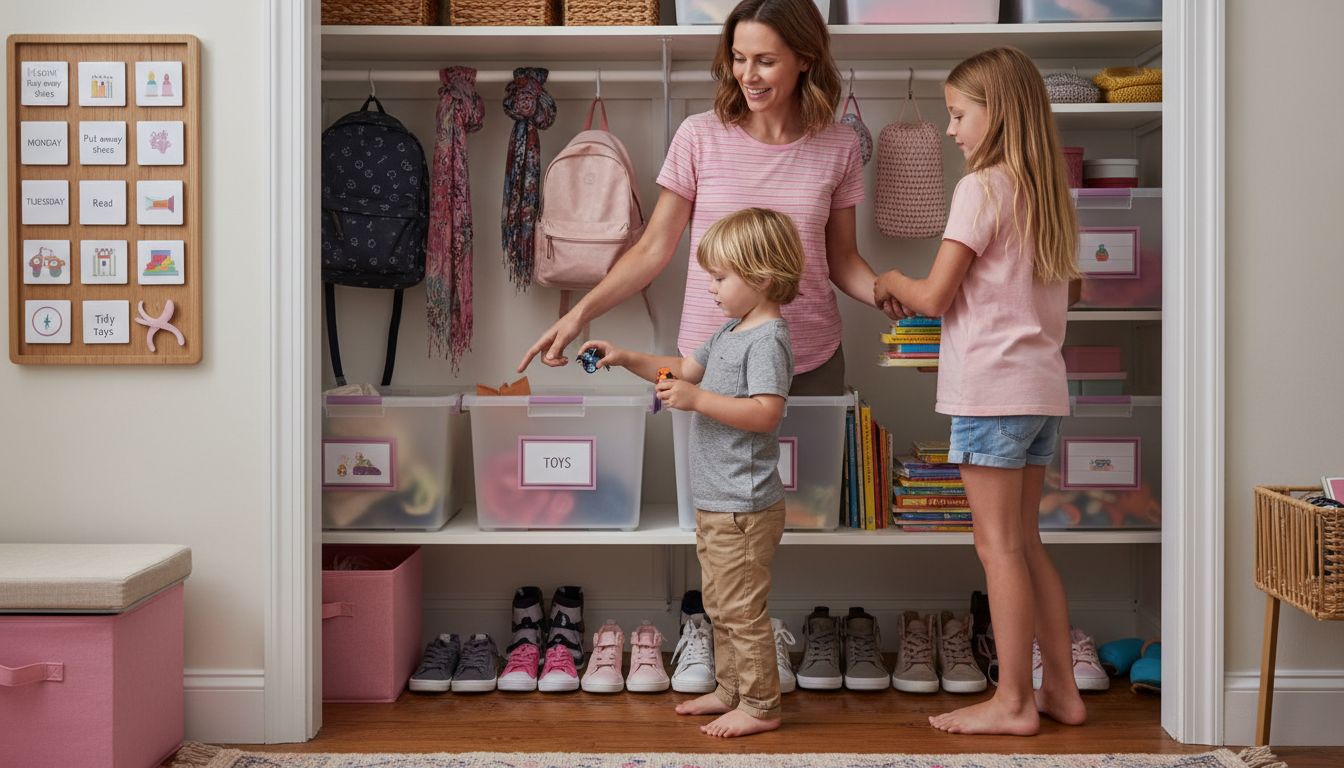 This not only keeps your space tidy but also teaches valuable life skills about responsibility and order.
Remember that organization is an ongoing process. Be patient with yourself and your family as you develop new habits. Your next step is maintaining the systems you have created and adjusting them as your familys needs change.
Step 5: Maintain a Clutter-Free Home with Simple Habits
Maintaining a clutter-free home requires consistent effort and strategic daily habits. Golden Plains Extension suggests focusing on daily decluttering strategies for high-use areas and establishing permanent storage spaces for commonly used items. Learn more about clearing clutter to keep your home organized and stress-free.
Implement a five-minute daily reset routine where everyone in the family participates. Before bedtime, walk through main living areas and return items to their designated spots. Create simple rules like handling mail immediately instead of letting it pile up. Keep a donation box in a central location so family members can easily discard items they no longer need. Use vertical storage solutions and multi-purpose furniture to maximize space and reduce visual clutter.
Make organization a family game and reward system. Create a sticker chart for kids who consistently put away their belongings. Set weekly family challenges like seeing who can keep their personal space the most organized. Practice the one-in-one-out rule where a new item means something old must be donated or discarded. This approach prevents unnecessary accumulation and teaches mindful consumption.
Remember that perfection is not the goal. Small consistent actions create lasting change. Celebrate your familys progress and be patient with the learning process.
Take Control of Your Family’s Clutter Today
Feeling overwhelmed by constant mess and household chaos is a common challenge for busy families. This article highlights how crucial it is to assess family needs, set clear decluttering goals, and involve everyone in the process to create a calm and organized home. By sorting belongings thoughtfully and maintaining simple daily habits, you can reduce stress and build lasting routines your whole family can follow.
If you want to transform these good intentions into real, lasting results explore the proven organization hacks and home management solutions waiting for you at Its A Southern Life. You will find easy-to-use productivity tips and simple living strategies designed specifically for families seeking work-life balance and peaceful, well-ordered spaces. Don’t wait to create the calm home environment you deserve, start your journey to a clutter-free life.
Frequently Asked Questions
How can busy families start decluttering their home naturally?
Begin by assessing your family’s decluttering needs and setting specific, achievable goals. For instance, aim to organize one space per weekend for a month to gradually transform your home.
What strategies can families use to sort belongings effectively?
Sort belongings by category instead of room to understand what you own better. Gather all similar items together, like clothes or books, and create clear piles: keep, donate, and trash.
How can I involve my kids in the decluttering process?
Make decluttering a fun and engaging activity by turning it into a game. Challenge your kids to find items they no longer use, setting a time limit to keep it exciting and rewarding their participation with small incentives.
What can I do to organize remaining items for easy access?
Invest in practical storage solutions that are visible and usable, like clear containers and labeled bins. Aim to create a designated home for each item, implementing this organization method within a week to see significant improvements.
How do I maintain a clutter-free home as a busy family?
Establish daily habits, like a five-minute reset routine before bedtime where everyone puts items back in their spots. Consistently using this method every night will help keep your home clutter-free over time.
How can I promote mindful consumption to avoid future clutter?
Implement the one-in-one-out rule: for every new item brought into the home, remove an old one. Encourage your family to think about their purchases critically, aiming for a reduction of unnecessary items in your home by ~20% over a few months.
Recommended
- 7 Simple Ways to Refresh Your Home for Busy Families – It’s a Southern Life Ya’ll
- How to Create a Peaceful Home for Your Family – It’s a Southern Life Ya’ll
- How to Clear the Clutter from Your Home –