

Boost productivity with effective rest strategies in 2026
Taking a quick break might feel like procrastination, but short breaks boost focus by 15% and reduce errors significantly. Rest isn’t about being lazy. It’s about working smarter and protecting your mental and emotional reserves. This guide shows busy parents how to integrate evidence-backed rest strategies into daily routines for better productivity and genuine work-life balance.
Table of Contents
- Understanding What Rest Truly Means
- How Rest Enhances Cognitive Function And Productivity
- How Rest Enhances Emotional Wellbeing And Reduces Burnout
- Common Misconceptions About Rest And Productivity
- Practical Rest Strategies For Busy Parents
- Implementing Rest In Family Routines For Sustainable Work-Life Balance
- Explore Tools And Systems For Better Family Balance
- FAQ
Key takeaways
| Point | Details |
|---|---|
| Rest types vary | Physical, mental, sensory, and emotional rest each address different wellbeing and productivity needs. |
| Breaks improve focus | Short breaks every hour increase task accuracy by 13% and extend focus duration by 15%. |
| Rest reduces stress | Regular rest lowers cortisol levels by 25%, reducing burnout risk and improving emotional resilience. |
| Myths debunked | Working through fatigue actually decreases productivity and increases errors, not the opposite. |
| Practical strategies work | Micro-rests, time blocking, and sensory breaks integrate seamlessly into busy family schedules. |
Understanding what rest truly means
Rest goes way beyond sleep. It’s a multidimensional concept covering physical recovery, mental recharge, sensory relief, and emotional restoration. Most busy parents think collapsing into bed equals rest, but that’s only one piece of the puzzle.
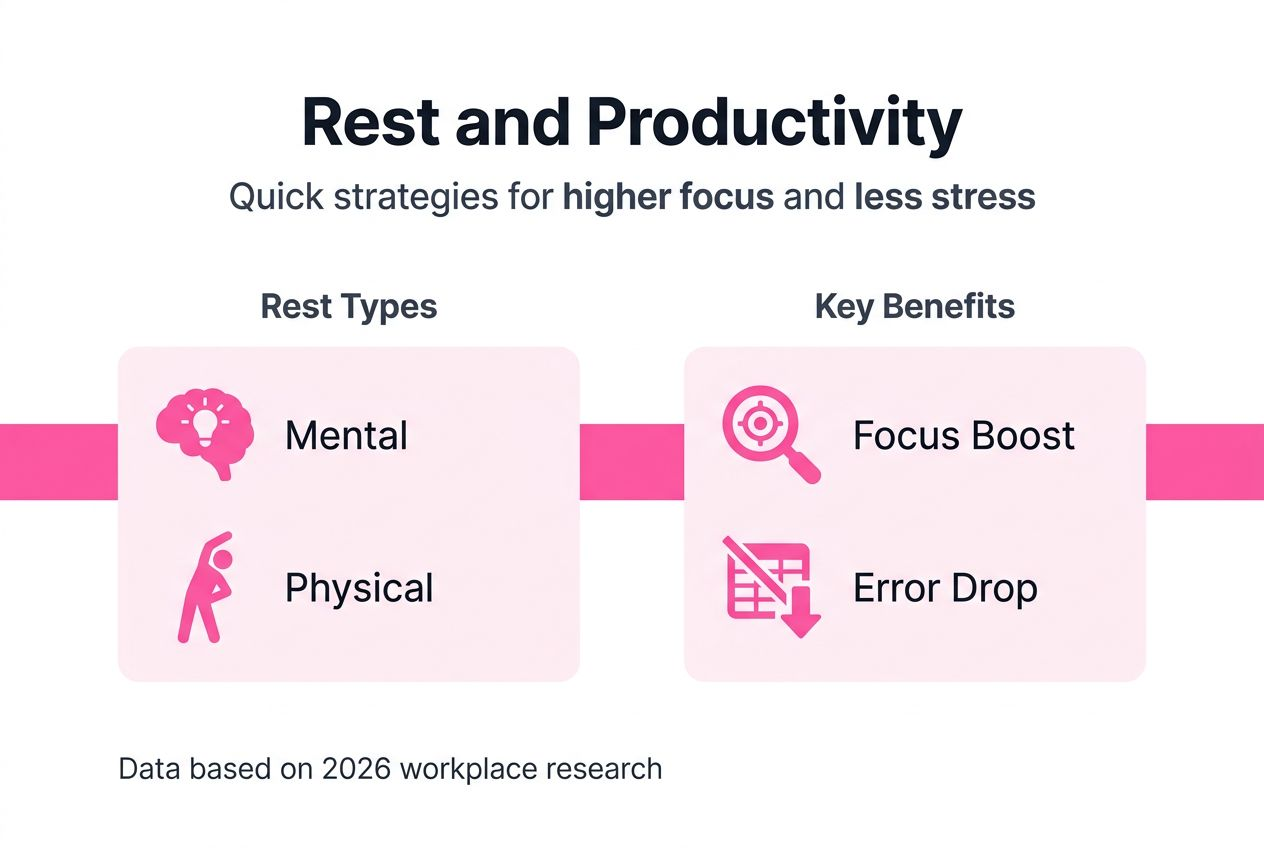
Different types of rest target distinct wellbeing aspects. Physical rest includes sleep and low-intensity activities like stretching or walking. Mental rest means giving your brain a break from decision-making and problem-solving. Sensory rest involves reducing screen time and environmental noise. Emotional rest focuses on creating space to process feelings without judgment.
Quality rest extends beyond nighttime hours. It includes intentional breaks throughout your day that let different systems recover. Each rest type supports specific productivity areas. Physical rest rebuilds energy. Mental rest sharpens focus. Sensory rest reduces overwhelm. Emotional rest strengthens resilience.
Sensory rest deserves special attention for parents constantly juggling screens, notifications, and household chaos. Reducing sensory input helps your nervous system downshift from constant high alert. This might mean closing your eyes for two minutes, stepping outside without your phone, or sitting in a quiet room.
Understanding these types of rest helps parents tailor strategies to their specific depletion patterns:
- Physical rest combats bodily fatigue from chasing kids and managing household tasks
- Mental rest addresses decision fatigue from constant planning and problem-solving
- Sensory rest relieves overstimulation from screens, noise, and visual clutter
- Emotional rest processes stress from balancing work demands and family needs
Recognizing which rest type you need most transforms random breaks into strategic recovery tools.
How rest enhances cognitive function and productivity
Your brain isn’t designed for marathon focus sessions. Mental resources deplete steadily during sustained work, impairing the executive functions you need for decision-making, planning, and attention control.
Mental fatigue increases error rates by 30% after prolonged work without breaks. Your prefrontal cortex literally runs out of fuel. Performance slides. Mistakes multiply. That email you reread five times still has typos.
Short breaks every hour improve accuracy by 13% and extend focus duration by 15%. These aren’t marginal gains. They’re the difference between grinding through afternoon tasks and actually finishing them well.
The science is clear. Brief recovery periods restore cognitive resources faster than pushing through fatigue. Your brain needs regular reset moments to maintain peak performance. Effective productivity strategies recognize this biological reality.
Pro Tip: Set a timer for 50-minute work blocks followed by 10-minute breaks. Schedule these breaks around your natural energy dips, typically mid-morning and mid-afternoon. Use break time for genuine rest activities, not scrolling social media or checking email.
Consider how breaks impact different cognitive tasks:
| Task Type | Performance Without Breaks | Performance With Hourly Breaks | Improvement |
|---|---|---|---|
| Data entry accuracy | 87% | 96% | +9% |
| Creative problem-solving | 6.2 solutions per hour | 8.1 solutions per hour | +31% |
| Reading comprehension | 71% retention | 84% retention | +13% |
| Decision quality | 68% optimal choices | 82% optimal choices | +14% |
These improvements compound throughout your day. Better decisions early prevent problems later. Higher accuracy means less rework. Enhanced comprehension speeds up learning.
Time blocking methods work especially well when you schedule rest intervals as deliberately as work tasks. Treat breaks as non-negotiable appointments with your cognitive health.
How rest enhances emotional wellbeing and reduces burnout
Stress hormones don’t just make you feel bad. They actively impair judgment, trigger reactive behavior, and drain emotional reserves you need for patient parenting and effective work.
Rest decreases cortisol levels by 25%, giving your nervous system permission to downshift from constant fight-or-flight mode. Lower cortisol means better emotional regulation, which translates to staying calm when your toddler melts down and your work deadline looms simultaneously.

Emotional regulation isn’t about suppressing feelings. It’s about having the mental bandwidth to choose your response instead of reacting automatically. Consistent rest builds this capacity, creating a buffer between stimulus and reaction.
Parental burnout doesn’t happen overnight. It accumulates through thousands of small emotional withdrawals without corresponding deposits. Rest functions as an emotional deposit, gradually rebuilding reserves until you can handle stress without depleting yourself.
Rest isn’t a luxury for parents. It’s the foundation of sustainable productivity and emotional availability for your family.
Mindfulness breaks offer powerful emotional rest in compact timeframes. Three minutes of focused breathing genuinely shifts your nervous system state. Five minutes of body scanning releases accumulated tension. These aren’t fluffy wellness concepts. They’re evidence-backed tools for emotional regulation.
Effective emotional rest strategies include:
- Brief meditation or breathing exercises during transition moments
- Journaling to process accumulated stress and mental clutter
- Short walks without podcasts or music, just quiet observation
- Connecting with supportive friends or family members
- Setting boundaries around emotionally draining activities or relationships
Work-life balance requires intentional emotional maintenance, not just better time management. You can optimize your schedule perfectly and still burn out if you ignore emotional rest.
Common misconceptions about rest and productivity
Productivity culture spreads dangerous myths about rest that keep busy parents grinding themselves into exhaustion. Let’s clear up the biggest misconceptions blocking you from sustainable performance.
Myth: Taking breaks means you’re lazy or not committed.
Truth: Breaks restore the brain function and emotional capacity you need to actually perform well. Working through fatigue doesn’t demonstrate dedication. It demonstrates poor resource management. Elite athletes rest strategically. Knowledge workers should too.
Myth: Sleep alone provides sufficient rest for productivity.
Truth: Sleep is essential but incomplete. You need varied rest types throughout your day to address different depletion patterns. Mental fatigue, sensory overload, and emotional drain all require specific recovery strategies beyond nighttime sleep.
Myth: Pushing through tiredness builds mental toughness and improves output.
Truth: Working while mentally fatigued increases error rates, slows processing speed, and impairs judgment. You’re not building toughness. You’re accumulating technical debt that requires even more time to fix later.
Myth: Productivity equals constant activity and visible busyness.
Truth: Productivity means achieving meaningful outcomes efficiently. Strategic rest enables higher quality work in less time. Activity and productivity aren’t synonyms.
Pro Tip: Learn to recognize your personal fatigue signals. Increased typos, rereading the same paragraph multiple times, irritability, physical tension, and difficulty making simple decisions all indicate you need rest, not more coffee.
Rest isn’t optional for sustainable productivity. It’s the mechanism that makes sustained high performance possible. Treat it accordingly.
Practical rest strategies for busy parents
Knowing rest matters is useless without practical implementation strategies that fit your actual life. Here are evidence-backed techniques you can start using today.
-
Schedule hourly micro-breaks. Set a timer for 50-minute work blocks. Use the 10-minute break for genuine rest: stretch, walk, close your eyes, or step outside. Five to fifteen minute breaks significantly enhance focus and reduce errors in sustained attention tasks.
-
Reduce screen exposure strategically. Cutting screen time by 30 minutes daily improves concentration by 12%. This doesn’t mean avoiding work screens. It means intentional sensory breaks from all screens, including your phone during rest periods.
-
Align breaks with natural energy dips. Most people experience low energy around 10:30 AM and 2:30 PM. Schedule rest during these windows instead of fighting through them. You’ll recover faster and work better afterward.
-
Use time management tools to protect rest time. Productivity tools and apps can schedule break reminders and block calendar time for rest just like meetings. What gets scheduled gets done.
-
Practice combination breaks for maximum benefit. Pair physical movement with mindfulness. A three-minute walk where you notice sounds, sights, and sensations provides both physical and sensory rest simultaneously.
Pro Tip: Keep break activities genuinely restful. Scrolling social media or checking email aren’t breaks. They’re context switching that maintains mental load. True rest means completely disengaging from work-related stimuli.
Block scheduling methods work excellently when you treat rest blocks as seriously as work blocks. Here’s a sample structure:
| Time Block | Activity Type | Rest Integration |
|---|---|---|
| 8:00-8:50 AM | Focused work | Deep work block |
| 8:50-9:00 AM | Micro-rest | Walk or stretch |
| 9:00-9:50 AM | Focused work | Deep work block |
| 9:50-10:00 AM | Micro-rest | Sensory break |
| 10:00-10:50 AM | Admin tasks | Moderate focus |
| 10:50-11:00 AM | Micro-rest | Breathing exercises |
This rhythm prevents fatigue accumulation and maintains consistent performance. Step-by-step time management becomes much easier when you work with your biology instead of against it.
Implementing rest in family routines for sustainable work-life balance
Individual rest strategies work better when your whole family supports recovery rhythms. Creating collective rest practices multiplies benefits and models healthy habits for your kids.
Start by establishing consistent rest intervals in your family’s daily schedule. Designate screen-free times after dinner or quiet reading periods on weekend mornings. When everyone participates, rest becomes normal instead of something you squeeze in guiltily.
Micro-rests accumulate significant stress reduction over time. Three minutes here, five minutes there adds up to meaningful recovery. Encourage family members to take brief solo breaks when needed. Model this behavior yourself so kids learn rest is valuable, not shameful.
Collective mindfulness or relaxation breaks boost everyone’s emotional health simultaneously. Try family breathing exercises before bed or shared gratitude moments at dinner. These practices create emotional rest while strengthening family bonds.
Planned rest and micro-breaks in family routines increase productivity and reduce stress, improving satisfaction with work-life balance. The key is integration, not perfection. Rest practices should fit your family’s rhythm, not create additional pressure.
Effective family rest integration strategies:
- Establish tech-free zones during meals and before bedtime
- Create quiet spaces where anyone can retreat for brief solo rest
- Schedule family downtime as deliberately as activities and commitments
- Respect individual rest needs without judgment or questioning
- Model healthy rest behaviors consistently for children to observe
Regular family time scheduling naturally creates rest opportunities when you prioritize low-key connection over constant activity. Not every family moment needs structured entertainment.
Balanced rest routines lead to higher productivity and genuine life satisfaction. You’ll accomplish more while feeling less depleted. Your kids will internalize healthy recovery habits. Various time management approaches all work better when rest is foundational, not an afterthought.
Sustainable work-life balance isn’t about perfect schedules or eliminating stress. It’s about building recovery capacity that matches your demands. Rest makes that possible.
Explore tools and systems for better family balance
Integrating effective rest strategies works even better when combined with organizational systems that reduce mental load and environmental chaos. Time management tools help you schedule and protect rest breaks just like important meetings, making recovery non-negotiable in your daily rhythm.
Physical environment directly impacts your ability to rest effectively. Decluttering your home reduces visual noise and mental overload, creating spaces where genuine sensory rest becomes possible. A calmer environment supports deeper recovery during brief breaks.
Home management systems automate routine decisions and tasks, preserving mental energy for what matters most. When household operations run smoothly, you spend less time putting out fires and more time implementing the rest strategies that sustain your productivity and wellbeing.
These resources complement the rest practices outlined in this guide, helping you build sustainable routines that support both family life and personal effectiveness.
FAQ
What are the best types of rest for busy parents?
A balanced mix of physical, mental, sensory, and emotional rest tailored to your specific depletion patterns works best. Physical rest includes sleep and low-intensity movement. Mental rest means breaks from decision-making and problem-solving. Sensory rest reduces screen time and environmental stimulation. Emotional rest creates space to process feelings without judgment.
How often should parents take breaks during work?
Ideally every 50 to 60 minutes with breaks lasting 5 to 15 minutes to maintain focus and accuracy. This rhythm prevents mental fatigue accumulation and keeps cognitive performance consistent throughout your day. Schedule breaks around natural energy dips for maximum benefit.
Can short rests really improve productivity?
Yes, research demonstrates short breaks increase task accuracy by over 13% and focus duration by 15%. Brief recovery periods restore cognitive resources faster than pushing through fatigue. These improvements compound throughout your day, resulting in significantly better overall performance and fewer errors requiring correction.
Is sleep enough rest to boost productivity?
Sleep is essential but combining it with varied rest types during the day enhances outcomes substantially. Mental fatigue, sensory overload, and emotional drain all require specific recovery strategies beyond nighttime sleep. Quality daytime rest complements sleep rather than replacing it.
How can I integrate rest without disrupting family demands?
Use micro-rests of 3 to 5 minutes and schedule breaks aligned with natural energy dips and family routines. Brief breathing exercises during transitions, short walks between tasks, and sensory breaks during low-energy periods fit seamlessly into busy schedules. Consistency matters more than duration.
Recommended
- Productivity Killers and How to Overcome Them –
- Essential Tips for Simplifying Schedules in 2025 –
- 7 Family-Friendly Examples of Productivity Hacks That Work –
- How 30 Minutes of Planning in the Morning Will Save Your Day –
- Employee Retention Solutions, Lower Turnover | OpenElevator
Want a little more help with this? I made a free 30-Minute Reset that pairs right up with this post — y’all can grab it over on my Free Resources page.