How to Teach Your Kids the Value of Hard Work (Without Nagging)
Every parent faces those days when encouraging kids to pitch in feels like an endless uphill climb. Teaching hard work can be challenging, especially in the busy rhythm of North American family life. By focusing on crystal clear family guidelines and celebrating small victories, you can help your children learn the value of effort without constant conflict. These practical strategies turn daily routines into opportunities for growth, building a spirit of teamwork and confidence that lasts.
Table of Contents
- Step 1: Set Clear Family Expectations For Work
- Step 2: Model Positive Work Behaviors Daily
- Step 3: Assign Age-Appropriate Responsibilities
- Step 4: Encourage Persistence With Praise
- Step 5: Review Progress And Celebrate Growth
Quick Summary
| Key Message | Explanation |
|---|---|
| 1. Establish Clear Expectations | Create transparent family guidelines for chores and responsibilities to promote accountability in children. |
| 2. Model Positive Work Behaviors | Your daily actions teach kids about hard work more effectively than words; be a role model in work ethics. |
| 3. Assign Age-Appropriate Tasks | Tailor responsibilities to children’s developmental stages to build confidence without overwhelming them. |
| 4. Praise Effort, Not Just Results | Focus on recognizing hard work and persistence in children to foster a resilient and growth-oriented mindset. |
| 5. Regularly Review Progress | Conduct monthly check-ins to discuss achievements and challenges, ensuring a continuous growth mindset in children. |
Step 1: Set clear family expectations for work
Teaching kids about hard work starts with creating crystal clear family guidelines that everyone understands. When you establish consistent expectations, children learn responsibility without feeling constantly nagged or overwhelmed.
To set effective family work expectations, focus on creating collaborative communication frameworks that invite participation and mutual understanding. This means developing a system where everyone knows their roles and responsibilities.
Start by creating a visible family expectations chart that outlines specific duties and standards:
- Morning responsibilities: Make bed, pack school lunch
- After-school tasks: Homework before screen time
- Weekend chores: Age-appropriate cleaning and helping
- Reward system: Positive reinforcement for completed tasks
By explaining the reasons behind each expectation, you help children understand the value of structured responsibilities. Kids are more likely to follow guidelines when they comprehend why these tasks matter.
Clear expectations create a sense of security and teach children that every family member contributes to household success.
Pro tip: Review and adjust your family expectations quarterly to match your children’s growing capabilities and changing family dynamics.
Step 2: Model positive work behaviors daily
Teaching kids the value of hard work starts with the most powerful tool in your parenting toolkit: your own daily actions. Children learn more from what they observe than what they are told, making your personal work ethic the most influential classroom.
To effectively demonstrate positive behavior strategies, focus on consistently showing dedication, persistence, and a healthy approach to challenges. This means letting your kids see how you handle work, stress, and responsibilities with grace and determination.
Here are practical ways to model positive work behaviors:
- Show enthusiasm for your daily tasks
- Talk through problem-solving out loud
- Maintain a positive attitude during challenging moments
- Demonstrate time management skills
- Share your work accomplishments with your family
Consistent positive attention to effort helps children understand that hard work is valuable and rewarding. When kids see you approaching tasks with commitment and a constructive mindset, they naturally begin to mirror those behaviors.
Your children are always watching and learning from your example – make every moment count.
Pro tip: Create a family culture where effort and persistence are celebrated more than just final results.
Step 3: Assign age-appropriate responsibilities
Teaching kids the value of hard work means giving them meaningful tasks they can actually accomplish. The key is finding the right balance between challenging your children and not overwhelming them with responsibilities beyond their developmental stage.
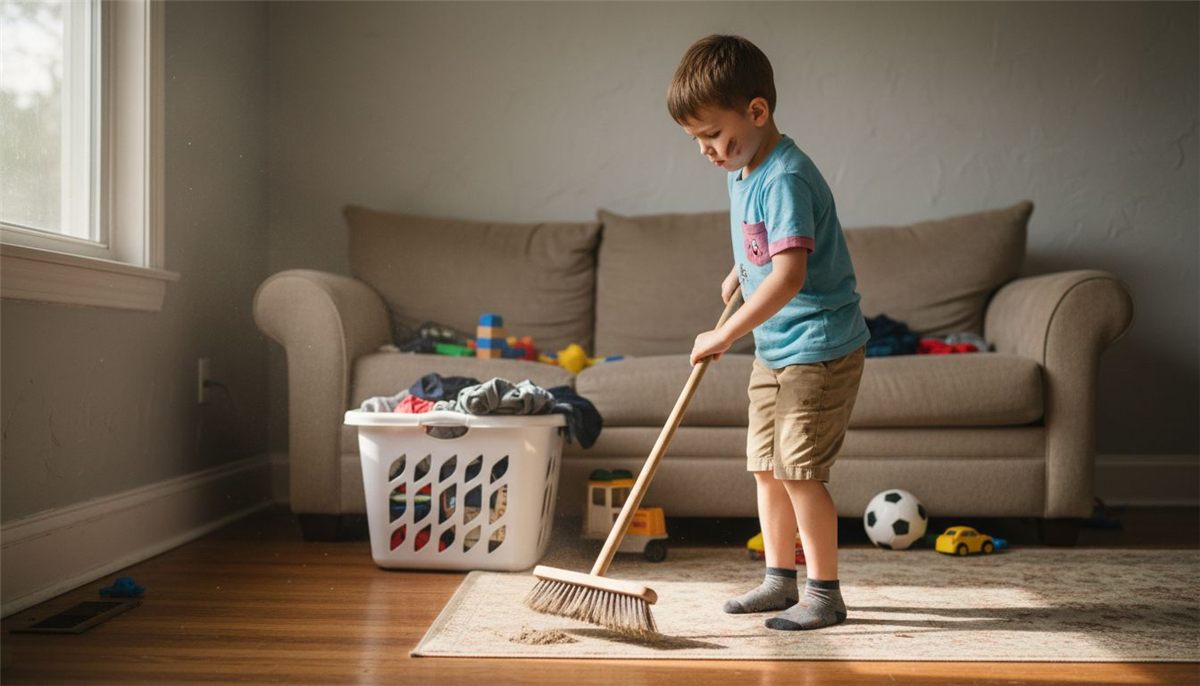
Engaging children with appropriate tasks helps build their confidence and sense of contribution to the family. This approach allows kids to develop critical life skills while feeling valued and capable.
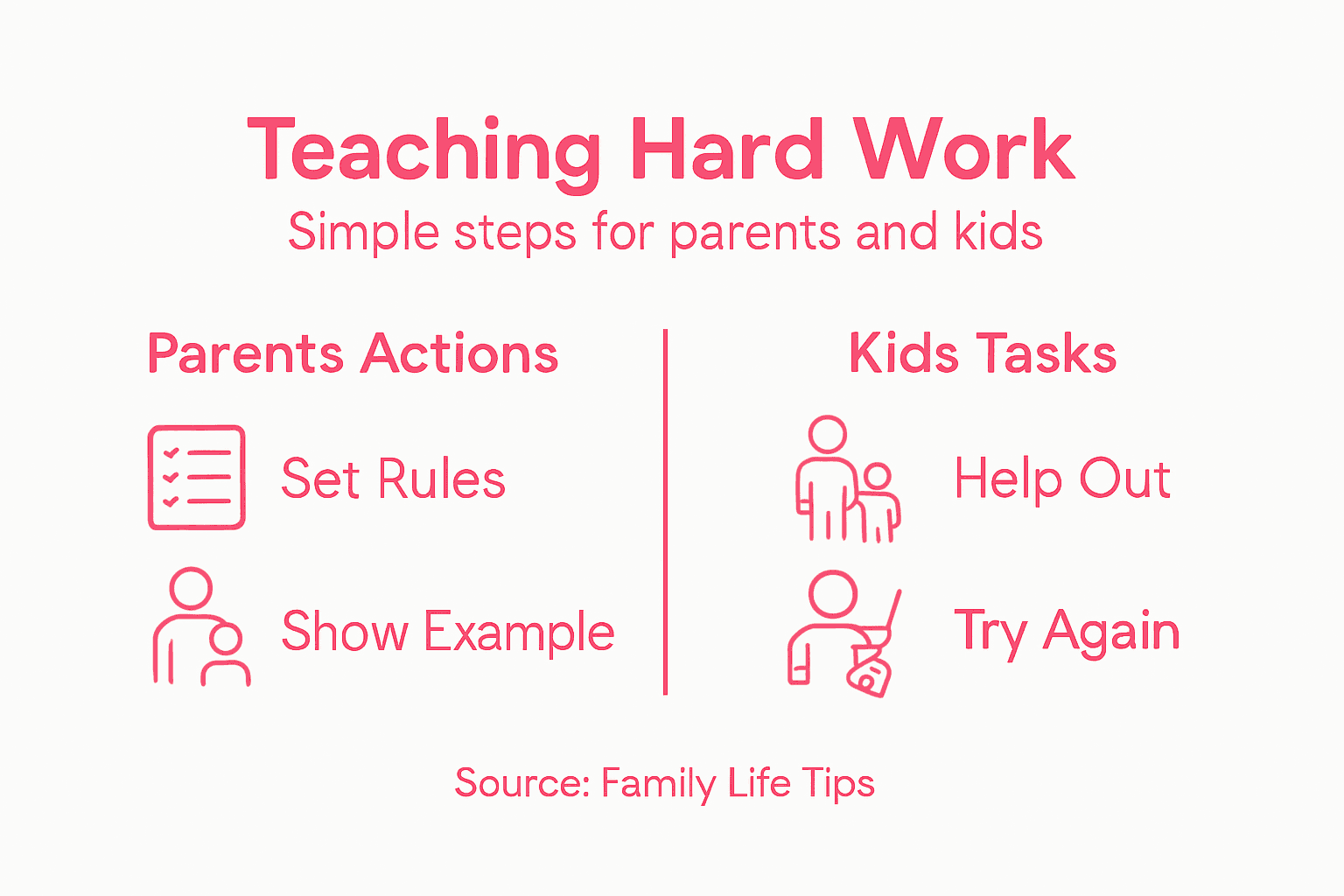
Here’s a breakdown of age-appropriate responsibilities:
For Younger Children (Ages 3-5):
- Put away toys after playing
- Help make their bed
- Set the table with plastic dishes
- Feed pets with supervised assistance
For Elementary Children (Ages 6-10):
- Make their bed independently
- Pack school lunch
- Do simple laundry tasks
- Clean their bedroom
For Tweens and Teens (Ages 11-16):
- Manage personal laundry
- Prepare simple meals
- Clean bathroom
- Help with yard work
- Manage personal schedules
Consistent routines build accountability and help children understand their role in the family ecosystem. Remember that every child develops differently, so adjust expectations based on individual capabilities.
Responsibilities are not punishments – they are opportunities for growth and learning.
Pro tip: Create a visual chore chart that celebrates completed tasks and allows children to track their own progress.
Here’s a quick guide to adjusting responsibilities as your child grows:
| Age Group | Focus of Responsibility | Key Benefits | Suggested Supervision |
|---|---|---|---|
| Ages 3-5 | Simple self-care tasks | Builds routine habits | High adult guidance |
| Ages 6-10 | Household contributions | Boosts confidence and skills | Occasional check-ins |
| Ages 11-16 | Independent management | Develops autonomy | Minimal reminders |
Step 4: Encourage persistence with praise
Fostering a strong work ethic isn’t about perfection – it’s about celebrating the journey of effort and continuous improvement. The words you choose when praising your children can dramatically shape their approach to challenges and learning.
Effective praise strategies focus on effort and process rather than natural talent. This means shifting from generic compliments like “you’re so smart” to specific acknowledgments that highlight hard work and problem-solving.
Here are powerful ways to encourage persistence through praise:
- Recognize the effort, not just the outcome
- Highlight specific strategies they used
- Celebrate incremental progress
- Normalize struggle as part of learning
- Use encouraging language that builds resilience
Some examples of transformative praise:
- Instead of “Great job!”: “I noticed how you kept trying different approaches to solve that math problem”
- Replace “You’re so smart”: “Your hard work in practicing really shows”
- Rather than “Good work”: “I’m impressed by how you didn’t give up when things got difficult”
Goal-setting reinforces persistent behavior by helping children understand that challenges are opportunities for growth. When kids see setbacks as learning experiences, they develop a more resilient mindset.
Praise is a powerful tool that can transform how children view challenges and their own capabilities.
Pro tip: Create a “persistence jar” where kids can add a marble each time they demonstrate determination, with a special reward when the jar gets full.
See how different types of praise shape a child’s mindset:
| Praise Type | Example Statement | Long-Term Impact |
|---|---|---|
| Effort-based | “You kept trying until you solved it” | Fosters resilience |
| Outcome-based | “You got an A” | May discourage risk-taking |
| Specific strategy-based | “Your plan really worked” | Encourages problem-solving |
Step 5: Review progress and celebrate growth
Teaching kids about hard work means creating a continuous feedback loop of recognition and improvement. Regular progress reviews help children understand their journey and feel motivated to keep developing their skills and work ethic.
Since no specific research links were provided, I’ll share practical strategies for reviewing and celebrating your child’s growth. The key is making these reviews feel positive and encouraging, not like a performance evaluation.
Effective progress review techniques include:
- Schedule monthly family check-ins
- Create visual progress tracking
- Use age-appropriate reflection questions
- Document achievements and challenges
- Allow children to share their perspectives
Sample reflection questions by age group:
Younger Children (Ages 3-7):
- What was your favorite task this month?
- What made you feel proud?
Older Children (Ages 8-12):
- What did you learn about yourself?
- What challenge did you overcome?
Teens (Ages 13-16):
- What skills are you developing?
- How are you growing as a person?
Celebrating growth is about recognizing effort, not just measuring perfect outcomes.
Pro tip: Create a special family ritual where everyone shares one thing they’re proud of accomplishing, making progress reviews feel like a celebration.
Build a Strong Work Ethic with Organized Family Life
Teaching your kids the value of hard work can feel overwhelming especially when trying to balance family expectations without nagging. If you want to create clear roles, encourage persistence, and assign age-appropriate responsibilities while keeping your home peaceful and organized you are not alone. This article highlights the challenge of establishing structured family guidelines and modeling positive work behaviors that resonate with busy families striving for harmony.
At Its a Southern Life Yall, we understand how important it is to have simple living strategies and proven productivity tips that transform your home and life. Imagine having access to tools for time management, decluttering solutions, and home management systems designed specifically for busy families who want to nurture responsibility and growth in kids without the stress. Take the first step toward creating a supportive environment by exploring our simple living strategies and discover how organized routines build confidence and resilience in your children.
Don’t wait to create a balanced home that fosters hard work and independence. Unlock practical solutions that empower your entire family to thrive with less hassle and more joy.
Frequently Asked Questions
How can I set clear family expectations for work without nagging?
To set clear family expectations, create a visible chart that outlines specific duties and standards for each family member. Review these expectations regularly to ensure everyone understands their roles and responsibilities.
What are some effective ways to model positive work behaviors for my kids?
Model positive work behaviors by showing enthusiasm for daily tasks, maintaining a constructive attitude during challenges, and sharing your work accomplishments with your family. Consistently demonstrate dedication and resilience to reinforce these values in your children.
How do I assign age-appropriate responsibilities to my children?
Assign age-appropriate responsibilities by identifying tasks suitable for each developmental stage. For example, younger children can help put away toys, while teens can manage their own laundry or prepare simple meals, gradually increasing their responsibilities as they grow.
How can I encourage persistence in my kids through praise?
Encourage persistence by focusing your praise on effort and specific strategies rather than just outcomes. For instance, instead of saying “Great job!” try saying, “I noticed how you kept trying different approaches.”
What should I include in progress reviews to celebrate my child’s growth?
Include specific achievements and challenges during progress reviews, and celebrate even small milestones. Engage your child with age-appropriate reflection questions to help them articulate their growth and encourage them to share their own experiences.
How often should I review my kids’ progress regarding responsibilities and work ethic?
Aim for monthly family check-ins to review progress. This regular schedule keeps the focus on growth and allows for continuous feedback, helping children to stay motivated and aware of their contributions.
Recommended
- 10 Simple Ways to Teach Kids Gratitude and Kindness – It’s a Southern Life Ya’ll
- Instituting Chores for your Children and Teens Easily – It’s a Southern Life Ya’ll
- Raising Confident Kids: Practical Strategies for Resilience – It’s a Southern Life Ya’ll
- Talking to Kids About Money—Building Lifelong Skills – It’s a Southern Life Ya’ll
- How to Deal With Parenting Conflicts