5 Ways to Build Unshakeable Confidence in Your Child
Every parent faces that moment when their child hesitates before trying something new, searching for the courage to speak up or tackle a difficult task. True confidence goes far beyond feeling good about yourself, giving kids the belief that they can overcome challenges and grow from every experience. This guide shares practical ways families can encourage a growth mindset, model confident behavior, and provide real strategies that help children build lasting self-belief in even the busiest North American households.
Table of Contents
- Core Elements Of True Childhood Confidence
- Types Of Confidence-Building Strategies For Kids
- Practicing Positive Reinforcement At Home
- Nurturing Independence In Daily Routines
- Handling Mistakes And Building Resilience
Key Takeaways
| Point | Details |
|---|---|
| True childhood confidence involves belief in capability and emotional resilience. | Confidence is built through experiences of overcoming challenges and developing a growth mindset. |
| Parental support is crucial for independence and self-advocacy. | Encouraging risk-taking and normalizing mistakes allows children to learn and grow. |
| Positive reinforcement boosts children’s development. | Specific and genuine praise fosters motivation and enhances a child’s self-worth. |
| Resilience is built from mistakes, not despite them. | Teaching children to navigate challenges helps them grow emotionally and adaptively. |
Core Elements of True Childhood Confidence
Confidence is more than just feeling good about yourself – it’s about believing in your ability to handle life’s challenges and grow from experiences. Childhood confidence fundamentally differs from simple self-esteem by focusing on capability and resilience.
True childhood confidence encompasses several critical components that help children develop a strong sense of self and potential:
- Belief in Personal Capability: Trusting they can learn and overcome obstacles
- Growth Mindset: Understanding skills can be developed through effort
- Emotional Resilience: Recovering quickly from setbacks and disappointments
- Self-Advocacy: Speaking up for themselves respectfully
- Persistent Problem-Solving: Continuing to work through difficult tasks
Children develop genuine confidence through consistent experiences of navigating challenges successfully. When parents create environments that encourage risk-taking, provide supportive feedback, and normalize learning from mistakes, kids build authentic self-confidence.
Here’s a summary of how different parenting approaches contribute to building true childhood confidence:
| Approach | Key Benefit | Potential Challenge |
|---|---|---|
| Encouraging risk-taking | Promotes problem-solving | May require careful supervision |
| Normalizing mistakes | Builds resilience | Can be difficult for perfectionist children |
| Praising effort | Reinforces persistence | Risk of undermining if not sincere |
| Giving responsibility | Develops independence | Tasks must match child’s ability |
Confidence isn’t about being perfect – it’s about believing you can handle imperfection.
The journey of building confidence requires patience, strategic encouragement, and understanding that each child’s path is unique. Praising effort, strategy, and persistence matters far more than celebrating only successful outcomes.
Pro tip: Create small, achievable challenges for your child that allow them to experience gradual growth and self-discovery.
Types of Confidence-Building Strategies for Kids
Building childhood confidence requires a strategic and compassionate approach. Parents can implement targeted confidence-building techniques that nurture their child’s sense of self-worth and capability.
Confidence-building strategies fall into several key categories:
- Emotional Validation: Acknowledging feelings and experiences
- Challenge Introduction: Presenting age-appropriate challenges
- Skill Development: Teaching problem-solving and decision-making
- Positive Reinforcement: Highlighting effort over perfect outcomes
- Responsibility Assignment: Giving children meaningful tasks
Successful confidence-building isn’t about constant praise, but creating environments where children feel safe to explore, make mistakes, and learn. Constructive feedback plays a crucial role, helping kids understand that setbacks are natural opportunities for growth.
Confidence grows when children believe in their ability to learn and improve.
Encouraging a growth mindset means teaching children that abilities can be developed through dedication and hard work. This approach shifts focus from innate talent to the power of persistent effort and strategic learning.
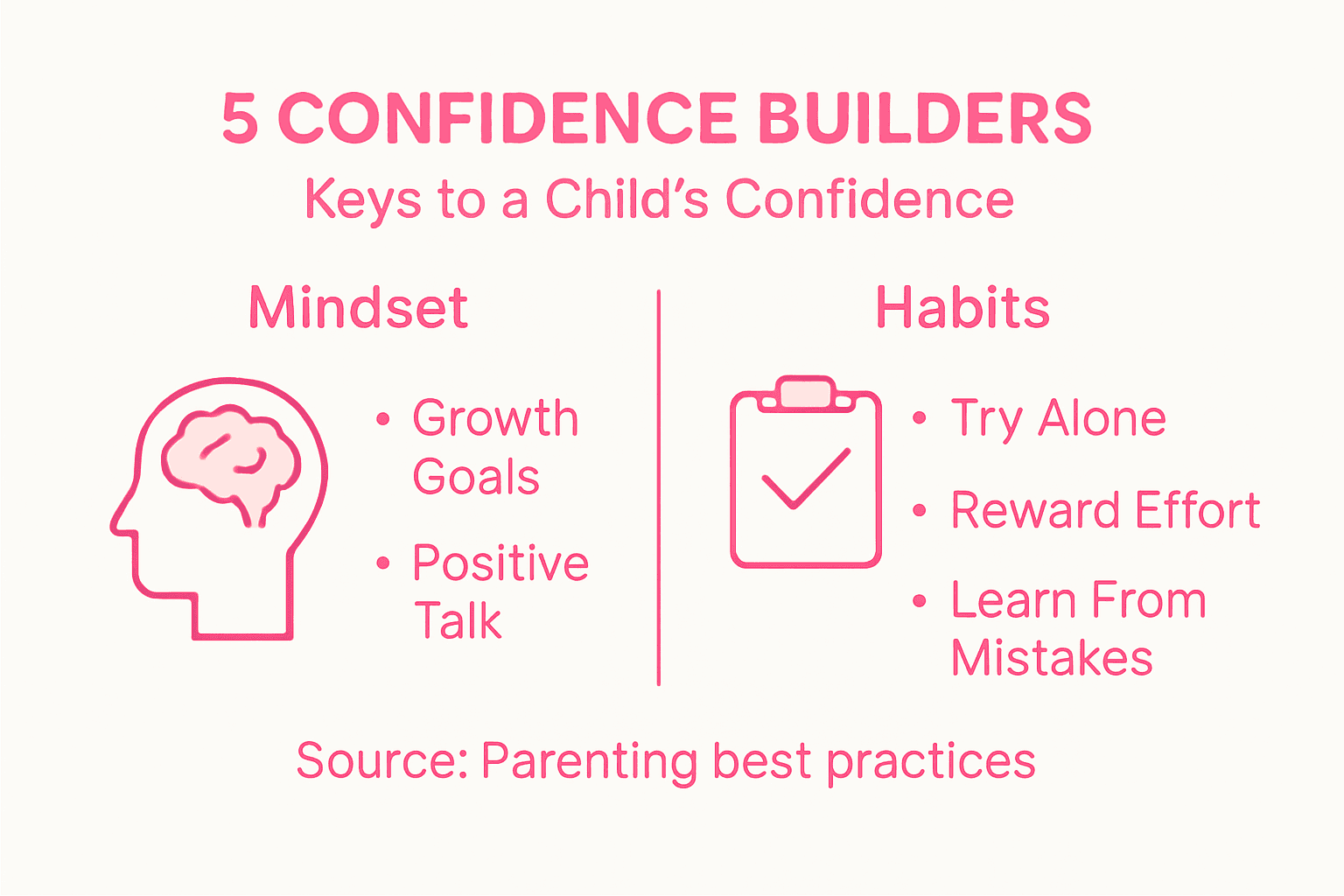
Pro tip: Create a weekly “challenge board” where your child can choose and accomplish small, achievable goals that progressively increase in difficulty.
Practicing Positive Reinforcement at Home
Positive reinforcement is a powerful tool for building your child’s confidence and encouraging desired behaviors. Parents can implement strategic reinforcement techniques that transform everyday interactions into opportunities for growth.
Effective positive reinforcement strategies include:
- Immediate Acknowledgment: Recognizing good behaviors right when they happen
- Specific Praise: Highlighting exact actions or efforts
- Varied Rewards: Using different types of positive reinforcement
- Consistent Application: Maintaining a steady approach
- Authentic Appreciation: Offering genuine, heartfelt recognition
The key is creating a supportive environment where meaningful feedback becomes a natural part of family communication. Children respond best to reinforcement that feels genuine and specific, rather than generic or overly broad praise.
Below is a comparison of common positive reinforcement strategies and their ideal use cases:
| Strategy | Best Used For | Tip for Maximum Effectiveness |
|---|---|---|
| Immediate acknowledgment | Reinforcing new skills | Pair with specific praise |
| Specific praise | Encouraging effort | Focus on what was done well |
| Varied rewards | Maintaining motivation | Rotate types of rewards |
| Consistent application | Building routines | Set clear family expectations |
| Authentic appreciation | Fostering trust | Always be sincere and personal |
Small, consistent moments of recognition can create lasting confidence in children.
Understanding your child’s unique motivators is crucial. What works for one child might not work for another, so pay attention to their individual preferences and emotional responses to different types of positive reinforcement.
Pro tip: Create a personalized reward system that focuses on effort and progress, not just final outcomes.
Nurturing Independence in Daily Routines
Children develop confidence through consistent opportunities to make decisions and manage responsibilities. Parents can create structured routines supporting independence by designing age-appropriate challenges that build self-reliance.
Key strategies for nurturing independence include:
- Gradual Skill Introduction: Breaking complex tasks into manageable steps
- Visual Scheduling: Using charts or calendars to track responsibilities
- Choice Offering: Providing limited options to encourage decision-making
- Consistent Expectations: Maintaining clear, predictable routine structures
- Positive Reinforcement: Celebrating effort and small achievements
Successful independence training requires patience and understanding. Developmental appropriateness is crucial, meaning tasks should match the child’s current cognitive and physical capabilities. Some children progress faster than others, so individualized approaches work best.
Independence isn’t about doing everything alone, but feeling confident in your ability to try.
The goal is creating an environment where children feel empowered to attempt tasks, make mistakes, and learn from their experiences. This approach builds resilience, problem-solving skills, and intrinsic motivation far more effectively than constant parental intervention.
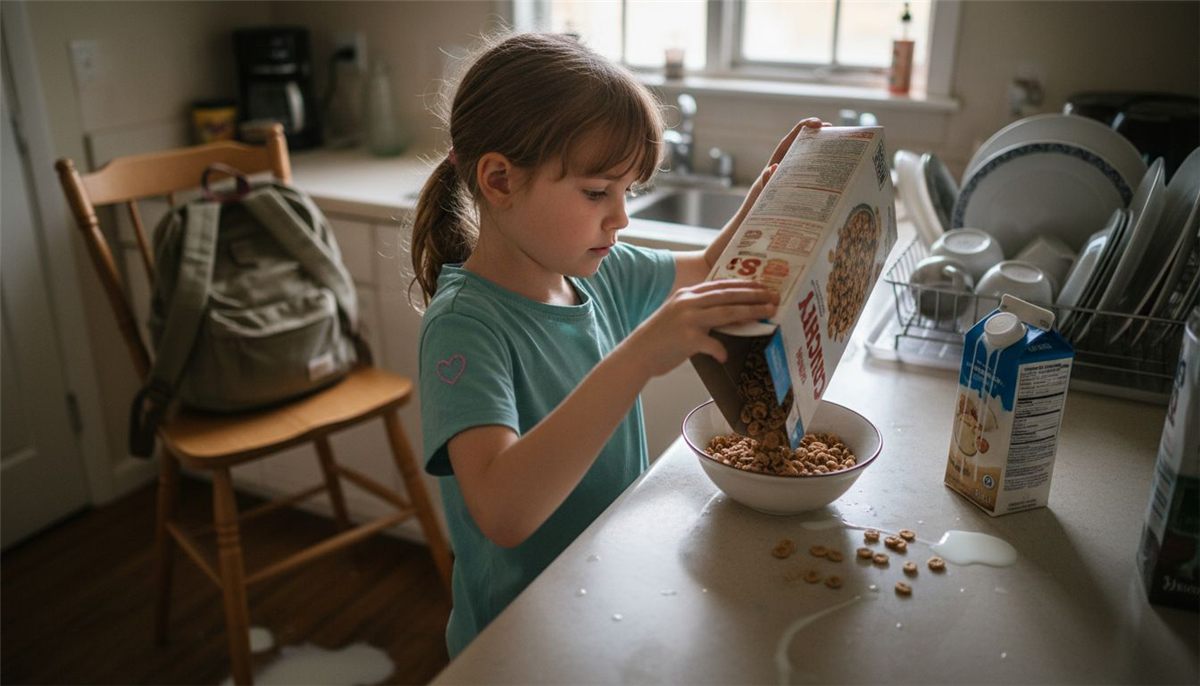
Pro tip: Create a weekly “challenge board” where children can select and complete age-appropriate tasks independently, gradually increasing complexity.
Handling Mistakes and Building Resilience
Mistakes are not failures, but valuable learning opportunities that help children develop emotional intelligence. Parents can understand resilience-building techniques to transform challenging moments into powerful growth experiences.
Critical components of building resilience include:
- Emotional Processing: Teaching children to acknowledge and understand their feelings
- Positive Reframing: Helping kids view challenges as opportunities
- Problem-Solving Skills: Encouraging constructive approaches to difficulties
- Self-Compassion: Developing kind internal dialogue
- Growth Mindset: Understanding that abilities can be developed
Resilient children don’t avoid mistakes – they learn to navigate them with confidence and creativity. Mistake management becomes a critical life skill that extends far beyond childhood, helping children develop adaptability and emotional strength.
Resilience isn’t about never falling, but about rising every time you fall.
The most effective approach involves creating a supportive environment where children feel safe exploring, making mistakes, and learning without fear of harsh judgment. This approach transforms potential moments of shame into powerful opportunities for personal development and self-discovery.
Pro tip: Create a family “mistake ritual” where everyone shares one mistake they learned from each week, normalizing error as part of growth.
Build Lasting Confidence by Creating a Calm and Organized Home
Supporting your child to develop unshakeable confidence starts with providing a nurturing environment that encourages growth and resilience. The article highlights the importance of nurturing independence, positive reinforcement, and emotional resilience. Many parents face the challenge of balancing busy family life while creating spaces where kids feel safe to take on challenges and learn from mistakes.
At Its a Southern Life Yall, we understand that a peaceful and organized home helps reduce stress and promotes consistent routines that build your child’s sense of capability and self-advocacy. Our proven home management systems and productivity tips offer practical solutions to streamline daily family tasks. This means you gain more quality time to encourage your child’s independence and celebrate their small victories.
Experience how simple living strategies can transform your household into a confident growth zone.
Frequently Asked Questions
How can I help my child believe in their own capabilities?
Encourage your child to take on challenges and recognize their efforts in overcoming obstacles. Providing constructive feedback and allowing them to make mistakes will help build their belief in their ability to learn and grow.
What are some effective strategies to teach emotional resilience to my child?
Focus on emotional processing by helping them acknowledge their feelings. Teach them positive reframing techniques to view challenges as opportunities, and encourage problem-solving skills to navigate difficulties more effectively.
How important is a growth mindset in building a child’s confidence?
A growth mindset is crucial as it teaches children that their abilities can be developed through effort and persistence. This perspective fosters resilience and encourages them to embrace challenges rather than shy away from them.
How can I incorporate positive reinforcement into my child’s routine?
Implement immediate acknowledgment of good behaviors, provide specific praise for their efforts, and use varied rewards to maintain motivation. Consistency in your approach will help reinforce desired behaviors and build your child’s confidence.
Recommended
- Raising Confident Kids: Practical Strategies for Resilience – It’s a Southern Life Ya’ll
- 10 Simple Ways to Teach Kids Gratitude and Kindness – It’s a Southern Life Ya’ll
- Talking to Kids About Money—Building Lifelong Skills – It’s a Southern Life Ya’ll
- Sibling Rivalry: Restore Harmony and Build Lifelong Bonds – It’s a Southern Life Ya’ll
- 8 Essential Tips for Camping with Children – Hazli Collection
Keep reading: more parenting help
Want a little more help with this? I made a free Age-by-Age Chore Chart that pairs right up with this post — y’all can grab it over on my Free Resources page.