Positive Parenting 101: Discipline with Love and Respect Guide
Every parent faces that moment when even simple requests spark resistance, leaving you wondering how to guide your children without endless power struggles. The challenge is real for busy American and Canadian families who want discipline to build connection rather than resentment. Embracing positive discipline means you lay the groundwork for mutual respect, clearer routines, and calmer days, creating a home where everyone feels heard and valued as you support your child’s lifelong growth.
Table of Contents
- Step 1: Prepare Your Family for Positive Discipline
- Step 2: Set Clear and Loving Boundaries
- Step 3: Communicate Expectations with Respect
- Step 4: Respond Calmly to Misbehavior
- Step 5: Reinforce Positive Choices Daily
- Step 6: Review Progress and Adjust Strategies
Quick Summary
| Key Point | Explanation |
|---|---|
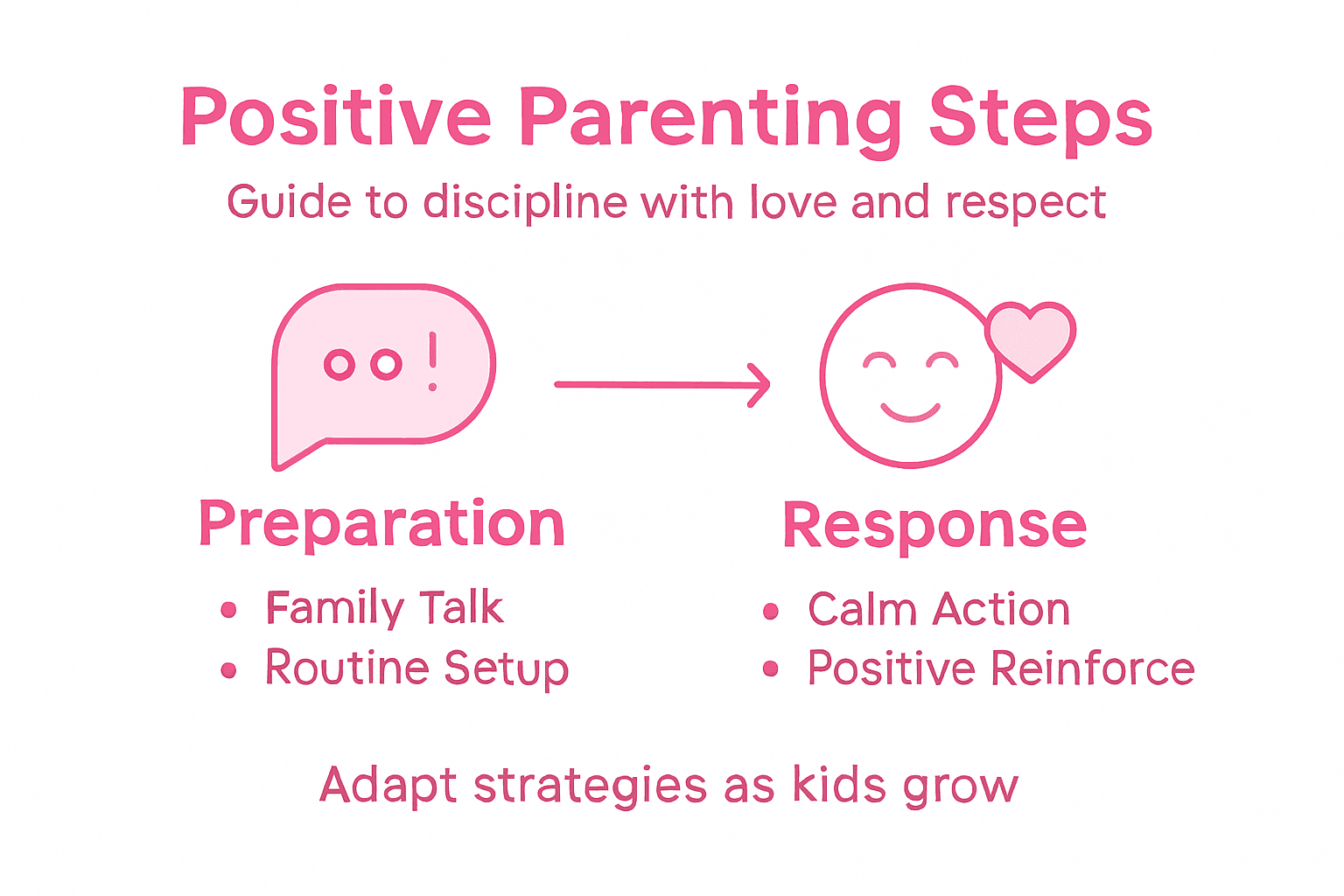
| 1. Foster Open Family Conversations | Begin by explaining the positive discipline shift to your family, emphasizing love and respect to promote cooperation. |
| 2. Set Consistent Boundaries | Clearly define and consistently apply boundaries, so children understand limits and feel secure in their environment. |
| 3. Communicate Expectations Respectfully | Use clear language and a calm tone to outline expectations, ensuring children understand what is required and why. |
| 4. Respond Calmly to Misbehavior | When faced with misbehavior, take a moment to calm yourself before responding, modeling emotional regulation for your child. |
| 5. Reinforce Positive Choices | Acknowledge and reward positive behaviors specifically and immediately to encourage repetition and build your child’s self-esteem. |
Step 1: Prepare Your Family for Positive Discipline
Before you can expect your kids to respond to a new discipline approach, you need to lay the groundwork. Think of this step like preparing the soil before planting a garden. You’re not just changing the rules, you’re shifting the entire culture of your household toward respect and mutual understanding. That’s big work, but it’s absolutely worth it.
Start by having honest conversations with your family about what you’re doing and why. Sit down with your kids and explain that you’re making a change because you love them and want your home to feel calmer and more respectful. Use language they understand. For younger children, keep it simple: “We’re going to try new ways of helping each other make good choices.” With older kids, you can be more detailed. Let them know that mistakes are learning opportunities, not reasons to punish. This transparency matters more than you’d think. When kids understand the “why” behind the shift, they’re far more likely to cooperate.
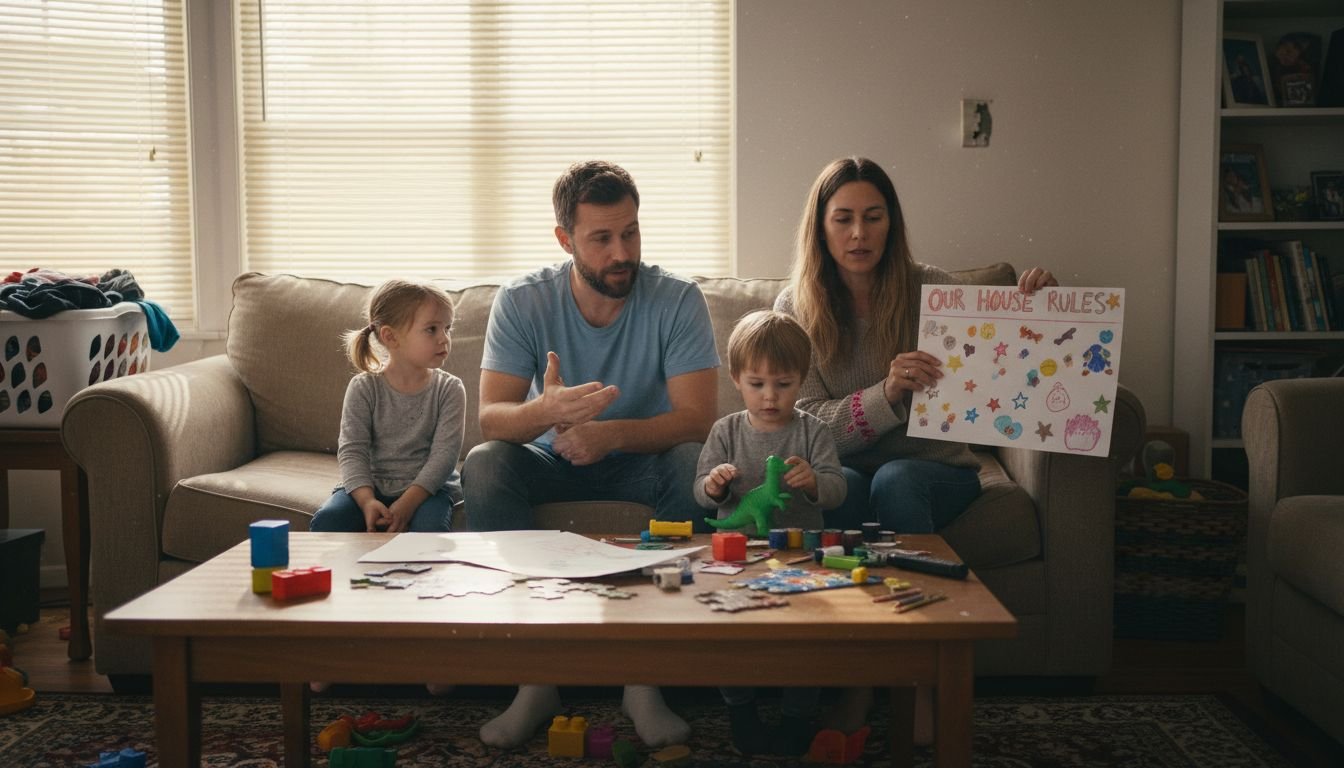
Next, establish basic routines and expectations before diving into specific discipline strategies. Family meetings work beautifully for this because they give everyone a voice in creating the rules. Let your children help decide what respect looks like in your home, what reasonable consequences are, and how your family wants to treat each other. When kids are part of the decision-making process, they feel ownership of the rules instead of resentment. You might discuss things like how family members will communicate when frustrated, what happens when someone makes a mistake, and how you’ll solve problems together.
Consider creating simple visual reminders of your family expectations. This could be a chart on the fridge, a poster in the kitchen, or even a list you review each morning. The goal isn’t to shame anyone or create a “naughty list.” It’s to keep everyone on the same page about what your family values. If your children help design these reminders, they’ll actually pay attention to them.
It’s also worth thinking about your physical space. When you’re implementing positive discipline techniques, a calm, organized home environment makes everything easier. You’ll find it harder to stay patient and consistent in chaos. Take some time to declutter problem areas where conflicts often happen, whether that’s the bedroom, kitchen, or living room. A more peaceful setting naturally supports a more peaceful approach to discipline.
Talk with your partner or co-parent about this shift too. You need to be on the same page about your new discipline style, or your kids will play you against each other. Discuss your personal goals for the family, your fears about the change, and how you want to support each other when things get tough. This alignment matters because children are incredibly quick to spot when parents aren’t consistent.
Finally, prepare yourself emotionally. Positive discipline requires patience you might not have practiced before. You’re going to be tempted to yell. You’re going to feel frustrated. That’s normal. Give yourself grace. The point isn’t to become a perfect parent overnight. It’s to gradually shift toward a more respectful, connected way of parenting.
Pro tip: Start this transition during a calm period when no major conflicts are happening. Avoid launching positive discipline during a stressful time like a move, a new sibling’s arrival, or right after a big family conflict. You’ll have better success when everyone’s emotional baseline is more stable.
Step 2: Set Clear and Loving Boundaries
Boundaries are one of the most misunderstood parts of positive parenting. Many parents think boundaries mean being strict or disconnected, but that’s the opposite of what they actually are. Think of boundaries as guardrails on a bridge. They’re not there to punish you for wanting to cross. They’re there to keep you safe while you explore. The same goes for your kids. Clear boundaries combined with love create an environment where children feel secure enough to grow.
Start by getting clear on your own values and limits first. Before you can communicate boundaries to your kids, you need to know what they are. Ask yourself these questions: What behavior truly bothers me and why? What am I willing to accept in my home? What are my non-negotiables versus what’s negotiable? Write them down if that helps. Maybe your non-negotiable is that no one speaks disrespectfully to another family member. Maybe physical safety is paramount. Maybe you’re flexible about screen time but firm about bedtimes. Whatever your boundaries are, own them. Kids can sense when you’re uncertain, and they’ll test uncertain boundaries every single time.
Now express these boundaries in clear, simple language. This is where healthy family boundaries become powerful tools instead of sources of conflict. Instead of saying “Stop being disrespectful,” you might say “I love you and I won’t listen when you talk to me that way. Let’s take a break and try again.” Instead of “Don’t be so loud,” try “Our family uses quiet voices in the house after 8 p.m. so everyone can rest.” The difference is huge. You’re explaining the boundary and the reason without shaming or attacking your child’s character.
Make sure your boundaries apply consistently. This is absolutely critical. If you say screen time ends at 6 p.m. on school nights, that needs to be true for everyone, every time. Not just when you’re feeling patient. Not just on days when your child hasn’t already annoyed you. Consistency is what makes boundaries actually work. Children need to know they can count on what you say. When your boundaries are reliable, kids stop fighting them as hard because they realize the boundary isn’t negotiable.
When your child tests a boundary, which they absolutely will, respond with calm firmness. Your tone and body language matter as much as your words. You’re not angry at your child for testing the limit. You’re simply enforcing what you already said. “I see you’re trying to stay up past bedtime. That’s not how it works in our family. Bedtime is 8 p.m.” Then follow through. No lectures. No guilt trips. No watering down the boundary because your child is upset. This sounds cold written out, but it actually feels incredibly loving to kids because they know exactly where they stand.
Include your children in creating some boundaries so they feel heard and respected. You’re not asking permission. You’re being collaborative where it makes sense. For example, “We need quiet time in the afternoon. What times work best for you?” Or “Fighting isn’t allowed in our house. What should we do instead when we’re angry?” When kids help develop the rules, they understand them better and they’re more invested in following them. They also learn that boundaries can be firm and fair at the same time.
Pro tip: State boundaries in positive terms whenever possible. Instead of “Don’t hit,” try “We use gentle hands in our family.” Instead of “Don’t interrupt,” try “We listen to each other finish speaking.” Positive framing gives kids something to do rather than just something to avoid, and it builds the behavior you actually want to see.
Step 3: Communicate Expectations with Respect
How you tell your kids what you expect matters just as much as what you expect. The words you choose, your tone of voice, and your body language all send messages about whether you respect your child as a person. When you communicate expectations with respect, you’re not just giving orders. You’re teaching your child how to listen, process information, and ultimately, how to treat others with the same consideration.
Start with clarity over perfection. Your child can’t meet an expectation they don’t understand. Instead of assuming they know what you mean, spell it out in concrete terms. Rather than saying “Be good at your cousin’s house,” try “At your cousin’s house, we’ll use inside voices, ask before touching toys, and help with cleanup before we leave.” Give them a picture they can actually visualize. This approach works across all ages. A three-year-old needs to see what “gentle hands” looks like. A nine-year-old needs to know specifically what “responsible” means in your family. When expectations are clear, you remove the guesswork and the opportunity for arguments about what you actually meant.
Respectful communication in parenting centers on building understanding rather than demanding compliance. This means explaining the “why” behind your expectations whenever possible. Kids are far more likely to cooperate when they understand the reasoning. “I need you to put your shoes on now because we’re leaving in five minutes and I want us to get there on time” is more effective than “Put your shoes on. Now.” The first option invites cooperation. The second invites resistance. You’re not being weak by explaining. You’re actually being stronger because your child internalizes the logic and can apply it to future situations.
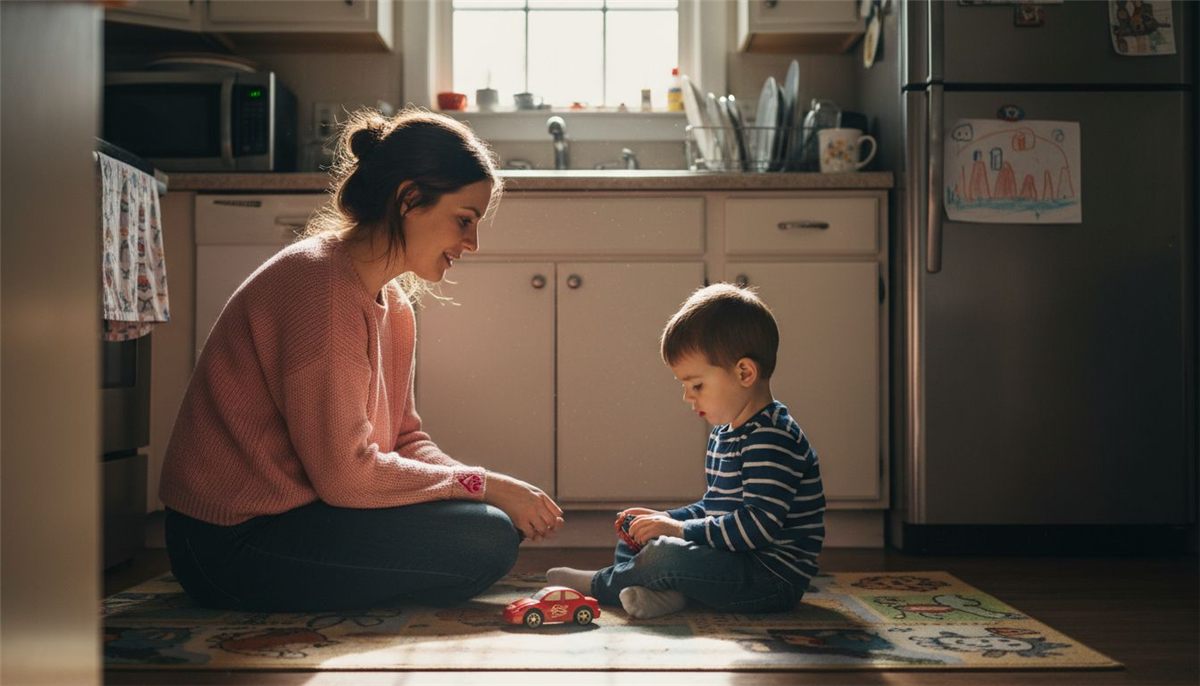
Pay attention to your tone and body language as you communicate. If your words say “I respect you” but your voice is dripping with frustration or your arms are crossed defensively, your child hears the contradiction. They trust nonverbal communication more than words. Take a breath before you speak. Get down to eye level with younger children. Keep your voice calm and steady. You want your child to feel like you’re on the same team, not that you’re their adversary. That doesn’t mean being passive or permissive. It means being firm and fair simultaneously.
When setting expectations, view situations from your child’s perspective to communicate more effectively. Why might your child resist cleaning their room? Maybe it feels overwhelming. Maybe they’re tired. Maybe they don’t understand where things go. Rather than assuming laziness or defiance, ask yourself what’s actually happening. Then adjust your communication. “Your room feels really messy right now. Let’s pick out five things to put away together, and that’s enough for today.” You’re still setting the expectation, but you’re acknowledging their reality and meeting them partway. This builds cooperation instead of resentment.
Give your child time to process what you’ve said. After you communicate an expectation, pause. Don’t immediately repeat it or add consequences. Let them sit with the information for a moment. Some kids need time to shift gears mentally. Jumping straight to “Do it now or else” cuts off that processing time and triggers defensiveness. A simple “I know this is a transition. Let me know when you’re ready” gives them space while still holding the boundary.
Use language that shows you believe in your child’s ability to meet the expectation. Instead of “You always leave your stuff everywhere,” try “I’ve noticed your backpack hasn’t made it to the hook. I know you can remember that.” The first statement attacks their character and makes them defensive. The second is factual and assumes competence. Over time, this kind of respectful communication builds your child’s confidence in themselves. They start believing they can actually do what you’re asking.
Pro tip: Deliver expectations when everyone is calm and fed, preferably not right in the middle of conflict or right before bedtime when emotions run high. Your child will hear and remember your expectations far better when their nervous system isn’t already activated.
Step 4: Respond Calmly to Misbehavior
Your child just did something that makes your blood boil. Maybe they talked back. Maybe they hit their sibling. Maybe they deliberately ignored you for the hundredth time today. In that moment, everything you’ve learned about positive discipline can feel impossible to remember. But here’s the thing: how you respond when you’re upset is actually when your response matters most. This is where the real teaching happens.
First, understand that misbehavior isn’t personal. Children’s misbehavior often stems from underdeveloped emotional regulation skills rather than a desire to make you miserable. Your five-year-old who threw a tantrum because you cut her sandwich the wrong way isn’t trying to ruin your day. Your eight-year-old who yelled at you isn’t a disrespectful kid. They’re kids whose brains are still learning how to manage big emotions. This mindset shift changes everything. Instead of taking misbehavior as an attack, you can see it as a teaching moment.
When misbehavior happens, your first job is to calm yourself. Yes, really. Before you do anything else, take a breath. Count to five if you need to. Step away for ten seconds if possible. Your child’s nervous system is already activated, and if yours becomes activated too, you’re now dealing with two people in fight-or-flight mode. Nothing good happens there. When you stay calm, you model the very emotional regulation you’re trying to teach. Your child sees that an adult can handle frustration without yelling or losing control. That’s powerful.
Next, pause before responding. You don’t have to react immediately. Saying “I need a moment to think about this” buys you time and shows your child that thoughtful responses are better than reactive ones. This pause also prevents you from saying things you’ll regret. Once words leave your mouth, you can’t take them back. Your child will remember the harsh thing you said far longer than they remember the misbehavior.
When you’re ready to respond, keep it brief and direct. Quick, firm, and respectful intervention stops the behavior and teaches self-regulation. Say what you see, what you need, and what happens next. “I see you’re really angry. I won’t let you hit. Let’s go take some space.” You’re not lecturing. You’re not asking why they did it. You’re not rehashing every similar incident from the past month. You’re simply stating the reality and offering a path forward. Lectures come later, when emotions have settled.
Use your physical proximity and tone strategically. Getting closer to your child, lowering your voice, and making eye contact sends a message of connection even during correction. You’re not distant or cold. You’re present and steady. This matters because kids are more likely to listen to someone they feel connected to. If you’re yelling from across the room, your child’s brain is in survival mode, not learning mode.
Offer a way to fix it or move forward. When possible, let your child participate in the solution. “You knocked over the blocks in anger. What do you think we should do?” Instead of punishment for punishment’s sake, you’re teaching problem-solving. Sometimes the solution is rebuilding what was knocked over. Sometimes it’s taking a break to calm down. Sometimes it’s apologizing. The point is that your child learns that misbehavior can be repaired, and they have agency in that process.
Be consistent in your calm responses. Kids test boundaries constantly, and they’re looking to see if you’ll stay calm or if you’ll blow up. When you respond calmly to the twentieth incident the same way you responded to the first, your child learns that your calm isn’t a fluke. It’s who you are. That consistency eventually reduces misbehavior because your child realizes that big reactions don’t work anymore.
Remember that staying calm doesn’t mean being soft. You can be simultaneously calm and firm. You can set consequences without anger. You can maintain a boundary without raising your voice. In fact, calm discipline is far more powerful than angry discipline because it teaches children that rules matter regardless of emotion, and that adults can handle difficult moments with grace.
Pro tip: If you feel yourself about to lose control, say out loud to your child that you need to take a break. “I’m getting too frustrated right now, so I’m going to take five minutes in the other room. We’ll talk about this after.” This models exactly what you want your child to do when they’re overwhelmed, and it prevents you from saying something you can’t take back.
Step 5: Reinforce Positive Choices Daily
You’ve set boundaries, communicated expectations, and responded calmly to misbehavior. Now comes the part that actually sticks with your kids: noticing when they do things right. Most parents are pretty good at catching misbehavior. We spot the mess, the eye roll, the unkind word instantly. But positive choices? Those often slip by without comment. This is where you’re missing one of the most powerful tools in positive parenting.
When your child makes a positive choice, acknowledge it specifically and immediately. Notice I didn’t say praise everything. Generic praise like “Good job” or “You’re so smart” doesn’t actually teach anything or build confidence. Instead, be specific about what you saw and why it matters. “You got ready for school without arguing this morning, and we got here on time. That made my whole day easier” is far more powerful than “You’re awesome.” The first version shows your child exactly what behavior you noticed, why it mattered, and how it affected someone they care about. The second is just a vague compliment.
Focus on effort over outcomes. Daily reinforcement of positive behavior through specific praise builds self-esteem and creates a pattern of continued good choices. When your child tries hard even if they don’t succeed, acknowledge the effort. “You were frustrated with that puzzle, but you kept trying. That’s what perseverance looks like” teaches your child that effort matters more than perfection. Kids who learn this are far more resilient later because they don’t give up when things get hard.
Catch them being good throughout the day, not just at the end. If you notice your seven-year-old being kind to their sibling, mention it in the moment. “I saw you help your brother find his favorite toy without being asked. That was really thoughtful.” Don’t wait until bedtime to mention something good that happened in the morning. The closer the reinforcement is to the behavior, the more your child connects the two. They understand what specific action earned the recognition.
Use continuous encouragement and affirmation to build your child’s confidence in their own abilities. Rather than focusing on comparing your child to others or to some external standard, help them see their own progress. “Last week you were worried about the soccer tryouts. You were nervous, but you went anyway. Look at how brave you are.” You’re reminding them of their own strengths and building belief in themselves.
Variety keeps reinforcement meaningful. Sometimes it’s a few specific words. Sometimes it’s a hug or high five. Sometimes it’s spending one-on-one time doing something they enjoy. Sometimes it’s a note left on their pillow. Mixing it up prevents reinforcement from feeling rote or fake. Kids catch on quickly when they’re being praised just because a parenting book says to do it. Keep it genuine and varied.
Don’t pair positive reinforcement with criticism. This sounds obvious, but many parents do this without realizing it. “You did your homework without being asked, but why didn’t you do it earlier?” That backhand criticism erases the positive completely. If you notice something positive, let it stand on its own. The criticism can come separately if it needs to come at all.
Remember that you’re building long-term patterns. When you consistently reinforce positive choices, your child gradually internalizes what good choices look like. They start making those choices not because you’re watching, but because they understand the values behind them. A child who’s praised for honesty learns to value honesty. A child who’s acknowledged for kindness learns to value kindness. You’re not just managing behavior. You’re shaping character.
Use a free habit tracker to help you notice and record positive behaviors consistently. Sometimes our brains are so full that we genuinely forget to acknowledge the good stuff. A simple visual tracker reminds you to pause and notice what your child is doing right, and you can review it together to celebrate progress.
Pro tip: Create a special signal or phrase that means “I noticed something great about you today.” Use it consistently so your child knows that when you say it, something positive is coming. This builds anticipation and helps them pay attention to their own positive choices throughout the day.
Step 6: Review Progress and Adjust Strategies
Positive discipline isn’t a set-it-and-forget-it system. What works beautifully for your six-year-old might not work at all when they turn eight. What helps your firstborn manage emotions might completely miss the mark with your second child. This is why reflection and adjustment are absolutely essential. You’re not failing if something isn’t working. You’re actually doing exactly what you need to do by noticing and changing course.
Set aside time weekly to think about what’s working and what isn’t. This doesn’t need to be complicated. Maybe it’s fifteen minutes on Sunday evening, or while you’re having your morning coffee on Friday. Ask yourself honest questions. Which discipline strategies actually reduced the behavior you wanted to address? Which ones felt forced or didn’t seem to matter? Where did you struggle most? When did things go smoothly? You don’t need a fancy journal or system. A few notes on your phone work perfectly fine. The point is to create space for reflection instead of just moving from one day to the next on autopilot.
Continually reflect on your parenting approaches and assess your child’s development to stay responsive to their changing needs. Your child is growing and evolving constantly, and their needs shift along with them. The boundary-setting techniques that worked when they were four might need tweaking now that they’re seven. What motivated them last year might not land the same way this year. By regularly assessing what you’re seeing, you stay ahead of those changes instead of wondering why something suddenly stopped working.
Look for patterns rather than isolated incidents. One time your child talked back doesn’t mean your communication strategy failed. But if talking back has happened seventeen times this month and only twice last month, that’s a pattern worth investigating. What changed? Did something happen at school? Is there a new stress at home? Are you tired and less patient, which might be affecting how they respond to you? Patterns tell you the real story. Random incidents are just noise.
Involve your child in the review process where appropriate. Kids benefit from understanding that strategies can change and improve. You might say to your eight-year-old, “We’ve been trying a new way to handle bedtime arguments. Is it working better for you? What would make it even easier?” Their perspective matters. They might see something you’re missing. Plus, when they have input on adjustments, they’re more invested in trying the new approach.
Set goals, celebrate achievements, and modify approaches.pdf) to foster your child’s growth and address challenges effectively. Don’t just adjust when things go wrong. Also celebrate when things go right and set new goals based on progress. Maybe your goal was reducing morning arguments about getting dressed. If that’s improved significantly, celebrate it together and then set a new goal. Perhaps you want to work on bedtime cooperation next. Setting and celebrating goals gives your child something to work toward and shows them that positive progress is recognized.
Be willing to try completely different approaches if needed. Sometimes the issue isn’t that you’re not implementing a strategy well. It’s that the strategy itself doesn’t match your child’s temperament or learning style. Some kids respond beautifully to logical consequences. Others do better with time to process. Some kids need physical movement to calm down. Others need quiet. If a strategy has been genuinely tried for several weeks without improvement, it’s okay to abandon it and try something completely different. There’s no shame in that. It’s actually wisdom.
Adjustment doesn’t mean you failed at consistency. Consistency and flexibility aren’t opposites. You can be consistent about your values and non-negotiables while being flexible about the specific strategies you use to get there. Your non-negotiable might be that family members speak respectfully to each other. But if one strategy for teaching that isn’t working, adjusting to a different strategy doesn’t break your consistency. You’re still holding the same boundary. You’re just taking a different path to get there.
Share information with your child’s teacher or other caregivers if they’re involved in your child’s life. What you’re noticing at home might be different from what’s happening at school, and that information matters. If you’ve adjusted your approach and seen improvement, mentioning that to teachers helps them understand your child better and might even inspire them to try similar techniques.
Pro tip: Track one specific behavior or goal for two weeks before deciding whether a strategy is working or not, rather than constantly changing approaches based on a rough day or two. Most strategies need at least that long to show results, and constantly shifting tactics prevents your child from ever really settling into a new pattern.
Use this table to compare common discipline mistakes with positive discipline alternatives:
| Common Mistake | Positive Discipline Alternative | Benefit of the Change |
|---|---|---|
| Yelling in frustration | Take a calming pause before responding | Models emotional regulation |
| Vague expectations | Give specific, actionable instructions | Reduces confusion and misbehavior |
| Inconsistent rules | Apply boundaries reliably every time | Builds security and predictability |
| Focusing on negative behavior | Acknowledge and reinforce positives | Motivates repeated good actions |
| Ignoring child’s input | Involve child in problem-solving | Boosts cooperation and buy-in |
Here’s a summary of positive discipline steps and the main change they require from parents:
| Step | Key Parent Shift | Desired Outcome |
|---|---|---|
| Prepare for Positive Discipline | Foster openness and transparency | Build trust and reduce resistance |
| Set Boundaries | Shift from control to collaboration | Establish fair rules and security |
| Communicate Expectations | Move from commands to conversation | Enhance understanding and respect |
| Respond Calmly | Replace reaction with reflection | Model self-control for children |
| Reinforce Positive Choices | Shift focus from mistakes to successes | Encourage positive behaviors daily |
| Review and Adjust | Adopt flexibility alongside consistency | Improve strategies to fit child’s needs |
Create a Calm and Organized Home That Supports Positive Parenting
Positive parenting, as outlined in the article, calls for patience, consistency, and clear boundaries to build trust and respect within your family. Yet, managing day-to-day chaos, setting routines, and creating a peaceful environment can feel overwhelming when juggling busy family life. If you find yourself struggling to maintain calm spaces or keep track of family expectations, you are not alone.
At Its A Southern Life Yall, we understand how crucial an organized home and simple living strategies are for sustaining positive discipline. Our proven organization hacks and home management systems help you establish the peaceful, structured environment your family needs to thrive. When your space supports your parenting goals, you can respond calmly to misbehavior, reinforce positive choices daily, and review progress with clarity.
Start transforming your home today and create the foundation for discipline done with love and respect. Explore our solutions now at Its A Southern Life Yall and take the next step toward a balanced and joyful family life.
Frequently Asked Questions
What is positive discipline in parenting?
Positive discipline is an approach that emphasizes guidance, respect, and connection rather than punishment. It focuses on teaching children how to make good choices while fostering a loving and supportive environment. Start by discussing your family values and creating clear expectations together with your children to lay the groundwork for positive discipline.
How can I prepare my family for positive discipline?
To prepare your family, have honest conversations about the changes you want to make and why they matter. Establish routines, set mutual expectations, and involve your children in decision-making to create a sense of ownership. Aim to make these preparations before any conflicts arise to ensure everyone is emotionally stable.
How do I set boundaries using positive discipline?
Set boundaries by first identifying your personal values and non-negotiables. Communicate these boundaries clearly and consistently, explaining their importance without shaming your child. Collaborate with your children to establish some boundaries, allowing them to feel included and respected in the process.
What are effective ways to communicate expectations with my children?
Communicate expectations by being clear and specific about what you want from your child. Use concrete examples and state the reasoning behind your expectations to encourage cooperation. Always check in with your child to ensure they understand, and consider giving them time to process your requests before expecting action.
How should I respond to my child’s misbehavior?
Respond calmly by taking a moment to collect yourself before addressing your child’s misbehavior. Use brief, direct statements to acknowledge the behavior and set clear boundaries, ensuring you model the emotional regulation you want your child to learn. Be consistent in your approach to reinforce your boundaries over time.
How can I reinforce positive choices in my child?
Reinforce positive choices by acknowledging specific actions immediately when you notice them. Instead of generic praise, detail what your child did right and explain why it mattered to you. Aim to recognize their positive behavior throughout the day to solidify those choices as they learn to internalize what is valued.
Recommended
- 7 Ways to Handle What to Do if Your Teen Refuses to Take Responsibility – It’s a Southern Life Ya’ll
- Instituting Chores for your Children and Teens Easily – It’s a Southern Life Ya’ll
- Understanding Productivity Tips for Parents Guide – It’s a Southern Life Ya’ll
- 7 Effective Tips on How to Get Your Teen to Do Chores Without Nagging – It’s a Southern Life Ya’ll
Keep reading: more parenting help