
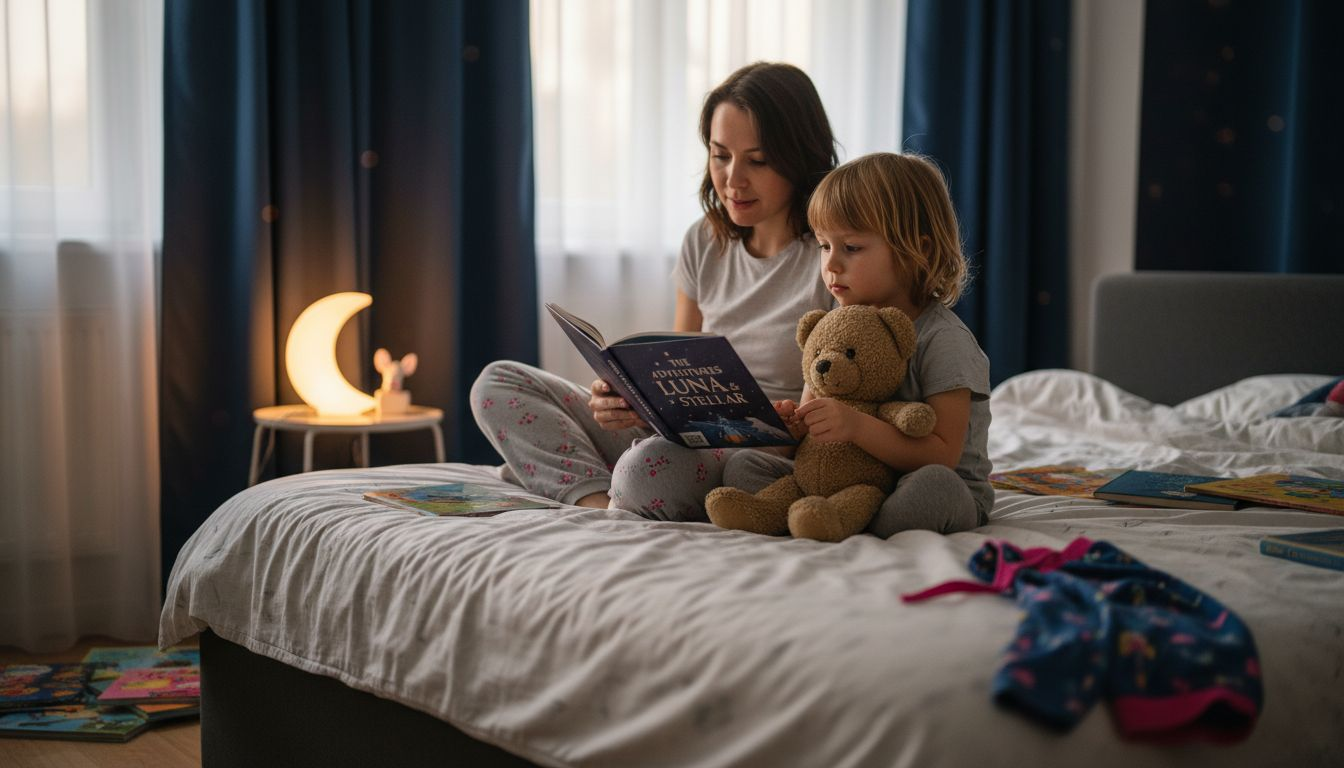
Bedtime Routine for Kids: Creating Calm Nights
Every parent faces those long, restless evenings when bedtime feels more like a battle than a gentle transition. For families across North America, establishing a reliable nighttime routine offers more than just a smoother end to the day. Research shows that a consistent bedtime routine supports better sleep, emotional regulation, and a stronger parent-child bond, laying the foundation for lifelong healthy habits. Discover practical strategies to craft routines that work even amidst busy schedules and make your evenings feel more peaceful.
Table of Contents
- What Is A Bedtime Routine For Kids?
- Science-Backed Benefits For Child Sleep
- Key Steps In Building A Consistent Routine
- Customizing Routines For Family Schedules
- Common Mistakes That Disrupt Children’s Sleep
Key Takeaways
| Point | Details |
|---|---|
| Consistent Bedtime Routine | Establishing a predictable bedtime routine helps children transition from daily activities to sleep, reducing anxiety and resistance. |
| Importance of Sleep | Adequate sleep supports children’s brain development, emotional regulation, and behavior management, fostering better learning outcomes. |
| Customize for Family Needs | Tailoring bedtime routines to fit family schedules and individual preferences enhances cooperation and routine adherence. |
| Avoid Common Mistakes | Inconsistency, screen time before bed, and chaotic environments can disrupt sleep quality, leading to negative behavioral outcomes. |
What Is a Bedtime Routine for Kids?
A bedtime routine for kids is simply a predictable series of calming activities you do with your child every single night before sleep. Think of it like a wind-down sequence that tells their brain “Hey, sleep is coming.” Instead of jumping straight from playtime to bed, you’re creating a bridge that helps them transition from the busyness of the day into rest mode. This routine works because children thrive on consistency and predictability. When kids know what to expect each night in the same order, it reduces their anxiety about bedtime and helps them actually want to go to sleep.
A solid bedtime routine typically includes activities like a warm bath, brushing teeth, putting on pajamas, reading stories, and maybe some gentle music or quiet conversation. The goal is to include calming activities that relax the body and signal that it’s time to wind down. You want to start your routine about 30 minutes to an hour before the actual bedtime, giving your child’s nervous system time to shift gears. Setting a consistent bedtime that aligns with your child’s natural sleep needs matters too. Most preschoolers need 10 to 13 hours of sleep per night, while school-age kids need 9 to 12 hours. Your routine should end right around that consistent bedtime every single night, even on weekends.
Why does this matter so much? Research shows that bedtime routines support better sleep, language development, emotional regulation, and stronger parent-child bonds. When children know their routine, they resist bedtime less often. That means fewer battles, less stress for you, and better sleep for everyone. Plus, starting a routine early (even by six months old) helps your child develop healthy sleep habits that can last a lifetime. It’s not about rigid perfection, though. Your routine just needs to work for your family and stay consistent enough that your kiddo recognizes the pattern.
Pro tip: Start your bedtime routine at the same time every evening and stick to it for at least two weeks before expecting real changes, because kids need time to adjust to new patterns.
Science-Backed Benefits for Child Sleep
You might think bedtime is just about getting your kid to stop bouncing off the walls, but what’s actually happening during sleep is nothing short of remarkable. When your child sleeps well, their brain is literally building itself. During those quiet hours, the developing brain consolidates memories, processes emotions, and strengthens neural connections that support learning and growth. Adequate sleep promotes attention, learning, memory, and emotional regulation in ways that can’t happen when your child is awake. This isn’t just feel-good parenting talk. This is how your child’s brain develops the ability to focus in school, manage frustration, and build healthy relationships.
Here’s something that might surprise you: a consistent bedtime routine doesn’t just help tonight’s sleep. It shapes your child’s emotional and behavioral development in ways that last well into their future. Research shows that consistent bedtimes strengthen emotional regulation and impulse control far better than inconsistent sleep schedules do. Children with regular sleep patterns handle stress more effectively and make better choices throughout the day. When bedtimes bounce all over the place, your child’s nervous system stays in a kind of constant scramble mode. Their stress hormones don’t have a chance to settle, which means more meltdowns, more resistance at bedtime, and more behavioral struggles during the day.
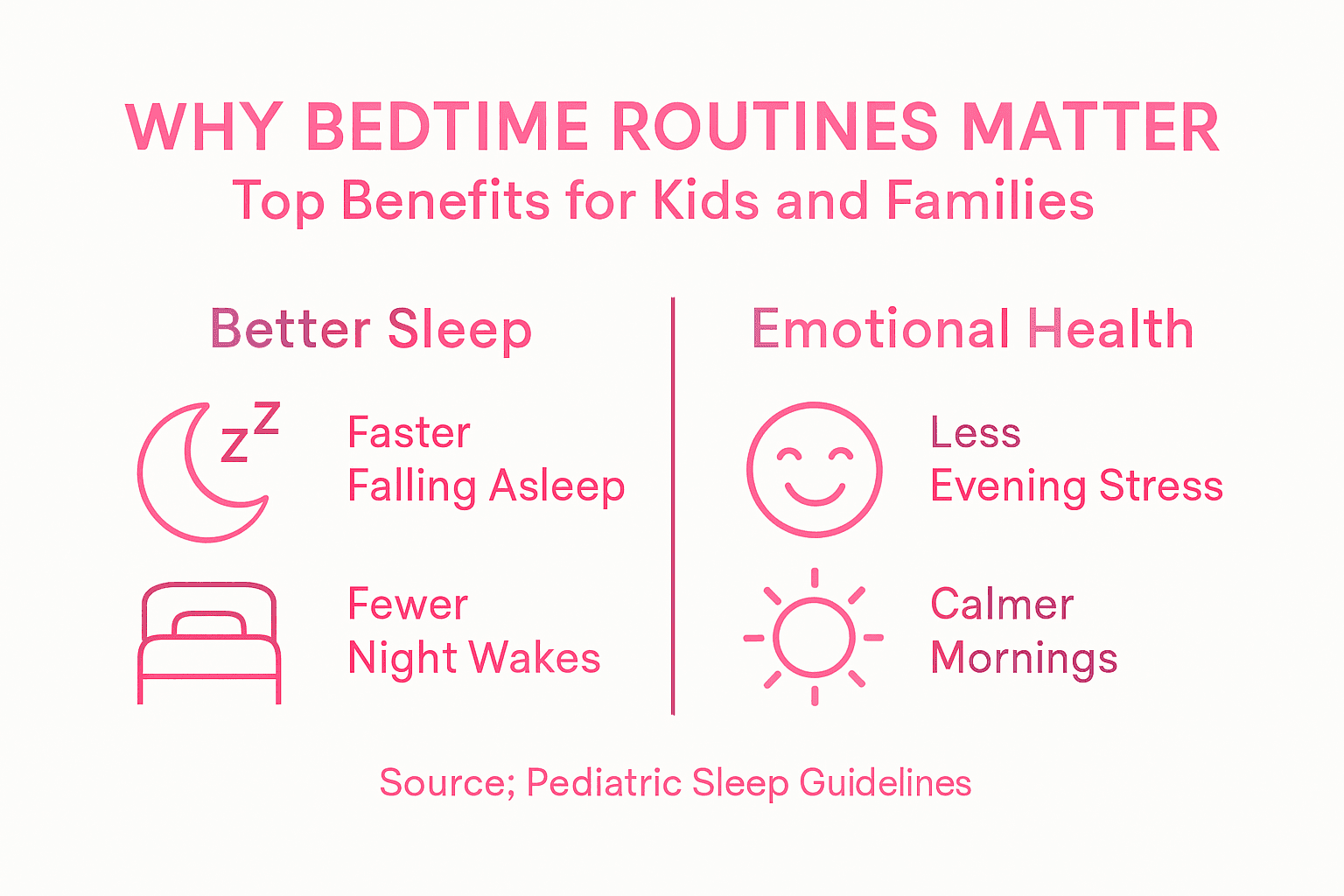
Beyond behavior and emotions, sleep directly impacts your child’s physical health and immune function. Consistent, adequate sleep reduces the risk of behavioral problems and supports healthy development of both the brain and body. If you’ve ever noticed your child gets sick more often when their sleep schedule falls apart, that’s not coincidence. Their immune system literally works better when they’re getting the right amount of sleep on a regular schedule. Plus, kids who sleep well have better attention spans, learn more effectively, and experience a genuinely higher quality of life. That bedtime routine you’re considering isn’t an extra thing to squeeze into an already packed day. It’s an investment in your child’s health, behavior, learning, and emotional well-being.
Pro tip: Track your child’s behavior and mood for a week before starting a consistent routine, then compare after two weeks of consistent sleep schedules to see the positive changes for yourself.
Here’s a quick overview of how bedtime routine quality affects children’s well-being:
| Routine Quality | Sleep Quality Impact | Emotional/Behavioral Effects | Long-Term Benefits |
|---|---|---|---|
| Consistent & Predictable | Better, deeper sleep | Fewer meltdowns, better mood | Improved focus, healthy habits |
| Inconsistent | Poor, disrupted sleep | More resistance, higher anxiety | Risk of sleep issues, less focus |
| Age-appropriate | Easier sleep onset | Better self-regulation | Stronger lifelong sleep patterns |
Key Steps in Building a Consistent Routine
Building a bedtime routine that actually works doesn’t require complicated steps or expensive gear. What it does require is intentionality and consistency. Start by choosing a realistic bedtime that aligns with when your child naturally wakes up and how much sleep they need for their age. If your six-year-old needs to wake at 7 a.m. and requires 10 hours of sleep, their bedtime should be around 9 p.m. Work backward from there. Once you’ve picked your time, commit to it. This sounds simple, but sticking to the same bedtime even on weekends is one of the most powerful things you can do for your child’s sleep. Your child’s body clock will start anticipating sleep at that exact time, making the whole process feel more natural.
Next, design your wind-down sequence. Creating a calm, predictable sequence of activities done in the same order each night works far better than random activities thrown together. A solid routine might look like this: bath or wash-up, put on pajamas, brush teeth, read a story, dim the lights, and snuggle time. Keep it simple and realistic for your family. If you’re exhausted after a long day, a ten-step routine will fall apart. Instead, choose activities that genuinely calm your child and that you can sustain. Starting your wind-down activities 30 to 45 minutes before the target bedtime gives your child’s nervous system time to transition from daytime energy to sleep mode. This buffer time matters way more than you might think.
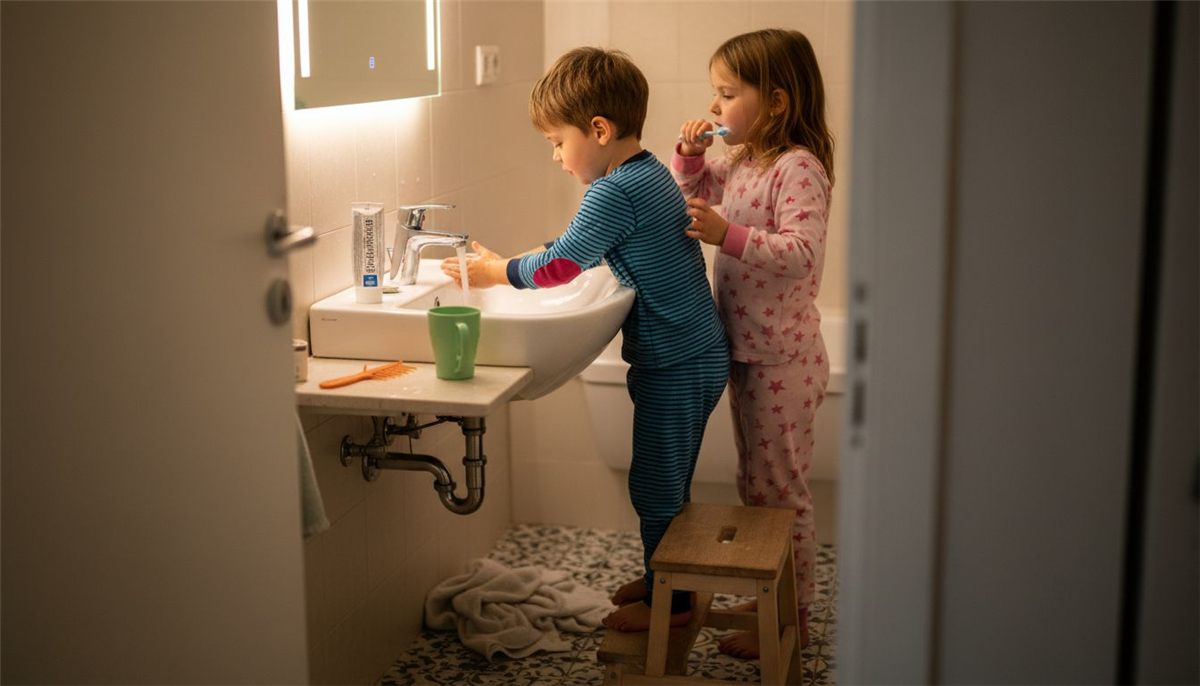
The final piece is building in patience and grace as your child learns. You’ll want to establish clear, simple expectations so your child understands what happens each step. Keep talking to a minimum as you get closer to actual bedtime. If your child gets out of bed, calmly guide them back without turning it into a power struggle or a conversation. Some families use gradual check-ins where they leave the room for short periods, returning if the child needs them, which helps kids build independence gradually. This consistency piece is where most parents stumble. Your routine might feel awkward for the first week or two. Stick with it anyway. By week three, your child’s body will recognize the pattern and cooperate far more readily.
Pro tip: Write your routine on a laminated card and post it in the bedroom so your child can anticipate each step, which reduces bedtime battles by giving them control over following the sequence. For the after-school hours, this free printable routine chart works the same way.
Customizing Routines for Family Schedules
Here’s the truth nobody wants to hear: the perfect bedtime routine you saw on Pinterest probably won’t work for your family. And that’s completely okay. Your family is unique, with its own rhythm, demands, and reality. Maybe one parent works nights. Maybe you have kids in three different sports. Maybe your household doesn’t quiet down until 8 p.m. because that’s when dinner happens. Whatever your situation, your bedtime routine needs to fit into your actual life, not some imaginary perfect version of it. The key is understanding that customizing bedtime routines involves recognizing each family’s unique schedules and traditions while maintaining consistency. This means you get to create something that works, not something that looks good on social media.
Start by getting honest about your family’s actual schedule. When does everyone realistically need to be home? What activities can’t be moved? What time is your child naturally tired? Once you know your real constraints, build your routine inside them. If your family doesn’t get home until 7 p.m. on soccer nights, don’t try to start bedtime at 7:30 p.m. Instead, maybe your routine on those nights is shorter but still consistent: a quick bath, pajamas, one story, lights out. On calmer nights when you’re home earlier, you can expand it to include more activities. The routine’s structure stays the same; only the depth changes. This flexibility actually makes consistency easier to maintain because you’re not setting yourself up for failure.
Another smart move is to involve your family in designing the routine. Families are advised to evaluate current routines and adapt them to fit their unique schedules while getting input from each family member. Ask your kids what calming activities they enjoy. Does your eight-year-old love audiobooks more than picture books? Use audiobooks. Does your four-year-old need extra snuggle time? Build that in. Kids are far more cooperative when they feel heard and have some choice in the matter. You might also need different routines for different aged kids. A teenager’s wind-down looks nothing like a preschooler’s, and that’s fine. The goal isn’t one identical routine for everyone. The goal is predictability that works for each child within your family’s real life.
Pro tip: Test your customized routine for at least two weeks, tracking what works and what doesn’t, then make one small adjustment at a time rather than overhauling everything at once.
Common Mistakes That Disrupt Children’s Sleep
You can have the most beautifully designed bedtime routine in the world, but if you’re making one of these common mistakes, your child still won’t sleep well. The biggest culprit? Inconsistency. You nail your routine Monday through Thursday, then Friday night rolls around and suddenly bedtime is an hour later because you’re out at a friend’s house. Your child’s body doesn’t understand exceptions. It only understands patterns. When bedtimes bounce all over the place, your child’s internal clock gets confused, and you’re essentially jet-lagging your kid every single week. That one late night on Friday can tank sleep for days. Parental inconsistency in setting limits and enforcing bedtime, along with irregular sleep schedules, frequently causes childhood sleep disorders. This is why consistency matters more than perfection.
Another huge mistake is the screen trap. You think letting your child watch a show or play a game for 30 minutes before bed will tire them out. Instead, you’re basically handing them a dose of artificial wakefulness. Excessive use of electronic devices near bedtime interferes with melatonin production and sleep onset, which is the hormone that tells your child’s brain it’s time to sleep. That blue light from screens literally tricks your child’s nervous system into thinking it’s daytime. If screens happen within an hour of bedtime, you’re fighting an uphill battle. The same goes for afternoon caffeine. That fruit punch at 4 p.m. or hot chocolate at 5 p.m. is still circulating in your child’s system at bedtime. You’d be amazed how much unnecessary caffeine sneaks into kids’ diets.
Overstimulation right before bed is another sleep killer that parents often miss. You’re having a tickle fight at 8:45 p.m. when bedtime is 9 p.m., or your household is loud and chaotic right up until lights out. Your child’s nervous system needs time to downshift. If you’re ramping up the energy and excitement in the final hour before bed, you’re working directly against sleep. Poor sleep environment matters too. Is the room too bright? Too loud? Too warm? Parental inconsistency, poor sleep hygiene, and environmental factors such as noise or light contribute to sleep disruptions. These environmental issues might seem small, but they can be the difference between your child sleeping through the night and waking repeatedly.
The table below summarizes key mistakes and their disruptive effects on children’s sleep:
| Mistake | How It Disrupts Sleep | Typical Result |
|---|---|---|
| Irregular sleep schedule | Confuses body clock | Harder to fall and stay asleep |
| Screens before bed | Suppresses melatonin | Delayed sleep, restless nights |
| Overstimulation | Keeps body alert | Resistance to sleep, bedtime drama |
| Poor environment | Uncomfortable sleep setting | Frequent waking, less restful sleep |
| Bedtime inconsistency | Lack of routine cues | Increased anxiety, bedtime battles |
Pro tip: Audit your current bedtime situation this week by noting what time your child actually falls asleep, how many times they wake, and what’s happening in the hour before bed, then eliminate the biggest problem before adding new routine elements.
Create Calm Evenings with Simple Home Organization Solutions
Struggling to keep your child’s bedtime routine consistent while juggling a busy family schedule is a common challenge. The article highlights key pain points like inconsistency, overstimulation before bed, and the need for predictable calming activities to promote better sleep and emotional well-being. If winding down your home and life feels overwhelming, focusing on a calmer, more organized environment can make a big difference. Achieving predictability in your child’s bedtime requires more than just routines. It involves managing household chaos, streamlining evening tasks, and reducing stress for everyone.
Discover how our proven organization hacks, productivity tips, and simple living strategies can support your family’s sleep goals. From creating peaceful spaces to optimizing time management, explore practical tools that help maintain that crucial consistency with ease. Don’t let bedtime battles wear down your family dynamic. Take control of your evenings now by visiting It’s a Southern Life Yall and uncover strategies designed for busy families like yours. Start transforming your nightly routine into the calming experience your kids and you deserve today.
Frequently Asked Questions
What is a bedtime routine for kids?
A bedtime routine for kids is a predictable series of calming activities done each night before sleep, helping them transition from daytime energy to restful sleep.
Why are bedtime routines important for children?
Bedtime routines support better sleep, language development, emotional regulation, and stronger parent-child bonds, reducing anxiety and bedtime resistance.
What are some effective activities to include in a bedtime routine?
Effective activities may include a warm bath, brushing teeth, putting on pajamas, reading stories, and gentle music or quiet conversation to promote relaxation.
How long should a bedtime routine last?
A bedtime routine should ideally start 30 minutes to an hour before the set bedtime, allowing your child’s nervous system to wind down before sleep.
Recommended
- How to Create a Peaceful Home for Your Family – It’s a Southern Life Ya’ll
- Guide to Morning Routines of High Achievers – It’s a Southern Life Ya’ll
- Must Have Items For A Cozy Bedroom – It’s a Southern Life Ya’ll
- 7 Simple Ways to Refresh Your Home for Busy Families – It’s a Southern Life Ya’ll
Want a little more help with this? The Home Rhythm Planner is where bedtime becomes a rhythm instead of a nightly negotiation — daily, weekly, monthly and seasonal, written down once.