How family routines boost organization and work-life balance
Many busy families believe structured routines are impossible to maintain with unpredictable schedules and competing demands. Yet consistent bedtime routines improve sleep outcomes and reduce caregiver stress, especially in households facing daily chaos. The secret isn’t rigid scheduling but flexible rhythms anchored by key activities like meals and bedtime. This guide shows you how to build workable routines that fit your family’s real life, improve organization, and create the work-life balance you’ve been seeking.
Table of Contents
- Why Family Routines Matter For Busy Families
- Balancing Structure And Flexibility: Practical Routine Strategies
- Navigating Challenges And Tailoring Routines
- Implementing And Maintaining Routines For Long-Term Success
- Explore Tools To Enhance Your Family’s Routines And Organization
- Frequently Asked Questions
Key takeaways
| Point | Details |
|---|---|
| Routines reduce stress | Consistent patterns lower caregiver anxiety and improve children’s sleep quality significantly. |
| Flexibility beats rigidity | Rhythm-based routines anchored by meals and bedtime adapt better to busy schedules than strict timetables. |
| Visual tools increase success | Charts and checklists help children engage with routines and reduce daily resistance. |
| Weekly reviews optimize routines | Regular adjustments ensure routines evolve with your family’s changing needs and commitments. |
Why family routines matter for busy families
Research consistently demonstrates that family routines deliver measurable benefits even when life feels overwhelming. Studies show that consistent bedtime routines improve sleep outcomes, enhance child development, and significantly reduce caregiver stress, particularly in families with lower educational attainment. These aren’t minor improvements. Children in households with regular bedtime patterns sleep longer, wake less frequently, and show better emotional regulation throughout the day.
The stress reduction effect extends beyond children. Parents who maintain consistent evening routines report feeling more in control and less reactive to daily challenges. This matters because caregiver wellbeing directly influences family dynamics and children’s behavioral outcomes. When you feel less frazzled, everyone benefits from calmer interactions and more positive connections.
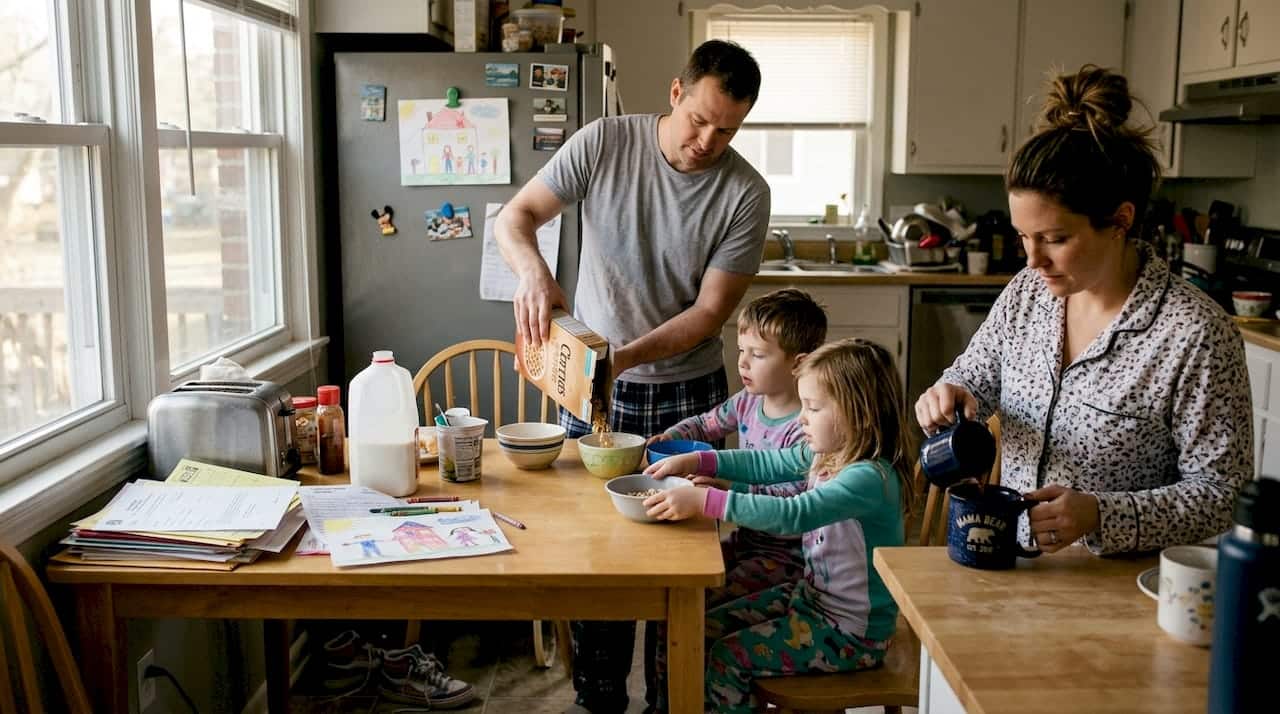
Regular mealtimes serve as another powerful anchor. Families who eat together at predictable times create natural opportunities for connection and communication. These moments don’t require elaborate preparations or perfect execution. Simple, repeated patterns around food create stability that children recognize and rely on. Pairing consistent mealtimes with family meal planning examples streamlines grocery shopping and reduces daily decision fatigue.
The key insight for busy families is this: routines work best when you prioritize consistency over perfection. A bedtime routine that happens at roughly the same time most nights outperforms an elaborate ritual attempted sporadically. Your goal isn’t to eliminate all schedule variations but to establish reliable touchpoints that ground your family’s day. These anchors provide structure without demanding unrealistic rigidity from households juggling work deadlines, school activities, and unexpected emergencies.
Consistent routines create predictable patterns that help children feel secure and help parents maintain control during chaotic periods.
Balancing structure and flexibility: practical routine strategies
Families approach routines differently based on their schedules and preferences. Fully structured routines assign specific times to every activity, creating detailed schedules that work well for predictable weeks. Semi-structured approaches maintain key anchors like meals and bedtime while leaving flexibility for other activities. Rhythm-based routines focus on the sequence of events rather than clock times, allowing natural flow while preserving consistency.
For busy families managing unpredictable demands, flexible rhythms over rigid schedules prove most sustainable. This approach recognizes that dinner might happen at 5:30 one evening and 6:15 the next, but the pattern of homework, dinner, bath, and bedtime remains constant. Children adapt to the sequence rather than specific times, reducing stress when schedules shift unexpectedly.
Implementing effective routines requires strategic planning and family buy-in. Start by identifying goals and bottlenecks, then involve family members in designing solutions. When children participate in creating routines, they develop ownership and resist less during implementation. Use visual aids like charts or checklists to make expectations clear and progress visible. These tools work especially well for younger children who benefit from concrete reminders.
Weekly reviews allow you to assess what’s working and adjust what isn’t. Schedule 15 minutes each Sunday to discuss the upcoming week with your family. Address scheduling conflicts, celebrate successes, and modify routines that have become burdensome. This regular check-in prevents small frustrations from building into major resistance. Integrating scheduling family time into your weekly planning ensures connection remains a priority alongside logistics.
Comparison of routine approaches:
- Fully structured: Fixed times for all activities; best for predictable schedules; can feel restrictive when plans change
- Semi-structured: Anchored by key events; balances consistency with adaptability; suits most busy families
- Rhythm-based: Focuses on sequence over timing; highly flexible; requires strong family communication
Pro Tip: Begin with one or two non-negotiable anchors like bedtime and breakfast before expanding your routine. This gradual approach prevents overwhelm and allows your family to build confidence with small wins. Once these anchors feel natural, layer in additional elements based on your specific needs and work-life balance tips.
Navigating challenges and tailoring routines
Not all families experience routine benefits equally, and understanding why helps you adapt strategies for your specific circumstances. Research reveals that harsh parenting and aggression negate the positive effects of routines on child behavior. Routines alone cannot compensate for hostile interactions or punitive discipline. If your household struggles with frequent conflicts, addressing communication patterns and discipline approaches becomes essential before routines can deliver their full benefits.
Children with ADHD often face unique challenges with routine adherence. Executive function difficulties make it harder for these children to initiate tasks, transition between activities, and remember multi-step sequences. Children with ADHD benefit from visual schedules and practicing routines together rather than enforcement through punishment. Break routines into smaller, manageable steps and use pictures or icons to represent each component. Practice the sequence during calm moments so your child builds muscle memory for the pattern.
Families where parents have contrasting preferences about structure face different obstacles. One parent might prefer detailed schedules while the other values spontaneity. Routine consistency paired with cognitive flexibility allows these different styles to coexist. Establish core routines that everyone maintains, then allow flexibility in areas where preferences diverge. This compromise respects individual differences while preserving the stability children need.
Strategies for challenging situations:
- Use visual schedules with pictures for children who struggle with verbal instructions
- Practice routines during low-stress times to build familiarity and confidence
- Ritualize transitions with songs, countdowns, or special phrases that signal upcoming changes
- Maintain calm, neutral tones when redirecting children back to routines rather than using punitive language
Pro Tip: For children who resist routines, transform them into rituals by adding special elements like a favorite song during cleanup or a silly handshake before bedtime. These personalized touches reduce resistance by making routines feel less like rules and more like cherished family traditions. Applying positive discipline strategies during routine implementation prevents power struggles and builds cooperation. When homework time becomes contentious, refer to managing homework time for targeted approaches.
Implementing and maintaining routines for long-term success
Building sustainable routines requires a systematic approach that your family can maintain over months and years. Follow these steps to create routines that stick:
- Identify specific goals like reducing morning chaos or improving bedtime cooperation
- Choose your routine style based on your family’s schedule predictability and preferences
- Involve every family member in designing the routine so everyone feels heard
- Create visual reminders using charts, checklists, or apps that match your family’s needs
- Implement one routine at a time rather than overhauling your entire schedule simultaneously
- Review progress weekly and adjust elements that aren’t working smoothly
- Celebrate successes to build momentum and reinforce positive changes
This step-by-step process prevents the overwhelm that causes many families to abandon routines after a few weeks. Starting small with focused goals allows you to build competence before tackling more complex scheduling challenges.
Different routine types deliver distinct advantages depending on your family’s circumstances:
| Routine Type | Best For | Key Benefit | Potential Challenge |
|---|---|---|---|
| Fully Structured | Predictable schedules | Maximum organization | Breaks down with unexpected changes |
| Semi-Structured | Variable schedules | Balances flexibility and consistency | Requires clear anchor identification |
| Rhythm-Based | Highly unpredictable weeks | Adapts to schedule variations | Needs strong family communication |
Involving children in routine creation dramatically improves compliance. When kids help choose which tasks happen when or design their own visual charts, they develop ownership over the process. This participation transforms routines from parent-imposed rules into family agreements. Even young children can contribute ideas about what makes mornings easier or bedtime more pleasant.
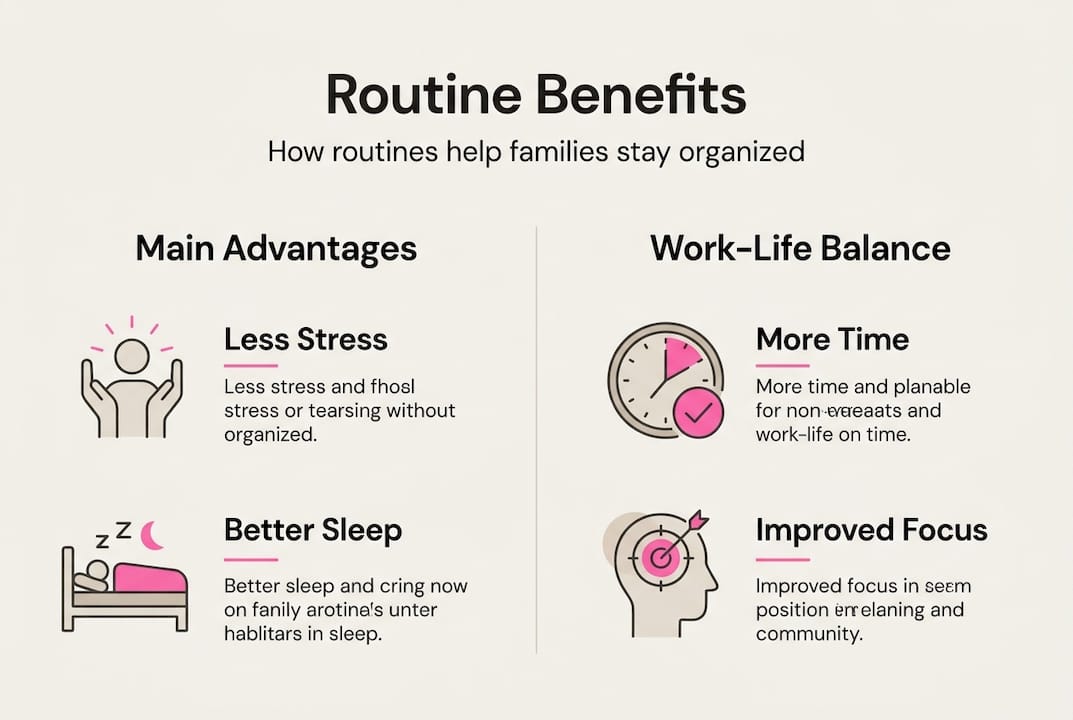
Regular evaluation ensures your routines evolve with your family’s changing needs. A routine that works perfectly for preschoolers may need modification when children start elementary school. Similarly, seasonal schedule changes, new work commitments, or additional family members require routine adjustments. Treating routines as living systems rather than fixed rules keeps them relevant and sustainable. Drawing on time-tested family hacks can inspire creative solutions when standard approaches feel stale.
Pro Tip: Use simple visuals tailored to your family’s unique rhythm rather than generic templates. A magnetic chart on the refrigerator, a whiteboard in the mudroom, or a shared digital calendar each work beautifully when matched to how your family actually communicates. The tool matters less than consistent use and visibility. Integrating routines with family finance organization and block scheduling for families creates comprehensive systems that support multiple aspects of household management.
Explore tools to enhance your family’s routines and organization
Building effective routines is just one piece of creating a well-organized, balanced family life. We offer extensive resources designed specifically for busy families like yours who want practical solutions that actually work. Our productivity hacks for families provide simple strategies to accomplish more in less time without adding stress. Discover comprehensive home management systems that simplify daily organization and reduce mental load. Find proven work-life balance tips for busy families that help you reclaim time for what matters most while maintaining household efficiency.
Frequently asked questions
What is the best way to start a family routine if we’re always busy?
Start small by choosing one or two key anchors like bedtime or breakfast rather than attempting to structure your entire day immediately. Focus on consistency with these anchors for two weeks before adding additional routine elements. Use visual reminders and involve everyone in designing the routine so children understand expectations and feel ownership over the process.
Can family routines really help reduce caregiver stress?
Yes, research demonstrates that consistent bedtime routines reduce caregiver stress significantly, particularly in families with lower educational attainment. Predictable patterns reduce decision fatigue and create structure that helps parents feel more in control. The benefits compound over time as routines become automatic and require less mental energy to maintain.
How can I keep children with ADHD engaged in family routines?
Children with ADHD benefit from visual schedules that break routines into clear, manageable steps with pictures or icons for each task. Practice routines together during calm moments rather than enforcing them through punishment. Use timers, songs, or other sensory cues to signal transitions, and celebrate small successes to build confidence. Applying positive discipline strategies prevents power struggles and maintains cooperation.
What if my family has different preferences for routines?
Maintain core consistent routines around essential activities like bedtime and meals while allowing flexibility in areas where preferences differ. Balancing consistency with cognitive flexibility helps families with contrasting styles coexist peacefully. Hold regular family meetings to discuss what’s working and negotiate adjustments that respect everyone’s needs while preserving necessary structure.
Recommended
- 7 Practical Work-Life Balance Tips for Busy Families –
- Time Management Step by Step for Family Success –
- Why Schedule Family Time—Better Balance for Busy Homes –
- 7 Family-Friendly Examples of Productivity Hacks That Work –
Want a little more help with this? The Sunday Blueprint sets your family routines for the week in about an hour.