Free Printable After-School Routine Chart for Kids (Age by Age, on the Fridge in 15 Minutes)
The short answer
A good after-school routine chart for kids is not a list of rules on the fridge. It is three short cards, one for each transition of the afternoon: walking in the door, the quiet window before anybody asks anything of them, and the wind-down that sets up tomorrow. The free After-School Fridge Kit is exactly that, and it takes about 15 minutes to print, cut and tape up. The chart works because the card does the asking, so you stop being the one who nags. Younger kids get pictures and two jobs; teens get a line and a time. On a bad day you run two lines instead of six, and that still counts.
Hey, y’all!
Here is a sound every mother knows: “What do I do now?”
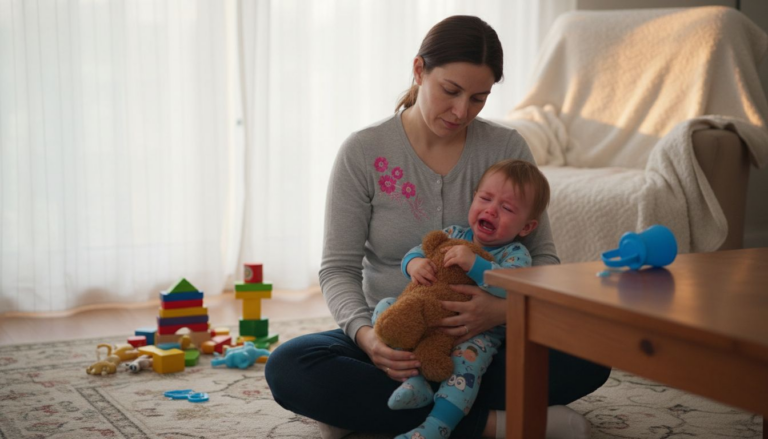
Not once. Four times, in about eight minutes, from at least two directions, while the backpack is still on the floor where it landed and one shoe is in the hall. You have answered it every single afternoon since August, and you will answer it again today, because the answer lives in your head and nowhere else.
That is the whole problem, and it is the whole reason this post exists. If you want the free chart, it is right below and you can have it on the fridge in 15 minutes. If you want to know why a chart works when reminders do not, keep reading under it. Either way, I want you to be the last person in that house who has to be the answer to “what do I do now?”
One thing before we start: this is the printable companion to the bigger piece I wrote on the after-school routine that survives a real Tuesday. That post is the why and the how of the whole hour. This one is the thing you tape to the door.
The free printable after-school routine chart
The After-School Fridge Kit is three cards you print once: a landing-zone card, a decompress-window card and a wind-down card. Cut them apart, put a magnet on each, and you have an after-school routine chart for kids that does the reminding for you. It is free, and it lives with the rest of the free printables on the Homefire free resources page. Print it now and it can be on the fridge before the bus comes.
Why an after-school routine chart beats a reminder
A reminder is a person. A chart is a place.
When the routine lives in your head, every step of the afternoon has to go through you. You are the one who notices the backpack, who says the words about the lunchbox, who asks about the homework and then asks again. By 5:30 you have said the same six sentences to the same three people, and everybody is a little tired of the sound of your voice, including you.
A chart moves those sentences out of your mouth and onto the fridge. That does two things at once. The child stops hearing you and starts reading the card, which takes the tone out of it, and you get to stop being the person who has to remember everything for everybody at the exact hour you have the least left to give.
I raised four children through that door, and I promise you the fridge never once sounded annoyed. The card asks the same way at 3:07 on a good day and at 3:07 on the day the dog got out. That steadiness is the thing a tired mama cannot fake, and she should not have to.
What is on the three cards
The Fridge Kit follows the same shape as the full routine: short blocks of about 15 minutes, in order. Three of the four blocks get a card. Homework does not, and that is on purpose. Homework does not need a card on the fridge; it needs a clear table and a clock. The cards handle the three transitions around it, which are the parts that actually go sideways.
Card one: the landing zone
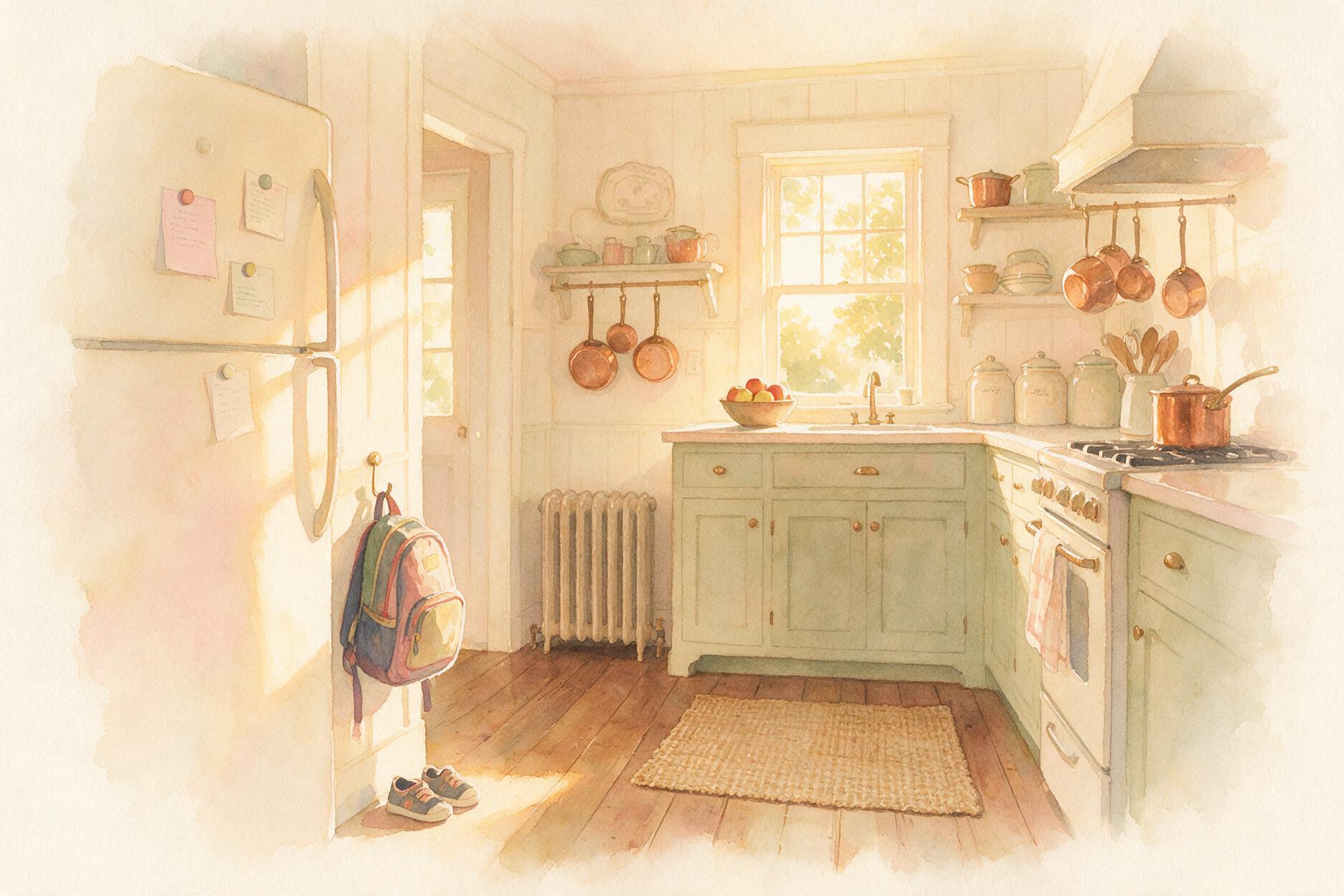
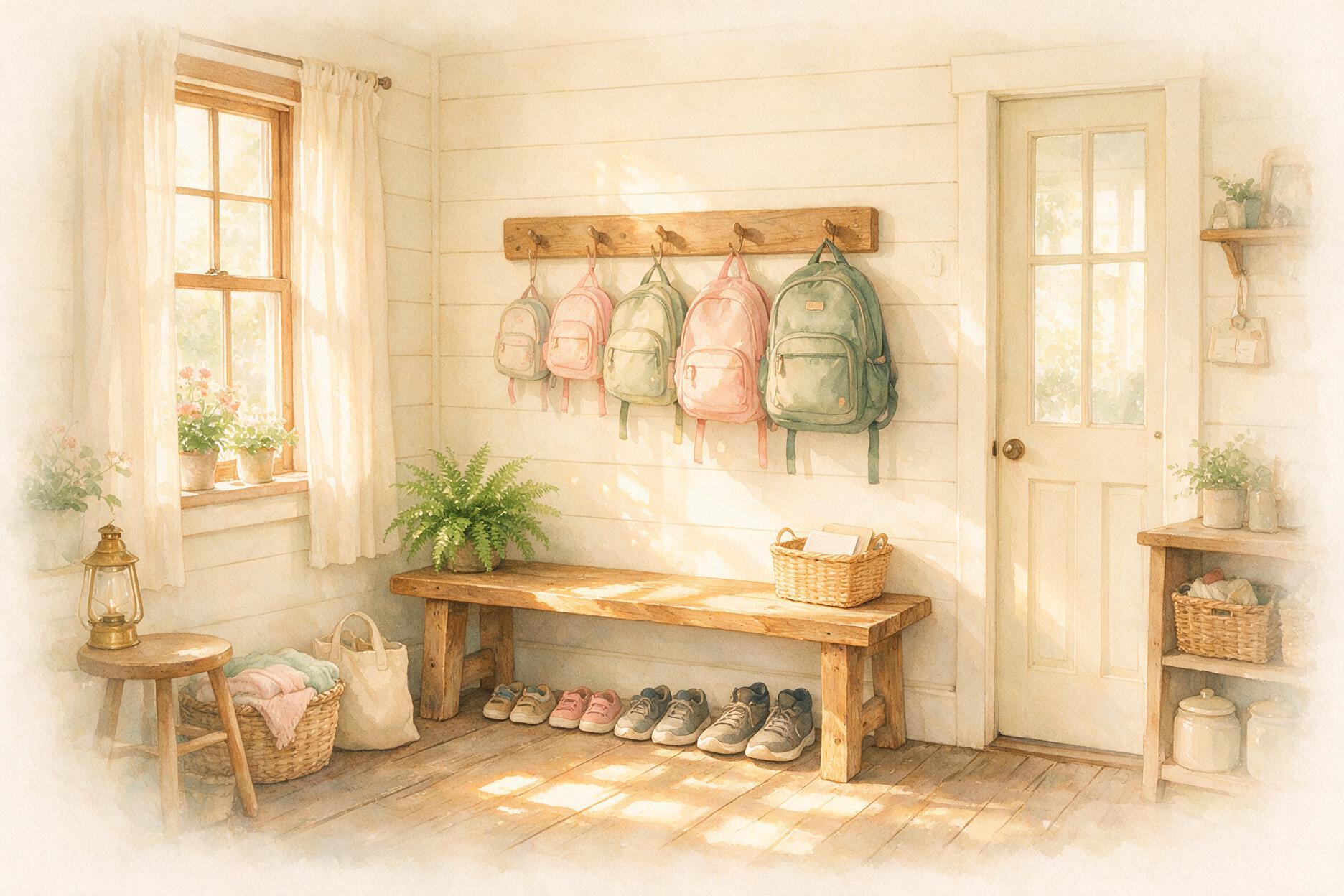
Bag on the hook. Lunchbox on the counter. Papers in the basket. Shoes where shoes go. Four lines, in that order, because the order is half the point. A child who does the same four things in the same order every day stops needing to think about them by the second week, and a thing you do not have to think about is a thing you do not have to be reminded of.
Card two: the decompress window
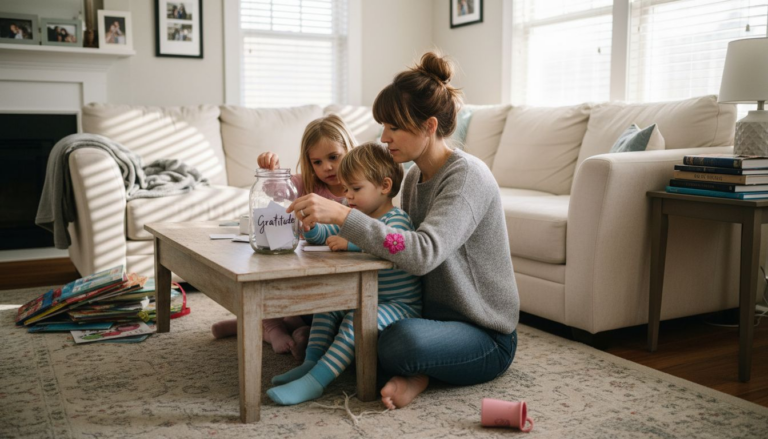
This is the card most of us would skip, and it is the one that does the most work. It says, in plain words, that for the next little while nobody is going to ask you for anything. A snack. A drink. Outside, or a book, or the floor and the dog. The card gives the child permission to land, and it gives you a reason to hold off on the homework question for 15 minutes, which is the difference between a conversation and a fight. I wrote a whole section on why in the routine post, and I would read it before you decide this card is optional.
Card three: the wind-down
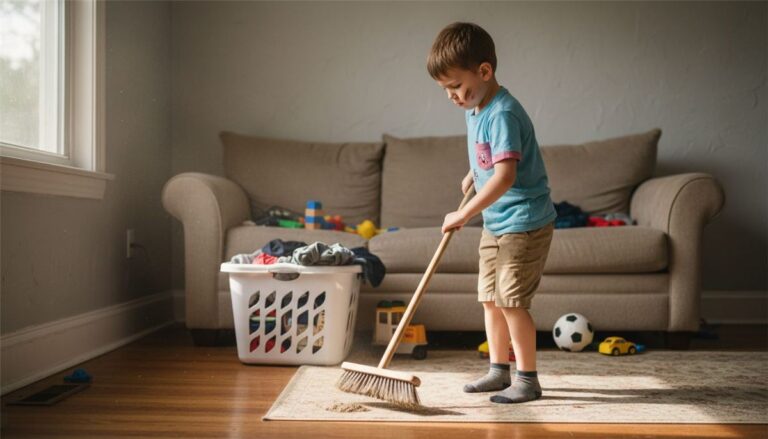
Tomorrow’s folder back in the bag. Lunchbox rinsed. Clothes for the morning picked out. One thing put back where it lives. This is the card that quietly buys back your morning, because every one of those jobs is a job you would otherwise be doing at 7:10 a.m. with a bus on the way. If you already have a system for the lunch part, my seven tips for planning stress-free school lunches fit right into this card.
The after-school routine chart, age by age
One chart does not fit a whole house, and it should not have to. The same three cards work at every age; what changes is how many lines are on them and who is in charge of reading them. Here is how I would set each one up. If you have more than one child, each of them gets their own set, at their own height on the door.
Littles (2 to 4)
Two pictures per card, no words. Shoes and a hook on card one. A cup and a cushion on card two. Card three is really yours, but let them carry one thing to the bag. The chart is not for them to read yet; it is for them to see you point at, so the shape of the afternoon starts to feel familiar before they can read a word of it.
Early Elementary (5 to 7)
Pictures with one word underneath. Three lines on each card, and they put a check mark or a sticker on each one. This age loves a job that ends, so let each card end with something they get to do: a snack they pick, a song, five minutes with the cat. You will still read the cards with them the first week. By the second week, they will read them to you.
Big Kids (8 to 10)
Words now, four lines per card, and this is the age where the chart really starts doing your job for you. When the backpack is on the floor, you do not say a word about the backpack. You say, “check your card,” and walk out of the room. It feels strange the first few times. Keep doing it. The card cannot be argued with, and after a few afternoons they stop trying.
Tweens (11 to 12)
Let them write their own cards. Give them the three headings and a pen and let them decide what goes under each. They will put more on the list than you would have, and they will keep to it better because it is theirs. Your only job is to make sure the decompress card has something on it that is actually restful, not another screen.
Teens (13 to 15)
One line per card and a time. “Bag hung, papers out, by 3:30.” “Nothing asked until 3:45.” “Tomorrow set up before dinner.” That is it. A teenager does not need a chart with pictures; a teenager needs to know exactly where the line is and that you will not move it. The card on the fridge is the line, and it saves you from being the one who has to draw it fresh every afternoon.
Older Teens (16 and up)
By now the chart is mostly a courtesy to the rest of the house. Their card is a note about what they own that touches everybody else: the shared car back by a certain time, a younger sibling collected from practice, the dishwasher run before they disappear upstairs. Driving and solo errands belong on this card and no card below it. The point at this age is not to manage their afternoon. It is to make the handoffs visible so nobody has to chase anybody down.
How to use the chart in the first week
Here is the part that decides whether the chart is still on the fridge in October or in the recycling by Friday.
Do not launch all three cards at once. Put up card one only. Spend the first week on the landing zone and nothing else. When the bag is going on the hook without you saying so, add card two. When the quiet window is holding, add card three. One job at a time, 15 minutes, then stop. A routine you add in layers is a routine that stays; a routine you announce all at once on a Monday is a routine everybody forgot by Wednesday.
While card one is settling in, keep the rest of the afternoon exactly the way it already is. If homework is a struggle, leave it alone for now; you are not fixing homework this week, you are fixing the door. When you are ready to work on that block, these ways to manage homework time pick up right where card two leaves off.
And say less than you think you need to. The whole point of the chart is that it does the asking. If you find yourself standing next to it reading it aloud every day, that is a reminder with extra steps. Point, then leave the room.
Ready to stop being the reminder?
Print the After-School Fridge Kit this afternoon, tape card one to the door, and by this time next week the backpack goes on the hook without a word from you. Three cards, one magnet each, 15 minutes to set up, and it is free on the free resources page. The other two cards are ready whenever card one is holding.
The day it all falls apart
It will. Somebody will come home in tears, or sick, or an hour late from a practice that ran over, and the three cards on the fridge will look like a joke.
On that day the chart is two lines, not six. Bag on the hook. Snack. That is the whole routine, and it still counts as the routine working. The cards are not a standard you are failing to meet; they are a shape the afternoon falls back into when the afternoon is ready. Tomorrow the third card will still be there. Nothing on the fridge is keeping score.
Some evenings, when I had four of them coming through that door on four different schedules, “bag and snack” was the whole plan and we were all glad to have it. The thing that made the hard days bearable was not that we did everything. It was that we knew what the first thing was.
Where the chart fits with everything else
The Fridge Kit is the free front door to a bigger system, and you can stop right here at the door if it is doing the job. If you want the whole afternoon built out for you, that exists too.
If three cards are working and you want the rest
The Homefire After-School System is the full afternoon: all four blocks written out age by age, the staggered version for two kids on two schedules, the bad-day version, and the homework and wind-down pages you can actually write on. It ships as a printable, a fill-in-on-your-computer version and an app, all at one price.
Two smaller pieces live in the same hour, if one particular block is the one that keeps going sideways: The Screen Time Rhythm for when the decompress window keeps turning into a screen negotiation, and The Chore System Starter for when the wind-down card needs a “who does what” behind it. And there are free 15-minute Homefire tools right here on the site, no cost, no catch.
So, back to 3:07. The backpack is on the floor, the shoe is in the hall, and somebody is about to ask what they are supposed to do now. This time you do not answer. You point at the fridge.
You don’t have to be perfect. Tend the home fire, in the minutes you have.
Keep tending the fire, y’all.
Ready for the whole routine, not just the chart? The Homefire After-School System carries it from the front door to bedtime, with the homework and chore pieces already built in.