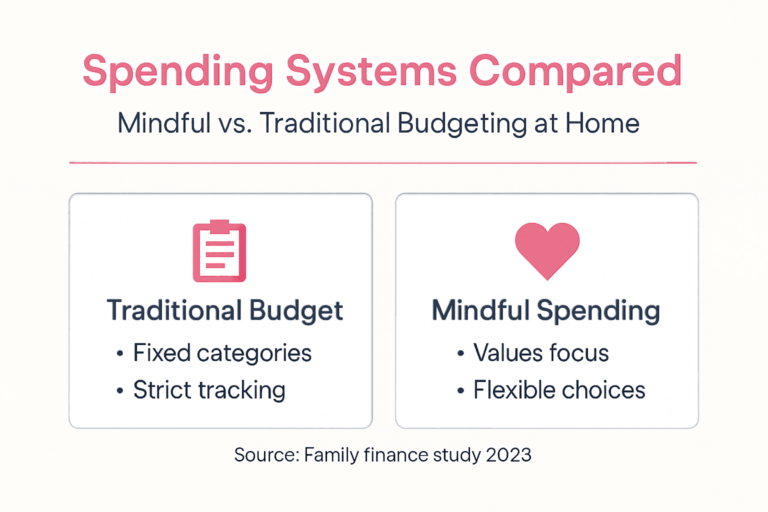

8 Practical Examples of Budget Hacks for Families
Families everywhere are searching for ways to stretch every paycheck and keep their finances on track. More than half of American households report they struggle with unexpected expenses, yet most admit they have never created a budget. Surprising, right? Building financial freedom often starts with small, practical steps nobody talks about—and the best part is, these steps can add up to saving your family hundreds or even thousands of dollars a year.
Table of Contents
- Start With A Family Budget Plan
- Use Grocery Shopping Apps For Discounts
- Take Advantage Of Free Family Activities
- Implement A No-Spend Challenge
- Set Up Automated Savings Contributions
- Shop Smart With Cashback Programs
- Diy Projects For Home And Kids
- Review And Negotiate Monthly Bills
Quick Summary
| Takeaway | Explanation |
|---|---|
| Create a Family Budget | Start by tracking income and expenses to guide financial decisions. Include all family members and be realistic about spending habits. |
| Utilize Grocery Shopping Apps | Use apps for discounts and price comparisons; plan meals based on current offers to maximize savings. |
| Engage in Free Family Activities | Explore local parks, libraries, and events for no-cost entertainment. Creativity can fill your calendar without spending money. |
| Conduct a No-Spend Challenge | Set a specific timeframe to avoid non-essential spending, encouraging creativity and intentional savings. |
| Automate Savings Contributions | Set up automatic transfers to savings accounts to consistently build wealth without manual effort. |
1: Start with a Family Budget Plan
Building a solid family budget is like creating a financial roadmap that guides your household spending and savings. Without a clear plan, you might find yourself lost in a maze of unexpected expenses and financial stress. The key is to start simple and be realistic about your family’s income and spending patterns.
According to the Penn State Extension, creating an effective family budget involves a structured approach. Here are some critical steps to get started:
- Track all income sources including salary, freelance work, investments
- List all monthly expenses from rent/mortgage to groceries and utilities
- Categorize expenses as essential or discretionary
- Set clear financial goals for short and long term savings
To make your budget work, you need honest communication with all family members. Discuss financial challenges openly and create a plan where everyone understands their role. This might mean involving older children in understanding basic budgeting concepts or agreeing on spending limits together.
A successful family budget isn’t about restricting spending but creating financial freedom. By knowing exactly where your money goes, you can make smarter choices. This might mean cutting unnecessary subscriptions, finding more affordable grocery options, or planning family activities that don’t break the bank.
Remember, a budget is a living document. Review and adjust it monthly to ensure it continues meeting your family’s changing financial needs. Flexibility and consistency are your greatest allies in maintaining a healthy family financial strategy.
2: Use Grocery Shopping Apps for Discounts
In the digital age, smart families are discovering powerful ways to trim their grocery bills using technology. Grocery shopping apps have revolutionized how households save money, offering instant discounts, price comparisons, and cashback opportunities right from your smartphone.
According to PLOS ONE research, digital interventions like mobile grocery apps can significantly help families make budget-friendly food choices. These apps provide more than just savings they help you make smarter purchasing decisions.
Here are some top strategies for maximizing grocery app savings:
- Compare prices across multiple stores before shopping
- Track digital coupons and instant rebate opportunities
- Plan meals based on current app discounts
- Set spending alerts to stay within budget
Loyalty programs integrated into these apps can provide additional benefits. Many grocery chains offer points that accumulate with each purchase, which you can later redeem for discounts or free items. Some apps even allow you to earn cashback simply by uploading your grocery receipts.
Be strategic about which apps you use. Some popular options include apps from major grocery chains, third-party coupon platforms, and cashback reward services. Compare and combine multiple apps to maximize your savings.
Remember, the goal isn’t just about collecting apps but using them effectively. Take time to learn each app’s features, set up notifications, and integrate them into your weekly meal planning and shopping routine. With a little effort, you could save hundreds of dollars annually on your family’s grocery expenses.
3: Take Advantage of Free Family Activities
Entertainment doesn’t have to drain your wallet. Families can create memorable experiences without spending a fortune by exploring the abundance of free activities available in most communities. The key is knowing where to look and being creative with your approach to family fun.
Local libraries, parks, and community centers often host no-cost events that can transform an ordinary weekend into an exciting family adventure. From story times and craft workshops to outdoor movie nights and seasonal festivals, these resources provide entertainment that doesn’t cost a dime.
Here are some fantastic free family activity ideas:
- Explore local parks and nature trails
- Attend community library events
- Visit free museum days
- Participate in local community festivals
- Host backyard game nights
Outdoor activities offer some of the most budget-friendly entertainment options. Hiking, picnicking, beach visits, and local playground exploration can provide hours of enjoyment. Many state and national parks offer free entry on specific days, giving families an opportunity to explore natural landscapes without ticket expenses.
Don’t overlook digital resources for free entertainment. Many museums now offer virtual tours, educational websites provide interactive learning experiences, and public libraries have expanded their digital collections. These online platforms can engage children and adults alike without spending money.
Creativity is your best tool in finding free family activities. Check community bulletin boards, follow local social media groups, and sign up for community newsletters to stay informed about upcoming no-cost events. With a little research and an open mind, you can fill your family calendar with exciting experiences that don’t impact your budget.
4: Implement a No-Spend Challenge
A no-spend challenge is a powerful strategy for families looking to reset their financial habits and boost savings. By deliberately choosing not to spend money on non-essential items, you create an opportunity to reassess your spending patterns and discover creative alternatives to typical consumption.
According to America Saves, implementing a no-spend challenge can help families discover free and rewarding activities while building financial discipline. The goal isn’t about complete deprivation but about making intentional spending choices.
Here are key strategies for a successful no-spend challenge:
- Define clear rules for what constitutes essential vs. non-essential spending
- Set a specific timeframe (weekend, week, or month)
- Involve all family members in the challenge
- Track your savings and celebrate collective achievements
Preparation is crucial for making a no-spend challenge work. Before starting, take inventory of your pantry, plan meals using existing ingredients, and find free entertainment options. This approach transforms the challenge from a potential hardship into an engaging family activity.
Consider setting specific goals for your challenge. Maybe you want to save for a family vacation, pay down debt, or get ahead of holiday costs with a Christmas on a budget plan you start in September. Having a clear objective makes the temporary spending restrictions more meaningful and motivating.
Remember that a no-spend challenge isn’t about feeling restricted. It’s an opportunity to get creative, appreciate what you already have, and develop more mindful spending habits. Families often discover they can have fun and meet their needs with much less than they typically spend.
5: Set Up Automated Savings Contributions
Automated savings contributions are like a financial autopilot that helps families consistently build wealth without constant manual intervention. By setting up automatic transfers, you remove the temptation to skip saving and make financial growth a seamless part of your monthly routine.
The key advantage of automated savings is psychological. When money moves directly from your paycheck to savings before you can spend it, you’re essentially paying yourself first. This strategy transforms saving from a voluntary action to an automatic habit.
Here are essential strategies for implementing automated savings:
- Start small with even 3-5% of your income
- Create multiple savings buckets for different goals
- Gradually increase contribution percentages
- Choose consistent transfer dates aligned with paychecks
- Review and adjust contributions quarterly
Digital banking tools make setting up these automatic transfers incredibly simple. Most banks and credit unions offer online platforms where you can schedule recurring transfers between checking and savings accounts. Some employers even allow direct deposit splitting, enabling you to allocate portions of your paycheck to different accounts automatically.
Consider creating separate automated savings streams for various financial objectives. Emergency funds, vacation savings, children’s education, and retirement accounts can each have dedicated automatic contributions. This approach ensures you’re systematically building financial security across multiple fronts.
Remember that consistency matters more than amount. Even small, regular contributions compound over time, turning modest savings into significant financial cushions. By automating your savings, you’re creating a sustainable path to financial stability that requires minimal ongoing effort.
6: Shop Smart with Cashback Programs
Cashback programs are a secret weapon for budget-conscious families looking to stretch their dollars further. These programs allow you to earn money back on purchases you’re already making, turning everyday spending into a strategic financial opportunity.
According to the Electronic Payments Coalition, households under $60,000 annually are particularly adept at leveraging cashback rewards, especially during high-expense seasons like back-to-school shopping.
Here are smart strategies for maximizing cashback benefits:
- Compare different cashback credit cards
- Stack cashback with store promotions
- Use dedicated cashback websites
- Track and redeem rewards regularly
- Choose cards matching your spending patterns
Digital platforms have made cashback programs more accessible than ever. Multiple websites and apps now offer cashback on everything from groceries and clothing to travel and electronics. Some platforms even provide bonus rewards for first-time sign-ups or hitting specific spending thresholds.
Be strategic about how you use cashback programs. Don’t let the promise of rewards tempt you into unnecessary spending. The goal is to earn money back on purchases you would make anyway. Consider setting up a separate savings account specifically for cashback earnings, treating it like a bonus fund for family treats or emergency savings.
Remember that not all cashback programs are created equal. Some offer flat rates, while others provide rotating categories with higher percentages. Take time to research and select programs that align best with your family’s typical spending habits. With careful planning, you could potentially save hundreds of dollars annually through smart cashback strategies.
7: DIY Projects for Home and Kids
DIY projects are an incredible way for families to save money, bond together, and develop practical skills. By transforming ordinary materials into creative solutions, you can simultaneously entertain your children, improve your home, and reduce unnecessary spending.
According to the U.S. Department of Energy, families can tackle numerous home improvement projects that not only save money but also increase energy efficiency. These projects range from simple home repairs to engaging craft activities that children can participate in.
Here are some budget-friendly DIY project ideas:
- Create homemade cleaning solutions
- Upcycle old furniture
- Make educational toys from household items
- Design custom storage solutions
- Develop home energy efficiency improvements
Children love hands-on activities, and DIY projects like these easy Halloween crafts for kids provide an excellent opportunity to teach them valuable skills. Involve kids in age-appropriate tasks like painting, organizing, or simple home repairs. This approach not only saves money but also builds their confidence and practical understanding of home maintenance.
Consider projects that serve multiple purposes. Repurposing old items can be both a fun family activity and a way to reduce waste. An old wooden pallet could become a vertical garden, a bookshelf, or a decorative wall hanging. Unused glass jars can transform into pencil holders, storage containers, or creative plant pots.
Remember that creativity trumps cost. The most successful DIY projects are those where family members collaborate, learn together, and enjoy the process. By approaching these projects with enthusiasm and teamwork, you’ll create lasting memories while developing practical skills that save money in the long run.
Below is a comprehensive table summarizing the eight practical budget hacks for families discussed throughout the article, including key steps, benefits, and real-world applications for each strategy.
| Strategy | Main Actions & Steps | Key Benefits & Outcomes |
|---|---|---|
| Start with a Family Budget Plan | Track all income/expenses, categorize, set goals, involve family, and review monthly | Guides decisions, builds awareness, creates financial freedom |
| Use Grocery Shopping Apps for Discounts | Compare prices, use coupons, plan meals around deals, join loyalty/cashback programs | Saves on groceries, smarter shopping, potential hundreds in annual savings |
| Take Advantage of Free Family Activities | Explore parks, libraries, community events, free online resources | No-cost family entertainment, fosters creativity and togetherness |
| Implement a No-Spend Challenge | Define rules, set timeframe, involve family, track savings, plan meals, use free activities | Boosts savings, builds discipline, encourages mindful habits |
| Set Up Automated Savings Contributions | Schedule automatic transfers, start small, use multiple savings accounts, review regularly | Consistent savings, reduces temptation, builds wealth effortlessly |
| Shop Smart with Cashback Programs | Use cashback cards/websites, stack rewards, monitor offers, redeem regularly | Earns cash on everyday spending, maximizes rewards, can save hundreds annually |
| DIY Projects for Home and Kids | Make cleaning solutions, upcycle items, teach kids skills, improve home efficiency | Saves on home costs, builds skills, provides bonding opportunities |
| Review and Negotiate Monthly Bills | Gather statements, research rates, call for better deals, ask about discounts, bundle services | Reduces recurring expenses, finds hidden savings, lowers monthly bills |
8: Review and Negotiate Monthly Bills
Reviewing and negotiating monthly bills is a critical strategy for keeping your family’s budget in check. Most households overlook the potential savings hidden in their regular expenses, but with a systematic approach, you can significantly reduce your monthly financial burden.
According to the Consumer Financial Protection Bureau, understanding your monthly bills is fundamental to effective budget management. This means going beyond simply paying what’s due and actively seeking ways to reduce costs.
Here are powerful strategies for bill negotiation:
- Collect all monthly statements in one place
- Research competitor rates for each service
- Call service providers and request better rates
- Ask about available discounts
- Consider bundling services
Telecommunications and internet bills are particularly ripe for negotiation. Many providers offer unadvertised discounts for long-term customers or are willing to match competitors’ rates to retain your business. Don’t be afraid to ask about promotions, loyalty programs, or package deals that could lower your monthly expenses.
Similarly, insurance policies often have hidden savings opportunities. Review your auto, home, and health insurance annually. Compare quotes from different providers and leverage these to negotiate better rates with your current insurance company.
Remember that preparation is key. Before making negotiation calls, gather information about current market rates, your payment history, and any competing offers. A calm, polite, and informed approach can often result in substantial monthly savings for your family.
Ready to Make Family Budgeting Simple and Stress-Free?
Does managing money for your family often feel overwhelming or chaotic? If your goal is to create more financial freedom, cut unnecessary spending, and actually enjoy family life with less stress, you are not alone. The article above highlights real frustrations like tracking bills, struggling with meal planning, or finding free activities. Maybe you are searching for a way to stick to your new family budget or organize your time more efficiently so you can spend less energy worrying and more time together.

Discover the proven home management systems, budgeting solutions, and organization hacks that busy families love at It’s a Southern Life Y’all. Get step-by-step guidance for smarter budgeting, practical tools for decluttering and productivity, and strategies for a balanced home. Start transforming your family’s routines today. Visit our tips and resources to take your next step toward lasting organization, savings, and peace of mind. Now is the perfect moment to create a more efficient and peaceful home—start today and watch your family’s budget transform.
Frequently Asked Questions
What is a family budget plan, and why is it important?
A family budget plan is a structured approach to managing household income and expenses. It helps families track their spending, set financial goals, and maintain financial stability by providing a roadmap for decision-making.
How can grocery shopping apps help my family save money?
Grocery shopping apps can provide discounts, price comparisons, and cashback opportunities. They help families plan meals based on current discounts, track digital coupons, and set spending alerts to stay within budget.
What are effective strategies for implementing a no-spend challenge?
Effective strategies include defining clear rules for essential vs. non-essential spending, involving all family members in the challenge, and tracking savings to celebrate achievements. Planning meals and finding free activities can enhance the experience.
How can I negotiate my monthly bills for better rates?
To negotiate monthly bills, collect all statements, research competitor rates, and directly call your service providers to request better rates or inquire about available discounts. Being informed and prepared can lead to significant savings.
Recommended
- Broke Mini Budget Landing Page – It’s a Southern Life Y’all
- After Mini Binder Email Budget Binder – It’s a Southern Life Y’all
- Printables – It’s a Southern Life Y’all
- Merchandise – It’s a Southern Life Y’all
Want a little more help with this? First Budget in 30 Minutes gives the hacks somewhere to land — a simple budget built from scratch in half an hour.