
Understanding Why Track Spending: A Family’s Guide
Families might feel like money just slips through their fingers with bills, groceries, and little splurges adding up fast. So it seems simple to just look at your bank statement and call it a day. But over 90 percent of consumers actually want tools that track spending in real time and most people do not realize that careful tracking does way more than reveal your balance. It can uncover hidden patterns, spark smarter decisions, and turn financial stress into confidence for your whole family.
Table of Contents
- What Is Spending Tracking And Its Purpose?
- Why Tracking Spending Is Important For Families
- How Spending Awareness Affects Financial Well-Being
- Key Concepts In Spending Tracking For Families
Quick Summary
| Takeaway | Explanation |
|---|---|
| Track every family expense | Record daily purchases and bills to understand your finances. |
| Identify unnecessary spending | Recognition of unneeded expenses helps create better budget plans. |
| Foster financial communication | Involve all family members in tracking to improve discussions about money. |
| Shift to proactive financial planning | Use spending insights to align financial choices with your family goals. |
| Develop financial literacy together | Collaboratively track expenses to teach budgeting and financial values as a family. |
What Is Spending Tracking and Its Purpose?
Spending tracking is a systematic approach to monitoring and recording all financial transactions within a household. By documenting every expense, families gain critical insights into their financial behaviors and patterns. This practice goes beyond simple record keeping and transforms into a powerful tool for financial management and strategic planning.
Understanding the Fundamental Concept
At its core, spending tracking involves recording every single financial transaction your family makes. This includes daily expenses like morning coffee, monthly utility bills, grocery shopping, and larger purchases such as electronics or furniture. The goal is to create a comprehensive picture of where your money flows and how it is being used.
Tracking spending helps families understand their financial health by revealing crucial details about their consumption habits. When you meticulously document expenses, you transform abstract spending into concrete information that can guide better financial decisions.
Why Tracking Matters for Families
According to the Financial Consumer Agency of Canada, tracking expenses is foundational for understanding spending habits. The primary purposes of spending tracking include:
- Identifying unnecessary expenses
- Creating realistic budget plans
- Recognizing potential areas for financial savings
- Understanding family spending patterns
- Developing more disciplined financial behaviors
By consistently monitoring expenses, families can pinpoint areas where money might be leaking unnecessarily. This awareness allows for strategic adjustments that can significantly improve overall financial wellness.
The table below summarizes the main purposes and benefits of tracking spending for families, offering a quick comparison of each key purpose with its explanation.
| Purpose of Tracking Spending | Explanation |
|---|---|
| Identify unnecessary expenses | Helps families spot and eliminate unneeded spending |
| Create realistic budget plans | Allows families to base budgets on actual habits and priorities |
| Recognize areas for financial savings | Reveals opportunities to save by highlighting spending trends |
| Understand family spending patterns | Makes visible how and where the family’s money is consistently spent |
| Develop disciplined financial habits | Encourages intentional and responsible use of resources |
| Support long-term financial goals | Provides a foundation for strategic plans like education savings and home ownership |
When you start tracking spending, you transform from passive consumers to active financial managers. You gain the power to redirect funds towards what truly matters most to your family’s long term prosperity and happiness.
Why Tracking Spending Is Important for Families
Tracking spending is more than just a financial exercise it is a critical strategy for family financial empowerment. By understanding where every dollar goes, families can transform their relationship with money, create stronger financial foundations, and build sustainable long term wealth.
Financial Awareness and Transparency
Financial transparency begins with knowing exactly how your family spends money. When you track expenses, you remove the mystery surrounding your household finances. Hidden spending patterns become visible, allowing you to make informed decisions about your financial future.
Understanding your spending habits helps identify areas where money might be unnecessarily spent. Perhaps you are spending more on dining out than you realize, or subscriptions are quietly draining your monthly budget. Tracking provides clear visibility into these financial blind spots.
Preventing Financial Stress and Building Security
Research from the American Psychological Association reveals that financial stress significantly impacts family well being. Tracking spending becomes a proactive approach to reducing this stress by giving families a sense of control and predictability.
Key benefits of comprehensive spending tracking include:
- Reducing unexpected financial surprises
- Creating a sense of financial confidence
- Establishing clear communication about family finances
- Developing collaborative financial planning strategies
- Teaching children about responsible money management
Long Term Financial Planning
Spending tracking is not about restricting your lifestyle but about aligning your expenses with your family’s goals and values. By understanding your current spending patterns, you can strategically redirect funds towards meaningful objectives like education savings, home ownership, or family vacations.
When families commit to tracking spending, they move from reactive financial management to proactive financial planning. This shift empowers families to make conscious choices that support their short term needs and long term dreams.
How Spending Awareness Affects Financial Well-Being
Spending awareness goes far beyond simple number tracking. It represents a profound psychological and practical approach to understanding your family’s financial ecosystem. By developing a deep comprehension of how money moves through your household, you create a foundation for sustainable financial health and emotional stability.
The Psychological Impact of Financial Transparency
Knowing exactly where your money goes provides a sense of control that directly influences your family’s emotional and financial well-being. Financial uncertainty creates stress, but comprehensive spending awareness transforms that anxiety into empowerment. When every expense is documented and understood, families feel more confident and less overwhelmed by their financial landscape.
This awareness helps break destructive financial patterns. Instead of feeling trapped by money challenges, families can make strategic decisions that align with their long term goals and values.
Connecting Awareness with Financial Resilience
Research published in the National Institutes of Health reveals that financial self-awareness is strongly associated with improved financial management behaviors and higher overall financial well-being. Families who consistently track spending demonstrate remarkable characteristics:
- Reduced financial anxiety
- Greater confidence in handling emergencies
- More proactive financial planning
- Enhanced ability to set and achieve financial goals
- Improved communication about money matters
Building a Sustainable Financial Mindset
Spending awareness is not about restricting your lifestyle but about creating intentional financial choices. By understanding your spending patterns, you can redirect resources towards what truly matters. This might mean reallocating funds from unnecessary subscriptions to education savings or creating an emergency buffer.
The ultimate goal of spending awareness is transforming your relationship with money from reactive survival to proactive strategic planning. When families embrace this approach, they unlock the potential to build generational financial strength, teaching children valuable lessons about responsible money management and strategic thinking.
Key Concepts in Spending Tracking for Families
Spending tracking transforms financial management from a complex challenge into an accessible, empowering process. By understanding fundamental concepts, families can develop a strategic approach to monitoring their financial health and making informed decisions.
Understanding Financial Categories
Effective spending tracking requires breaking down expenses into clear, meaningful categories.
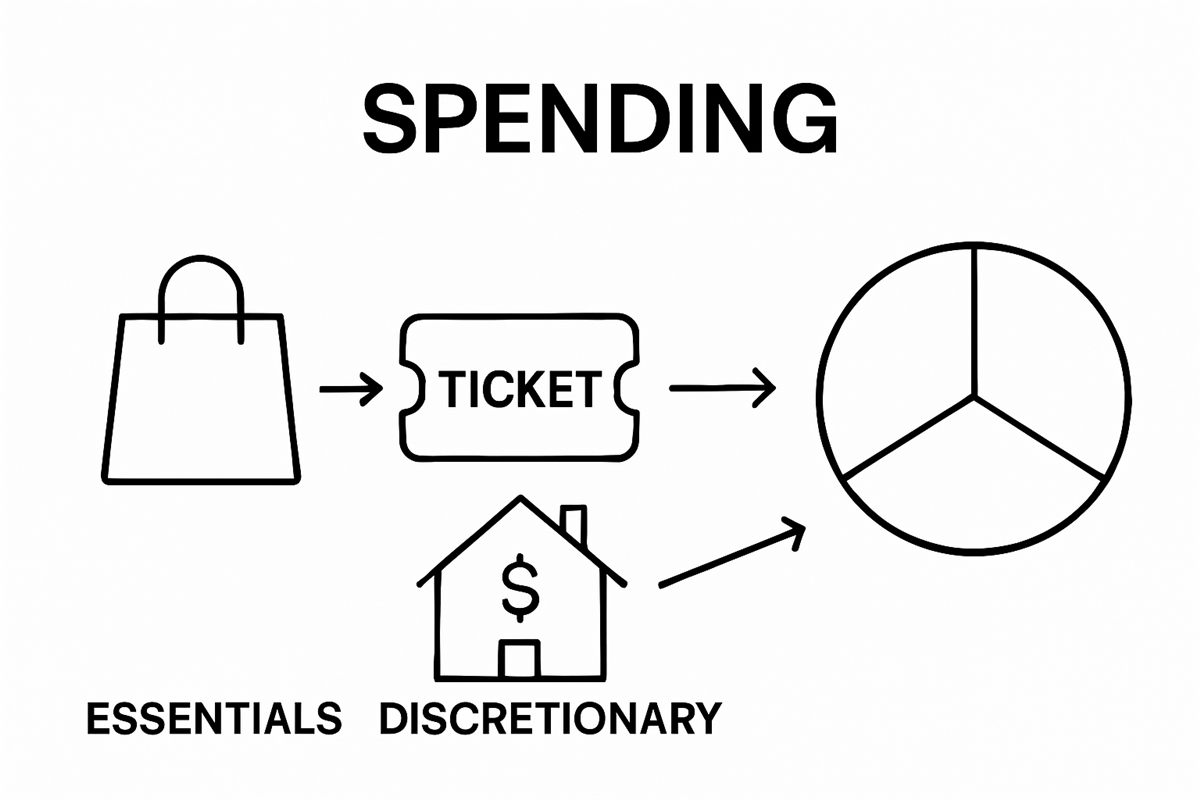 Financial categorization helps families see exactly where their money flows. These categories typically include essential expenses like housing, utilities, and groceries, and discretionary spending such as entertainment, dining out, and personal purchases.
By classifying expenses, you create a detailed map of your family’s financial landscape.
This table organizes the most common financial categories families should consider when tracking their expenses, clarifying which types are essential or discretionary.
| Category | Description | Type |
|---|---|---|
| Housing | Rent or mortgage, property taxes | Essential |
| Utilities | Electricity, water, internet, etc. | Essential |
| Groceries | Food, household supplies | Essential |
| Transportation | Gas, car payments, public transit | Essential |
| Entertainment | Movies, events, hobbies | Discretionary |
| Dining Out | Restaurants, cafes, takeout | Discretionary |
| Personal Purchases | Clothing, beauty, miscellaneous | Discretionary |
 This categorization reveals patterns that might otherwise remain hidden, allowing for more strategic financial planning and resource allocation.
Real Time Spending Feedback
The Consumer Financial Protection Bureau discovered that over 90 percent of consumers are interested in tools that provide immediate spending insights. Real time tracking allows families to:
- Monitor expenses as they happen
- Prevent unexpected budget overruns
- Make immediate adjustments to spending
- Develop more conscious financial habits
- Reduce impulsive purchasing decisions
Building Financial Literacy
Spending tracking is more than recording numbers it is a powerful educational tool for building family financial literacy. By involving all family members in the tracking process, you create opportunities to discuss financial values, teach budgeting skills, and develop a shared understanding of financial management.
The goal is not just tracking expenses but transforming how your family thinks about and interacts with money. When tracking becomes a collaborative, transparent process, families develop stronger financial communication and shared financial goals.
Take Control of Your Family’s Finances—And Your Whole Home
Are you ready to stop feeling overwhelmed by hidden spending patterns and uncertain budgets? This article uncovered how tracking spending gives families the confidence to manage money and teach financial skills, but taking action can still feel daunting. If you want to turn awareness into real progress, it helps to use practical tools that make financial clarity and home organization easy to achieve. That’s where It’s a Southern Life, Y’all comes in.

Explore budgeting systems, time-saving home management solutions, and proven productivity strategies designed just for families. Find out how powerful organization methods can help you apply your new knowledge—reducing financial stress and creating peaceful spaces for your loved ones. Visit It’s a Southern Life, Y’all right now for easy-to-use resources and start building a more confident, organized, and budget-smart life today.
Frequently Asked Questions
What is spending tracking and why is it important for families?
Spending tracking is the process of monitoring and recording all financial transactions within a household. It is important for families because it helps identify spending patterns, manage budgets, and reduce unnecessary expenses, ultimately improving overall financial health.
How can tracking spending help in creating a budget?
By systematically documenting all expenses, families can gain a clear understanding of their financial habits. This insight allows for the creation of realistic budgets that align with their financial goals and values.
What are some effective methods for tracking spending?
Effective methods for tracking spending include using budgeting apps, spreadsheets, or traditional methods like pen and paper. The key is to categorize expenses and monitor them consistently for accurate insights.
How does spending awareness contribute to financial well-being?
Spending awareness promotes financial transparency, reduces stress, and builds confidence in managing finances. It empowers families to make informed decisions and encourages proactive financial planning for long-term goals.
Recommended
- Printables – It’s a Southern Life Y’all
- Merchandise – It’s a Southern Life Y’all
- Time Blocking Schedule – simplify your day | It’s a Southern Life Y’all
- Broke Mini Budget Landing Page – It’s a Southern Life Y’all
Want a place to put all that tracking? First Budget in 30 Minutes gives your numbers a home so the tracking actually adds up to something.