

Understanding the Role of Financial Literacy for Families
Most people think managing money is just about paying bills on time and keeping a few bucks in savings. But here is what might surprise you. Only one in three adults worldwide actually understand basic financial concepts like interest rates or budgeting. What really counts is financial literacy and this skill changes everything for families—turning everyday money worries into long-term stability and new opportunities.
Table of Contents
- What Is Financial Literacy And Why It Matters
- The Importance Of Financial Literacy In Family Life
- Key Concepts In Financial Literacy For Families
- How Financial Literacy Affects Future Opportunities
- Real-World Applications Of Financial Literacy Skills
Quick Summary
| Takeaway | Explanation |
|---|---|
| Financial literacy enhances decision-making. | It equips families to make informed choices about budgeting, saving, and investing effectively. |
| Understanding financial tools is crucial. | Grasping the workings of savings accounts, investments, and retirement plans supports long-term economic goals. |
| Teaching financial skills empowers future generations. | Financial education for children leads to responsible money management throughout their lives. |
| Building financial resilience is essential. | Strong financial literacy skills help families tackle economic challenges and unexpected expenses more effectively. |
| Proactive planning improves financial stability. | Anticipating financial challenges fosters preparedness and helps create strategies to avoid potential problems. |
What is Financial Literacy and Why It Matters
Financial literacy is about understanding how money works in your world. It goes beyond simply knowing how to count cash or balance a checkbook. Financial literacy means having the skills and knowledge to make smart money decisions that protect and grow your family’s financial future.
Understanding the Core Concept
At its heart, financial literacy involves comprehending key financial principles that help you manage income, expenses, savings, and investments effectively. According to the Organisation for Economic Co-operation and Development, financial literacy combines awareness, knowledge, skills, and behaviors necessary to make sound financial choices.
Think of financial literacy like learning a new language – but instead of words, you’re learning financial terms, strategies, and smart money management techniques. This knowledge helps you:
- Navigate complex financial products
- Make informed decisions about spending and saving
- Understand risks and opportunities in financial systems
- Protect your family’s economic well being

Why Financial Literacy Matters for Families
For families, financial literacy isn’t just about numbers. It’s about creating stability, reducing stress, and building a secure future. According to the U.S. Federal Deposit Insurance Corporation, financial literacy empowers families to make strategic choices about banking, saving, borrowing, and investing.
When families understand financial concepts, they can:
- Create realistic budgets
- Build emergency savings
- Plan for long term goals like education and retirement
- Avoid dangerous debt traps
- Make confident financial decisions
Ultimately, financial literacy transforms money from a source of anxiety into a tool for creating opportunities and achieving your family’s dreams.
The Importance of Financial Literacy in Family Life
Financial literacy is not just about managing money – it’s about creating a stable and secure future for your entire family. Understanding financial principles transforms how families approach economic challenges, opportunities, and long-term planning.
Building Financial Resilience
Every family encounters financial challenges, but those with strong financial literacy skills can navigate these obstacles more effectively. According to research from the Social Security Administration, increased financial knowledge directly correlates with better economic decision making and increased household stability.
Financial resilience means more than just having savings.
 It involves:
- Understanding how to allocate resources strategically
- Creating backup plans for unexpected expenses
- Developing multiple income streams
- Learning to make informed investment choices
- Protecting family assets through smart financial planning
Teaching Financial Skills Across Generations
Financial literacy is a powerful inheritance that parents can pass to their children. When families prioritize financial education, younger generations learn critical money management skills early. **Children who understand financial concepts are more likely to make responsible monetary decisions throughout their lives.
**
Key areas of family financial education include:
- Explaining budgeting basics
- Teaching the difference between needs and wants
- Demonstrating smart saving techniques
- Discussing responsible credit use
- Modeling healthy financial behaviors
By making financial conversations transparent and educational, families can break cycles of financial uncertainty and create lasting economic strength. Financial literacy becomes a tool for empowerment, helping families transform their economic potential and build generational wealth.
Key Concepts in Financial Literacy for Families
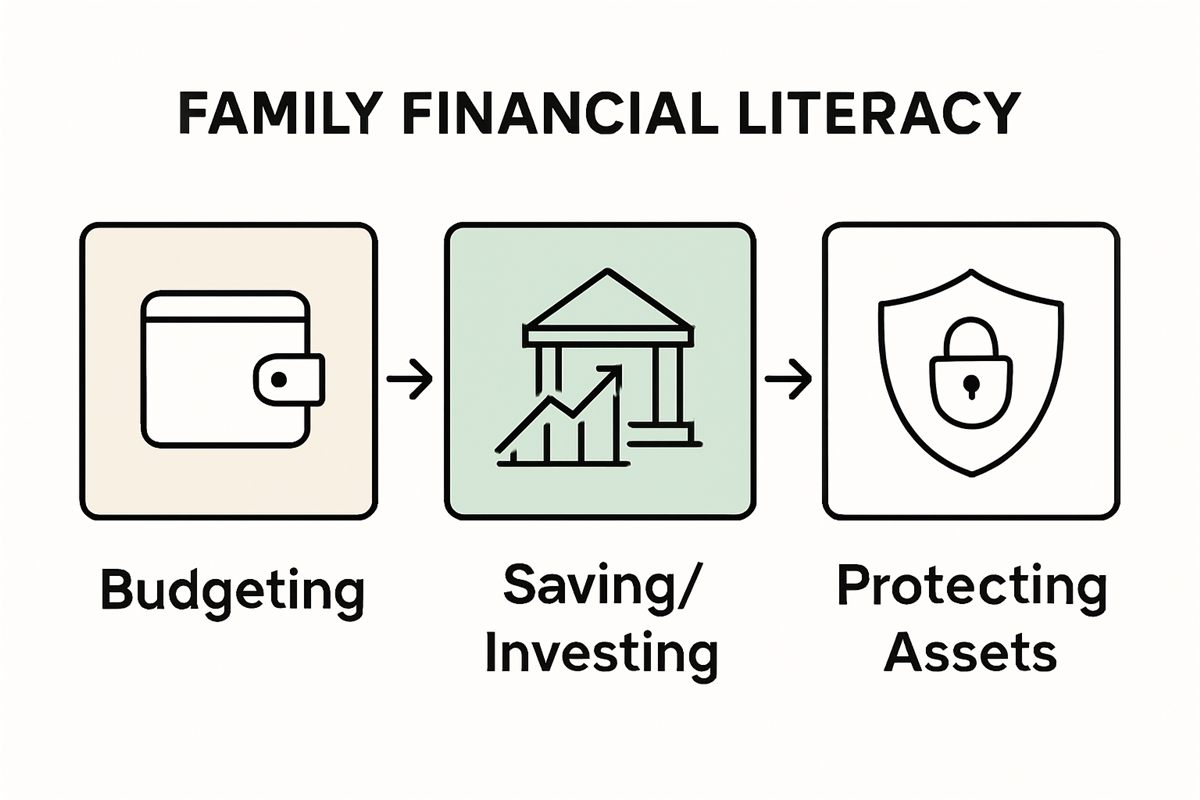
Financial literacy is a comprehensive skill set that empowers families to make informed and strategic money decisions. Understanding these key concepts transforms how households manage, grow, and protect their financial resources.
Core Financial Management Skills
At the foundation of financial literacy are essential skills that every family should develop. According to the Consumer Financial Protection Bureau, building financial knowledge starts with understanding fundamental money management principles.
The core skills include:
To help clarify the foundational elements of financial literacy that every family should understand, the following table summarizes each core financial management skill and its purpose.
| Skill | Purpose |
|---|---|
| Budgeting and tracking expenses | Enables families to control spending and allocate resources efficiently |
| Understanding income and cash flow | Helps families plan based on what money comes in and goes out |
| Differentiating between needs and wants | Prevents unnecessary spending and supports smarter financial decisions |
| Setting realistic financial goals | Provides direction and motivation for saving and investing for the future |
| Managing debt responsibly | Reduces interest costs, limits financial stress, and protects future financial options |
Understanding Financial Instruments and Strategies
Beyond basic skills, families need to comprehend various financial tools and strategies that can help them build wealth and security. Financial literacy means knowing how different financial instruments work and how they can support your family’s economic objectives.
Important financial concepts to master include:
- Savings accounts and interest rates
- Investment basics like stocks and bonds
- Retirement planning mechanisms
- Insurance and risk management
- Tax planning and optimization strategies
By developing a holistic understanding of these key concepts, families can transform their financial future. Financial literacy is not about being perfect with money, but about making progressively smarter decisions that create long-term stability and opportunities for growth.
How Financial Literacy Affects Future Opportunities
Financial literacy is more than a skill – it’s a powerful catalyst that can transform a family’s future trajectory. Understanding money management opens doors to opportunities that extend far beyond immediate financial comfort.

Breaking Generational Economic Barriers
Financial knowledge has the potential to reshape a family’s economic landscape. According to research from the OECD, families with higher financial literacy are more likely to make strategic decisions that create long-term wealth and stability.
This transformative power manifests through:
- Creating intergenerational economic mobility
- Developing strategic investment strategies
- Building sustainable financial habits
- Reducing financial stress and uncertainty
- Expanding educational and career opportunities
Investing in Future Potential
Financial literacy acts as a gateway to broader life opportunities. When families understand how to manage, save, and invest money effectively, they unlock potential that goes beyond immediate financial constraints.
Key areas where financial literacy creates opportunities include:
- Higher education funding
- Small business development
- Real estate investment
- Career skill development
- Personal and professional networking
By treating financial education as a critical life skill, families can create a roadmap for sustained economic growth. Financial literacy becomes a powerful tool that empowers individuals to dream bigger, plan strategically, and transform potential challenges into opportunities for success.
Real-World Applications of Financial Literacy Skills
Financial literacy transforms abstract concepts into practical strategies that families can use every day. Understanding how to apply financial knowledge helps households make smarter, more confident money decisions across multiple life scenarios.
Everyday Financial Decision Making
Real-world financial literacy means turning knowledge into action. According to research from the National Center for Biotechnology Information, practical financial skills directly impact a family’s ability to manage resources effectively and plan for future challenges.
Practical applications include:
- Creating and maintaining realistic household budgets
- Comparing financial products before making purchases
- Understanding credit card terms and interest rates
- Negotiating better rates for services
- Making informed insurance and investment choices
The table below organizes everyday applications of financial literacy skills to demonstrate how families use these concepts in practical, real-world scenarios.
| Application Area | Example Action | Benefit |
|---|---|---|
| Budgeting | Creating and maintaining household budgets | Improved control over spending and saving |
| Financial product comparison | Comparing products before making purchases | Better value for money and reduced costs |
| Credit management | Understanding credit card terms and rates | Lower interest payments and improved credit |
| Negotiation skills | Negotiating better rates for services | Savings on recurring expenses |
| Insurance and investments | Making informed choices with insurance/investing | Enhanced financial protection and long-term growth |
Strategic Financial Planning
Financial literacy enables families to move beyond reactive money management to proactive financial planning. This means anticipating potential financial challenges and developing strategies to address them before they become problems.
Strategic planning involves:
- Building emergency savings funds
- Developing multiple income streams
- Planning for major life expenses
- Understanding tax implications of financial decisions
- Protecting family assets through smart risk management
By applying financial literacy skills in real-world contexts, families can transform their economic potential. Financial knowledge becomes a powerful tool that turns everyday challenges into opportunities for growth and stability.
Empower Your Family’s Future With Simple Organization and Financial Systems
Are you ready to turn financial literacy into real results for your family? If you want to break free from money stress, avoid debt traps, and give your children the lifelong advantage of smart financial habits, now is the perfect time to take action. Our team knows that managing budgets, juggling schedules, and keeping your home running smoothly can feel overwhelming, especially when you crave stability and peace of mind.
Transform your family’s routines with easy-to-follow budgeting solutions, home management systems, and decluttering strategies designed for busy families. Take what you learned about budgeting, planning, and teaching kids about money, and discover step-by-step systems that create structure in every part of your life. Visit It’s a Southern Life Y’all now to explore tips and tools that make financial confidence part of your family’s daily routine. Start today and unlock calmer days and a brighter future for your loved ones.
Recommended
- Printables – It’s a Southern Life Y’all