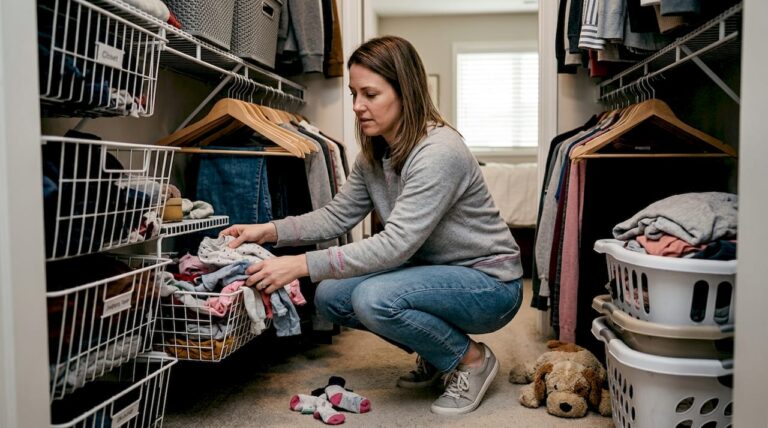
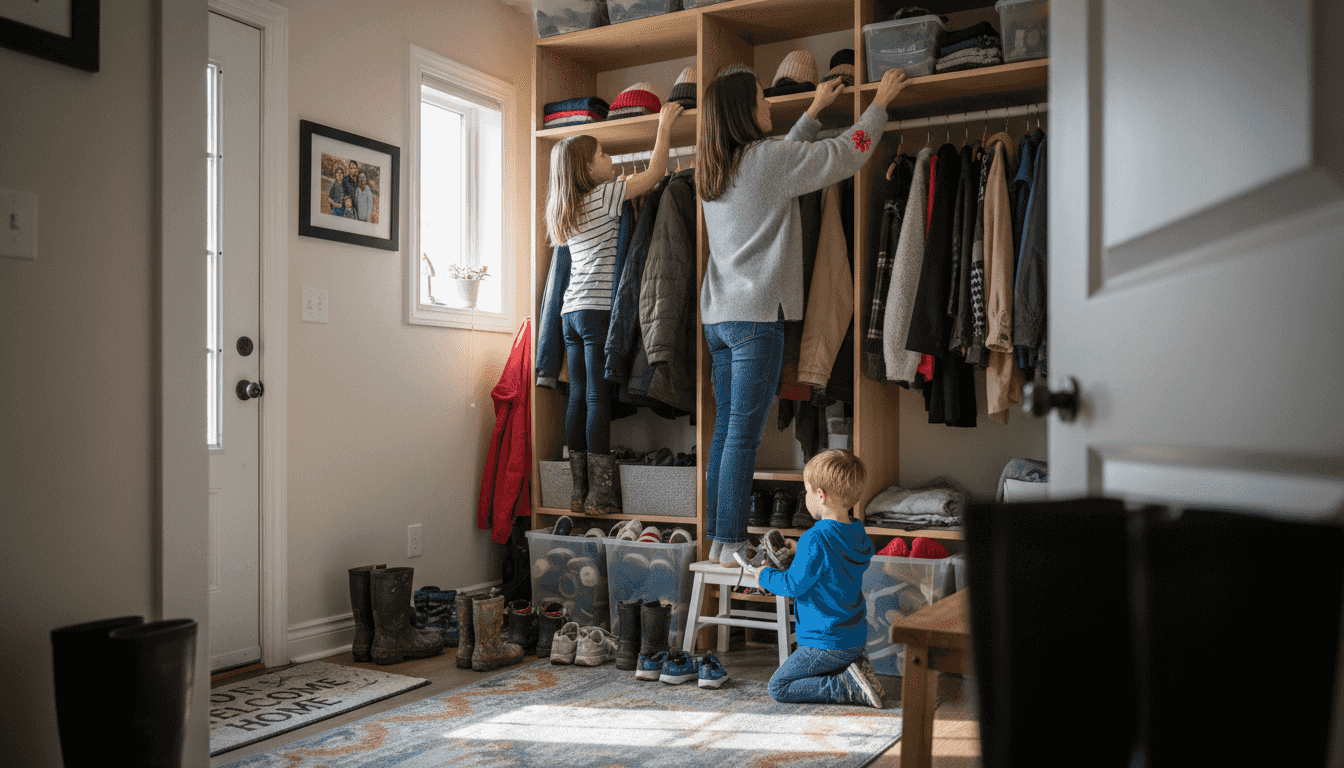
Front Closet Organization Ideas: 4 Tips Save 30% Space
Chaotic mornings don’t happen by accident. They’re the direct result of cluttered front closets where coats pile up, shoes scatter everywhere, and backpacks mysteriously vanish. When your family can’t find what they need, stress levels spike and everyone runs late. This article delivers practical front closet organization ideas that busy families can implement today to reclaim space, reduce chaos, and streamline daily routines. You’ll discover proven solutions for maximizing storage, making items accessible to children, and maintaining order with minimal effort.
The short answer: Take everything out, keep only the current season within reach, and store the rest somewhere else. Add a second lower rod or hooks at kid height so children can hang their own coats and backpacks. Bins on the shelf above and a tray for wet shoes below are what recover most of the space.
Table of Contents
- Selection Criteria For Front Closet Organization
- Decluttering: The Essential First Step
- Kid-Friendly Storage Solutions
- Maximize Vertical And Hidden Spaces
- Family-Specific Customization And Zoning
- Maintaining And Sustaining Closet Organization
- Summary Comparison Of Storage Options
- Situational Recommendations: Choosing What Fits Your Family
- Discover More Family Productivity And Organization Solutions
Key Takeaways
| Point | Details |
|---|---|
| Decluttering reclaims wasted space | Most families actively use only 20% of closet items, making purging essential for functional storage. |
| Clear labeled bins boost independence | Affordable bins costing $5 to $16 help children locate and return items without parental assistance. |
| Vertical tools increase capacity significantly | Double rods, hooks, and shelves can boost storage by over 30% in standard closets. |
| Zoning personalizes family storage | Assigning dedicated areas per family member reduces clutter by up to 50% and smooths routines. |
| Regular maintenance sustains results | Families practicing consistent upkeep retain organization 85% better long term. |
Selection Criteria for Front Closet Organization
Choosing the right organization solutions requires understanding what actually works for busy families juggling multiple schedules and needs. You can’t just buy random bins and hope for the best.
Effective closet organization requires child accessibility, space maximization, affordability, ease of maintenance, and family-specific customization. Start by evaluating your available space honestly. Measure height, width, and depth to understand what storage tools will physically fit without overcrowding.
Child safety and accessibility matter tremendously. Storage systems must allow kids to independently grab coats and shoes without climbing or asking for help every morning. Look for solutions with rounded edges, stable construction, and height appropriate for your youngest family members.
Budget considerations influence every purchase decision for practical families. You don’t need expensive custom systems to achieve professional results. Mass market retailers offer effective storage tools at reasonable prices that deliver real functionality.
Maintenance ease determines whether your organization system survives beyond the first week. Choose solutions you can quickly wipe down, adjust, or reorganize as family needs evolve. Complex systems requiring constant fussing will fail.
Customization according to your specific situation makes or breaks success. A family with three hockey players needs different solutions than a family with toddlers and newborns. Consider ages, activities, and seasonal gear requirements when selecting home organization systems that match your reality.
Pro Tip: Take photos of your current closet chaos from multiple angles before starting. You’ll appreciate the visual proof of progress and these images help identify problem zones you might otherwise overlook.
Applying decluttering techniques for busy families alongside proper selection criteria creates sustainable organization. Understanding family-friendly closet customization principles ensures your investment delivers lasting value rather than temporary tidiness.
Decluttering: The Essential First Step
You cannot organize clutter effectively. Attempting to arrange items you don’t use, don’t fit, or don’t need wastes time and perpetuates the problem.
Most people actively wear only 20% of their wardrobe, making decluttering essential to reclaim closet space. That statistic means 80% of your closet contents likely sit unused while creating visual noise and taking up valuable real estate.
Decluttering delivers immediate mental clarity alongside physical space. When you remove excess, you can actually see what you own and access items without digging through piles. The process also teaches children valuable lessons about ownership, decision making, and responsibility.
Follow this practical sequence tailored for busy schedules:
- Empty the entire closet completely so you can see every single item and assess the full space
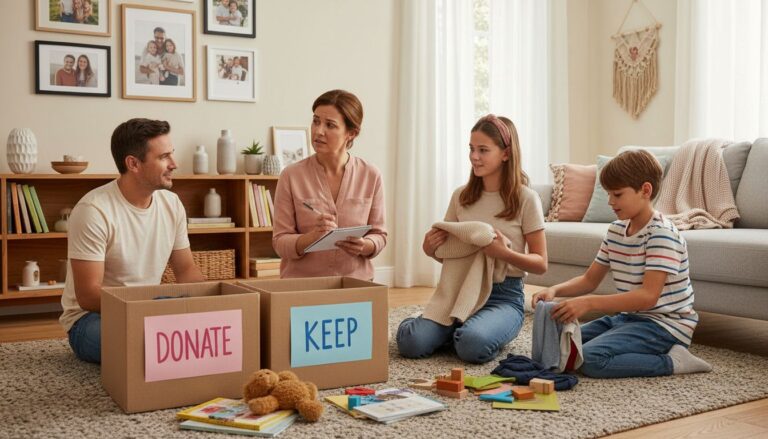
- Create three sorting piles labeled keep, donate or sell, and trash for systematic decision making
- Evaluate each item honestly asking if it fits, gets worn regularly, and serves current family needs
- Remove sentimental guilt by photographing special items before letting them go to new homes
- Immediately bag donations and schedule pickup before items creep back into circulation
- Clean the empty closet thoroughly before returning only the keep pile items
Involve every family member age appropriate in this process. Even young children can sort their own shoes and coats with guidance. Shared effort builds habits and distributes the workload fairly.
Pro Tip: Set a timer for 15 minute decluttering sprints instead of attempting marathon sessions. Short focused bursts prevent decision fatigue and fit into packed family schedules more realistically.
Understanding the importance of decluttering transforms this from an overwhelming chore into an empowering reset. Combining physical purging with decluttering tips for families creates momentum for the organization work ahead.
Kid-Friendly Storage Solutions
Children need access to their belongings without constant parental intervention. The right storage solutions foster independence while reducing your daily workload significantly.
Clear, labeled bins costing $5 to $16 each help children identify and access clothes quickly, fostering independence and easing parental duties. Transparency matters because kids can see contents at a glance instead of dumping everything to find one item.
Transparent containers outperform opaque options dramatically for young children still developing organizational skills. Clear plastic allows visual scanning that matches how children naturally search for belongings. This simple feature eliminates frustration and wasted time.
Consider these effective storage options by price and purpose:
- Small clear shoe boxes for accessories like gloves, hats, and scarves ranging $5 to $8 each
- Medium stackable bins for folded items like sweaters and pants priced $10 to $14 each
- Large rolling bins for sports equipment and seasonal gear costing $12 to $16 each
- Drawer organizers with compartments for socks and small items at $6 to $10 each
Labeling transforms good storage into great storage. Use picture labels for pre-readers and word labels for older children. Label both the bin and the shelf location so items have designated homes everyone recognizes.
| Storage Type | Best For | Child Accessibility | Maintenance | Cost Range |
|---|---|---|---|---|
| Clear bins | Daily wear items | Excellent | Easy wipe clean | $5 to $16 |
| Drawer organizers | Small accessories | Good | Requires sorting | $6 to $10 |
| Hanging organizers | Shoes and bags | Moderate | Occasional dusting | $12 to $20 |
| Open baskets | Quick grab items | Excellent | Simple tidying | $8 to $15 |
Pro Tip: Photograph the organized bin contents and attach printed photos to bin fronts as visual labels. This works brilliantly for non-readers and reinforces proper item placement for everyone.
Implementing storage systems for families that prioritize accessibility creates lasting habits. Pairing bins with home refresh ideas maintains an inviting organized space. The clear labeled bins benefits extend beyond aesthetics to genuine functional improvements.
Maximize Vertical and Hidden Spaces
Most families drastically underutilize their closet’s vertical potential, leaving precious storage capacity untapped while complaining about insufficient space.
Vertical space optimization can boost storage capacity by over 30% in average 146 square foot closets. That percentage translates to substantial real world storage gains without expanding your physical footprint or construction costs.
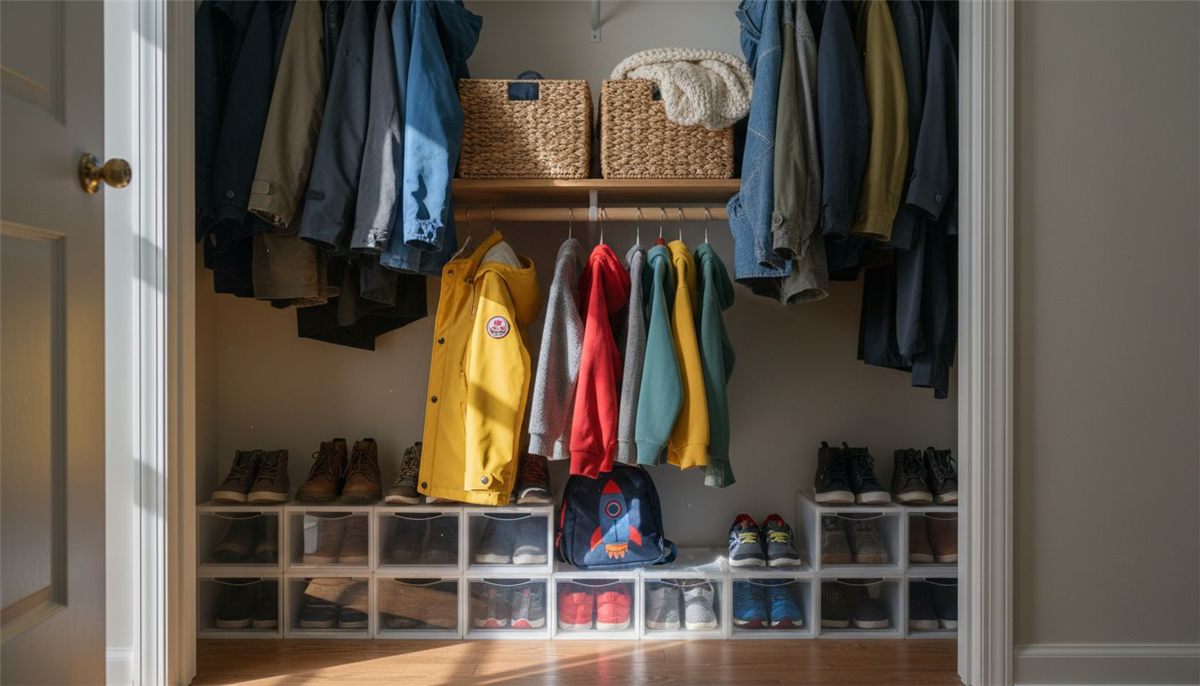
Standard front closets measure approximately 6 feet tall by 3 feet wide. The upper 2 feet typically sit empty while floor space overflows with piled shoes and bags. This represents wasted vertical real estate you’re already paying for.
Double hanging rods instantly double your hanging capacity by creating upper and lower levels. Install the top rod at standard height around 66 inches and add a lower rod at 33 inches for children’s coats and shorter items. This simple modification accommodates significantly more garments.
Door mounted hooks capture unused vertical space on the back of closet doors. Each door can hold 4 to 6 over-the-door hooks supporting bags, scarves, or tomorrow’s outfit. This keeps frequently accessed items visible and readily available.
Shelf risers and stackable organizers create vertical layers on existing shelves. Rather than single height storage, you gain multiple tiers that separate categories and prevent toppling piles.
| Vertical Tool | Storage Increase | Installation Difficulty | Flexibility | Typical Cost |
|---|---|---|---|---|
| Double rods | 100% hanging capacity | Moderate drilling | Fixed placement | $15 to $30 |
| Door hooks | 4 to 6 additional items | Easy adhesive or screws | Adjustable | $8 to $20 |
| Shelf risers | 50% per shelf | None | Very flexible | $10 to $25 |
| Wall mounted shelves | Variable by size | Moderate drilling | Permanent | $20 to $50 |
Underutilized corners offer hidden storage potential. Corner shelves or rotating organizers access awkward spaces that typically become black holes for lost items.
Pro Tip: Use the reach test before installing high shelves or rods. Have your shortest regular closet user attempt to reach the proposed location to ensure functional accessibility.
Exploring closet space maximization ideas through vertical thinking multiplies capacity. Applying space-saving closet hacks alongside proper vertical space maximization transforms cramped closets into efficient storage hubs.
Family-Specific Customization and Zoning
Generic organization fails families because every household operates differently with unique needs, schedules, and challenges requiring personalized solutions.
Zoning closets by family member and customizing storage reduces clutter by up to 50% and improves morning routine flow. This dramatic reduction happens because designated zones eliminate the free-for-all scramble where everyone’s belongings intermingle chaotically.
Zoning means dividing your closet into dedicated sections assigned to specific family members or item categories. Each person receives defined space for their coats, shoes, and accessories. This territorial approach establishes clear ownership and accountability.
For children, position their zones at accessible heights typically 24 to 48 inches from the floor. Low placement enables independent dressing and returns items to proper locations without assistance. Label each child’s zone with their name and photo for instant recognition.
Seasonal zoning separates current needs from off-season storage. Winter coats and boots occupy prime accessible real estate during cold months, then rotate to upper shelves when spring arrives. This rotation keeps relevant items front and center.
Activity based zones organize gear by function rather than person. Create sections for:
- School backpacks and lunch bags grouped together for morning grab and go convenience
- Sports equipment clustered by activity type with soccer, dance, and hockey gear separated
- Outdoor accessories like sunscreen, hats, and sunglasses stationed near the door
- Pet supplies including leashes, waste bags, and treats for easy walk preparation
Maintaining zones requires consistent enforcement and periodic adjustment. As children grow or family activities change, reassess zone assignments to match current reality. Flexibility prevents organization systems from becoming rigid obstacles.
Pro Tip: Use different colored bins or labels for each family member’s zone. Visual color coding speeds identification and reinforces personal responsibility for maintaining assigned spaces.
Implementing customizable organizing systems through zoning personalizes storage. Combining zoning with family productivity hacks streamlines routines. Understanding family-specific closet zoning principles delivers customized solutions that actually work for your household.
Maintaining and Sustaining Closet Organization
Organizing your closet once means nothing if the system collapses within weeks. Sustainable organization requires consistent maintenance habits involving the entire family.
Families practicing regular maintenance routines retain closet organization 85% better over time. This impressive retention rate proves that modest ongoing effort vastly outperforms sporadic major overhauls.
Daily maintenance takes minimal time but delivers maximum impact. Establish these non-negotiable habits:
- Return items to designated zones immediately after use rather than creating temporary piles
- Spend 2 minutes each evening doing a quick closet reset before bed
- Check that bins contain only appropriate items and labels remain visible
- Hang coats on hooks instead of draping them over furniture or railings
Monthly deeper maintenance catches drift before chaos returns. Schedule 15 to 20 minutes on the first weekend of each month for:
- Remove items that no longer fit or belong in the closet
- Wipe down shelves, bins, and rods to maintain cleanliness
- Assess whether current zoning still serves family needs or requires adjustment
- Rotate seasonal items as weather patterns change
- Involve children in evaluating their zones and making improvement suggestions
Family participation distributes workload and builds ownership. Children who help maintain organization feel invested in preserving order. Assign age appropriate tasks like sorting shoes, folding scarves, or checking bin labels.
Pro Tip: Create a visible family checklist posted inside the closet door with daily and monthly maintenance tasks. Check boxes provide satisfying visual progress and accountability for completing upkeep duties.
Reward systems motivate children to maintain their zones consistently. Simple incentives like extra screen time or choosing weekend activities reinforce positive organizational behaviors without elaborate reward structures.
Practicing family productivity habits through maintenance routines sustains results. Following proven organization maintenance tips prevents backsliding into previous chaos patterns.
Summary Comparison of Storage Options
Comparing popular storage solutions side by side clarifies which tools best match your family’s specific needs, budget constraints, and space limitations.
| Storage Solution | Cost Range | Best Use Case | Child Friendliness | Space Efficiency | Customization Potential |
|---|---|---|---|---|---|
| Clear labeled bins | $5 to $16 | Daily wear items and accessories | Excellent visual access | High vertical stacking | Flexible repositioning |
| Drawer organizers | $6 to $10 | Small items like socks and accessories | Good with labels | Moderate fixed space | Limited to drawer size |
| Double hanging rods | $15 to $30 | Maximizing coat and shirt capacity | Good for older children | Excellent vertical use | Fixed once installed |
| Door hooks and racks | $8 to $20 | Bags, hats, and grab items | Excellent accessibility | Captures unused door space | Easily adjustable |
| Shelf risers | $10 to $25 | Creating vertical layers on shelves | Moderate stability concerns | Good space multiplication | Very flexible placement |
| Rolling storage bins | $12 to $18 | Sports equipment and seasonal gear | Excellent mobility | Moderate floor space use | Portable repositioning |
Clear bins excel for families with young children needing visual confirmation of contents. The transparency factor reduces frustration and encourages independent use more effectively than opaque containers.
Double rods deliver maximum hanging capacity gains but require installation commitment and work best for families with numerous coats and jackets. The permanent nature means careful planning before mounting.
Door storage captures wasted vertical real estate without floor footprint costs. This solution suits crowded closets where every inch matters and flexibility remains important.
Comparing storage furniture options across categories helps identify optimal combinations. Most successful systems blend multiple storage types rather than relying on single solutions.
Situational Recommendations: Choosing What Fits Your Family
Your family’s unique circumstances dictate which organization strategies deliver practical results versus theoretical ideals that sound good but fail in practice.
For limited space closets under 20 square feet, prioritize vertical maximization through double rods and door hooks. These tools multiply capacity without expanding footprint. Avoid bulky floor bins that consume precious space.
Families with children under age 8 benefit most from low clear bins positioned 24 to 36 inches from the floor. This height range enables genuine independence while picture labels reinforce organizational systems. Skip high shelving young children cannot safely access.
Budget conscious families should focus spending on versatile basics like clear stackable bins from discount retailers. Target, Walmart, and IKEA offer functional organization tools at $5 to $15 price points. Expensive custom systems rarely justify costs for growing families with evolving needs.
Households managing multiple sports and activities require dedicated activity zones with labeled bins for each pursuit. A soccer bin, dance bag area, and baseball equipment zone prevents the chaotic mixing that causes frantic pre-practice searches. Rolling bins allow easy transport between closet and vehicle.
Seasonal climate variations demand rotation friendly systems. Families experiencing four distinct seasons need accessible upper storage for off-season items and quick swap capability. Labeled bins identifying season and contents streamline twice yearly rotations.
- Small closets: Double rods, door hooks, slim vertical bins
- Young children: Low clear bins, picture labels, stable construction
- Tight budgets: Mass retailer basics, DIY labels, repurposed containers
- Multiple activities: Zoned sections, rolling bins, activity labels
- Seasonal climates: Rotation friendly bins, accessible upper storage, clear seasonal labels
Flexibility matters more than perfection when selecting systems. Start with affordable basics, assess what works for your family’s actual behavior patterns, then adjust accordingly. Organization evolves as children grow and family dynamics shift.
Implementing appropriate home organization systems matched to your situation increases success rates. Combining recommendations with effective decluttering approaches creates comprehensive solutions.
Discover More Family Productivity and Organization Solutions
Transforming your front closet represents just one piece of creating an efficiently organized family life that reduces stress and maximizes precious time together.
Explore comprehensive family-friendly productivity hacks that extend beyond closet organization into meal planning, schedule management, and routine optimization. These proven strategies help busy families accomplish more while feeling less overwhelmed by competing demands.
Discover effective home organization systems applicable throughout your entire home, from kitchen pantries to bedroom closets and garage storage. Consistent organizational principles applied across spaces create household-wide efficiency and peaceful environments where everything has a designated place.
FAQ
How do I get my kids involved in organizing the front closet?
Start by making the process fun through games like timed sorting races or reward systems for completing tasks. Assign age appropriate responsibilities such as matching shoe pairs for toddlers or labeling bins for older children. Involving kids builds ownership and responsibility while teaching valuable life skills they’ll use forever.
What are the best storage solutions for small front closets?
Double hanging rods and over-the-door hooks maximize vertical space without requiring additional square footage. Clear stackable bins create organized layers while maintaining visibility of contents. Focus on multipurpose storage that serves multiple functions rather than single-use specialty items consuming precious space.
How often should my family maintain organized closets?
Implement quick 2 minute daily resets each evening to prevent clutter accumulation and keep systems functional. Schedule monthly 15 to 20 minute deep cleans involving all family members to assess fit, remove outgrown items, and adjust zoning as needs evolve. Consistent maintenance prevents overwhelming overhauls.
Can I organize a front closet on a tight budget?
Absolutely, effective organization requires strategy more than expensive products. Purchase basic clear bins from discount retailers at $5 to $10 each and create DIY labels using free printables or handwritten tags. Repurpose shoeboxes and household containers before buying new storage, focusing investment on versatile basics delivering maximum functionality.
What should I do with seasonal items during off months?
Rotate seasonal gear to less accessible upper shelves or labeled bins stored in basement or garage areas during off months. This rotation keeps current-season items in prime accessible zones while preventing overcrowding. Label bins clearly with season and contents for easy identification when rotation time arrives again.
Recommended
- How to Organize Your Kitchen Counters When the Clutter is More Than You Can Handle –
- Complete Guide to Overlooked Storage Space –
- 7 Effective Types of Home Organization Systems –
- How to Organize Pantry for Stress-Free Family Living –
- 7 Clever Nursery Closet Organization Tips for Parents
Want a little more help with this? I made a free Mental Load Kit that pairs right up with this post — y’all can grab it over on my Free Resources page.