

Review Finances: Boost Family Stability and Growth
Over half of all American families admit they rarely discuss their finances as a group, leaving critical goals overlooked and opportunities missed. Open conversations and regular financial reviews can transform how families approach money decisions, making it easier to stay on track and avoid long-term stress. You will discover why routine checkups are essential for American households aiming to build a stronger financial foundation together.
Table of Contents
- Defining Financial Reviews For Families
- Types Of Family Financial Checkups
- How Regular Reviews Support Your Goals
- Common Missteps When Avoiding Reviews
- Building Habits That Strengthen Family Finances
Key Takeaways
| Point | Details |
|---|---|
| Importance of Financial Reviews | Regular financial reviews provide critical insights into a family’s economic stability, helping to track income, expenses, and investments. |
| Types of Financial Checkups | Various types of financial checkups, such as monthly budget reviews and annual comprehensive reviews, cater to different planning needs and life changes. |
| Benefits of Regular Reviews | Consistent reviews support goal achievement, tracking progress, and identifying gaps, fostering a collaborative family approach to financial planning. |
| Risks of Avoiding Reviews | Skipping financial reviews can lead to mismanagement and increased vulnerability to unexpected expenses, ultimately stressing the family unit. |
Defining Financial Reviews for Families
A financial review is a comprehensive examination of your family’s monetary health, tracking income, expenses, investments, and long-term financial goals. Unlike casual budget check-ins, these systematic assessments provide deep insights into your financial landscape. Federal Reserve research highlights the critical importance of understanding your household’s economic stability through regular financial evaluations.
Financial reviews encompass several key components that paint a holistic picture of your family’s financial wellness. These typically include analyzing monthly income streams, tracking spending patterns, reviewing debt levels, assessing savings rates, and evaluating investment performance. Family financial management experts recommend conducting these reviews quarterly to ensure your financial strategy remains aligned with your family’s evolving needs and aspirations.
Successful financial reviews require more than just number crunching. They demand honest communication, shared goal-setting, and a collaborative approach where all family members understand and contribute to financial planning. This process helps identify potential challenges, recognize opportunities for growth, and build a resilient financial foundation that can adapt to changing circumstances.
Pro Tip – Family Financial Check: Schedule a quarterly family finance meeting where everyone participates, using visual tools like spreadsheets or budgeting apps to make the review process engaging and transparent for all members.
Types of Family Financial Checkups
Family financial checkups come in different formats, each designed to address specific aspects of your household’s monetary health. The Family Check-Up model demonstrates how structured assessments can provide comprehensive insights into your financial well-being, helping families develop stronger financial management practices.
Typically, these checkups can be categorized into several key types:
- Basic Budget Review: A quick monthly assessment focusing on income versus expenses
- Quarterly Financial Snapshot: A deeper dive examining spending patterns, savings rates, and short-term financial goals
- Annual Comprehensive Review: A thorough examination of long-term financial strategies, investments, insurance coverage, and retirement planning
- Life Transition Checkup: Specialized review triggered by major life events like marriage, childbirth, job change, or approaching retirement
Nationwide financial experts recommend a holistic approach that goes beyond simple number tracking. These checkups should evaluate multiple financial dimensions, including emergency fund status, debt management, insurance adequacy, investment diversification, and alignment with family’s evolving financial objectives.
The most effective financial checkups involve transparent communication and collaborative planning. They transform financial management from a chore into a shared family mission, helping everyone understand their role in achieving collective financial stability and growth.
Pro Tip – Checkup Planning: Create a standardized financial review template that covers all critical areas, making each review consistent and comprehensive while allowing flexibility for your family’s unique circumstances.
Here’s a comparison of family financial checkup types and when to use them:
| Checkup Type | Ideal Frequency | Focus Area | Best For |
|---|---|---|---|
| Basic Budget Review | Monthly | Day-to-day income, expenses | Keeping spending on track |
| Quarterly Financial Snapshot | Quarterly | Savings, short-term goals | Adjusting for recent changes |
| Annual Comprehensive Review | Yearly | Investments, insurance, plans | Evaluating long-term strategies |
| Life Transition Checkup | As needed | Major life changes | Planning for big milestones |
How Regular Reviews Support Your Goals
Regular financial reviews act as a powerful navigation system for your family’s financial journey, helping you stay aligned with your most important goals and dreams. Research from the University of Minnesota demonstrates that consistent financial discussions are crucial for making strategic decisions that reflect your family’s evolving needs and aspirations.
These periodic reviews support goal achievement through several key mechanisms:
- Tracking Progress: Measuring actual financial performance against established objectives
- Identifying Gaps: Recognizing areas where current strategies fall short of desired outcomes
- Adaptive Planning: Adjusting financial approaches based on changing family circumstances
- Motivation Building: Creating transparency and shared understanding among family members
Behavioral finance research reveals that open communication about finances significantly enhances financial literacy, which directly correlates with more successful goal achievement. By regularly reviewing your financial landscape, you transform abstract objectives into actionable strategies, making long-term dreams feel more attainable and immediate.
Successful goal support through financial reviews requires more than just number crunching. It demands honest dialogue, collaborative problem solving, and a willingness to adjust course when necessary. This approach turns financial management from a potential source of stress into an empowering family activity that builds confidence and collective financial intelligence.

Pro Tip – Goal Tracking: Create a visual goal tracking board where family members can see financial progress, celebrating milestones and adjusting strategies together to maintain motivation and alignment.
The following table summarizes key ways regular financial reviews benefit families:
| Benefit Area | Description | Long-Term Impact |
|---|---|---|
| Progress Tracking | Measures advancement toward goals | Sustained motivation |
| Gap Identification | Spots strategy weaknesses | Early course correction |
| Adaptive Planning | Modifies approach as life changes | Better response to new situations |
| Family Engagement | Fosters shared understanding | Stronger financial communication |
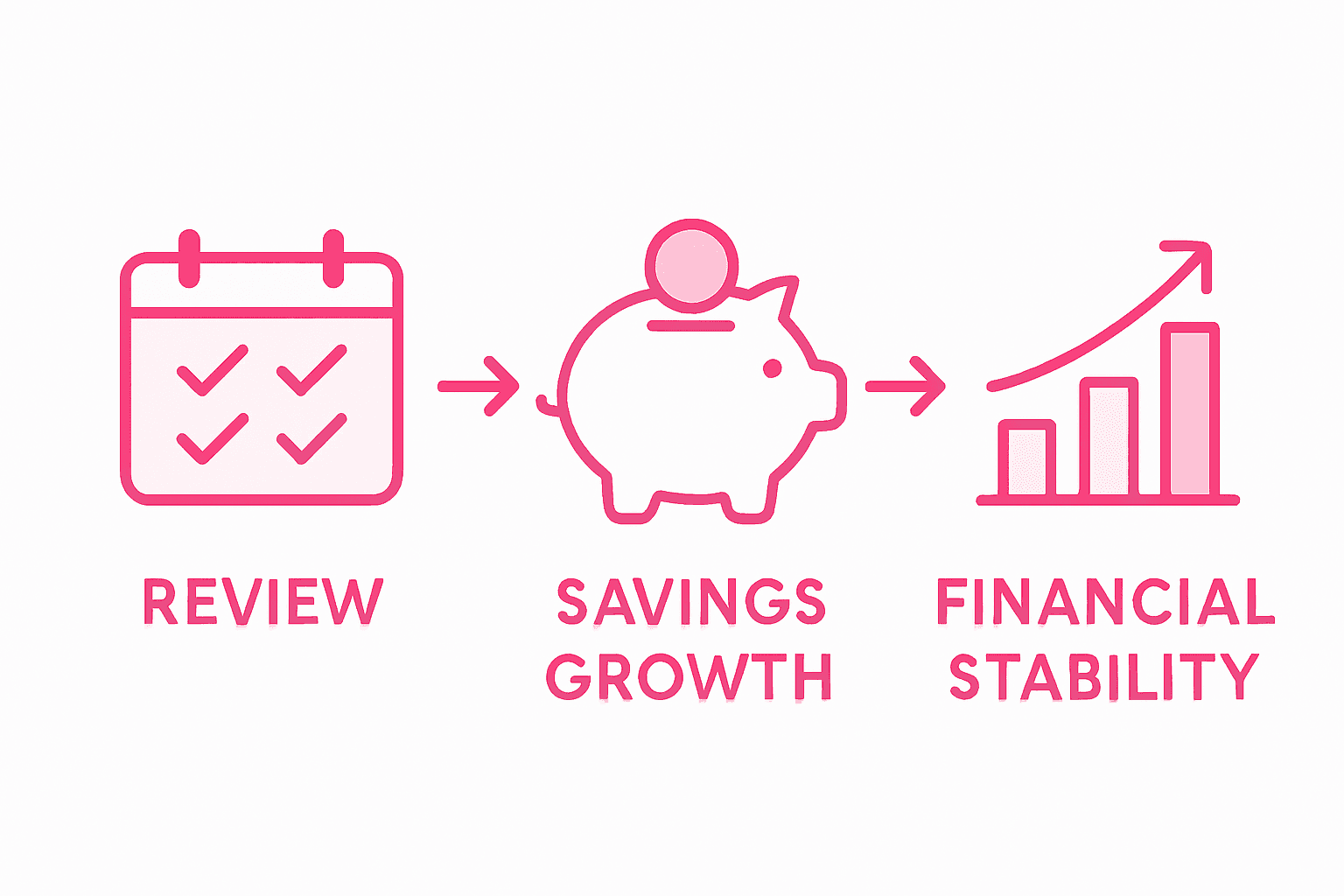
Common Missteps When Avoiding Reviews
Financial neglect can silently erode your family’s economic foundation, creating long-term challenges that are difficult to overcome. Research from the National Endowment for Financial Education reveals that families who consistently avoid financial reviews are at significant risk of developing poor financial behaviors and decision-making patterns.
The most common missteps families encounter when avoiding financial reviews include:
- Ignoring Warning Signs: Overlooking early indicators of financial stress
- Reactive Instead of Proactive: Addressing financial issues only during crisis moments
- Communication Breakdown: Avoiding transparent discussions about money
- Missed Optimization Opportunities: Failing to adjust strategies as family circumstances change
Federal Reserve analysis indicates that financial unawareness can lead to increased economic instability. Families who skip regular financial reviews often find themselves blindsided by unexpected expenses, missed investment opportunities, and growing financial vulnerabilities that could have been prevented through consistent monitoring and strategic planning.
Ultimately, avoiding financial reviews is like navigating a complex journey without a map. It creates unnecessary risk, increases family stress, and limits your ability to build long-term financial resilience. The small time investment in regular financial check-ins can prevent significant financial challenges and provide peace of mind for every family member.
Pro Tip – Risk Prevention: Schedule mandatory quarterly family financial meetings, treating them as non-negotiable appointments that prioritize your family’s financial health and collective future.
Building Habits That Strengthen Family Finances
Financial habits are the building blocks of family economic success, transforming abstract goals into tangible achievements. The American Association of Family and Consumer Sciences emphasizes the critical importance of integrating financial management education into daily family life, creating a foundation for long-term stability and growth.
Developing robust financial habits requires a strategic approach across several key dimensions:
- Consistent Communication: Regular, transparent discussions about money
- Shared Goal Setting: Creating collective financial objectives
- Collaborative Tracking: Jointly monitoring financial progress
- Adaptive Learning: Continuously improving financial skills together
Behavioral finance research demonstrates that families who develop strong financial communication patterns significantly enhance their overall financial literacy. This means moving beyond simple budgeting to creating a family culture that views financial management as a collaborative, ongoing learning process.
Successful financial habit building requires consistency, patience, and a willingness to learn from both successes and setbacks. It’s about creating a family environment where financial discussions are normal, non-threatening, and viewed as a shared responsibility. By normalizing these conversations and approaches, families can transform financial management from a source of stress to an empowering collective journey.
Pro Tip – Habit Formation: Implement a weekly family finance huddle where everyone participates, sharing insights, celebrating small wins, and collectively problem-solving financial challenges.
Strengthen Your Family Finances with Simple Organization and Planning
Managing family finances can feel overwhelming when trying to juggle budgets, savings, and long-term goals in a busy household. This article highlights the importance of regular financial reviews to boost stability and growth while addressing challenges like communication breakdowns and missed opportunities. If your family needs help building consistent financial habits, tracking progress, and adapting plans through transparent discussions, you are not alone.
We offer practical solutions designed for busy families seeking balance and peace. Our proven organization hacks and budgeting systems can help you transform complicated financial reviews into manageable routines. With easy-to-use tools for time management and home organization, you can create a supportive environment where family members actively engage in financial planning.
Frequently Asked Questions
What is a financial review?
A financial review is a comprehensive assessment of your family’s monetary health, including an analysis of income, expenses, investments, and long-term financial goals.
How often should we conduct financial reviews?
Experts recommend conducting financial reviews quarterly to ensure your financial strategy aligns with your family’s evolving needs and aspirations.
What are the benefits of regular financial reviews?
Regular financial reviews track progress towards goals, identify gaps in strategies, allow for adaptive planning, and foster family engagement in financial discussions.
What common mistakes do families make by avoiding financial reviews?
Common mistakes include ignoring warning signs of financial stress, being reactive instead of proactive, experiencing communication breakdowns, and missing opportunities for financial optimization.
Recommended
- Family Finance Organization Guide
- Financial Literacy: Everything You Need to Know
- How to Track Family Expenses: A Simple Guide for 2025
- Budgeting for Families – Creating Stability at Home
- 7 Essential Family Cookware Recommendations for Chefs – Brass & Steel
Want a little more help with this? I made a free Mental Load Kit that pairs right up with this post — y’all can grab it over on my Free Resources page.