

Understanding the Role of Budgeting in Families
Family budgets might sound simple but they hold the key to long-term financial peace at home. Get this. Families who budget see a measurable drop in money-related stress according to PubMed research. Most people believe budgeting is just about pinching pennies and sacrificing fun but that misses the point entirely. The real secret is that budgeting gives families more freedom to choose what matters, not less.
Table of Contents
- What Is Budgeting And Its Importance For Families
- Why Budgeting Matters For Family Financial Health
- How Budgeting Works To Enhance Family Decision-Making
- Key Concepts Of Family Budgeting Explained
- Real-World Impacts Of Budgeting On Family Life
Quick Summary
| Takeaway | Explanation |
|---|---|
| Budgeting enhances financial awareness | Families become more aware of spending patterns, allowing for informed financial decisions. |
| Build an emergency fund | Systematically setting aside funds protects against unforeseen expenses, fostering financial security. |
| Flexible budgeting adapts to changes | Family budgets should be adaptable, allowing adjustments to meet changing life circumstances and priorities. |
| Prioritize open financial communication | Regular budgeting discussions improve family dynamics by fostering trust and shared financial understanding. |
| Budgeting supports goal achievement | A structured budget helps families plan for both short and long-term financial objectives, aligning resources with aspirations. |
What is Budgeting and Its Importance for Families
Budgeting is a critical financial management strategy that helps families track income, control expenses, and achieve financial stability. At its core, budgeting represents a systematic approach to understanding and organizing household money flows, ensuring resources are allocated effectively across various family needs.
Understanding the Basic Concept of Family Budgeting
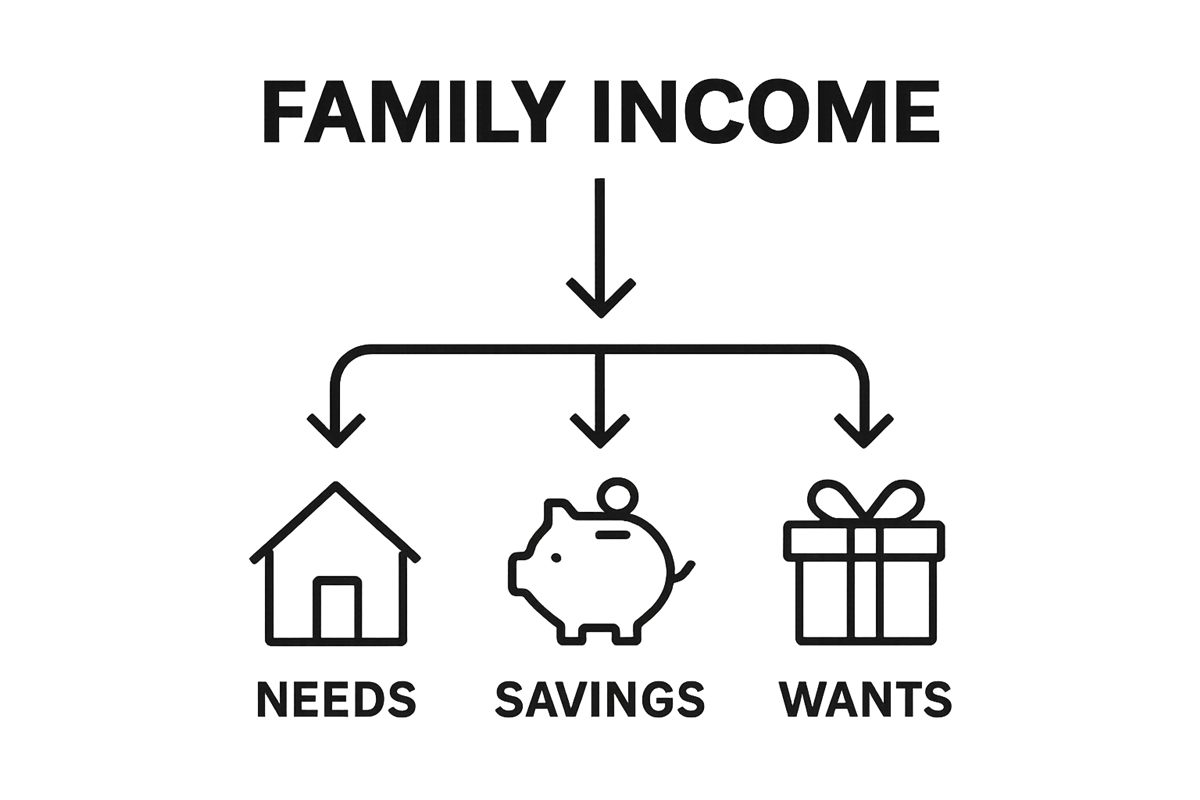
A family budget functions as a comprehensive financial roadmap that details expected income and planned expenses. It provides a clear picture of where money comes from and where it goes, enabling families to make informed financial decisions. According to the Consumer Financial Protection Bureau, budgeting helps families ensure they have sufficient funds for necessities, savings, and discretionary spending.
Key Benefits of Family Budgeting
Family budgeting offers numerous advantages that extend beyond simple money management:
- Financial Awareness: Creates transparency about spending patterns
- Stress Reduction: Minimizes financial uncertainty and unexpected expenses
- Goal Achievement: Enables systematic planning for short and long term financial objectives
By implementing a structured budget, families can transform their financial health, turning potential economic challenges into opportunities for growth and stability.
The process involves tracking income, categorizing expenses, identifying potential savings, and making strategic financial choices that align with family priorities.
Successful budgeting requires commitment, regular review, and flexibility. Families must be willing to adjust their financial plans as circumstances change, ensuring their budget remains a dynamic tool for economic empowerment rather than a rigid constraint.
Ultimately, budgeting is not about restricting spending but about making intentional financial choices that support family well being and future prosperity.
Why Budgeting Matters for Family Financial Health
Budgeting is far more than a simple accounting exercise. It represents a powerful strategy for securing long term family financial wellness, transforming how households approach money management and economic planning.
Financial Protection and Risk Management
Research from the University of Northern Iowa underscores that effective budgeting allows families to build robust financial defenses against unexpected challenges. By creating a systematic approach to tracking income and expenses, families develop a critical safety net that protects against potential economic disruptions.
Long Term Family Financial Stability
Budgeting enables families to create a proactive financial strategy that extends beyond immediate needs. The process involves strategic planning that addresses multiple financial dimensions:
- Emergency Fund Development: Systematically setting aside funds for unexpected expenses
- Debt Management: Creating structured approaches to reduce and eliminate outstanding financial obligations
- Future Planning: Establishing frameworks for long term financial goals like education, retirement, and major purchases
Through disciplined budgeting, families can transform financial uncertainty into a predictable and manageable economic landscape. This approach allows households to make informed decisions, prioritize spending, and create a sense of financial security that extends across generations.
The most successful family budgets are not rigid restrictions but flexible frameworks that adapt to changing life circumstances. They recognize that financial health is dynamic, requiring continuous assessment and strategic adjustments.
Ultimately, budgeting represents an investment in family potential. By understanding and controlling financial flows, families can unlock opportunities for growth, reduce stress, and build a foundation of economic resilience that supports both immediate needs and future aspirations.
How Budgeting Works to Enhance Family Decision-Making
Budgeting transforms family financial dynamics by creating a structured framework for collaborative decision-making. It serves as more than a financial tool, becoming a powerful mechanism for communication, shared understanding, and strategic planning within households.
Creating Transparent Financial Communication
According to BMC Public Health research, family budgeting significantly improves decision-making processes by establishing clear channels of financial communication. When families engage in regular budget discussions, they develop a collective understanding of their economic situation, enabling more informed and collaborative choices.
Strategic Resource Allocation and Prioritization
Budgeting empowers families to make intentional decisions about resource allocation by introducing a systematic approach to understanding financial capabilities and limitations. This process involves critical evaluation of family needs and priorities:
- Needs Assessment: Identifying essential versus discretionary expenses
- Goal Alignment: Matching financial resources with family objectives
- Consensus Building: Creating shared understanding about financial trade-offs
By presenting financial information transparently, budgeting reduces potential conflicts and misunderstandings. Family members can see exactly how resources are being utilized, which promotes trust and shared responsibility.
The most effective budgeting approaches treat financial planning as a dynamic, inclusive process. Rather than a top-down mandate, successful budgets emerge from open dialogue, where each family member’s perspective is valued and considered.
Ultimately, budgeting becomes a powerful tool for family empowerment. It transitions families from reactive financial management to proactive strategic planning, enabling them to navigate economic challenges with confidence and unity.
Key Concepts of Family Budgeting Explained
Family budgeting represents a comprehensive approach to financial management that goes beyond simple money tracking. It involves understanding complex financial dynamics and creating strategic frameworks for economic stability and growth.
Essential Financial Components of Budgeting
According to the Consumer Financial Protection Bureau, successful budgeting requires understanding several critical financial components. These foundational elements help families develop a holistic view of their economic landscape and make informed financial decisions.
Core Budgeting Terminology and Concepts
To effectively manage family finances, understanding key budgeting concepts is crucial. These fundamental principles form the backbone of successful financial planning:
- Income Tracking: Documenting all sources of household revenue
- Expense Categorization: Distinguishing between fixed and variable costs
- Financial Goal Setting: Establishing short and long term monetary objectives
Budgeting is not about restricting spending but about creating intentional financial strategies that align with family values and aspirations. It requires continuous learning, adaptation, and a willingness to have open conversations about money.
Below is a table defining essential budgeting terms and core concepts to help families gain a clearer understanding of foundational financial planning language.
| Term/Concept | Explanation |
|---|---|
| Income Tracking | Documenting all sources of household revenue |
| Expense Categorization | Distinguishing between fixed and variable costs |
| Financial Goal Setting | Establishing short and long term monetary objectives |
| Emergency Fund Development | Systematically setting aside funds for unexpected expenses |
| Debt Management | Creating structured approaches to reduce and eliminate financial obligations |
| Transparent Communication | Sharing financial information openly among family members |
| Flexible Budgeting | Allowing adaptation of the budget to changes in circumstances |
The most effective budgets are flexible frameworks that evolve with changing family circumstances. They recognize that financial health is a dynamic process, requiring regular review and strategic adjustments.
Ultimately, mastering budgeting concepts empowers families to transform their financial potential. By developing a nuanced understanding of income, expenses, and financial planning, households can build resilience, reduce economic stress, and create pathways to long term financial prosperity.
Real-World Impacts of Budgeting on Family Life
Budgeting extends far beyond numerical calculations, profoundly influencing family dynamics, emotional well being, and overall quality of life. Its impact reaches deep into the social and psychological fabric of households, transforming how families interact, plan, and navigate economic challenges.
Psychological and Emotional Benefits
Research from PubMed reveals intriguing connections between household financial management and personal well being. Families that engage in systematic budgeting often experience reduced financial stress, improved communication, and a greater sense of collective purpose and control over their economic destiny.
Practical Life Transformations Through Budgeting
The real-world implications of consistent budgeting manifest in multiple dimensions of family life:
- Stress Reduction: Eliminating financial uncertainty and unexpected monetary surprises
- Goal Realization: Creating clear pathways to achieving family dreams and aspirations
- Relationship Strengthening: Promoting transparent communication and shared financial responsibility
Budgeting acts as a powerful mechanism for family empowerment. It shifts households from reactive financial survival to proactive economic planning, enabling members to make informed decisions that support collective well being.
The most successful families understand that budgeting is not about restriction, but about creating intentional financial strategies that reflect shared values and future aspirations. By treating budgeting as a collaborative process, families can transform potential sources of conflict into opportunities for mutual understanding and growth.
Ultimately, effective budgeting represents an investment in family resilience. It provides a structured approach to navigating economic challenges, building financial literacy, and creating a stable foundation for generational prosperity.
The following table organizes the major financial and wellbeing impacts of budgeting on family life, highlighting both practical effects and emotional benefits based on the article’s content.
| Impact Category | Description |
|---|---|
| Stress Reduction | Minimizes financial uncertainty and unexpected monetary surprises |
| Goal Realization | Facilitates pathways to achieving family dreams and ambitions |
| Relationship Strengthening | Promotes transparent communication and shared financial responsibility |
| Financial Security | Builds safety nets for emergencies and future planning |
| Empowerment | Shifts families from reactive to proactive economic planning |

Strengthen Your Family Finances and Home Life Today
If you feel overwhelmed by unpredictable expenses or find it tough to create peace and clarity around money conversations, you are not alone. The article highlighted how budgeting builds financial awareness, reduces stress, and empowers families to reach their goals. Many families struggle to keep track of spending, plan for emergencies, and manage daily life without chaos. But with the right support, you can take control of your finances and transform daily routines too.

Ready to take the next step toward a calm, organized home and a strong financial future? Discover practical home management systems, real-life budgeting solutions, and easy organization strategies at It’s a Southern Life Y’all. Start exploring our simple living resources and budgeting tools to help your family thrive. Visit our homepage now and start building your most balanced, peaceful life today.
Frequently Asked Questions
What is family budgeting?
Family budgeting is a systematic approach to managing household finances, involving tracking income, controlling expenses, and planning for financial stability. It creates a comprehensive roadmap of expected income and planned expenses.
Why is budgeting important for families?
Budgeting is crucial for families as it promotes financial awareness, reduces stress related to expenses, and helps in achieving financial goals. It allows families to allocate resources effectively and create a sense of economic security.
How can budgeting enhance family decision-making?
Budgeting enhances family decision-making by improving communication about finances, facilitating mutual understanding of economic situations, and fostering collaborative choices. It empowers families to make informed financial decisions together.
What are the key components of successful family budgeting?
Key components of successful family budgeting include income tracking, expense categorization, and financial goal setting. Understanding these elements helps families develop a holistic view of their financial position and make better decisions.
Recommended
- After Mini Binder Email Budget Binder – It’s a Southern Life Y’all
- Printables – It’s a Southern Life Y’all
- Broke Mini Budget Landing Page – It’s a Southern Life Y’all
- Time Blocking Schedule – simplify your day | It’s a Southern Life Y’all
Ready to build yours? First Budget in 30 Minutes walks you through a family budget in a single sitting, no spreadsheet skills needed.