
Wedding Budget Breakdown: Step-by-Step Guide for Families
Did you know that the average wedding in the US costs over $30,000? Planning such a significant celebration means every dollar matters. Couples who organize their budget from the start feel less stressed and avoid unexpected expenses down the road. By learning how to assess your funds, set categories, and prioritize spending, you can celebrate your big day with confidence—while keeping your finances on track.
Table of Contents
- Step 1: Assess Your Total Wedding Funds
- Step 2: Allocate Budgets to Key Categories
- Step 3: Prioritize Non-Negotiable Expenses
- Step 4: Track Spending Against Budget Plan
- Step 5: Adjust and Verify Final Allocations
Quick Summary
| Key Point | Explanation |
|---|---|
| 1. Assess total wedding funds first | Gather all financial resources including savings, family contributions, and gifts to create a complete budget picture. |
| 2. Allocate budgets by expense category | Divide your funds according to recommended percentages for key areas like venue, food, and photography to manage spending. |
| 3. Identify non-negotiable expenses | Rank essential elements of the wedding to focus spending on what truly matters, helping to guide budget adjustments. |
| 4. Track all wedding expenses closely | Use budgeting apps or spreadsheets to detail every transaction and compare spending against your budget in real time. |
| 5. Adjust allocations as needed | Reassess budget categories periodically, reallocating funds from less critical areas to address unexpected expenses without compromising priorities. |
Step 1: Assess Your Total Wedding Funds
Your first big wedding planning move is figuring out exactly how much money you have to work with. According to letsmakeaplan.org, you need to begin by listing all potential income sources for your wedding celebration.
Start by gathering all financial information from every possible channel. This means sitting down with your partner and making a comprehensive list that includes personal savings, family contributions, potential gifts, and any other financial resources you might tap into. Write down exact amounts next to each source so you can see the total picture. Some sources might include your own bank accounts, contributions from parents or family members, work bonuses, or even dedicated wedding savings accounts you might have started.
One smart tip is to have an honest family conversation early in the process. Sometimes parents or relatives want to contribute but are waiting to be asked. By opening up the dialogue about wedding funding, you might discover additional resources you didn’t know existed. Just remember that every dollar counts when youre building your wedding budget.
Once youve compiled your total funds, youll be ready to move on to the next critical step of wedding financial planning: setting your overall budget and determining how to allocate those precious dollars.
Step 2: Allocate Budgets to Key Categories
Now that youve identified your total wedding funds, its time to strategically divide those dollars across different wedding expenses. Vibrant Credit Union recommends a percentage based breakdown that can help you prioritize spending effectively.
According to their expert guidance, you should plan to allocate your budget roughly as follows: about 50% for your venue, food, and drink which are typically the largest expenses. Next, set aside 12% for photography to capture those precious memories.
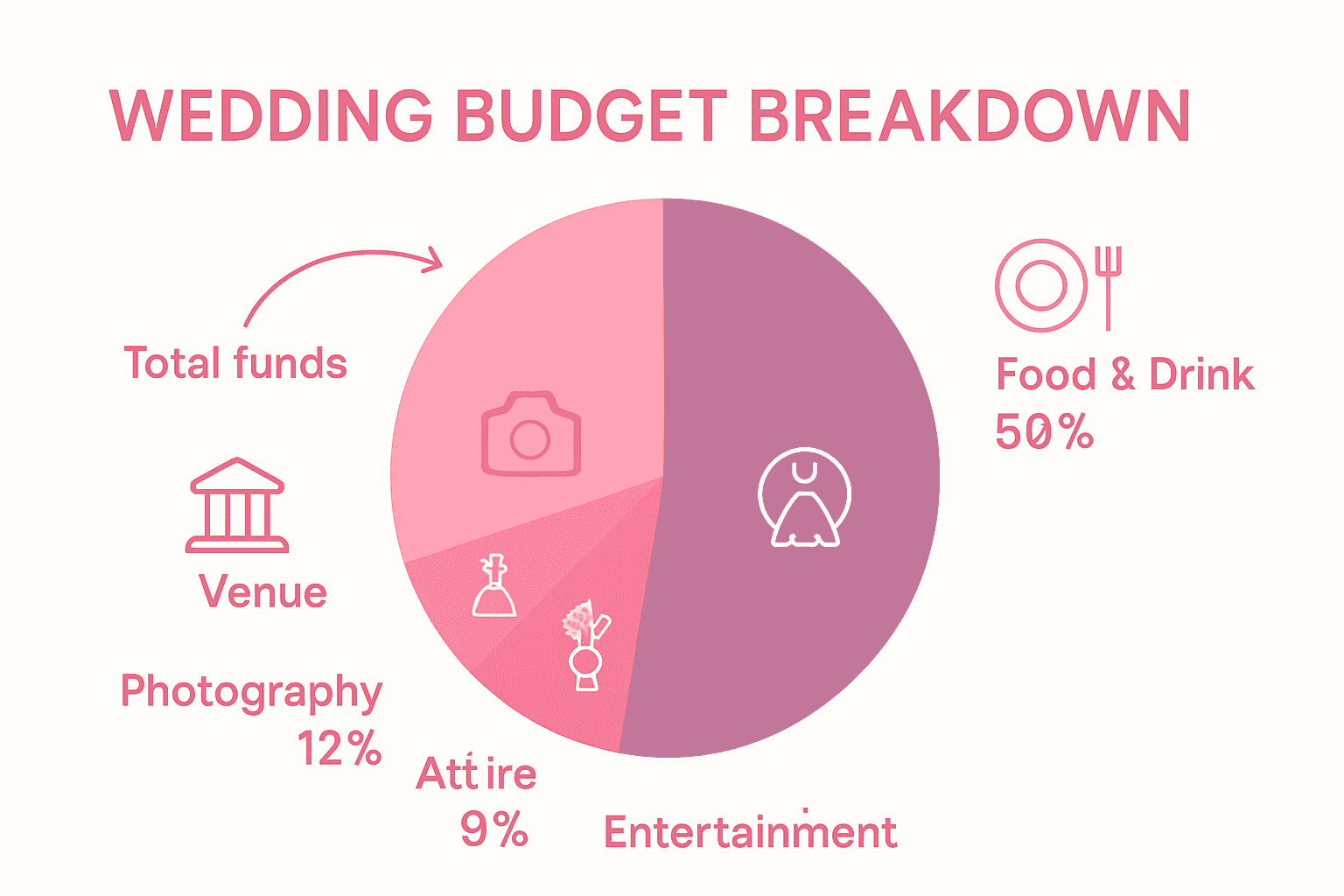 For attire and accessories, budget around 9% of your total funds. Decorations should get about 8% of your budget, while entertainment like music or performers deserve approximately 7%.
A helpful strategy is to create a spreadsheet or use a wedding budget app to track these allocations in real time. This way, you can see exactly how much youre spending in each category and make adjustments if needed. Remember that these percentages are guidelines not strict rules. Your personal wedding vision might require shifting some funds around to match your specific priorities. The key is staying flexible while keeping an eye on your overall financial plan.

With your budget categories mapped out, youre now ready to start researching specific vendors and getting quotes that will help you turn your wedding dreams into a financially responsible reality.
Step 3: Prioritize Non-Negotiable Expenses
With your total wedding budget in hand, its time to get strategic about which expenses are absolute musts versus nice-to-haves. According to letsmakeaplan.org, youll want to identify and rank essential wedding elements by distinguishing between your true needs and wants.
Start by sitting down with your partner and having an honest conversation about what matters most. For most couples, non negotiable expenses typically include the venue, catering, marriage license, and core attire. Think about what elements are truly meaningful to you both. Maybe youre a foodie who wants an incredible dining experience or a music lover who prioritizes an amazing band. These personal priorities will help you allocate funds where they matter most. Some couples might value photography over elaborate floral arrangements while others might prefer stunning decorations over expensive entertainment.
One helpful tip is to create a tiered list of expenses marked as must have, would love to have, and can live without. This approach helps you make tough financial decisions without losing sight of your wedding vision. If unexpected costs arise or you need to trim the budget, youll know exactly where you can make cuts. By creating a sinking fund for wedding expenses, you can also provide additional financial flexibility to cover those non negotiable items.
With your priorities clearly mapped out, youre now ready to start getting specific quotes and making initial vendor selections that align with your most important wedding elements.
Step 4: Track Spending Against Budget Plan
Now its time to become your own financial detective and keep a razor sharp eye on every single wedding expense. TDECU recommends utilizing budgeting apps and financial tools to monitor expenses and ensure they align perfectly with your predetermined budget.
Start by creating a detailed spreadsheet or using a dedicated wedding budget tracking app that allows you to log each expense the moment it happens. According to Balance Pro, maintaining a comprehensive record of all wedding related expenditures is crucial for comparing actual spending against your original budget. Break down your tracking into categories like venue, catering, attire, and decorations. Update your spreadsheet immediately after making any purchase and include details like vendor name, specific item, total cost, and payment date.
One smart strategy is to set up color coded alerts in your tracking system. For instance green could mean youre on budget red signals youre overspending and yellow indicates youre approaching your limit. When youre tracking spending, consistency is key. Schedule a weekly budget check in with your partner to review expenses together and make adjustments as needed.
With your spending meticulously tracked, youre now prepared to make informed financial decisions and keep your wedding budget firmly under control.
Step 5: Adjust and Verify Final Allocations
Youve tracked your spending carefully and now its time for the final financial tune up of your wedding budget. Vibrant Credit Union recommends being prepared to reallocate funds between categories as needed to maintain overall financial balance.
Review your spreadsheet and look for areas where youve over or underspent. Some categories might need a financial shuffle. Perhaps you found a less expensive photographer than anticipated or discovered your dream venue costs more than originally planned. This is where your tiered priority list becomes your best friend. Move money from lower priority categories to cover unexpected expenses in your must have areas. Be strategic and communicate openly with your partner about each adjustment.
A helpful tip is to keep a small contingency fund of about 5 to 10% of your total budget for last minute surprises. When youre tracking spending, flexibility is key. Have a final budget meeting with your partner to confirm all allocations feel right and align with your original wedding vision. Double check that every expense serves your core wedding priorities and that youre not compromising the elements that matter most to you.
With your final budget allocations verified and balanced, youre now ready to confidently move forward with your wedding planning knowing your finances are under control.
Take Control of Your Wedding Budget and Home Life Today
Planning a wedding while managing family finances can feel overwhelming. The article highlights key challenges like assessing total funds, prioritizing expenses, and tracking spending closely. If you are juggling these demands and want to avoid feeling stressed or uncertain about your budget, you are not alone. Many families struggle with staying organized and maintaining financial control amid wedding planning.
Our website offers proven organization hacks and simple living strategies tailored for busy families seeking work-life balance. Imagine having easy-to-follow budgeting systems and home management tools that help you stay on top of every wedding detail without sacrificing peace at home. Why wait until last minute stress sets in when you can start planning smarter and smoother right now? Discover practical tips and tools that align perfectly with budgeting priorities from the article by visiting It’s a Southern Life Y’all. Make sure to explore how you can track spending effectively and implement a sinking fund strategy to buffer those must-have wedding expenses.
Start transforming your wedding budget and home life today by taking advantage of these resources. Visit It’s a Southern Life Y’all now to create your most efficient lifestyle and enjoy the wedding planning journey with confidence.
Frequently Asked Questions
How do I assess my total wedding funds?
Start by listing all sources of income available for the wedding, such as personal savings, family contributions, and potential gifts. Sit down with your partner to compile a comprehensive list of these funds before moving forward with budget planning.
What categories should I include in my wedding budget?
Typical categories for a wedding budget include venue, catering, photography, attire, decorations, and entertainment. Allocate funds accordingly, starting with about 50% for venue and food, and adjust based on your priorities.
How can I prioritize the expenses for my wedding budget?
Identify which expenses are non-negotiable by discussing what matters most to both you and your partner. Rank expenses into must-haves, nice-to-haves, and can-live-withouts to help streamline decision-making and manage costs effectively.
What steps should I take to track spending against my budget plan?
Create a detailed spreadsheet or use a wedding budget tracking app to log each expense as it occurs. Update it immediately with details such as vendor name and total cost to keep an accurate overview of your spending compared to your budget.
How do I adjust my wedding budget after tracking expenses?
Review your budget regularly to identify areas of overspending or underspending. Reallocate funds from lower priority categories to cover any unexpected costs, and maintain a small contingency fund of about 5-10% of your total budget for last-minute surprises.
When is the best time to have a final budget meeting with my partner?
Schedule your final budget meeting once you have tracked spending for a few weeks and made initial vendor selections. Aim to meet within a month of your wedding date to ensure all allocations align with your priorities and allow for any final adjustments.
Recommended
- Understanding What is a Family Budget: A Clear Guide – It’s a Southern Life Ya’ll
- How to Track Family Expenses: A Simple Guide for 2025 – It’s a Southern Life Ya’ll
- How to Host an Amazing Family Party for 30 People Without Breaking Your Budget – It’s a Southern Life Ya’ll
- The Complete Guide to Feeding a Family on $50 Per Week (Or As Close As Possible!) – It’s a Southern Life Ya’ll
- Financial Planning for Single Moms: Build Wealth Step-by-Step – Prosperual
- How To Create And Stick To Your Wedding Budget | Calle Habana Band
Need a little more than a blog post? The Budget and Savings Planner gives you the pages to price it all out before you commit to anything.