

Understanding Your Budget Tracking Guide for Families
Most families struggle to figure out where their money disappears every month. Turns out, only 41 percent of Americans use a budget to track their spending. That leaves a stunning majority guessing their way through important decisions. So here’s the twist you did not see coming. Simple budget tracking is not about cutting back, it’s about gaining control and unlocking peace of mind for everyone in the house.
Quick Summary
| Takeaway | Explanation |
|---|---|
| Budget tracking empowers families financially | Understanding your finances helps to reduce stress and make informed decisions about spending and saving. |
| Categorize income and expenses accurately | Distinguishing between fixed and variable expenses allows for more precise budgeting and better financial planning. |
| Set SMART financial goals | Establishing Specific, Measurable, Achievable, Relevant, and Time-bound goals enhances your ability to track progress and prioritize savings. |
| Utilize budgeting tools and methods | Choose a budgeting approach or tools that fit your family’s needs to streamline financial management and tracking. |
| Regularly review and adjust your budget | Consistent financial check-ins and adjustments based on changing circumstances can lead to greater stability and success in financial goals. |
What is Budget Tracking and Why is it Important?
Budget tracking is more than just recording numbers. It’s a strategic approach to understanding and managing your family’s financial landscape. When you track your budget, you create a comprehensive view of how money moves in and out of your household, helping you make informed decisions about spending, saving, and achieving financial goals.
Understanding Budget Tracking Basics
At its core, budget tracking involves systematically recording and categorizing all your income and expenses. According to the Financial Deposit Insurance Corporation, a budget is an organized plan that helps you track how much money you earn, spend, and save. This process transforms abstract financial concepts into tangible insights about your family’s financial health.
Key components of effective budget tracking include:
- Documenting all sources of income
- Recording every household expense
- Categorizing spending patterns
- Identifying potential areas of financial improvement
Why Budget Tracking Matters for Families
Tracking your budget isn’t just about restricting spending. It’s about empowerment and financial awareness. Research from University Admissions Financial Literacy resources suggests that creating budget goals helps families establish clear financial objectives. By understanding your spending patterns, you can:
- Reduce unnecessary expenses
- Build emergency savings
- Plan for future investments
- Teach children financial responsibility
Budget tracking provides a transparent view of your financial ecosystem, allowing you to make proactive decisions that align with your family’s short and long-term goals. It transforms financial management from a reactive process to a strategic planning tool, giving you control and confidence in your monetary journey.

The Key Concepts of Budget Tracking for Families
Budget tracking is a dynamic process that requires understanding several fundamental concepts. These core principles help families transform financial management from a challenging task into an empowering strategy. Learning these key concepts enables you to build a robust financial framework that supports your family’s unique needs and goals.
Income and Expense Classification
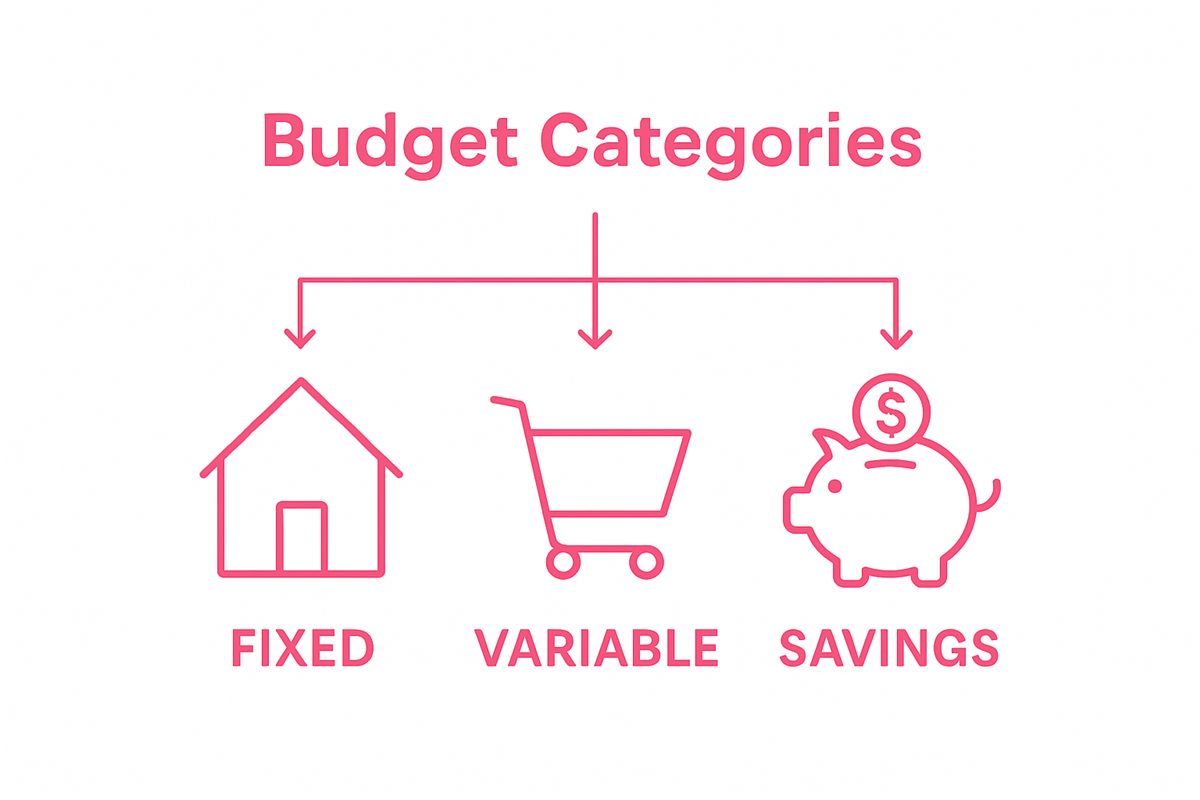
Successful budget tracking starts with precise categorization. According to financial experts at the California Department of Financial Protection and Innovation, understanding the difference between fixed and variable expenses is crucial. Fixed expenses remain consistent month to month, like mortgage payments or insurance premiums, while variable expenses fluctuate, such as groceries or entertainment costs.
Key expense categories typically include:
To help families quickly identify their regular expenses, here is a table summarizing the main expense categories and their typical examples as discussed in the guide.
| Category | Typical Examples |
|---|---|
| Housing | Rent, mortgage payments, property taxes |
| Transportation | Gas, car payments, public transit |
| Food | Groceries, dining out |
| Utilities | Electricity, water, internet |
| Healthcare | Insurance premiums, medications |
| Personal spending | Clothing, entertainment, hobbies |
| Savings & investments | Emergency fund, retirement accounts |
- Housing
- Transportation
- Food
- Utilities
- Healthcare
- Personal spending
- Savings and investments
Financial Goal Setting and Tracking
Effective budget tracking goes beyond number crunching. It involves setting SMART financial goals that are Specific, Measurable, Achievable, Relevant, and Time-bound. By establishing clear objectives, families can create targeted savings plans and track progress systematically. Learn more about strategies for starting a budget to enhance your financial planning.
Important goal-tracking considerations include:
- Regular financial check-ins
- Adjusting goals based on changing circumstances
- Celebrating financial milestones
- Teaching children about financial responsibility
Budget tracking is ultimately about creating financial transparency, understanding spending patterns, and making informed decisions that support your family’s long-term financial health and aspirations.
How Budget Tracking Benefits Family Financial Health
Budget tracking is more than a financial tool. It is a transformative approach that nurtures your family’s overall financial wellness, providing insights, stability, and strategic planning capabilities that extend far beyond simple money management.
Reducing Financial Stress and Building Confidence
Research from the Federal Deposit Insurance Corporation highlights that understanding your financial landscape significantly reduces household stress. When families have clear visibility into their income and expenses, they experience greater peace of mind and emotional well-being. Financial transparency becomes a powerful stress reduction strategy.
Key stress reduction benefits include:
- Eliminating financial uncertainty
- Creating predictable spending patterns
- Establishing emergency fund readiness
- Preventing unexpected financial surprises

Long-Term Financial Resilience and Planning
Budget tracking builds financial resilience by helping families anticipate and prepare for future challenges. By consistently monitoring spending and saving patterns, you develop a proactive approach to financial management. Learn more about creating a budget when you’re just starting out, which can help set a strong foundation for your family’s financial journey.
Strategic planning advantages include:
- Identifying potential financial risks early
- Creating robust savings strategies
- Aligning spending with family goals
- Teaching children financial responsibility
Ultimately, budget tracking transforms financial management from a reactive chore into a strategic, empowering process that supports your family’s short-term stability and long-term prosperity.
Understanding Different Budgeting Methods and Tools
Budgeting isn’t a one-size-fits-all approach. Different families require unique strategies that align with their financial goals, lifestyle, and personal preferences. Understanding various budgeting methods empowers you to select the most effective approach for your household’s specific needs.
Traditional Budgeting Approaches
According to University Admissions Financial Literacy resources, selecting the right budgeting method can significantly impact your financial success. Traditional methods provide structured frameworks for tracking and managing household finances.
This table outlines popular budgeting methods mentioned in the article, making it easier to compare their key features and determine which might work best for your family.
| Budgeting Method | Main Features |
|---|---|
| Zero-based budgeting | Assigns every dollar a specific role; spend = income |
| 50/30/20 rule | Divides income: 50% needs, 30% wants, 20% savings |
| Envelope budgeting | Allocates cash to envelopes for each spending category |
| Percentage-based budgeting | Sets custom percentage allocations for each category |
Common budgeting approaches include:
- Zero-based budgeting
- 50/30/20 rule
- Envelope budgeting system
- Percentage-based budgeting
Digital Budgeting Tools and Technology
Modern technology has revolutionized budget tracking, offering families sophisticated yet user-friendly tools. Learn more about creative budgeting strategies with our cash envelope budget guide, which introduces innovative tracking methods.
Advanced budgeting tools provide:
- Real-time expense tracking
- Automated savings recommendations
- Visual spending analytics
- Customizable financial reporting
The key is finding a budgeting method that feels intuitive and sustainable for your family, transforming financial management from a chore into an empowering practice of financial wellness.

Take Control of Your Family’s Budget—Start Building Lasting Financial Wellness
Feeling overwhelmed by unpredictable expenses or frustrated by a lack of financial clarity? If you’ve ever struggled to categorize your spending, set realistic family goals, or reduce stress over monthly bills, you’re not alone. As highlighted in our budget tracking guide, understanding income, classifying expenses, and sticking to SMART goals can transform your household’s financial future. But even with all the right information, putting strategies into action can be a real challenge for busy families.
Now is the perfect moment to turn knowledge into results. At Its a Southern Life Y’all, we offer easy-to-follow budgeting systems, proven home management tricks, and practical organization hacks inspired by real family life. Streamline your routines and make every dollar count with solutions created for families just like yours. Ready to make your financial goals a reality? Visit our main page at Its a Southern Life Y’all for step-by-step guides and actionable tools. Your path to a calmer, more confident home life starts today.
Frequently Asked Questions
What is budget tracking, and why is it important for families?
Budget tracking is the process of systematically recording and categorizing all income and expenses. It helps families understand their financial landscape, make informed spending decisions, and achieve financial goals, ultimately providing a clearer view of their financial health.
How do I classify my income and expenses for effective budget tracking?
Effective classification involves distinguishing between fixed expenses (like mortgage payments and insurance) and variable expenses (like groceries and entertainment). Common expense categories include housing, transportation, food, utilities, healthcare, personal spending, and savings.
What are SMART financial goals, and how do they relate to budgeting?
SMART financial goals are Specific, Measurable, Achievable, Relevant, and Time-bound objectives that families set to guide their financial planning. They help create targeted savings plans and facilitate systematic progress tracking in budget management.
What budgeting methods are available for families to choose from?
Families can choose from various budgeting methods, including zero-based budgeting, the 50/30/20 rule, the envelope budgeting system, and percentage-based budgeting. Each method has its unique approach to tracking and managing finances effectively.