

Types of Savings Strategies for Families
Every family wants to feel secure when it comes to money. Yet, a whopping 40 percent of Americans would struggle to cover a $400 emergency. That surprises a lot of people who think simply having a savings account is enough. The real difference is in the strategies you use—not just how much you save, but how you save it.
Table of Contents
- What Are Savings Strategies And Why Are They Important?
- Key Types Of Savings Strategies For Families
- The Psychology Of Saving: How Mindset Shapes Savings
- Maximizing Savings: Tools And Resources For Families
- Long-Term Vs. Short-Term Savings: Making The Right Choices
Quick Summary
| Takeaway | Explanation |
|---|---|
| Establish clear savings goals | Setting specific financial targets can help families allocate resources and track progress effectively. |
| Utilize automated savings techniques | Automating transfers to savings can simplify money management and ensure consistent savings habits. |
| Leverage technology for savings | Digital tools and applications can enhance financial tracking and make saving easier for families. |
| Understand the psychology of saving | Mindset influences saving behavior; developing a positive relationship with money can improve saving effectiveness. |
| Balance short-term and long-term savings | A well-rounded approach to savings offers immediate security and builds future wealth, addressing different financial needs. |
What Are Savings Strategies and Why Are They Important?
Savings strategies are structured approaches families use to set aside money for future financial goals, emergencies, and long-term security. Think of them as financial roadmaps that help you navigate unexpected expenses and build wealth over time.
Understanding the Basics of Savings Strategies
At their core, savings strategies are about intentional money management. Learn more about tracking your emergency fund to understand how these strategies protect your family’s financial health. These approaches go beyond simply putting money in a bank account. They involve deliberate planning, consistent effort, and smart decision making about how you save and allocate your resources.
Key characteristics of effective savings strategies include:
- Predictable and consistent saving amounts
- Clear financial objectives
- Flexibility to adapt to changing family needs
- Mechanisms to protect against financial uncertainties
The primary goal of savings strategies is to create financial stability. By systematically setting aside money, you build a buffer against unexpected challenges and create opportunities for future investments and personal growth.
Why Savings Strategies Matter for Families
Financial experts consistently highlight the importance of strategic saving. According to research from the Federal Reserve, families with robust savings strategies are better equipped to handle economic uncertainties.
For families, savings strategies provide multiple benefits:
- Reduced financial stress
- Greater ability to handle unexpected expenses
- Increased opportunities for future planning
- Enhanced sense of financial security
By developing a comprehensive approach to saving, you transform money management from a reactive process to a proactive strategy. You’re not just saving money you’re building a foundation for your family’s financial future.
Key Types of Savings Strategies for Families
Families have several strategic approaches to savings, each designed to address different financial goals and protect against various economic challenges. Understanding these different types helps create a comprehensive financial plan that supports your family’s unique needs.
The table below compares three key types of savings strategies for families, highlighting primary features, advantages, and relevant considerations for each approach.
| Savings Strategy | Description | Advantages | Considerations |
|---|---|---|---|
| Traditional Savings Account | Simple deposit account in a bank or credit union | Safe, FDIC-insured, liquid funds | Low interest rates |
| Goal-Oriented Savings Method | Separate funds/accounts for specific objectives | Easier tracking, motivation for goals | Requires organization |
| Automated & Percentage-Based Techniques | Scheduled transfers or set income percentage toward savings | Consistent, less reliant on willpower | May need adjustment as income shifts |
Traditional Savings Account Strategies
Traditional savings accounts remain a foundational strategy for many families. Check out our guide on tracking family expenses to complement your savings approach. These accounts provide a safe, accessible place to store money with minimal risk. While interest rates are typically low, they offer liquidity and security for emergency funds and short-term savings goals.
Key features of traditional savings strategies include:
- Low-risk investment approach
- Easy access to funds
- FDIC insurance protection
- Minimal maintenance requirements
Goal-Oriented Savings Methods
According to research from Bankrate, targeted savings approaches can significantly improve a family’s financial resilience. Goal-oriented savings strategies involve creating specific savings accounts or funds for particular objectives like:
- Education expenses
- Home down payment
- Family vacations
- Major home repairs
- Children’s future needs
These methods allow families to segment their savings, making it easier to track progress and stay motivated toward specific financial targets. By allocating funds to distinct goals, you create a more intentional and structured approach to money management.

Automated and Percentage-Based Savings Techniques
Modern savings strategies leverage technology and systematic approaches to make saving more consistent and effortless. Automated savings techniques involve setting up regular transfers from checking to savings accounts, ensuring you consistently set aside money before discretionary spending occurs.
Percentage-based savings methods recommend allocating a specific portion of income to savings. Financial experts often suggest the 50/30/20 rule: 50% for necessities, 30% for wants, and 20% for savings and debt repayment. This flexible approach adapts to changing family income levels while maintaining a disciplined savings mindset.
The Psychology of Saving: How Mindset Shapes Savings
The way families think about money dramatically influences their ability to save effectively. Your mental approach to finances can either propel you toward financial success or create barriers that prevent wealth accumulation.
Understanding Psychological Money Patterns
Learn how to stop spending money you don’t have and gain insights into transforming your financial mindset. Psychological research reveals that our money habits are deeply rooted in childhood experiences, family backgrounds, and personal beliefs about wealth and security.
Key psychological factors that impact saving behavior include:
- Emotional associations with money
- Past financial experiences
- Family financial history
- Personal beliefs about wealth
- Comfort with financial uncertainty
These underlying mental frameworks determine how individuals approach saving, spending, and financial planning. Some people view saving as a restrictive practice, while others see it as a pathway to freedom and opportunity.
Cognitive Barriers to Effective Saving
According to research from the American Psychological Association, individuals often struggle with saving due to cognitive biases that interfere with rational financial decision making. These psychological obstacles can prevent families from building robust savings strategies.
Common cognitive barriers include:
- Present bias (prioritizing immediate gratification)
- Loss aversion (fear of potential financial loss)
- Optimism bias (underestimating future financial challenges)
- Mental accounting (treating money differently based on its source)

Developing a Positive Savings Mindset
Transforming your approach to saving requires intentional psychological reframing. Successful savers view money as a tool for creating opportunities rather than a source of stress. They develop mental strategies that make saving feel rewarding and empowering.
Effective techniques for cultivating a positive savings mindset involve:
- Visualizing long-term financial goals
- Celebrating small saving achievements
- Reframing saving as self-care
- Creating positive emotional associations with financial planning
By understanding the psychological dynamics of saving, families can develop more sustainable and fulfilling approaches to managing their finances. The key is recognizing that saving is not just about numbers but about creating a sense of security and possibility for your family’s future.
Maximizing Savings: Tools and Resources for Families
Families today have an unprecedented array of digital and traditional tools designed to simplify savings, track expenses, and optimize financial planning. Understanding and leveraging these resources can significantly accelerate your family’s financial goals.
Digital Savings Applications and Platforms
Discover clever products that save you money and explore innovative ways to maximize your family’s financial potential. Modern technology offers sophisticated savings platforms that automate and streamline financial management, making saving easier and more accessible than ever.
Key digital savings tools include:
- Budgeting mobile applications
- Automated savings platforms
- Investment tracking software
- Expense categorization tools
- Micro-investing applications
These digital resources provide real-time insights, help identify spending patterns, and create opportunities for immediate financial adjustments. Many applications use artificial intelligence to offer personalized recommendations based on your family’s unique financial behavior.
Tax-Advantaged Savings Instruments
According to research from FinAid, strategic use of tax-advantaged savings accounts can dramatically enhance a family’s long-term financial planning. These specialized accounts offer significant benefits by reducing tax liabilities and supporting specific financial objectives.
Notable tax-advantaged savings options include:
- 529 college savings plans
- Roth Individual Retirement Accounts (IRAs)
- Health Savings Accounts (HSAs)
- Flexible Spending Accounts (FSAs)
- Education Savings Accounts
By strategically utilizing these instruments, families can save money on taxes while simultaneously building funds for critical future expenses like education, healthcare, and retirement.
Community and Educational Resources
Beyond digital tools, families can access numerous community and educational resources that provide financial guidance. Local credit unions, financial workshops, online webinars, and personal finance blogs offer valuable insights and strategies for effective savings.
These resources help families develop financial literacy, understand complex monetary concepts, and learn practical saving techniques. Many are free or low-cost, making them accessible to families across different economic backgrounds. The key is proactively seeking knowledge and staying informed about emerging financial strategies and tools.
Long-term vs. Short-term Savings: Making the Right Choices
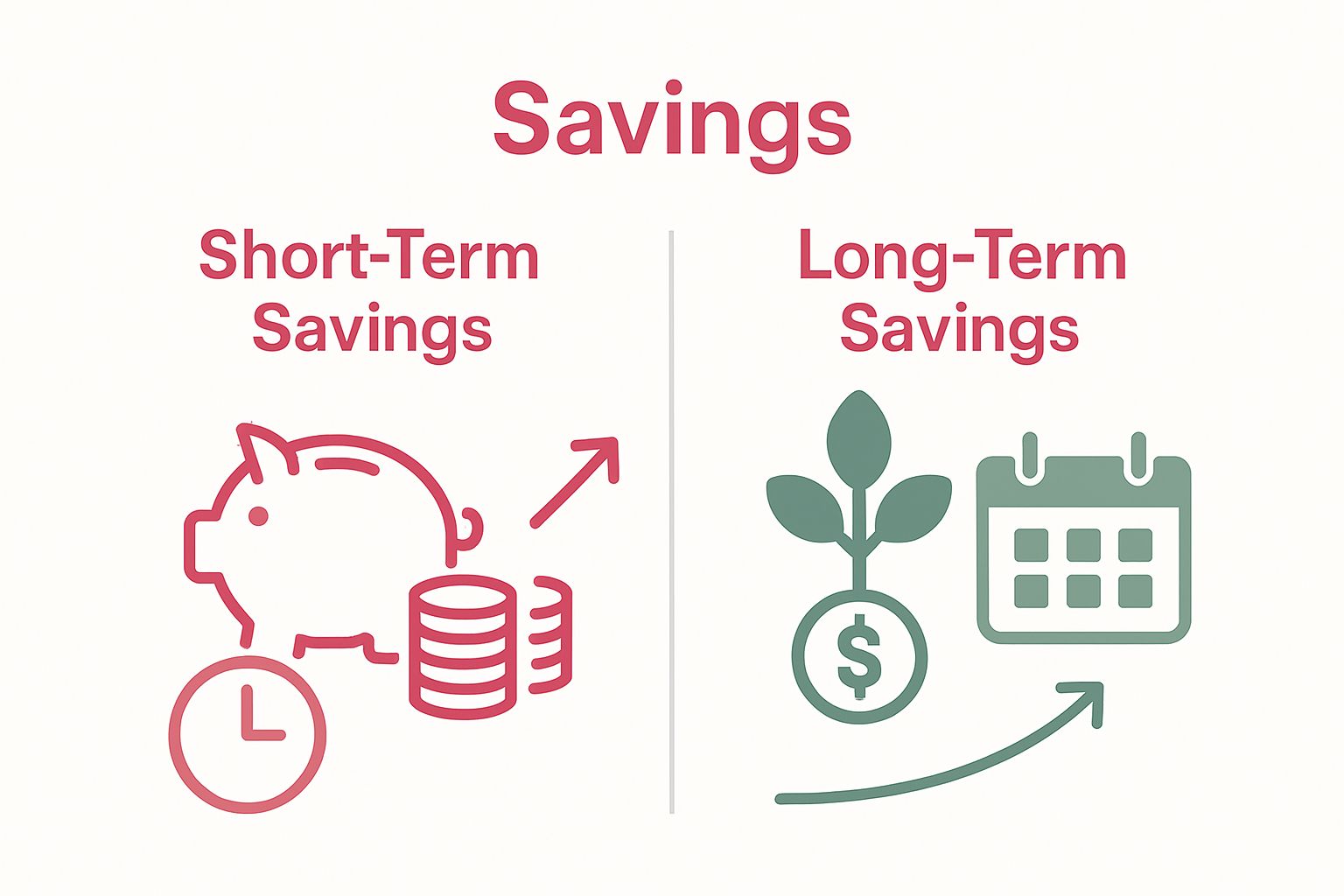
Understanding the nuanced differences between long-term and short-term savings is crucial for creating a balanced and effective family financial strategy. Each savings approach serves unique purposes and requires distinct planning techniques.

Defining Savings Timelines
Learn how to feel good about spending and saving to develop a holistic approach to your financial planning. Short-term savings typically cover goals within a few years, while long-term savings target more extended financial objectives that require sustained investment and strategic planning.
Key characteristics of savings timelines include:
- Immediate accessibility for short-term funds
- Higher growth potential for long-term investments
- Different risk management strategies
- Varied tax implications
- Distinct investment vehicles
The primary distinction lies in the timeline and purpose of the savings, which fundamentally influences how you approach and manage these financial resources.
Strategic Allocation of Financial Resources
According to research from the Consumer Financial Protection Bureau, effective financial planning requires a balanced approach to both short-term and long-term savings.
Important considerations for savings allocation:
- Emergency funds (short-term savings)
- Retirement accounts (long-term savings)
- Educational expenses (mixed-timeline savings)
- Major purchase goals
- Unexpected financial opportunities
Successful families understand that short-term and long-term savings are complementary, not competing strategies. Short-term savings provide financial security and flexibility, while long-term savings build wealth and prepare for future milestones.
Risk Management and Investment Strategies
Each savings timeline demands a unique approach to risk and potential returns. Short-term savings prioritize preservation and accessibility, typically using low-risk options like high-yield savings accounts. Long-term savings can tolerate more risk, allowing for potentially higher returns through diversified investment portfolios.
The key is creating a balanced financial ecosystem that addresses immediate needs while simultaneously building future financial stability.
This table summarizes key differences between short-term and long-term savings, including purpose, timeline, access, and risk considerations, to assist families in making strategic allocation decisions.
| Aspect | Short-Term Savings | Long-Term Savings |
|---|---|---|
| Typical Purpose | Emergency fund, upcoming purchases | Retirement, college, major assets |
| Time Horizon | 0-3 years | 3+ years |
| Accessibility | Immediate/easy access | Limited access, penalties possible |
| Risk Tolerance | Low (preservation focused) | Moderate to high (growth focused) |
| Investment Vehicles | Savings/high-yield accounts | IRAs, 529 plans, investments |
| By understanding the distinct roles of short-term and long-term savings, families can develop a comprehensive strategy that provides both security and growth potential. |

Ready to Turn Savings Strategies Into Real Results for Your Family?
You have just explored how structured savings strategies can protect your family from stressful financial surprises and help you reach meaningful goals. If you feel overwhelmed by day-to-day expenses or worried about staying on track with your savings plans, you are not alone. Many families struggle to balance practical money management with the realities of busy lives, fluctuating budgets, and competing priorities. But you can move from uncertainty to confidence by taking the next step.
Our website gives you more than just advice. Here, you will discover expert-backed solutions like simple budgeting systems, emergency fund tips, and practical organization strategies crafted for real families. Take the first move toward a more secure and peaceful home. Put your savings strategies to work for a brighter, more organized future.
Frequently Asked Questions
What are the key types of savings strategies for families?
The key types of savings strategies for families include traditional savings accounts, goal-oriented savings methods, and automated savings techniques. Explore each type to determine which aligns best with your family’s financial goals.
How can I implement a goal-oriented savings strategy?
To implement a goal-oriented savings strategy, identify specific savings objectives, such as a vacation, education, or emergency fund. Allocate funds into different accounts designated for each goal to help track progress.
What are automated savings techniques, and how do they work?
Automated savings techniques involve setting up transfers from your checking account to savings accounts on a regular basis, ensuring you save without having to think about it. Start by committing to a small percentage of your income, like 10%, to boost your savings gradually.
How do I determine the right balance between short-term and long-term savings?
Determining the right balance involves assessing your immediate needs and future goals. Typically, maintain 3-6 months’ worth of expenses in short-term savings while investing in long-term options like retirement accounts simultaneously.
Can savings strategies adapt to changing family needs?
Yes, effective savings strategies should be flexible enough to adapt to changing family needs, such as job loss or increased expenses. Regularly review and adjust your savings plan, ensuring it meets current financial priorities.
What tools can help track my family’s savings strategies?
Various tools, such as budgeting apps or tracking spreadsheets, can help monitor your family’s savings strategies. Choose a method that fits your family’s lifestyle to ensure consistent tracking and accountability.
Recommended
- Understanding Your Budget Tracking Guide for Families –
- Understanding What is a Family Budget: A Clear Guide –
- How to Track Family Expenses: A Simple Guide for 2025 –
- The Top 5 Ways To Save Money While Raising Kids in 2024 –
Want a little more help with this? Grab my free Finance & Life Planner over on the Free Resources page — and when you’re ready to go deeper, the First Budget in 30 Minutes will carry you the rest of the way.