

Work-Life Balance Tips for Families With Kids
Over half of american parents report feeling stretched too thin as they juggle careers and family routines. The constant push and pull between work demands and home responsibilities can leave families feeling disconnected and stressed. Understanding what work-life balance truly means for american families is the first step to building more meaningful and manageable daily routines that honor both professional goals and family well-being.
Table of Contents
- Defining Work-Life Balance For Families
- Unique Challenges With Children And Teens
- Effective Time Management Strategies At Home
- Balancing Parental Roles And Self-Care
- Avoiding Burnout And Common Pitfalls
Key Takeaways
| Point | Details |
|---|---|
| Importance of Work-Life Balance | Achieving work-life balance requires families to create strategies that harmonize professional and personal responsibilities. |
| Unique Challenges with Children | Parents face specific challenges with children and teens, necessitating effective communication and flexible approaches. |
| Effective Time Management | Implementing time management strategies like time blocking can enhance productivity and family quality time. |
| Prioritizing Self-Care | Self-care is essential for parents to maintain their well-being and effectively support their families. |
Defining Work-Life Balance for Families
Work-life balance is more than just a buzzword – it’s a critical strategy for modern families trying to manage multiple responsibilities without burning out. According to research from the National Center for Biotechnology Information, work-life balance is best understood as “the accomplishment of role-related expectations negotiated and shared between an individual and their role-related partners in both work and family domains.”
At its core, work-life balance means creating harmony between professional commitments and family needs. It’s about finding sustainable ways to meet work responsibilities while also being present and engaged with your family. This doesn’t mean achieving perfect 50/50 split, but rather creating flexible strategies that allow you to excel both professionally and personally.
Successful work-life balance looks different for every family. Some key components typically include:
- Setting clear boundaries between work and home life
- Creating predictable schedules
- Practicing effective time management
- Communicating openly with partners and employers
- Prioritizing self-care and family time
For families with children, achieving balance requires intentional planning and continuous adjustment. Time Blocking Guide for Parents can provide additional strategies to help you structure your day effectively and create more quality time with your loved ones.
Unique Challenges With Children and Teens
Balancing work and family life becomes exponentially more complex when children and teens are involved. According to research from the National Center for Biotechnology Information, modern lifestyles have created significant challenges for working parents, particularly in managing childcare and work schedules. The research highlights that isolated parenting models make it increasingly difficult to maintain professional commitments while meeting children’s diverse needs.
Parenting dynamics shift dramatically as children grow from infants to teenagers. While younger children require constant physical supervision, teens demand emotional support and guidance without feeling micromanaged. This transition requires parents to continuously adapt their work-life balance strategies.
 Communication becomes crucial – understanding each child’s unique developmental stage helps parents create more flexible and responsive family structures.
Specific challenges families encounter include:
- Managing school and extracurricular schedules
- Supporting emotional and academic development
- Navigating technology and social media interactions
- Maintaining meaningful connections despite busy schedules
- Balancing individual family member’s needs
Teens especially require nuanced approaches to work-life integration. 7 Effective Tips on How to Get Your Teen to Do Chores Without Nagging can help parents develop collaborative strategies that respect teenagers’ growing independence while maintaining household harmony.
Effective Time Management Strategies at Home
Effective time management is the cornerstone of achieving a harmonious work-life balance for families. According to research from the National Center for Biotechnology Information, achieving work-life balance involves strategically managing work and non-work roles. The key is setting clear boundaries, prioritizing tasks, and ensuring dedicated time for family and personal activities to enhance overall satisfaction.
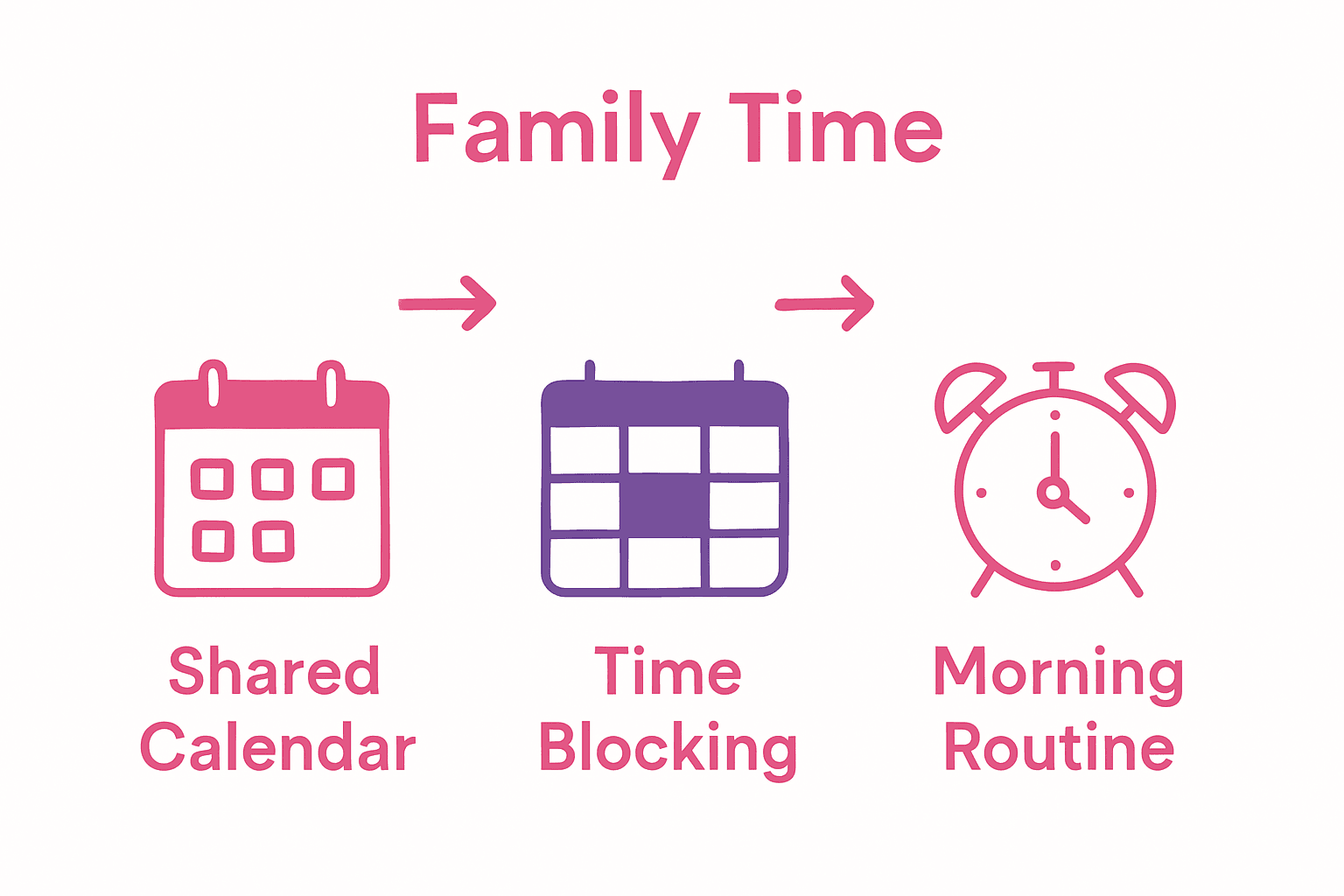
Time blocking emerges as a powerful strategy for families seeking to maximize productivity and quality time. This approach involves dividing your day into specific chunks dedicated to different responsibilities. For working parents, this might mean creating distinct time segments for professional work, child care, household management, and personal self-care. By intentionally allocating time, families can reduce stress and create more predictable, manageable daily routines.
Key time management strategies for families include:
- Creating a shared family calendar
- Establishing consistent daily routines
- Implementing morning and evening preparation rituals
- Utilizing digital tools for coordination
- Practicing flexible but structured scheduling
- Involving children in age-appropriate planning
For families looking to refine their scheduling approach, 7 Time Management Tips for Families to Balance Life offers practical insights into developing more efficient and harmonious household systems. The goal isn’t perfection, but creating a sustainable rhythm that works for everyone.
Balancing Parental Roles and Self-Care
Parents often struggle with the challenging task of maintaining personal well-being while meeting family responsibilities. According to research from the National Center for Biotechnology Information, work-life balance isn’t about equally distributing time, but achieving daily satisfaction and joy across career, family, friends, and personal needs. This means recognizing that self-care is not a luxury, but a critical component of effective parenting.
The journey of balancing parental roles requires intentional strategies and compassionate self-awareness. Parents must acknowledge that taking care of themselves directly impacts their ability to care for their family. This might involve setting boundaries, creating dedicated personal time, and understanding that moments of individual restoration are not selfish but necessary for maintaining emotional and physical health.
Essential self-care strategies for parents include:
- Scheduling regular personal time
- Practicing mindfulness and stress management
- Maintaining physical health through exercise
- Connecting with supportive friends and partners
- Learning to say no to unnecessary commitments
- Seeking professional support when needed
A Guide to Self-Care: 10 Steps to Prioritizing & Caring for Yourself provides deeper insights into developing a sustainable self-care routine that allows parents to show up more fully for their families while honoring their own needs.
Avoiding Burnout and Common Pitfalls
Burnout is a silent challenge that creeps up on many parents, transforming what should be a joyful journey into an exhausting marathon. According to research from the National Center for Biotechnology Information, avoiding burnout requires effectively managing both work and personal roles by setting clear boundaries, prioritizing tasks, and ensuring dedicated time for personal activities. This strategic approach helps enhance overall satisfaction and prevents the emotional and physical exhaustion that many families experience.
The most common burnout triggers for parents include constant multitasking, unrealistic expectations, and lack of personal boundaries. Many parents fall into the trap of believing they must be superhuman, handling every responsibility perfectly while neglecting their own well-being. The reality is that sustainable parenting requires intentional self-preservation, which means learning to delegate, say no, and create meaningful pauses in the daily chaos.
Key strategies to prevent parental burnout include:
- Establishing realistic and flexible expectations
- Creating consistent support networks
- Practicing regular self-care routines
- Developing clear communication with partners
- Recognizing and addressing early warning signs
- Implementing structured stress management techniques
For parents seeking more in-depth strategies, 5 Mental Health Habits That Made Me a Better Person offers practical insights into maintaining emotional resilience and preventing the overwhelming cycle of parental exhaustion.
Achieve True Work-Life Balance for Your Family Today
Managing the demands of work and family life with kids can feel overwhelming and exhausting. This article clearly highlights the struggle to create harmony between professional commitments and family needs while avoiding burnout and juggling parenting roles. If you find yourself trying to set clear boundaries, improve time management, and prioritize self-care all at once, know that you are not alone.
Discover proven strategies that transform chaos into calm with practical organization hacks and simple living tips designed for busy families. Visit itsasouthernlifeyall.com to explore how to create predictable routines, manage your time effectively, and build a supportive home environment. Learn more about balancing responsibilities and nurturing family connections through resources like Time Blocking Guide for Parents and develop nurturing self-care habits with A Guide to Self-Care.
Take control of your family’s happiness and work-life integration now. Start easy, sustainable changes that make every day smoother by visiting itsasouthernlifeyall.com and find your path to peaceful, organized living.
Frequently Asked Questions
What is work-life balance for families with kids?
Work-life balance for families with kids refers to creating harmony between professional commitments and family needs. It involves finding sustainable ways to meet work responsibilities while being present and engaged with your family.
How can I effectively manage my time as a working parent?
Effective time management strategies for working parents include creating a shared family calendar, establishing consistent daily routines, and practicing time-blocking to allocate specific time segments for work, childcare, and personal activities.
What are some self-care tips for parents?
Parents can prioritize self-care by scheduling regular personal time, practicing mindfulness, maintaining physical health through exercise, connecting with friends, and learning to say no to unnecessary commitments.
How can I avoid burnout as a busy parent?
To avoid burnout, establish realistic expectations, create a support network, practice regular self-care routines, and implement structured stress management techniques. Recognize early warning signs of stress and adjust your commitments accordingly.
Recommended
- 7 Time Management Tips for Families to Balance Life – It’s a Southern Life Ya’ll
- Understanding Productivity Tips for Parents Guide – It’s a Southern Life Ya’ll
- Effective Ways to Manage Homework Time for Families – It’s a Southern Life Ya’ll
- Time Blocking Guide for Parents – It’s a Southern Life Ya’ll
- Family-Friendly Carpet Cleaning Tips for Safe and Fresh Homes 2025 – Yarra Valley Carpet Cleaning
- 7 Essential Chiropractic Tips for Parents in Fremantle
Want a hand with this part? The Home Rhythm Planner gives you a week that leaves room for the kids and for you.