

What Is a Monthly Budget and Why Families Need One
Most American families are surprised to learn that nearly 60 percent struggle to stick to a monthly budget, even when wages are steady. Understanding where your money actually goes each month can reveal hidden patterns and drain points that are easy to miss. When you grasp the basics of monthly budgeting, you gain more control over your financial future and learn how to make your dollars work for you and your family’s unique needs.
Table of Contents
- Monthly Budget Basics For Families
- Types Of Monthly Budgeting Methods
- How A Monthly Budget Works Step By Step
- Key Elements Of A Successful Budget
- Budgeting Challenges And Common Mistakes
Key Takeaways
| Point | Details |
|---|---|
| Creating a Monthly Budget | A monthly budget serves as a financial roadmap, guiding families in aligning their spending with their financial goals and values. |
| Budgeting Methods | Families can choose from various budgeting methods like zero-based, envelope, and 50/30/20, ensuring they select one that suits their financial style. |
| Key Steps to Budget | Tracking income and expenses systematically enables families to make informed financial decisions and set specific financial goals. |
| Common Budgeting Mistakes | Families should overcome challenges like unrealistic goal setting and inconsistent tracking to transform budgeting into a valuable financial tool. |
Monthly Budget Basics for Families
A monthly budget is your family’s financial roadmap, helping you understand where your money comes from and where it goes. Think of it like a GPS for your finances that keeps you moving in the right direction. Creating a budget isn’t about restricting spending – it’s about making intentional financial choices that align with your family’s goals and values.
Starting a budget means tracking your family’s monthly income and expenses systematically. This process involves three key steps: understanding your total household income, categorizing all expenses, and identifying areas where you can save or redirect funds. Most families discover surprising insights when they first map out their spending – like how small daily expenses can add up quickly.
Breaking down your budget typically involves creating categories such as housing, utilities, groceries, transportation, healthcare, entertainment, and savings. Each category helps you see exactly how your money flows and where potential adjustments can be made. Successful budgeting isn’t about perfection but about consistent tracking and gradual improvement. By reviewing your budget monthly, you’ll develop stronger financial awareness and make smarter spending decisions.
Pro tip: Budget Tracking Technique: Set aside 30 minutes each month to review your budget together as a family. Make it fun by turning it into a collaborative activity where everyone contributes and learns about financial planning.
Types of Monthly Budgeting Methods
Families have several powerful budgeting methods to choose from, each designed to help manage money more effectively. Different budgeting strategies offer unique approaches to tracking and allocating household funds, allowing families to select a method that best matches their financial style and goals.
Three popular budgeting methods stand out for family financial planning. The zero-based budget requires every dollar to be assigned a specific purpose, ensuring no money is left unaccounted for. The envelope budgeting method involves allocating cash into physical or digital envelopes for different expense categories, which helps limit overspending. The 50/30/20 budget provides a simple framework where 50% of income goes to necessities, 30% to discretionary spending, and 20% toward savings and debt repayment.
Moreover, families can explore more advanced budgeting techniques like incremental and flexible budgeting. Incremental budgeting adjusts previous budget allocations slightly, while flexible budgeting allows for dynamic spending shifts based on changing family needs. The key is finding a system that provides structure without feeling restrictive, enabling your family to track expenses, meet financial goals, and build long-term financial health.
Pro tip: Budget Method Selection: Choose a budgeting method that matches your family’s financial personality and be willing to adjust your approach if the first method doesn’t feel comfortable or sustainable.
Here’s a comparison of popular family budgeting methods and when each one works best:
| Budgeting Method | Key Approach | Ideal For Families Who | Potential Drawback |
|---|---|---|---|
| Zero-Based | Assigns every dollar a specific use | Want strict expense control | Can be time-consuming to track |
| Envelope | Physically separates money by category | Prefer visual or cash systems | Less flexible in emergencies |
| 50/30/20 | Allocates set percentages to categories | Need a simple, quick structure | May not fit unique expenses |
| Incremental | Adjusts prior budget slightly | Value routine and small tweaks | Can overlook major changes |
| Flexible | Allows dynamic category adjustments | Have unpredictable spending | May lead to less discipline |
How a Monthly Budget Works Step by Step
Creating a monthly budget is like building a financial roadmap for your family, with clear steps designed to help you understand and control your spending. Families can successfully track their finances through a systematic budgeting process that transforms money management from a stressful task into an empowering experience.
The budgeting process typically involves six critical steps. First, identify and calculate your total household monthly income from all sources, including regular paychecks, side hustles, and any additional revenue streams. Second, track and categorize all your monthly expenses – including fixed costs like mortgage or rent, utilities, insurance, and variable expenses like groceries, entertainment, and transportation. Third, compare your income against your expenses to understand your current financial health and identify potential areas for adjustment.

The next three steps focus on strategic financial planning. Fourth, set specific financial goals – whether that’s building an emergency fund, saving for a family vacation, or paying down debt. Fifth, create spending allocations that align with your goals, potentially using methods like the 50/30/20 budget or envelope system. Finally, the sixth step involves regularly monitoring and adjusting your budget, reviewing it monthly to ensure it remains realistic and responsive to your family’s changing financial needs.
Pro tip: Budget Reality Check: Review your budget together as a family quarterly, treating it as a collaborative financial planning session where everyone can share insights and contribute to your collective financial success.
Key Elements of a Successful Budget
A successful family budget requires more than just tracking numbers – it demands strategic planning and intentional financial management. Families can build robust financial foundations by understanding key budgeting elements that transform money management from a challenging task to an empowering process.
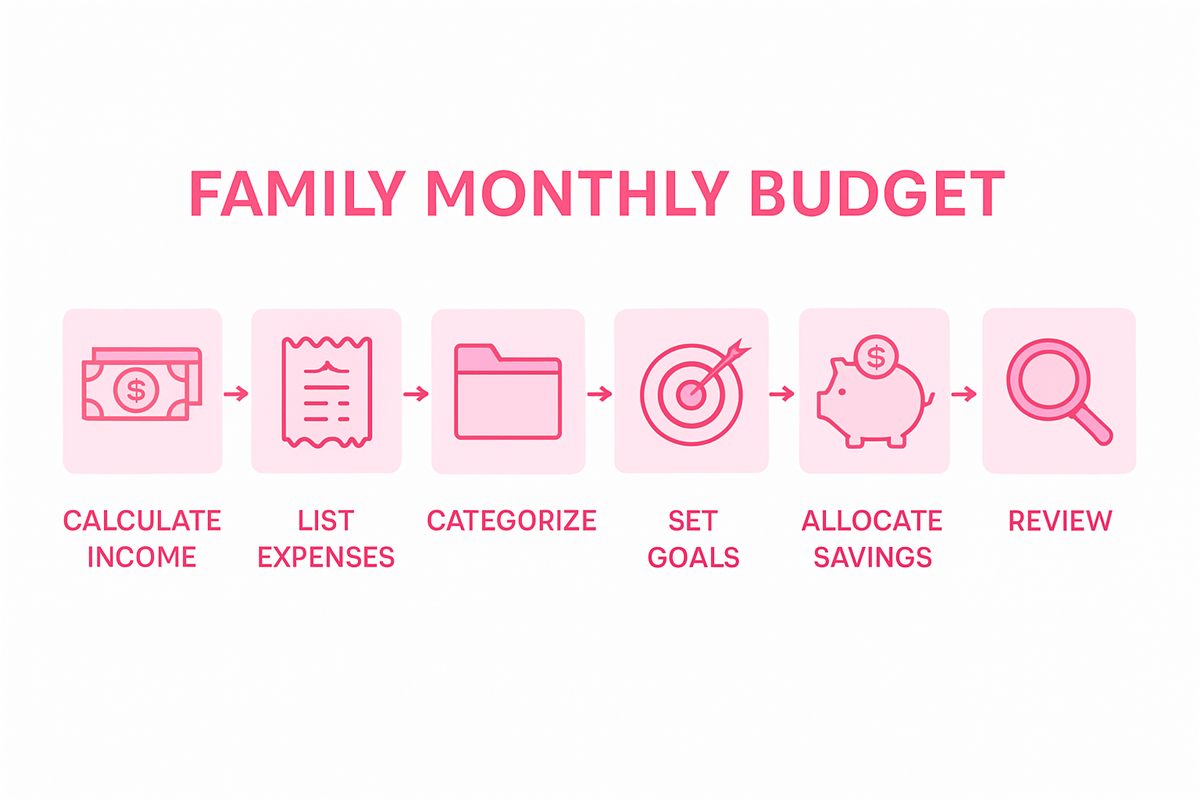
The first critical element is creating a comprehensive income tracking system that captures all household revenue streams. This means documenting not just primary paychecks, but also side income, investment returns, and occasional earnings. Equally important is developing a detailed expense categorization strategy that breaks down spending into clear, manageable segments like fixed costs (mortgage, utilities), variable expenses (groceries, entertainment), and discretionary spending. By understanding exactly where money flows, families can make informed financial decisions.
Another fundamental element involves establishing financial safety nets and forward-looking strategies. This includes building an emergency fund that covers 3-6 months of expenses, planning for irregular costs like annual insurance payments or vehicle maintenance, and setting specific savings goals. Successful budgets also incorporate flexibility, allowing families to adjust allocations as circumstances change while maintaining overall financial discipline. Regular budget reviews – ideally monthly or quarterly – help ensure the budget remains aligned with the family’s evolving financial landscape and personal objectives.
Pro tip: Budget Flexibility Check: Schedule a quarterly family financial meeting where everyone can discuss budget performance, celebrate wins, and collaboratively adjust strategies to keep your financial plan dynamic and responsive.
Budgeting Challenges and Common Mistakes
Families face numerous financial hurdles when attempting to create and maintain a budget, with many struggling to bridge the gap between income and essential expenses. Working families often encounter significant challenges in managing basic financial needs and developing sustainable budgeting strategies, which can feel overwhelming and discouraging.
Some of the most common budgeting mistakes include unrealistic goal setting, inconsistent tracking, and failing to account for irregular expenses. Many families underestimate variable costs like car repairs, medical expenses, or seasonal fluctuations in utility bills. Another critical error is neglecting to build an emergency fund, which leaves households vulnerable to financial shocks. Emotional spending, impulse purchases, and not involving all family members in financial planning can also derail even the most well-intentioned budget.
Overcoming these challenges requires a proactive and collaborative approach. Families should prioritize transparent communication about finances, set realistic and flexible budget goals, and develop strategies for tracking expenses consistently. This might involve using budgeting apps, creating shared spreadsheets, or scheduling regular family financial meetings. Understanding that budgeting is an ongoing process – not a one-time event – can help families approach their financial planning with patience and resilience. Recognizing and addressing these common mistakes can transform budgeting from a source of stress to a powerful tool for financial empowerment.
To help you spot and address common budgeting pitfalls, review this summary:
| Budgeting Challenge | Why It Occurs | Improvement Tip |
|---|---|---|
| Ignoring Irregular Expenses | Forgetting seasonal costs | Add annual/seasonal sinking funds |
| Unrealistic Spending Goals | Setting too low/high limits | Base on tracked spending history |
| Inconsistent Tracking | Skipping expense reviews | Schedule monthly check-ins |
| Leaving Out Family Input | Not involving all members | Hold regular family budget meetings |
| Emotional/Impulse Spending | Reacting to feelings, not plan | Set up alerts or spending pauses |
Pro tip: Mistake Mitigation Strategy: Create a monthly family budget check-in where everyone can openly discuss spending, share financial goals, and collaboratively problem-solve any budgeting challenges.
Take Control of Your Family’s Financial Future Today
Struggling to create a monthly budget that truly works for your family is a challenge many face. From tracking irregular expenses to managing emotional spending, the article highlights how important it is to develop intentional financial choices and consistent budget reviews. Your family’s goal to build a clear spending roadmap and avoid common pitfalls can be supported by simple living strategies and effective budget systems.
Discover how you can transform your home and financial life with proven organization hacks and productivity tips at It’s a Southern Life Y’all. Gain access to easy-to-use budgeting systems, time management tools, and home management ideas designed for busy families seeking balance and peace. Ready to build a strong budget that works for you? Start now by visiting It’s a Southern Life Y’all and explore practical solutions that help you make every dollar count with confidence.
Frequently Asked Questions
What is a monthly budget?
A monthly budget is a plan that outlines your family’s income and expenses over a month, helping you track financial inflows and outflows to make informed spending decisions.
Why do families need a monthly budget?
Families need a monthly budget to understand their financial situation, allocate resources effectively, save for future goals, and avoid overspending, thus promoting financial stability and empowerment.
How can families create a successful monthly budget?
To create a successful monthly budget, families should track total income, categorize expenses, set financial goals, allocate funds accordingly, and review and adjust the budget regularly to ensure it remains relevant.
What are common budgeting methods families can use?
Common budgeting methods for families include the zero-based budget, the envelope budgeting method, the 50/30/20 budget, as well as more advanced techniques like incremental and flexible budgeting, allowing for tailored financial management.
Recommended
- Understanding What is a Family Budget: A Clear Guide – It’s a Southern Life Ya’ll
- Why Use Budgeting Systems: Complete Family Guide – It’s a Southern Life Ya’ll
- Understanding Your Budget Tracking Guide for Families – It’s a Southern Life Ya’ll
- Budgeting for Families – Creating Stability at Home – It’s a Southern Life Ya’ll
Ready to build your first one? First Budget in 30 Minutes takes you from blank page to a working monthly budget in one sitting.