

Meal Planning Workflow: Saving Time for Families
Every parent faces that weekday scramble to decide what’s for dinner, only to realize the fridge is missing key ingredients. With busy schedules and competing priorities, meal planning can feel daunting, yet a clear workflow offers more than convenience—it’s a way to take control of both time and nutrition. Discover how a well-organized meal planning workflow helps American and Canadian families minimize mealtime stress, save money, and ensure everyone enjoys balanced, satisfying meals.
Table of Contents
- Meal Planning Workflow Explained for Parents
- Types of Meal Planning Systems Compared
- Step-by-Step Meal Planning Process Guide
- Essential Tools and Apps for Meal Planning
- Common Mistakes and Simple Fixes
Key Takeaways
| Point | Details |
|---|---|
| Meal Planning Workflow | Implementing a structured meal planning process helps families manage time better and enhances meal preparation efficiency. |
| Adapting Systems | Choose a meal planning system (manual, digital, or hybrid) that best suits your family’s organizational style and technological comfort. |
| Step-by-Step Process | Follow a systematic approach in meal planning that includes inventory assessment, recipe selection, scheduling, and grocery list creation. |
| Common Mistakes | Avoid pitfalls such as last-minute planning and inflexible schedules by incorporating backup meal options and maintaining flexibility in your meal plans. |
Meal Planning Workflow Explained for Parents
Managing family meals can feel like solving a complex puzzle, but a strategic meal planning workflow transforms chaos into calm. Efficient meal planning techniques aren’t just about food – they’re about reclaiming your time and reducing daily stress.
A successful meal planning workflow involves several key components that make home cooking more manageable:
- Assess your family’s schedule and preferences
- Create a flexible meal template
- Develop a systematic grocery shopping approach
- Prep ingredients in advance
- Build a rotating menu of family-favorite recipes
The core of effective meal planning is understanding your family’s unique rhythm. Some families prefer rigid schedules, while others need more flexibility. Your workflow should adapt to your lifestyle, not the other way around.
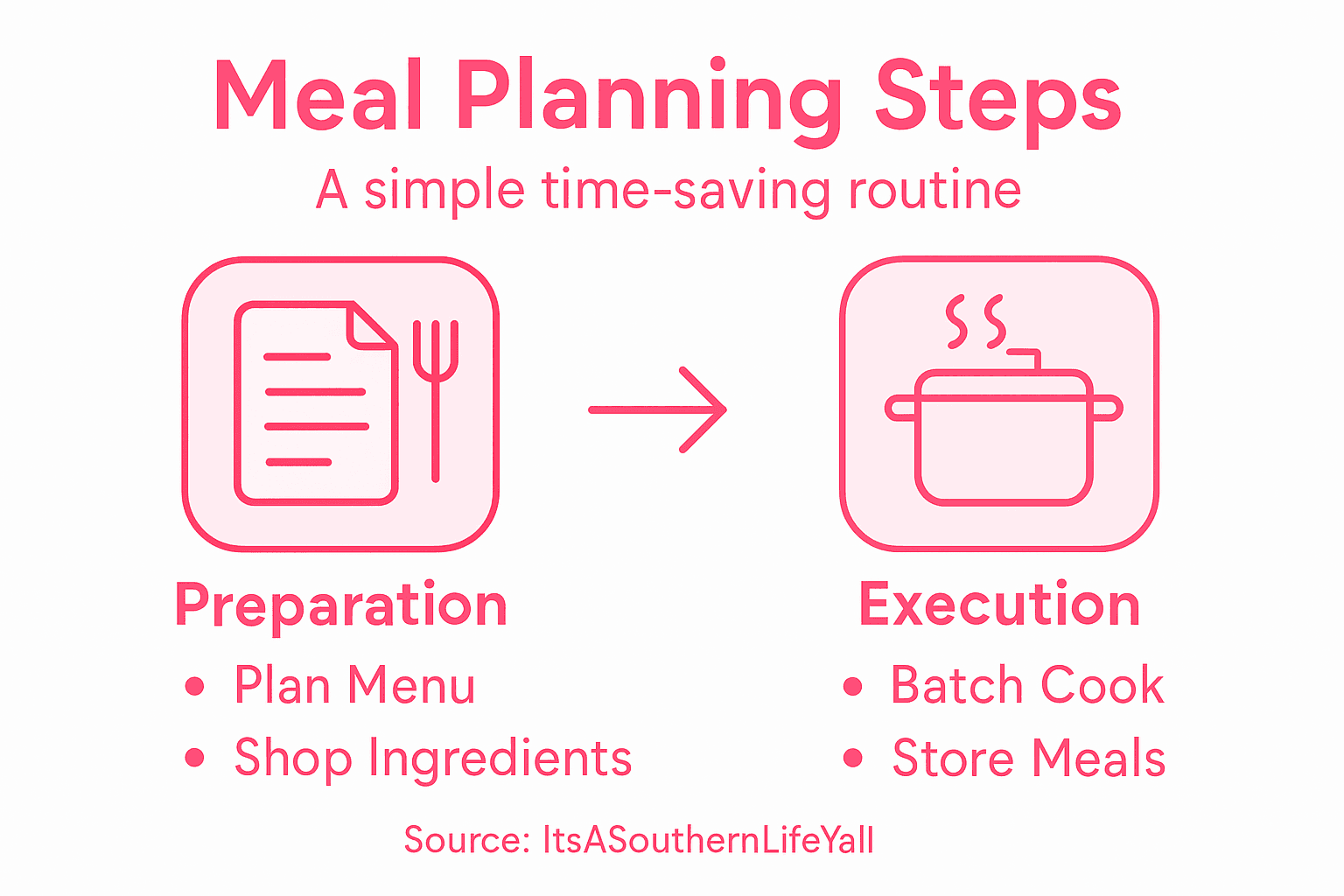
Time management is crucial in meal planning. Most parents struggle with limited time, but strategic meal preparation routines can dramatically reduce daily cooking stress. By dedicating a few hours each week to planning and prepping, you can create nutritious meals without feeling overwhelmed.
Pro Tip: Invest in reusable containers and label them with meal names and dates to streamline your weekly food preparation process.
Types of Meal Planning Systems Compared
Meal planning has evolved from simple handwritten lists to sophisticated digital solutions. Modern meal planning systems now offer families multiple approaches to managing weekly nutrition and cooking tasks.
Three primary meal planning systems dominate the home cooking landscape:
-
Manual Planning System
- Handwritten lists and calendars
- Low-tech but highly customizable
- Works best for families comfortable with paper tracking
-
Digital App-Based System
- Smartphone and tablet applications
- Automated grocery lists
- Recipe storage and nutritional tracking
- Ideal for tech-savvy parents
-
Hybrid Planning System
- Combination of digital tools and physical planning
- Flexible approach accommodating different family preferences
- Uses digital recipes with physical meal calendars
Each system offers unique advantages depending on your family’s technological comfort and organizational style. Some families prefer the tactile experience of paper planning, while others embrace the convenience of digital tools that sync across devices and provide instant nutritional insights.
Here’s a quick comparison of meal planning systems to help you identify which fits your family’s style best:
| System Type | Organizational Style | Level of Automation | Ideal User Profile |
|---|---|---|---|
| Manual | Paper-based, tactile | None | Hands-on, analog families |
| Digital App-Based | Cloud-synced, app-based | High | Tech-savvy, busy parents |
| Hybrid | Mix of digital & paper | Moderate | Flexible, adaptable users |
Technological adaptation plays a crucial role in selecting the right meal planning system. Institutional meal planning frameworks demonstrate how structured approaches can dramatically improve meal preparation efficiency and nutritional quality.
Pro Tip: Create a trial period for each meal planning system to determine which approach best matches your family’s unique rhythm and needs.
Step-by-Step Meal Planning Process Guide
Meal planning isn’t just about deciding what to eat – it’s a strategic approach to managing family nutrition and time. Comprehensive meal planning processes can transform chaotic weeknight dinners into smooth, stress-free experiences.
Here’s a detailed roadmap for creating an effective meal planning workflow:
-
Inventory Assessment
- Check existing pantry and refrigerator ingredients
- Note items that need to be used soon
- Identify staple items that need restocking
-
Recipe Selection
- Review family schedules and available cooking time
- Choose recipes matching time constraints
- Consider dietary preferences and nutritional balance
-
Meal Scheduling
- Assign specific meals to different days of the week
- Create flexibility for unexpected schedule changes
- Include backup meal options
-
Grocery List Creation
- List ingredients needed for selected recipes
- Cross-reference with pantry inventory
- Organize list by store sections for efficient shopping
Batch cooking techniques can dramatically reduce weekly meal preparation time. By dedicating a few hours to cooking multiple meals at once, families can ensure healthy, convenient dining options throughout the week.

Technological tools can further streamline the meal planning process. Many digital apps now offer recipe storage, nutritional tracking, and automated shopping list generation, making meal planning easier than ever.
Pro Tip: Designate a specific day and time each week for meal planning to turn it into a consistent, stress-free family routine.
Essential Tools and Apps for Meal Planning
Modern families need smart solutions to simplify meal planning, and technology offers incredible support. Digital diet monitoring applications have revolutionized how parents approach weekly nutrition and cooking tasks.
Key technological tools for meal planning include:
-
Meal Planning Apps
- Automated recipe suggestions
- Nutritional tracking capabilities
- Personalized menu generation
- Integration with grocery delivery services
-
Digital Grocery List Tools
- Real-time list synchronization
- Price comparison features
- Inventory management
- Coupon and discount tracking
-
Recipe Management Platforms
- Cloud-based recipe storage
- Scaling ingredient quantities
- Dietary restriction filters
- Meal prep scheduling
Modern meal planning apps leverage advanced technologies like artificial intelligence to provide increasingly personalized recommendations. These tools can analyze family preferences, dietary needs, and schedule constraints to suggest optimal meal plans.
This table summarizes key tools and their impact on meal planning efficiency:
| Tool Category | Key Benefit | Example Impact |
|---|---|---|
| Meal Planning Apps | Personalized meal suggestions | Reduce time deciding meals |
| Grocery List Platforms | Real-time inventory management | Avoid duplicate purchases |
| Recipe Management | Dietary filter options | Improve nutrition compliance |
Smartphone technology has transformed meal planning from a tedious chore into an efficient, streamlined process. By integrating multiple functions like recipe storage, nutritional tracking, and shopping list generation, these apps save families significant time and mental energy.
Pro Tip: Download and test three different meal planning apps, giving each a full week to evaluate its effectiveness for your family’s unique needs.
Common Mistakes and Simple Fixes
Meal planning can quickly become overwhelming, but understanding common pitfalls helps families develop more effective strategies. Typical meal planning mistakes often stem from poor preparation and unrealistic expectations.
Key mistakes families frequently encounter include:
-
Last-Minute Planning
- Causes stress and poor food choices
- Leads to expensive takeout meals
- Reduces nutritional quality
-
Overcomplicated Recipes
- Too many complex dishes per week
- Increases cooking time and frustration
- Discourages consistent meal preparation
-
Inflexible Meal Schedules
- No room for unexpected schedule changes
- Increases food waste
- Creates unnecessary household tension
Nutrition planning strategies reveal that successful meal planning requires adaptability and realistic goal-setting. Families should approach meal preparation with flexibility, understanding that not every meal will be perfect.
The most effective meal planning workflows incorporate built-in contingencies. This means having backup meal options, allowing for spontaneity, and not beating yourself up when plans inevitably shift.
Pro Tip: Create a “flex meal” slot in your weekly plan to accommodate unexpected schedule changes or last-minute recipe adjustments.
Simplify Your Family Meal Planning and Reclaim Precious Time
Feeling overwhelmed by last-minute meal chaos and the stress of juggling family schedules is a challenge many parents face. The article highlights common pain points like time management struggles, inflexible meal schedules, and complicated recipes that drain your energy. It shows how a flexible meal planning workflow and strategic preparation can transform your family dinners from stressful moments into organized, enjoyable experiences.
At ItsASouthernLifeYall, we understand how important it is to create peaceful, organized spaces and routines that support busy families. Our site offers proven time management tools and simple living strategies designed to help you build effective meal planning systems that fit your unique lifestyle. Don’t wait to reduce stress and regain control; explore practical tips to declutter your daily routine and boost productivity today. Start your journey to a calmer, more balanced home by visiting ItsASouthernLifeYall and turn meal planning into a smooth, manageable part of your week.
Frequently Asked Questions
What are the key components of a meal planning workflow for families?
A successful meal planning workflow includes assessing your family’s schedule and preferences, creating a flexible meal template, systematically approaching grocery shopping, prepping ingredients in advance, and building a rotating menu of family-favorite recipes.
How can meal planning help reduce daily cooking stress?
Meal planning helps reduce daily cooking stress by allowing families to dedicate specific time for meal preparation, ensuring they have all ingredients on hand, and facilitating quick and healthy meal decisions throughout the week.
What types of meal planning systems are available?
There are three primary meal planning systems: manual planning (using handwritten lists), digital app-based systems (smartphone and tablet applications), and hybrid systems that combine both digital tools and physical planning methods.
What common mistakes should families avoid in meal planning?
Common mistakes include last-minute planning, which leads to stress and poor choices, overcomplicating recipes with too many complex dishes, and having inflexible meal schedules that do not allow for unexpected changes.
Recommended
- Meal Planning for Families: Your Guide – It’s a Southern Life Ya’ll
- Understanding What is “Pre-Planned Meals” for Families – It’s a Southern Life Ya’ll
- Meal Planning on a Budget: Wellness Recipes That Save Time and Cash – It’s a Southern Life Ya’ll
- 7 Practical Examples of Family Meal Planning – It’s a Southern Life Ya’ll
Want a hand with this part? Meal Genie has the whole workflow built in, list and all.