
Types of Household Budgets: Find the Right Fit
Every parent faces the challenge of keeping up with bills, grocery runs, and surprise expenses while trying to build a little financial breathing room. Juggling a busy household in the United States or Canada means money decisions matter just as much as time management. A household budget is more than a list of numbers—it’s a practical tool that gives you control and clarity over your family’s finances, helping reduce stress and create a more organized home right from the start.
Table of Contents
- What Counts As A Household Budget?
- Comparing Popular Household Budget Types
- How Envelope, Zero-Based, And 50/30/20 Methods Work
- Choosing A Budgeting Method For Your Family
- Common Budgeting Mistakes And How To Avoid Them
Key Takeaways
| Point | Details |
|---|---|
| Household Budgeting is Essential | A household budget serves as a financial roadmap, offering clarity on income and expenses to facilitate informed financial decisions. |
| Selecting the Right Budget Type | Various budgeting methods exist, such as Zero-Based and 50/30/20 budgets, each catering to different financial styles and goals. |
| Avoid Common Budgeting Mistakes | Families should be aware of pitfalls like underestimating expenses and poor tracking habits, which can jeopardize their budgeting efforts. |
| Regular Review and Adaptation | Consistent evaluation of the budget allows families to adapt to changing financial situations and improves overall financial health. |
What Counts as a Household Budget?
A household budget is more than just a piece of paper with numbers. It’s a strategic financial roadmap that tracks your family’s income and expenses, helping you understand where your money goes each month. Understanding your budget’s core components is crucial for effective financial management.
At its most basic, a household budget includes several key categories:
- Monthly Income: All money coming into the household
- Fixed Expenses: Consistent monthly bills like rent or mortgage
- Variable Expenses: Fluctuating costs such as groceries and utilities
- Discretionary Spending: Entertainment, dining out, and personal purchases
- Savings and Financial Goals: Emergency funds, retirement, and future planning
A comprehensive budget doesn’t just record spending—it helps you make intentional financial decisions. Budget tracking helps families prioritize spending and avoid overspending while working toward long-term financial objectives.
Effective budgets are living documents that adapt to your family’s changing needs. They provide clear visibility into your financial health, allowing you to make informed choices about saving, spending, and investing.
Pro tip: Start by tracking every single expense for one month to get a truly accurate picture of your household spending patterns.
Comparing Popular Household Budget Types
Household budgeting isn’t a one-size-fits-all approach. Household spending patterns reveal diverse financial strategies that vary dramatically across different family income levels and financial goals.
Here are the most common household budget types:
- Zero-Based Budget: Every dollar is assigned a specific purpose
- 50/30/20 Budget: Allocates income into needs, wants, and savings
- Envelope Budget: Uses cash categories to limit spending
- Percentage-Based Budget: Distributes income across fixed percentage categories
- Values-Based Budget: Aligns spending with personal priorities and goals
Household finance strategies reflect different approaches to managing income, expenses, and financial objectives. Each budget type offers unique advantages depending on your family’s financial situation, discipline level, and long-term goals.

Choosing the right budget type requires understanding your spending habits, income stability, and financial objectives. Some families might thrive with strict envelope systems, while others prefer more flexible percentage-based approaches that allow for spontaneity and adjustment.
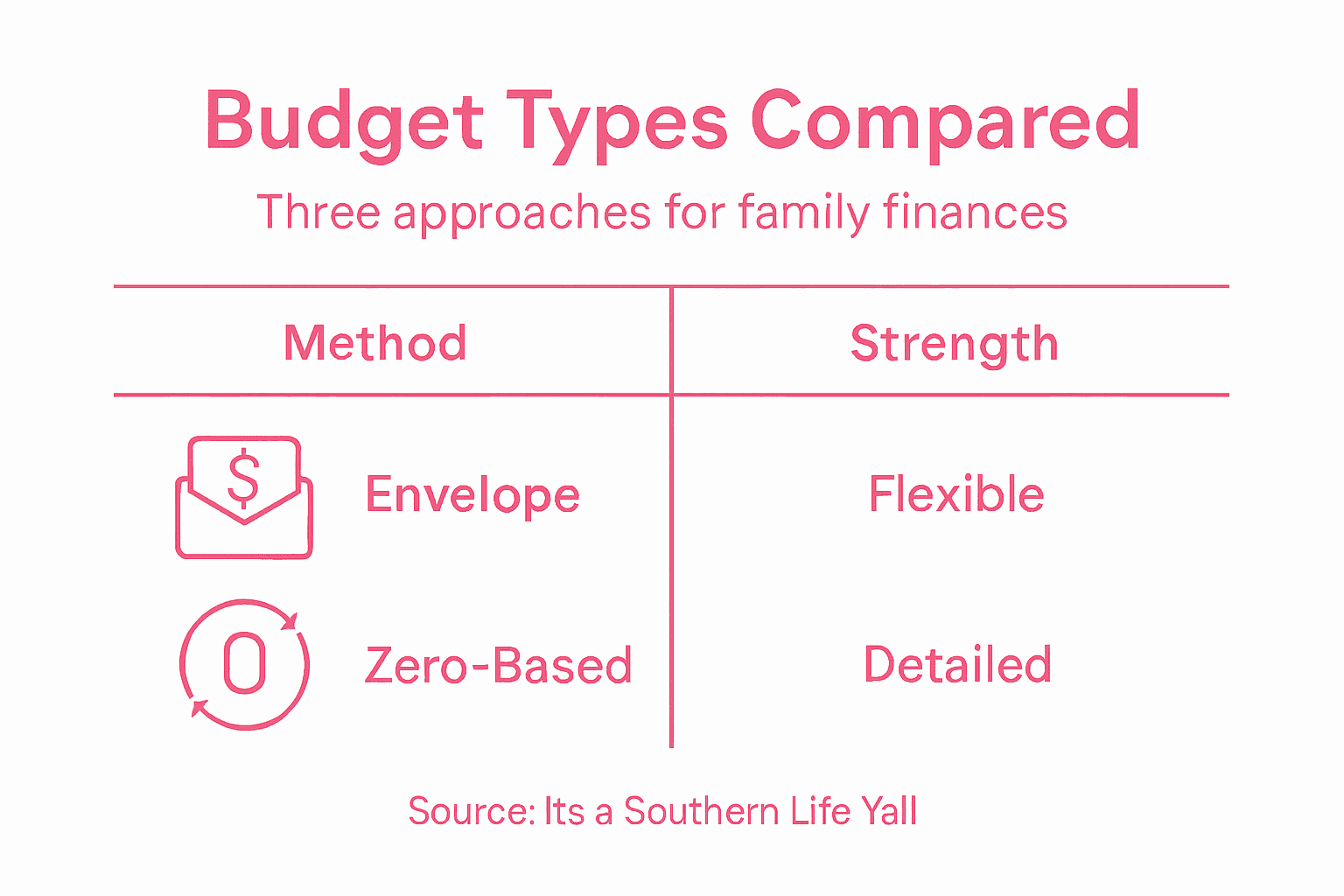
Here’s a comparison of popular household budgeting methods and which family profiles they fit best:
| Budget Type | Best For | Flexibility Level |
|---|---|---|
| Envelope | Cash spenders | Low – strict categories |
| Zero-Based | Detail-oriented | Moderate – all income planned |
| 50/30/20 | Big-picture planners | High – broad categories |
| Percentage-Based | Tech-savvy families | High – easily adjusted |
| Values-Based | Goal-focused households | Variable – highly customizable |
Pro tip: Experiment with different budget types for three months to discover which method feels most natural and sustainable for your household.
How Envelope, Zero-Based, and 50/30/20 Methods Work
Envelope budgeting methods provide structured approaches to managing household finances, each with unique strategies for tracking and controlling spending. These popular budgeting techniques offer different frameworks for families seeking financial organization and discipline.
Key characteristics of each budgeting method include:
-
Envelope Budget:
- Physically or digitally separates money into spending categories
- Limits spending by allocating specific cash amounts
- Prevents overspending in individual categories
- Works well for those who struggle with impulse purchases
-
Zero-Based Budget:
- Assigns every single dollar a specific purpose
- Ensures total income minus expenses equals zero
- Requires detailed tracking of all financial transactions
- Promotes intentional and mindful spending
-
50/30/20 Budget:
- Divides after-tax income into three primary categories
- 50% for essential needs
- 30% for discretionary wants
- 20% for savings and debt repayment
Budget allocation strategies demonstrate how families can create financial flexibility while maintaining structured spending habits. Each method offers unique advantages depending on individual financial goals and personal discipline.
Choosing the right budgeting approach depends on your financial personality, income stability, and personal money management skills. Some people thrive with strict envelope systems, while others prefer the simplicity of percentage-based allocations.
Pro tip: Create a hybrid budgeting approach by combining elements from different methods that work best for your unique financial situation.
Choosing a Budgeting Method for Your Family
Budgeting tips for families require careful consideration of your household’s unique financial landscape. Selecting the right budget method isn’t about finding a perfect system, but discovering an approach that fits your family’s spending habits, income, and financial goals.
Consider these key factors when choosing a budgeting method:
-
Family Income Stability:
- Consistent monthly income
- Irregular or fluctuating earnings
- Multiple income sources
- Seasonal work patterns
-
Financial Goals:
- Emergency fund building
- Debt reduction
- Saving for major purchases
- Long-term wealth accumulation
-
Family Money Management Style:
- Detail-oriented trackers
- Big-picture planners
- Technology-friendly approaches
- Cash-based preferences
Financial planning strategies emphasize the importance of flexibility and consistent review. The most effective budget is one your entire family can understand and commit to, which might require periodic adjustments as your financial situation evolves.
Remember that no single budgeting method works perfectly for every family. Be willing to experiment, communicate openly about finances, and adjust your approach as your household’s needs change.
Pro tip: Schedule a monthly family finance meeting to review your budget together and make collaborative adjustments.
Common Budgeting Mistakes and How to Avoid Them
Common financial mistakes can derail even the most well-intentioned household budget. Understanding these pitfalls is the first step toward creating a more resilient and effective financial plan for your family.
Most frequent budgeting mistakes include:
-
Underestimating Expenses:
- Forgetting irregular expenses
- Failing to account for unexpected costs
- Overlooking annual or quarterly bills
- Not creating buffer zones in spending categories
-
Poor Tracking Habits:
- Inconsistent expense recording
- Using outdated financial tracking methods
- Neglecting small purchases
- Avoiding detailed financial reviews
-
Unrealistic Goal Setting:
- Setting overly restrictive budget limits
- Ignoring personal spending habits
- Creating unsustainable financial expectations
- Failing to adjust goals periodically
Successful budgeting requires honest self-assessment and a willingness to adapt. Regularly reviewing your budget, being transparent about spending, and maintaining flexibility can transform financial challenges into opportunities for growth.
By recognizing these common mistakes, families can develop more robust financial strategies that align with their unique lifestyle and long-term objectives.
Below is an overview of frequent budgeting mistakes and practical solutions to avoid them:
| Mistake | Why It Happens | How to Avoid It |
|---|---|---|
| Underestimating Expenses | Forgetting irregular costs | Track annual bills and set buffers |
| Poor Tracking Habits | Inconsistent recording | Use apps, set reminders |
| Unrealistic Goal Setting | Overly strict limits | Adjust goals to match real spending |
Pro tip: Create a monthly budget review ritual where all family members participate, turning financial planning into a collaborative and educational experience.
Find the Perfect Budgeting Approach to Empower Your Family Finances
Struggling to choose the right household budget can lead to frustration and missed financial goals. The article highlights common pain points like understanding various budget types such as Envelope, Zero-Based, and 50/30/20 budgets and adapting them to your unique family income and lifestyle. If you feel overwhelmed by tracking expenses or unsure how to create a sustainable plan, you are not alone. Many families seek clear strategies that fit their specific money management style and financial objectives.
At Its a Southern Life Yall, we offer proven organization hacks and simple living strategies designed to complement your budgeting efforts. From home management systems to productivity tips, our resources help busy families bring order and balance to their daily lives. Explore how you can integrate effective budgeting with overall home and time management to create peaceful, efficient spaces for your loved ones. Take action now by visiting Its a Southern Life Yall and start transforming your household budget into a workable roadmap that supports your goals.
Frequently Asked Questions
What are the main types of household budgets?
Household budgets primarily include types like Zero-Based Budget, 50/30/20 Budget, Envelope Budget, Percentage-Based Budget, and Values-Based Budget. Each has a unique approach to managing income and expenses.
How does a Zero-Based Budget work?
A Zero-Based Budget assigns every dollar of income a specific purpose, ensuring that total income minus total expenses equals zero. It requires detailed tracking of all expenses and promotes mindful spending.
What is the 50/30/20 budgeting method?
The 50/30/20 budgeting method divides your after-tax income into three categories: 50% for essential needs, 30% for discretionary wants, and 20% for savings and debt repayment. This method provides a structured yet flexible financial framework.
How can I choose the best budgeting method for my family?
To choose the best budgeting method, consider your family’s income stability, financial goals, and money management style. It may be helpful to experiment with different budgets and hold regular finance meetings to determine what works best.
Recommended
- Understanding What is a Family Budget: A Clear Guide – It’s a Southern Life Ya’ll
- Why Use Budgeting Systems: Complete Family Guide – It’s a Southern Life Ya’ll
- Budgeting for Families – Creating Stability at Home – It’s a Southern Life Ya’ll
- Understanding Your Budget Tracking Guide for Families – It’s a Southern Life Ya’ll
Not sure which one fits your family? First Budget in 30 Minutes helps you pick a style and build your first one in a single sitting.