
Your First Blog Post Introduction: How to Hook Readers Fast
The first few sentences can make or break a blog post, and for american mothers juggling endless to-do lists, attention is precious. More than half of readers decide whether to keep reading a blog post based solely on the introduction. Creating an engaging opening is more than a formality, it is your best chance to connect with busy families, spark curiosity, and set a warm, inviting tone for the advice to come.
Table of Contents
- What Makes A Great Blog Introduction?
- Types Of Hooks For Family Blog Content
- Key Components That Capture Attention
- Common Mistakes To Avoid When Starting
- Practical Steps For Busy Parents’ First Posts
Key Takeaways
| Point | Details |
|---|---|
| Craft an Engaging Hook | Start your blog introduction with a captivating hook that addresses the reader’s pain points to maintain interest. |
| Establish Value Early | Clearly communicate what readers will gain from the content to motivate them to continue reading. |
| Connect Emotionally | Use relatable scenarios and authentic experiences to establish an emotional connection with your audience. |
| Avoid Common Pitfalls | Clearly define your target audience and maintain good writing structure to enhance engagement and readability. |
What Makes a Great Blog Introduction?
A great blog introduction is your digital handshake with readers, transforming casual scrollers into engaged audience members. When crafted strategically, your opening paragraphs can mean the difference between a reader clicking away or diving deep into your content. Blog intros uniquely capture reader interest by creating immediate connection and sparking curiosity.
The most compelling introductions typically include several key components. First, they deliver an attention-grabbing hook that speaks directly to the reader’s pain point or burning question. This might be a provocative statement, an intriguing statistic, or a scenario that resonates with your audience’s experience. Effective introductions often begin with action or intrigue, pulling readers into the narrative rather than providing bland background information.
Successful blog introductions also quickly establish the value proposition. Readers want to know immediately: What will they gain by continuing to read? Will this content solve a problem, answer a question, or provide unique insights? Your introduction should telegraph the core promise of the article, creating an implicit contract with the reader about what they’ll learn. By setting clear expectations and hinting at the transformative knowledge ahead, you motivate readers to invest their time and attention.
Pro tip: Before finalizing your blog introduction, read it aloud and ask yourself if it would genuinely make you want to keep reading – if not, revise until it does.
Types of Hooks for Family Blog Content
Crafting the perfect hook for family blog content requires understanding the emotional landscape of parenting and home life. Hooks that evoke empathy through relatable family scenarios are particularly powerful, transforming simple words into compelling narratives that capture readers’ hearts and minds. Different hook styles can help you instantly connect with your audience, making them feel seen, understood, and eager to read more.
Some of the most effective hooks for family-oriented blogs include the storytelling hook, which shares personal experiences that resonate with parents’ daily challenges. Another potent approach is the educational hook, which solves problems or explains complex topics simply. For instance, a hook about managing bedtime tantrums or simplifying school lunch preparation can immediately grab a busy parent’s attention. The topical hook is equally compelling, connecting current trends or timely issues directly to family life experiences.
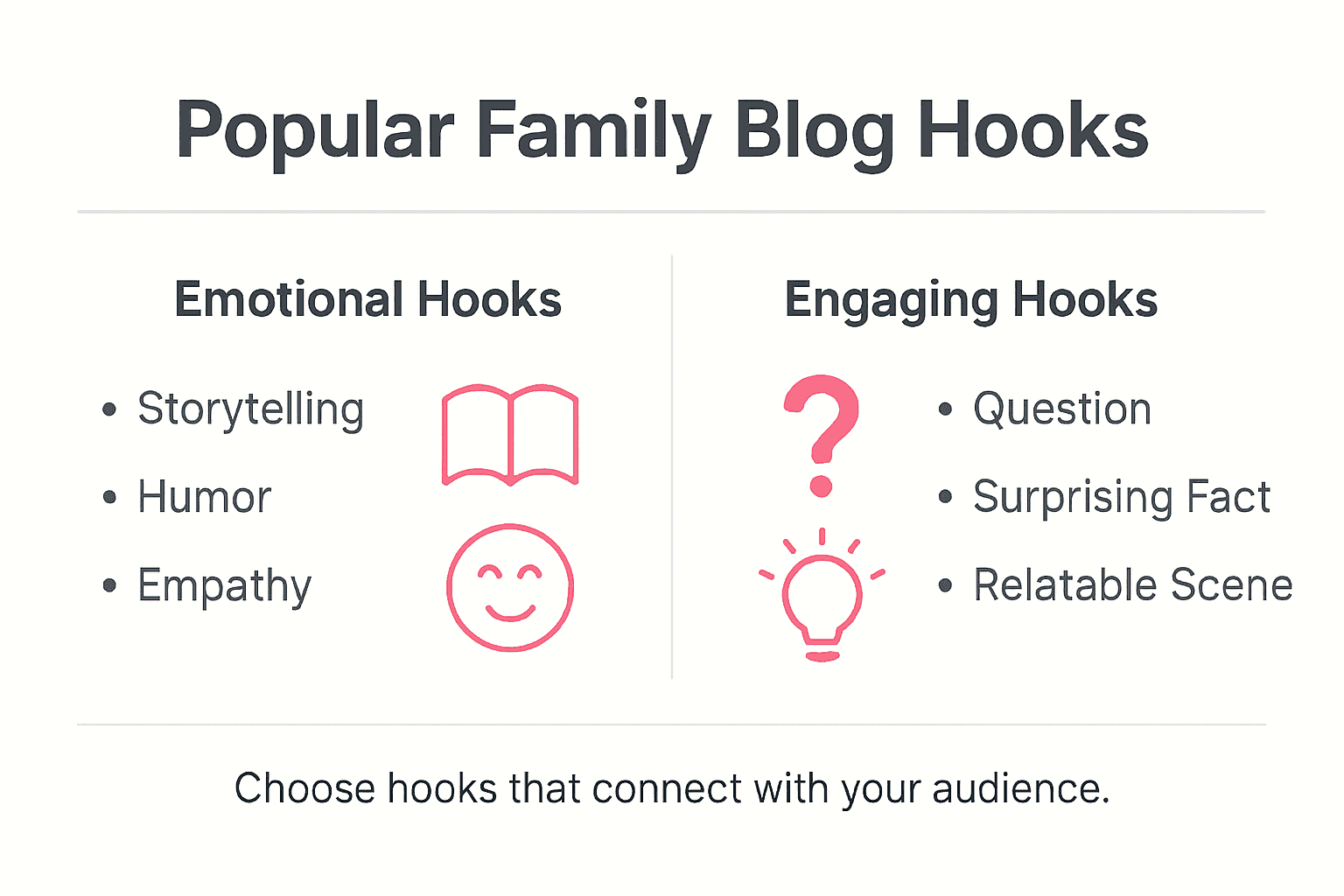
The key to a great family blog hook is authenticity and emotional connection. Whether you’re using humor to lighten parenting struggles, sharing a vulnerable moment, or presenting a clever solution to a common challenge, your goal is to make readers feel like you truly understand their world. By crafting hooks that speak directly to parents’ hopes, fears, and daily realities, you create an instant bond that keeps readers scrolling and engaged.
Pro tip: Test your hook by asking yourself if it would make a fellow parent pause and think “Yes, that’s exactly how I feel!”
Here’s a look at the unique impact of different blog hooks for family content:
| Hook Type | Emotional Effect | Typical Use Case | Recommended Audience |
|---|---|---|---|
| Storytelling Hook | Builds empathy | Sharing daily parenting moments | Parents craving connection |
| Educational Hook | Inspires confidence | Explaining parenting solutions | Busy moms and dads |
| Topical Hook | Sparks curiosity | Relating news to family life | Trend-aware families |
Key Components That Capture Attention
Crafting an introduction that truly captures attention requires understanding the intricate dance of reader engagement. Key components of a compelling introduction work together like a carefully choreographed performance, each element playing a crucial role in keeping readers invested from the first word. The goal is to create a magnetic opening that pulls readers deeper into your content without feeling manipulated or overwhelmed.

The first critical component is the curiosity hook – a powerful opening that immediately signals to readers why they should care. This might involve presenting an intriguing problem, sharing a surprising statistic, or posing a question that resonates deeply with their experiences. Effective introductions quickly provide background and context that orients readers and helps them understand the broader significance of what you’re about to discuss. By clearly signaling your purpose and creating immediate relevance, you transform a potential scroll-past into an engaging reading experience.
Successful introductions also balance emotional connection with practical insight. They speak directly to the reader’s underlying motivations, fears, or aspirations. Whether you’re writing about parenting challenges, home organization, or personal growth, your introduction should feel like a conversation with a trusted friend who truly understands their world. The most compelling introductions don’t just inform – they create an instant sense of recognition and understanding that makes readers feel seen and valued.
Pro tip: Read your introduction out loud and ask yourself: Would this make me want to keep reading if I stumbled across it online?
Common Mistakes to Avoid When Starting
Blogging can be a minefield for new writers, especially when you’re passionate about sharing your family experiences. Common blogging mistakes can dramatically reduce your content’s engagement and reach, turning potential readers away before they’ve even read your first paragraph. Understanding these pitfalls is crucial for creating a blog that resonates with your audience and builds a loyal readership.
One of the most significant errors new bloggers make is not defining their target audience clearly or trying to write for everyone. For family bloggers, this means understanding exactly who you’re speaking to – whether it’s new parents, busy moms, or families navigating specific life challenges. Writing without a clear audience in mind is like trying to have a conversation in a crowded room without knowing who you’re talking to. Your content should feel personal, targeted, and directly addressing the specific needs, struggles, and interests of your intended readers.
Another critical mistake is neglecting the fundamental aspects of good writing and blog structure. This includes using overly complex language, failing to proofread, and creating posts without clear organization. Family blog content should feel like a conversation with a trusted friend – warm, accessible, and easy to understand. Avoid industry jargon, break up text with meaningful paragraphs, and ensure your writing flows naturally. Remember that your readers are likely stealing moments between diaper changes, work, and household management – make every word count and every sentence engaging.
Pro tip: Write your first draft without judgment, then edit ruthlessly – your readers’ time is precious, so make every word meaningful.
Practical Steps for Busy Parents’ First Posts
Writing a blog post as a busy parent might seem like another impossible task on an already overflowing to-do list. Practical writing strategies can transform this challenge into a manageable and rewarding experience, helping you share your unique voice without sacrificing precious family time. The key is creating a streamlined approach that fits seamlessly into your chaotic schedule.
Start by understanding your core audience and selecting topics that genuinely resonate with other parents. This means digging deep into your own experiences and identifying the struggles, questions, and moments of triumph that define modern parenting. Your outline should break the post into bite-sized sections that can be drafted in short windows of time – perhaps during naptime, after bedtime, or in those rare quiet moments between household tasks. Use simple, conversational language that feels like a chat with a trusted friend, and keep paragraphs short to accommodate readers who might be skimming between interruptions.
Technology can be your ally in making blog writing more efficient. Use voice-to-text features on your phone to capture ideas instantly, create draft documents you can easily return to, and leverage note-taking apps that sync across devices. This allows you to capture inspiration the moment it strikes, whether you’re waiting in the school pickup line or folding laundry. Remember that perfection is the enemy of done – your first post doesn’t need to be a literary masterpiece, but it does need to be authentic, helpful, and true to your unique perspective.
Pro tip: Set a timer for 25 minutes and write without editing – you’ll be surprised how much content you can create in a focused burst.
This table outlines strategies and their benefits for busy parent bloggers:
| Writing Strategy | How It Helps | Example Tool/Approach |
|---|---|---|
| Voice-to-text | Captures ideas quickly | Smartphone dictation apps |
| Timed writing | Boosts productivity | 25-minute writing sprints |
| Note-taking apps | Organizes ideas on the go | Evernote, Google Keep |
Hook Your Readers and Simplify Your Busy Life Today
Starting your first blog post introduction can feel overwhelming when your mind races with how to hook readers fast while balancing a busy family life. The article highlights key challenges such as capturing attention quickly, creating authentic emotional connection, and staying clear and conversational. Many parents and family bloggers struggle with crafting that perfect opening that truly resonates and keeps readers engaged.
If you are juggling writing alongside home chaos, our site offers practical organization hacks, productivity tips, and simple living strategies designed just for busy families like yours. By mastering home management and time-saving techniques you will free up mental space to craft compelling blog content that speaks directly to your audience’s needs. Visit Its A Southern Life Yall now and discover ways to create both peaceful spaces and powerful blog posts that hook your readers from the first sentence.
Ready to transform your writing and your lifestyle? Explore our expert advice and get started with actionable solutions every busy parent can use. The perfect blog introduction and an organized life await—take the first step today.
Frequently Asked Questions
What is the purpose of a blog introduction?
A blog introduction serves as the first impression for readers, capturing their interest and encouraging them to continue reading your content. It establishes a connection and outlines what they can expect to learn or gain from the post.
How can I create an effective hook for my blog post?
To create an effective hook, consider starting with a relatable scenario, a surprising statistic, or a question that resonates with your audience’s experiences. This draws readers in, making them eager to see how your post addresses their concerns or interests.
What are common mistakes to avoid when writing a blog introduction?
Common mistakes include writing for a broad audience instead of targeting specific readers, using complex language, and failing to provide a clear value proposition. It’s essential to make your introduction relatable and engaging to retain readers’ attention.
How can busy parents find time to write their first blog post?
Busy parents can find time by breaking their writing into manageable chunks. Utilizing techniques like timed writing sessions and voice-to-text apps can help capture ideas quickly and effectively without disrupting their daily routines.
Recommended
Want a little more help with this? My SEO Content Pro Strategist GPT takes what we talked about here and walks you through it, step by step.