
Content Calendars: Streamlining Blogging for Busy Parents
Over 60 percent of American family bloggers admit they struggle to maintain a regular posting schedule in the midst of work and parenting demands. Staying organized feels impossible when your calendar is packed with meetings, school projects, and last-minute events. Understanding how a real content calendar works—what it is and what it is not—can help you build a sustainable, stress-free strategy that keeps your family blog lively, purposeful, and perfectly in sync with your American urban lifestyle.
Table of Contents
- What A Blog Content Calendar Is And Isn’t
- Types Of Content Calendars For Family Blogs
- Key Elements Your Calendar Must Include
- Planning Workflow And Scheduling Strategies
- Top Tools And Templates For Blogging Success
- Common Mistakes Parents Should Avoid
Key Takeaways
| Point | Details |
|---|---|
| Content Calendar Importance | A content calendar is a strategic tool that organizes and plans your blogging content effectively, ensuring consistent engagement with your audience. |
| Types of Content Calendars | Choose from various content calendar formats like editorial, platform-specific, or multi-channel planners based on your family’s blogging style and needs. |
| Essential Elements | Include publishing dates, content status, authors, and types in your calendar to enhance planning and maintain diverse content delivery. |
| Common Mistakes | Avoid creating content without strategic focus and overcommitting to posting schedules, which can lead to burnout and disengagement. |
What a Blog Content Calendar Is and Isn’t
A content calendar is far more than a simple scheduling tool – it’s your strategic roadmap for consistent, purposeful blogging. Unlike a basic to-do list, a content calendar helps bloggers systematically plan and organize their publishing strategy with intentional precision.
At its core, a content calendar represents a comprehensive planning system that tracks what content you’ll create, when you’ll publish it, and how it connects to your broader blogging goals. Think of it like a GPS for your online writing journey – helping you navigate through potential content roadblocks while keeping your audience consistently engaged. The calendar isn’t just about dates and topics; it’s about creating a structured approach that transforms random ideas into a cohesive content strategy.
What a content calendar isn’t includes random post scheduling, sporadic writing bursts, or last-minute content scrambling. Instead, it’s a deliberate framework that allows busy parents to plan content weeks or months ahead, ensuring your blog remains active even during hectic family schedules. By providing a big-picture overview of planned content, these calendars help maintain publishing consistency and marketing effectiveness.
Pro tip: Start your content calendar with just three months of planned topics, giving yourself flexibility while establishing a strategic rhythm for your blogging workflow.
Types of Content Calendars for Family Blogs
Content calendars for family blogs come in various styles, each designed to meet different blogging needs and family dynamics. Content calendars can be strategically categorized based on platforms, purpose, and specific blogging goals, allowing parents to choose a system that best matches their unique family storytelling approach.
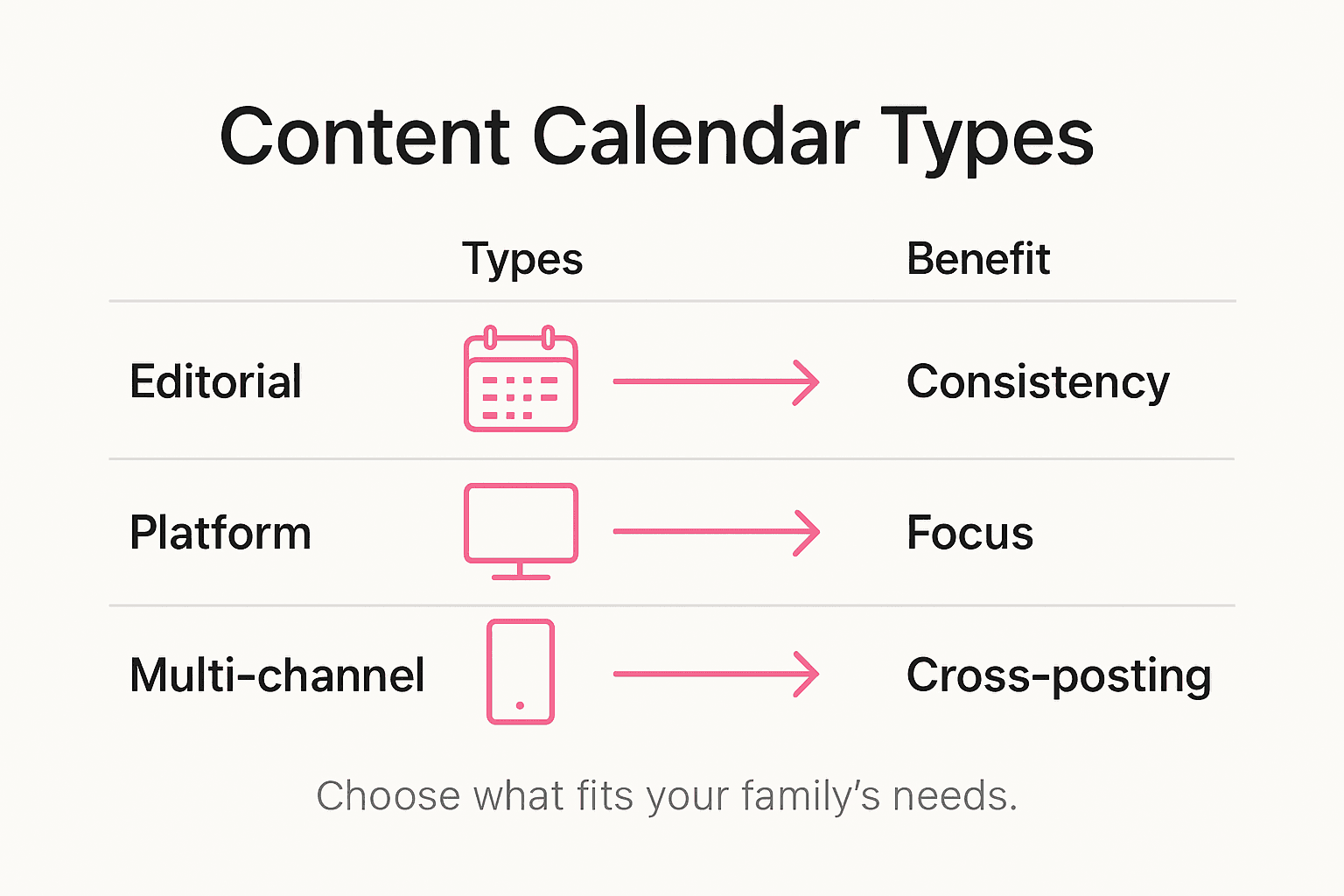
The primary types of content calendars for family blogs include editorial calendars, platform-specific calendars, and multi-channel content planners. Editorial calendars focus on systematic content publishing, helping parents map out blog posts, themes, and storytelling arcs months in advance. Platform-specific calendars, by contrast, zero in on individual channels like Instagram, Pinterest, or personal blogs, allowing granular tracking of content across different digital spaces.
Multi-channel content calendars represent the most comprehensive approach for busy parents. These dynamic tools integrate content planning across multiple platforms, ensuring consistent messaging and reducing the mental load of tracking different content streams. They enable parents to synchronize blog posts, social media updates, and potential newsletter content, creating a cohesive digital storytelling strategy that keeps family narratives organized and engaging.
Pro tip: Select a content calendar format that matches your family’s complexity and your personal blogging bandwidth, remembering that flexibility is key to sustainable content creation.
Here’s a clear comparison of common content calendar types for family blogs:
| Calendar Type | Main Focus | Best For | Unique Benefit |
|---|---|---|---|
| Editorial Calendar | Long-term planning | Consistent parent bloggers | Maintains storytelling arcs |
| Platform-Specific | Single-channel content | Social media–focused parents | Tracks individual platform posts |
| Multi-Channel Planner | Cross-platform strategy | Busy families with broad reach | Synchronizes messaging everywhere |
Key Elements Your Calendar Must Include
Family blog content calendars require strategic planning and comprehensive tracking to transform scattered ideas into consistent, engaging content. Essential elements of an effective content calendar create a robust framework for organizing and executing your blogging strategy, ensuring no brilliant family story or milestone gets overlooked.
The core elements your content calendar must include span several critical categories. These fundamental components include publishing dates, content status, assigned authors, and content types. Each element serves a specific purpose: publishing dates help you maintain consistency, content status tracks progress, assigned authors clarify responsibilities, and content types ensure a diverse and engaging mix of family storytelling approaches. Additionally, tracking keywords, SEO focus, and potential thematic campaigns can elevate your blog from a simple diary to a strategic digital narrative.

A comprehensive content calendar goes beyond basic scheduling. By incorporating strategic goals, distribution channels, and clear ownership, you create a dynamic tool that supports organization, collaboration, and consistent content delivery. For family bloggers, this means mapping out not just when you’ll write, but how each piece of content connects to your broader family storytelling objectives. Consider including columns for post ideas, draft status, publication platform, target audience, and potential emotional or educational impact of each piece.
Pro tip: Create a color-coded system in your content calendar to quickly visualize different content types, family members involved, and publication status for seamless tracking and planning.
Planning Workflow and Scheduling Strategies
Family blog content creation requires a strategic approach that transforms sporadic writing into a consistent, manageable process. Effective content planning workflow begins with establishing clear, measurable goals that align with your family’s storytelling objectives, transforming your blog from a random collection of posts into a purposeful digital narrative.
The heart of successful scheduling lies in understanding your realistic capacity and creating a flexible yet structured workflow. This means setting a consistent publishing frequency that matches your family’s energy and available time. Batching similar tasks such as research, writing, and editing can dramatically streamline your content production process. For busy parents, this might look like dedicating specific time blocks to brainstorming post ideas, another for drafting content, and yet another for editing and finalizing posts.
Your content workflow should also incorporate strategic planning elements like seasonal event tracking, potential trending topics, and space for spontaneous family moments. Consider creating a thematic content calendar that maps out potential posts around family milestones, holidays, and significant life events. This approach allows you to plan 2-3 months ahead while maintaining the flexibility to capture unexpected, beautiful family stories that emerge organically. The key is building a system that supports your creativity without becoming a rigid constraint.
Pro tip: Implement a “content idea capture” system using a shared digital note app where family members can quickly jot down potential blog post ideas, ensuring no inspiring moment gets forgotten.
Top Tools and Templates for Blogging Success
Blogging tools are the secret weapons for busy parents looking to transform their family storytelling from chaotic to strategic. Comprehensive project management platforms offer blog management templates that help streamline content organization, research, and scheduling, making it possible to maintain a consistent online presence without sacrificing family time.
The essential toolkit for family bloggers spans several critical categories. Content management platforms like WordPress provide flexible publishing environments, while graphic design tools such as Canva help create visually engaging posts that capture family memories. SEO-focused tools and analytics platforms enable bloggers to understand their audience, track performance, and refine their content strategy. Social media management platforms can help synchronize your blog content across multiple channels, ensuring your family’s stories reach the right audience at the right time.
Choosing the right tools requires careful consideration of your specific blogging goals, technical comfort level, and family dynamics. Some platforms offer integrated solutions that combine project management, content creation, and analytics, while others specialize in specific aspects of blogging. The key is finding a combination of tools that feels intuitive and supportive rather than overwhelming. Look for platforms with user-friendly interfaces, robust collaboration features, and flexible pricing models that can grow with your blogging journey.
Pro tip: Start with 2-3 core tools that address your most pressing blogging needs, and gradually expand your toolkit as you become more comfortable with digital content creation.
Below is a summary of leading blogging tools and what they offer families:
| Tool Category | Example Platform | Key Benefit |
|---|---|---|
| Content Management | WordPress | Streamlines post publishing |
| Graphic Design | Canva | Enhances visual appeal |
| SEO Analytics | SEMrush | Improves blog visibility |
| Social Scheduling | Buffer | Coordinates multi-channel posting |
Common Mistakes Parents Should Avoid
Family blogging can quickly become overwhelming when parents fall into predictable traps that derail their content creation journey. Common blogging mistakes can transform what should be an enjoyable creative outlet into a source of stress and frustration, especially for busy parents trying to balance multiple responsibilities.
One of the most significant pitfalls is creating content that lacks strategic focus. Many parent bloggers make the critical error of writing solely for themselves, instead of understanding and targeting their intended audience. This means producing posts that feel more like personal diary entries rather than engaging, valuable content that resonates with other parents. Inconsistent posting schedules, neglecting search engine optimization, and failing to promote their blog effectively further compound these challenges, turning what could be a meaningful digital storytelling platform into a sporadic and ineffective endeavor.
The root of most blogging mistakes for parents stems from unrealistic expectations and poor planning. Overcommitting to a rigid posting schedule without accounting for the unpredictable nature of family life can lead to rapid burnout. Instead, successful parent bloggers learn to create flexible content strategies that accommodate sudden school events, unexpected family needs, and the natural ebb and flow of daily parenting responsibilities. This means developing a realistic approach that allows for grace, adaptability, and genuine storytelling without creating undue pressure.
Pro tip: Create a content buffer of 3-4 pre-written posts that can be published during weeks when family demands make consistent writing challenging.
Master Your Family Blog with Smart Planning and Organized Living
If juggling family life while maintaining a consistent blog feels overwhelming, you are not alone. The article highlights how a well-structured content calendar is essential for busy parents to avoid sporadic posting and burnout. It shows how planning publishing dates, content types, and batching tasks can transform your blogging from chaotic to purposeful. These pain points connect deeply with the challenges many parents face trying to balance storytelling with day-to-day demands.
At Its A Southern Life Yall, we understand the emotional weight of managing family priorities alongside creative outlets. We offer proven organization hacks and simple living strategies designed to help you reclaim time and create peaceful, productive routines. Discover practical productivity tips and home management systems that complement the content calendar strategies you just learned. Start streamlining your blog workflow and family life today. Take the first step toward consistent blogging and peaceful home management now.
Frequently Asked Questions
What is a content calendar and how does it help busy parents blog?
A content calendar is a strategic roadmap that helps bloggers systematically plan and organize their publishing strategy. For busy parents, it allows for planning content weeks or months in advance, ensuring the blog remains active even during hectic family schedules.
What types of content calendars are best for family blogs?
The best types of content calendars for family blogs include editorial calendars for long-term planning, platform-specific calendars for focusing on individual channels, and multi-channel planners for integrating content across multiple platforms for a cohesive strategy.
What key elements should be included in a family blog content calendar?
A family blog content calendar should include publishing dates, content status, assigned authors, content types, keywords, SEO focus, and thematic campaigns to ensure a comprehensive and organized blogging strategy.
What common mistakes should parents avoid when using a content calendar for blogging?
Common mistakes include creating content without strategic focus, having inconsistent posting schedules, neglecting SEO, and underestimating the need for flexibility in planning due to family responsibilities.
Recommended
- Parental Time Management Types for Busy Families – It’s a Southern Life Ya’ll
- 7 Time Management Tips for Families to Balance Life – It’s a Southern Life Ya’ll
- Time Management Tools for Parents – A Comparison 2025 – It’s a Southern Life Ya’ll
- blogging – It’s a Southern Life Ya’ll
- Blog – A1 Renovari
Want a little more help with this? My SEO Content Pro Strategist GPT takes what we talked about here and walks you through it, step by step.