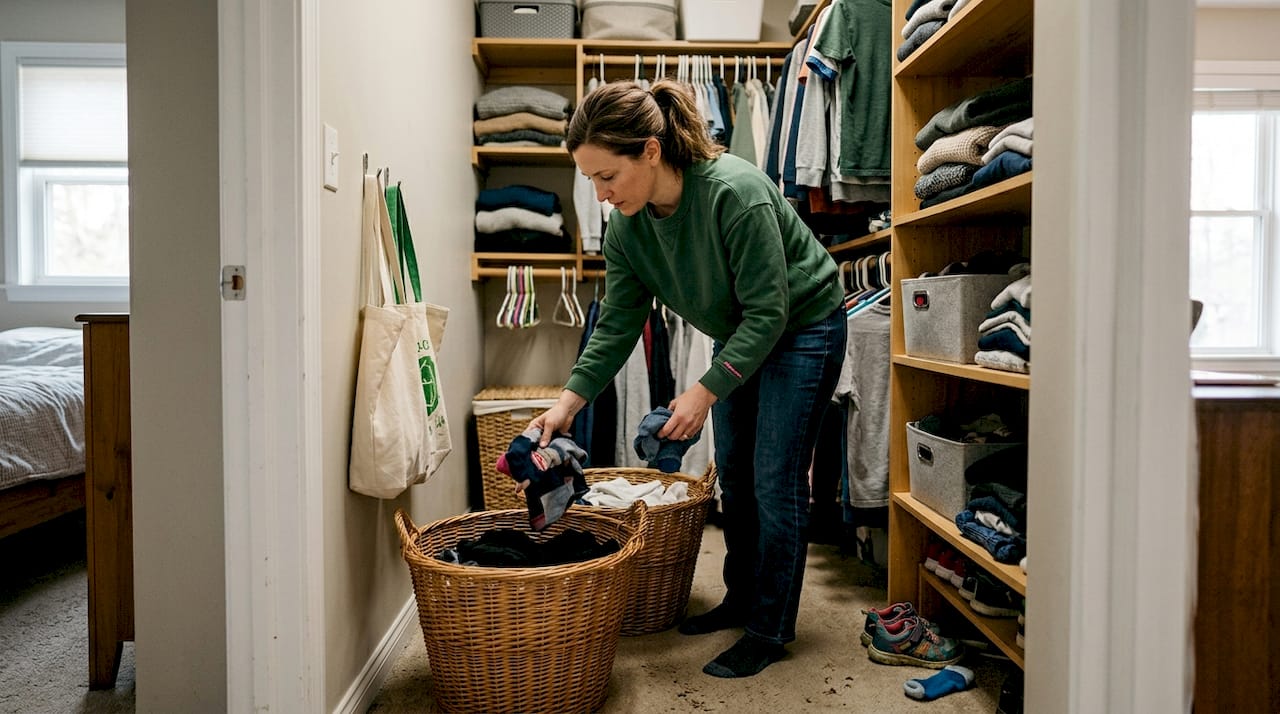
Closet decluttering process made simple for busy parents
Picture this: it’s 7:15 a.m., the kids need to leave in ten minutes, and you’re digging through a mountain of clothes just to find a matching pair of socks. Sound familiar? You’re not alone. 54% of Americans feel overwhelmed by clutter, and that chaos doesn’t just slow you down physically. It drains your mental energy before the day even begins. The good news is that a clear, step-by-step closet decluttering process can transform your mornings, calm your mind, and give your whole family a fresh start. Let’s walk through it together.
Table of Contents
- Why decluttering your closet matters for families
- What you need before you start decluttering
- Step-by-step closet decluttering process
- Maintenance strategies for lasting results
- How to know your closet decluttering was a success
- Take your family organization to the next level
- Frequently asked questions
Key Takeaways
| Point | Details |
|---|---|
| Save time daily | Decluttering your closet typically saves families at least 15 minutes every morning. |
| Reduce family stress | Getting organized lowers stress and helps mornings go smoothly for everyone. |
| Start with simple steps | All it takes is a clear method, a few bins, and an hour to start making progress. |
| Maintain with easy habits | Quick, weekly and seasonal checks prevent clutter from building up again. |
Why decluttering your closet matters for families
A cluttered closet is more than an eyesore. It’s a daily source of stress that quietly chips away at your family’s peace. Research shows that clutter raises cortisol by 20%, and cortisol is the hormone your body releases when you’re under pressure. That means a messy closet is literally putting your body in stress mode every single morning.
The flip side is just as powerful. When your closet is organized, you can save 15 minutes daily that would otherwise be lost to searching and second-guessing. Over a week, that’s nearly two hours returned to your family. Think of what you could do with that time: a slower breakfast, a few extra minutes of connection with your kids, or simply arriving somewhere on time without the frantic rush.
Here’s what an organized closet does for your family:
- Smoother mornings with less searching and fewer arguments
- Lower stress levels for both parents and kids
- More confidence when getting dressed because everything fits and feels good
- Better modeling for children about intentionality and caring for belongings
- Reduced decision fatigue so your mental energy goes where it matters most
If you’re ready to start decluttering your home naturally, the closet is one of the best places to begin. It’s personal, it’s daily, and the results are immediate. You can also explore ways to refresh your home as part of a broader reset for your family’s living spaces. According to closet clutter statistics, the majority of families feel overwhelmed by their closets, which means you’re in very good company and the solution is well within reach.
Now that the need is clear, let’s look at what you’ll need before starting.
What you need before you start decluttering
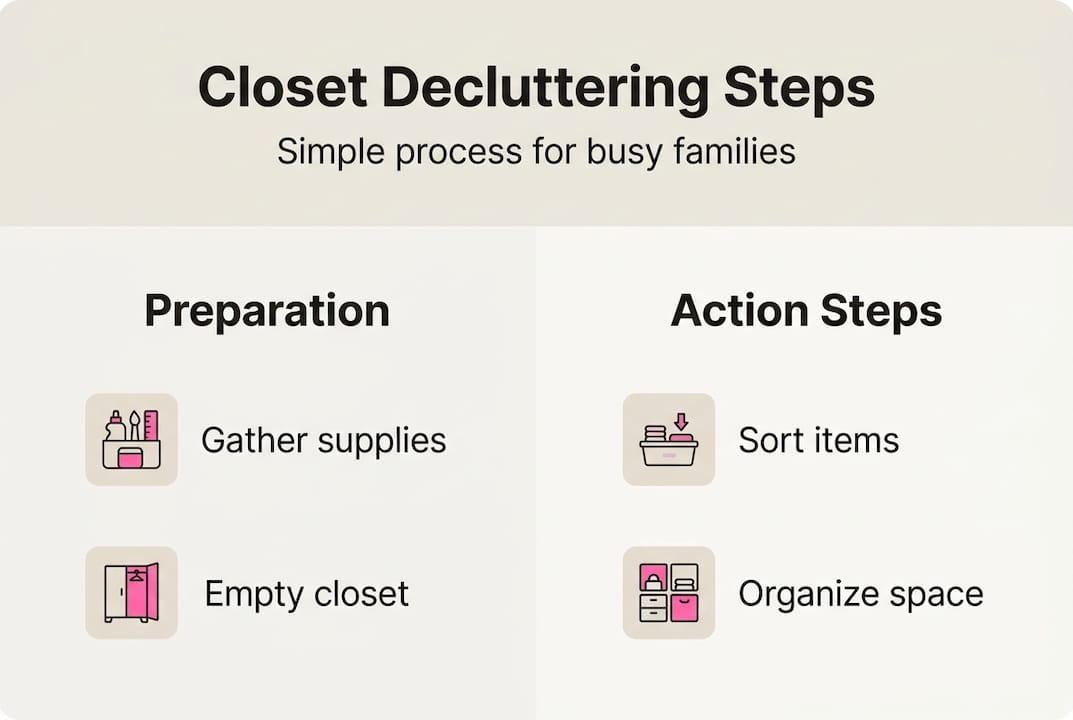
Preparation is the secret ingredient that separates a successful declutter from a half-finished pile on the floor. Before you pull a single item off a hanger, gather your supplies and set your mindset.
Supplies checklist:
- 3 to 4 large bins or bags labeled: Keep, Donate, Toss, and Relocate
- Cleaning spray and a cloth for wiping down shelves
- Label stickers for bins and shelves
- A full-length mirror if possible
- A notepad for jotting down what you need to replace
The core decluttering process involves emptying, sorting, evaluating, cleaning, and then rehanging and organizing. Knowing this upfront helps you plan your time wisely. For an average bedroom closet, block out one to two hours. Smaller closets may take less. Check out these wardrobe decluttering tips for additional guidance on timing and approach.
| Task | Estimated time |
|---|---|
| Gather supplies | 10 minutes |
| Empty the closet | 15 to 20 minutes |
| Sort into bins | 30 to 40 minutes |
| Clean shelves and rods | 10 minutes |
| Rehang and organize | 20 to 30 minutes |
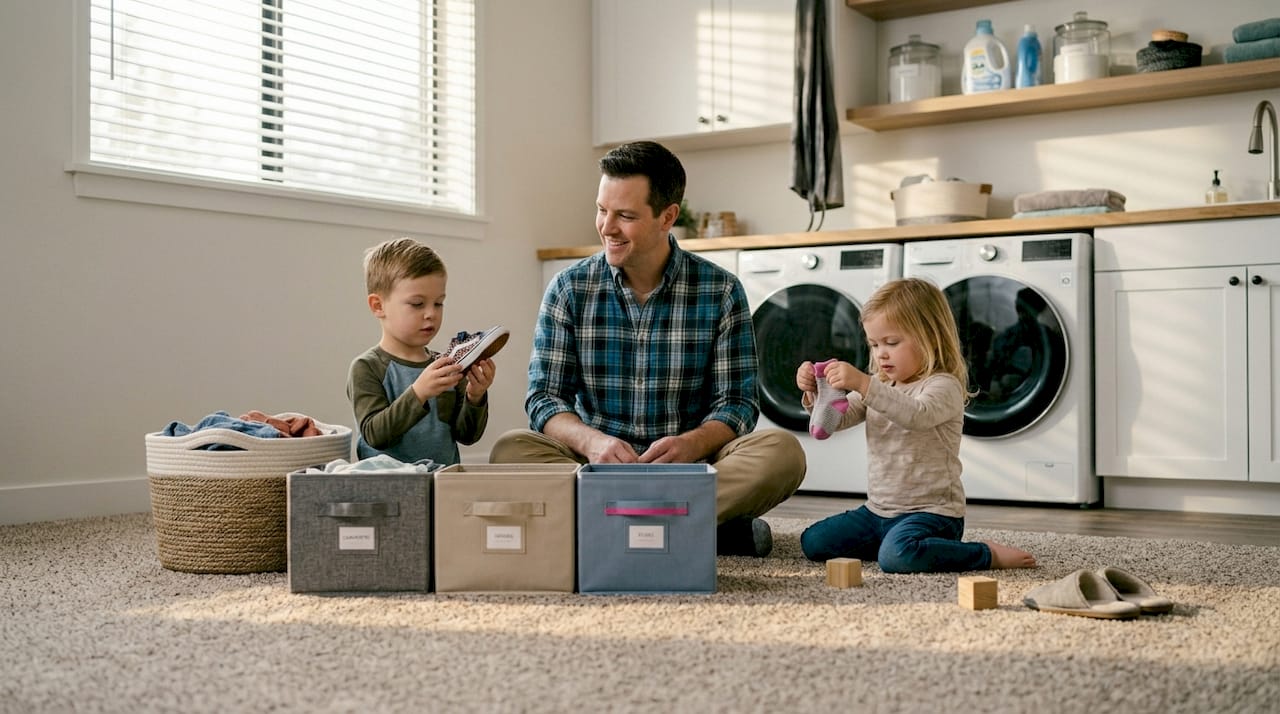
Enlist your family members if you can. Even young children can help sort shoes or fold items into bins. It turns a chore into a team activity and teaches kids the value of an organized space. For ideas on front closet organization, there are some great space-saving strategies worth exploring before you begin.
Pro Tip: Play an upbeat playlist or set a timer in 20-minute intervals. It keeps the energy up and makes the process feel less like a task and more like a productive family project.
With everything prepped, you’re ready to begin the actual process.
Step-by-step closet decluttering process
This is where the real transformation happens. Follow these steps in order and you’ll move through the process with clarity and confidence.
- Empty the entire closet. Pull everything out and place it on the bed or floor. Yes, everything. Seeing it all at once helps you make honest decisions.
- Sort into your four bins. As you pick up each item, place it in Keep, Donate, Toss, or Relocate. Don’t overthink it. Your first instinct is usually right.
- Evaluate each item. Ask yourself: Does it fit? Have I worn it in the last year? Does it match my current lifestyle? Sort by fit, usage, and lifestyle to make decisions faster and with less guilt.
- Clean the closet. Wipe down shelves, vacuum the floor, and let the space breathe before putting anything back.
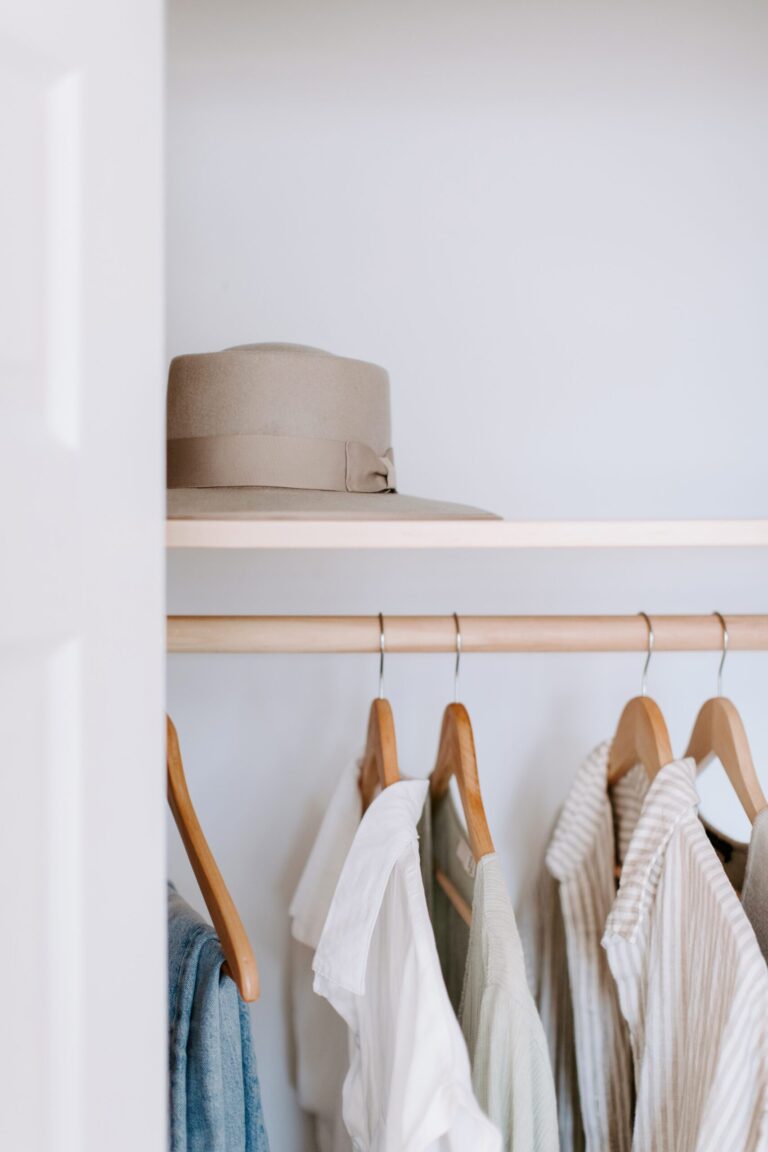
- Rehang and organize. Group by category: tops together, bottoms together, dresses, then seasonal items at the back. Place the things you reach for daily at eye level.
Pro Tip: Create a Maybe bin for items you’re unsure about. Store it out of sight for 30 days. If you don’t reach for anything in it, donate the whole bin without looking inside again.
For busy parents who don’t have time for a full purge, low-effort maintenance like the reverse hanger method works beautifully between deep cleans. Here’s a quick comparison to help you choose your approach:
| Approach | Best for | Time needed |
|---|---|---|
| Full purge | Seasonal reset or major life change | 1 to 2 hours |
| Reverse hanger method | Ongoing maintenance | Minimal, ongoing |
| Zone focus | Targeting one section at a time | 20 to 30 minutes |
You can also explore home organization systems to find a structure that fits your family’s rhythm. And if you’re ready to clear the clutter beyond just the closet, there are whole-home strategies waiting for you.
You’ve now completed the hands-on decluttering. Let’s look at how to maintain this progress.
Maintenance strategies for lasting results
Decluttering once is a win. Keeping it that way is the real goal. The good news is that maintenance doesn’t have to be a big production. Small, consistent habits are what plant seeds that grow into lasting order.
“Clutter raises cortisol by 20%, making organization a mental health priority, not just a home improvement project.”
Here are simple habits that keep your closet working for your family:
- Weekly mini-check: Spend five minutes every Sunday resetting the closet. Rehang anything that fell, return items that wandered in from other rooms.
- Seasonal sort: Every three to four months, pull out off-season items and swap them to storage. This is also a great time to check for outgrown kids’ clothing.
- Involve the kids: Give each child a small bin in their closet for items they’ve outgrown. When it’s full, it’s time to donate.
- Reverse hanger method: Hang all clothes with hangers facing backward. After wearing an item, hang it correctly. After six months, anything still backward can go. This low-effort maintenance tip is a game-changer for busy parents.
- Year-round donation bag: Keep a bag in the corner of your closet. When something no longer serves you, drop it in immediately instead of putting it back.
40% of people reorganize closets yearly, but more frequent small checks make the annual reset almost unnecessary. Pair your closet habits with strategies to create a peaceful home and you’ll feel the difference in every room. The mental health benefits of organization are real, and your family deserves to feel them every day. You can also find more inspiration in these simple ways to refresh your home that complement your closet work beautifully.
Pro Tip: Set a recurring phone reminder every season labeled “Closet check.” It takes 30 seconds to set and saves you from ever facing a full-blown closet crisis again.
Keep those gains. Here’s how to know the process has worked.
How to know your closet decluttering was a success
Sometimes the results speak for themselves. You walk into your closet and feel calm instead of overwhelmed. That feeling is real, and it matters. But here are some concrete signs that your decluttering effort paid off.
Signs your closet declutter was a success:
- You get dressed in under ten minutes without stress
- Every item in your closet fits and you feel good wearing it
- You can see everything clearly without digging or shifting piles
- Your kids can find their own clothes independently
- Mornings feel calmer and more predictable for the whole family
- You’re not buying duplicates because you forgot what you already owned
Organized spaces reduce stress and boost productivity, and you’ll feel that shift almost immediately. It’s not just about the clothes. It’s about reclaiming your time and your peace. Pair your organized closet with simplifying your family’s schedules and you’ll notice how one organized space creates a ripple effect through your entire day.
| Sign of success | Benefit for your family |
|---|---|
| Faster morning routine | Less rushing, more connection |
| Visible, accessible clothing | Kids gain independence |
| No duplicate purchases | Saves money over time |
| Calm closet environment | Lower daily stress levels |
| Seasonal swaps in place | Always wearing what fits and works |
Now that you see the value, let’s look at what other resources can help you continue your organization journey.
Take your family organization to the next level
Your closet is just the beginning. Once you feel the calm that comes from one organized space, you’ll want that feeling everywhere in your home. We’ve built a whole library of resources designed specifically for busy parents like you who are ready to create a home that works for them instead of against them. Start with decluttering your home naturally for a room-by-room approach that fits into real family life. Then explore front closet organization ideas to tackle the space everyone sees first. And when you’re ready to boost your family’s daily efficiency, our productivity hacks for families will give you practical tools that save time and reduce chaos every single week. You’ve already taken the first step. Keep going.
Frequently asked questions
How long does it take to declutter a closet?
On average, set aside one to two hours for a bedroom closet. The average closet takes under two hours when you follow a clear process, and involving family members speeds things up considerably.
What should I do with clothes I no longer want?
Sort into donate, toss, or sell categories. Donate gently used items to local shelters or thrift stores, and recycle or upcycle worn-out textiles rather than sending them to a landfill.
How often should you declutter your closet?
A seasonal audit every three to four months keeps things manageable. 40% reorganize yearly, but quick monthly checks make the process even easier and prevent buildup.
What is the reverse hanger method?
Hang all your clothes with hangers facing backward at the start. After wearing an item, hang it correctly. The reverse hanger method reveals unworn items after six months so you can let them go without guilt.
Does a decluttered closet really save time?
Absolutely. An organized closet can save up to 15 minutes per day in searching and decision time, which adds up to nearly two hours returned to your family every week.
Recommended
- How to Declutter Home Naturally for Busy Families –
- Front Closet Organization Ideas: 4 Tips Save 30% Space –
- How to Organize Pantry for Stress-Free Family Living –
- 7 Simple Ways to Refresh Your Home for Busy Families –
- How to be a working mom and a student in the same time? – Hazli Collection
Want a little more help with this? The Room-by-Room Reset takes the same slow-and-steady approach and stretches it across the whole house.