
Understanding What is Work-Life Harmony for Families
Families are searching for ways to keep up with demanding careers and still enjoy real moments together. A surprising fact is that families who practice work-life harmony report significantly lower stress levels and stronger relationships compared to those chasing balance. The real surprise is that the secret is not about trying to split your life evenly at all. It is about blending work and family so each supports the other in unexpected ways.
Table of Contents
- Defining Work-Life Harmony And Its Essence
- The Importance Of Work-Life Harmony For Families
- How Work-Life Harmony Differs From Work-Life Balance
- Key Concepts And Principles Of Work-Life Harmony
- Real-World Applications Of Work-Life Harmony In Family Life
Quick Summary
| Takeaway | Explanation |
|---|---|
| Work-life harmony adapts to individual needs | It encourages flexible strategies tailored to unique family dynamics, integrating work and personal life seamlessly. |
| Focus on quality interactions over strict time allocation | This approach prioritizes meaningful engagement in both work and personal domains for overall life satisfaction. |
| Flexible work arrangements enhance integration | Options like telecommuting and flexible hours allow families to blend their professional and personal responsibilities effectively. |
| Emphasize holistic family wellness | A harmonious relationship between work and life leads to better emotional well-being and healthier family dynamics. |
| Leverage technology for seamless integration | Digital tools facilitate boundary-less work environments, allowing better management of personal and professional obligations. |
Defining Work-Life Harmony and Its Essence
Work-life harmony represents a dynamic and personalized approach to managing professional responsibilities and personal life, moving beyond traditional work-life balance concepts. Unlike rigid balance models, work-life harmony acknowledges that life integration is fluid and unique to each individual and family.
The Core Philosophy of Work-Life Harmony
At its essence, work-life harmony focuses on creating meaningful connections between work and personal domains rather than treating them as competing priorities. This approach recognizes that family life and professional goals are not mutually exclusive but can be complementary and supportive of each other. Our guide on creating a work-at-home schedule provides practical insights into implementing this philosophy.
According to research examining work-family dynamics, work-life harmony varies across different life stages and requires continuous adaptation. The key characteristics include:
- Flexibility in managing professional and personal responsibilities
- Integration of work and family goals
- Personalized strategies that suit individual family needs
Understanding the Holistic Approach
Work-life harmony goes beyond time management. It involves creating synergy between personal well-being, family relationships, and professional achievements. Families practicing work-life harmony understand that success is not about equal time allocation but about quality interactions and meaningful engagement across different life domains.
This approach empowers individuals to design work arrangements that support their family’s unique needs, recognizing that productivity and personal satisfaction are interconnected. By focusing on overall life quality rather than strict separation between work and personal time, families can create more fulfilling and balanced lifestyles.
The Importance of Work-Life Harmony for Families
Work-life harmony represents a transformative approach that extends far beyond traditional time management strategies, profoundly impacting family dynamics, individual well-being, and overall quality of life. By recognizing the interconnected nature of professional and personal experiences, families can create more resilient and fulfilling lifestyles.
Psychological and Emotional Benefits
The psychological impact of work-life harmony is substantial. Research from the International Journal of Environmental Research and Public Health highlights that families practicing work-life harmony experience reduced stress levels and improved emotional well-being. This approach acknowledges that mental health is critically linked to how individuals balance and integrate their various life roles.
Key psychological advantages include:
- Reduced emotional burnout
- Enhanced sense of personal fulfillment
- Improved family relationship quality
Holistic Family Wellness
Work-life harmony directly contributes to comprehensive family wellness by creating an environment where professional achievements and personal growth coexist harmoniously. Our guide on creating a work-at-home schedule can help families develop strategies that support this integrated approach.
Families benefit from work-life harmony through increased adaptability, better communication, and a more supportive home environment. By dismantling rigid boundaries between work and personal life, family members can support each other’s goals, share responsibilities more equitably, and cultivate a more collaborative and understanding household dynamic.
Ultimately, work-life harmony is not about achieving perfect balance, but about creating a flexible, responsive approach that allows families to thrive amid life’s constant changes. It empowers individuals to design work and personal experiences that align with their unique values, needs, and aspirations.
How Work-Life Harmony Differs from Work-Life Balance
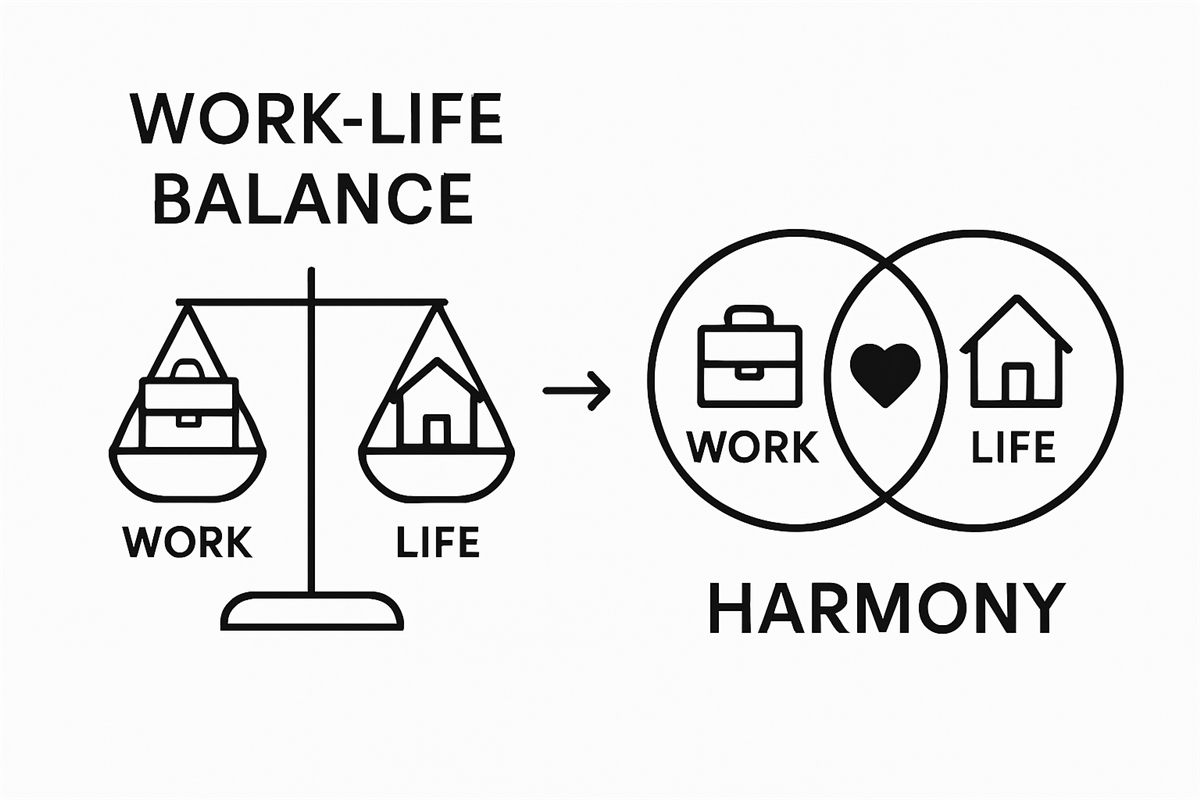
While work-life balance and work-life harmony might sound similar, they represent fundamentally different approaches to managing professional and personal responsibilities. Understanding their nuanced differences is crucial for families seeking more integrated and meaningful life experiences.
To clarify the difference between work-life balance and work-life harmony, the following table compares their key characteristics side by side.
| Aspect | Work-Life Balance | Work-Life Harmony |
|---|---|---|
| Approach | Rigid separation of work and personal life | Flexible integration of work and personal responsibilities |
| Focus | Equal time allocation between domains | Quality interactions and meaningful engagement |
| Stress Impact | Higher stress from strict division | Lower stress due to adaptability and personalization |
| Model Philosophy | Compartmentalization | Synergy and mutual support between roles |
| Adaptation to Life Changes | Difficult to adapt to shifting needs | Encourages ongoing adaptation and customization |
| Energy and Engagement | Emphasizes dividing time and energy | Emphasizes the flow of energy and engagement across domains |
The Traditional Balance Model
Traditional work-life balance operates on a rigid, compartmentalized model where work and personal life are seen as separate domains that must be carefully divided. According to research from the Association for Psychological Science, this approach often creates a sense of constant competition between professional and personal commitments.
Key limitations of the traditional balance model include:
- Strict time allocation between work and personal activities
- Increased stress from trying to maintain perfect separation
- Fragmented energy and attention
Embracing Work-Life Harmony
Work-life harmony represents a more fluid and adaptive approach. Our guide on creating a work-at-home schedule illustrates how families can implement this more integrated perspective.
Instead of viewing work and personal life as competing forces, work-life harmony recognizes these domains as interconnected and mutually supportive. This approach allows individuals to design flexible strategies that align with their unique family dynamics, personal goals, and professional aspirations.
The core philosophy of work-life harmony emphasizes integration over separation, encouraging families to create synergistic experiences where professional achievements and personal fulfillment can coexist and even enhance each other. By shifting from a rigid balancing act to a more holistic, adaptive model, families can reduce stress, increase productivity, and cultivate a more meaningful overall life experience.
Key Concepts and Principles of Work-Life Harmony
Work-life harmony is built upon foundational principles that transform how families approach their professional and personal experiences. Unlike traditional models, this approach recognizes the intricate interconnections between different life domains and seeks to create a more integrated, flexible lifestyle.
Core Philosophical Foundations
Research from Brigham Young University’s Marriott School demonstrates that work-life harmony is fundamentally about creating control and flexibility in how individuals manage their time and responsibilities. The approach shifts from rigid time management to a more dynamic, personalized strategy.
Key philosophical principles include:
- Holistic integration of professional and personal goals
- Individual adaptability as a central strategy
- Mutual support between work and family domains
Practical Implementation Strategies
Our guide on creating a work-at-home schedule offers insights into translating these principles into actionable strategies. Work-life harmony is not about achieving perfect equilibrium, but about creating a responsive system that allows for seamless transitions and mutual reinforcement between different life roles.
Practical implementation involves recognizing that energy and engagement matter more than strict time allocation. Families practicing work-life harmony focus on quality of interactions, strategic prioritization, and creating environments that support both professional growth and personal well-being. This means understanding that productivity is not about hours worked, but about meaningful contributions across all life domains.
Real-World Applications of Work-Life Harmony in Family Life
Work-life harmony transforms theoretical concepts into tangible strategies that families can implement in their daily lives. By embracing flexible approaches, families can create more dynamic, responsive environments that support both professional achievements and personal well-being.
Flexible Work Arrangements
Research from workplace flexibility studies demonstrates that practical implementation of work-life harmony involves strategic approaches to managing professional responsibilities. Flexible work options provide families with practical tools to integrate work and personal life more seamlessly.
Key flexible work arrangements include:
- Telecommuting options
- Flexible start and end times
- Compressed work weeks
- Part-time scheduling
Technology-Enabled Integration
Our guide on creating a work-at-home schedule highlights how technology enables more integrated work-life experiences. Digital tools and communication platforms allow families to maintain professional connectivity while remaining present for personal commitments.
Modern families are leveraging technology to create boundary-less work environments. This means parents can attend virtual meetings while managing household responsibilities, students can complete academic work during flexible hours, and professionals can adjust their schedules to accommodate family needs without sacrificing professional performance.
Ultimately, real-world work-life harmony is about creating personalized systems that recognize the unique dynamics of each family. By prioritizing flexibility, communication, and intentional integration, families can design lifestyles that support both professional success and personal fulfillment.

Bring Work-Life Harmony Home With Simple Solutions
Are you struggling to find real integration between your work and family life? The journey toward true work-life harmony means more than splitting your time—it means creating flexibility, better energy, and meaningful connections. If managing family routines, decluttering your space, or building systems that truly support your goals still feels overwhelming, you are not alone. Many families face the same challenge of balancing professional demands with personal well-being. Discover tools and solutions tailored for busy families like yours and begin transforming everyday chaos into calm.
Start your work-life harmony journey right now. Explore proven organization hacks, productivity tips, and home management resources at itsasouthernlifeyall.com. Ready for real-life change? See this work-at-home schedule guide to create a plan that fits your family’s needs. Take your first step to a more peaceful, efficient lifestyle—visit itsasouthernlifeyall.com today before another busy week gets in the way.
Frequently Asked Questions
What is work-life harmony?
Work-life harmony refers to a dynamic approach to managing professional and personal responsibilities, where work and personal life are seen as interconnected and mutually supportive rather than competing priorities.
How does work-life harmony differ from work-life balance?
Work-life harmony emphasizes integration and flexibility between personal and professional life, while work-life balance typically involves a rigid separation of time and energy between these domains.
What are some benefits of achieving work-life harmony for families?
Families that practice work-life harmony experience reduced stress, improved emotional well-being, better communication, and a more supportive home environment, leading to overall enhanced family dynamics.
How can families implement work-life harmony in their daily lives?
Families can implement work-life harmony by adopting flexible work arrangements, utilizing technology for better integration of responsibilities, and focusing on quality interactions rather than strict time allocation.
Recommended
- Tips for Creating a Bullet-Proof Work at Home Mom Schedule
- 20 Time-Tested Family Hacks to Break the Paycheck-to-Paycheck Cycle (Strategies That Actually Work with Kids)
- How to Use Inspirational Quotes to Build Stronger Family Values
- How to Host an Amazing Family Party for 30 People Without Breaking Your Budget
Ready to find your own rhythm? The Home Rhythm Planner helps you shape a week that fits your family instead of the other way around.