Raising Confident Kids: Practical Strategies for Resilience
Every parent has watched their child hesitate at the playground, unsure whether to climb higher or stick with what feels safe. Moments like these matter because they shape your child’s ability to face challenges with real confidence and to recover from disappointment. Building confidence and resilience is not about expensive programs or constant praise—it’s about supportive relationships and skill-building in everyday life. This guide offers practical solutions you can fit into your busy American household so your child grows into someone who believes in their own abilities and bounces back when life gets tough.
Table of Contents
- Defining Confidence And Resilience In Children
- Factors Shaping Resilience And Self-Belief
- Emotional Regulation And Problem-Solving At Home
- Fostering Independence And Growth Mindsets
- Parenting Mistakes That Undermine Confidence
- Real-Life Tips For Busy North American Families
Key Takeaways
| Point | Details |
|---|---|
| Confidence builds through competence. | Encourage children to tackle tasks independently to foster a belief in their abilities. |
| Resilience is developed through challenges. | Allow children to face manageable difficulties to learn problem-solving skills and bounce back from setbacks. |
| Parental support shapes beliefs. | Be present and supportive, helping children reframe negative thoughts and enhancing their self-efficacy. |
| Routine and realistic expectations matter. | Establish consistent routines and set achievable goals to create a stable environment that promotes confidence and resilience. |
Defining Confidence and Resilience in Children
Let’s start with what these words actually mean, because they’re not quite what you might think. Confidence in kids isn’t about being loud or always knowing the right answer. It’s the quiet belief that they can handle what comes their way. It’s your 7-year-old trying the monkey bars again after falling last week, or your 5-year-old raising their hand in class even though their voice shakes a little. Confidence grows from competence, which means actually being able to do things successfully. When your child learns to tie their shoes, ride a bike without training wheels, or solve a problem on their own, that experience builds real confidence. It’s not fake self-esteem or empty praise. It’s the genuine feeling that comes from handling a situation effectively.
Resilience is different, though it works hand-in-hand with confidence. Think of resilience as your child’s ability to bounce back from tough moments. It’s the skill that helps them navigate disappointment, failure, or frustration without falling apart. Resilience involves competence, confidence, and connection according to the American Academy of Pediatrics. Your child might strike out in baseball and feel disappointed, but resilience is what lets them step up to the plate again next game. It’s not about never feeling sad or frustrated. It’s about having the tools and support to move through those feelings and keep going. Harvard’s research on child development shows that resilience can be strengthened through supportive relationships and skill-building at any age. This is genuinely good news for you as a parent. You’re not working with a fixed trait here. You’re actively building something your child will use for their entire life.
Here’s what makes this practical for your busy household: these skills develop through everyday moments, not special programs or expensive classes. When your 4-year-old tries to zip their own coat and gets frustrated, that’s a confidence-building opportunity. When your 9-year-old doesn’t make the travel team and you help them problem-solve what comes next, that’s resilience in action. Both confidence and resilience need three things to grow. First, they need competence, which comes from practice and real accomplishment. Second, they need your presence and belief in them, which creates security. Third, they need to experience manageable challenges that they overcome. Not crushing failures. Not constant safety nets. Just the right amount of stretch.
The beautiful part is that these aren’t separate skills you build in isolation. When your child feels confident, they’re more likely to try things that build resilience. When they bounce back from setbacks with your support, their confidence grows. They feed each other. Your job as a parent is to create the conditions where both can develop naturally, which honestly looks a lot like letting your kids struggle a little bit, believing in them even when they doubt themselves, and celebrating the effort, not just the outcome.
Here’s how confidence and resilience interact as children develop:
| Attribute | Confidence | Resilience |
|---|---|---|
| Definition | Belief in handling challenges | Ability to recover from setbacks |
| Growth Source | Mastery of real skills, practice | Coping with adversity, support systems |
| Parent’s Role | Encourage independence, celebrate effort | Model healthy coping, allow manageable risks |
| Result | Willingness to try new things | Persistence after disappointment |
Pro tip: _Start noticing moments each day when your child handles something independently, then name it out loud: “I saw you try that puzzle three different ways before you figured it out.” This simple observation teaches your child to recognize their own competence, which is the real foundation of confidence.
Factors Shaping Resilience and Self-Belief
Raising a resilient kid isn’t about protecting them from every bump and bruise. It’s actually about understanding what builds their ability to handle life’s real challenges. Think of resilience like a muscle that grows stronger when it’s used. Your child’s resilience doesn’t develop in a vacuum. It’s shaped by a combination of internal traits and external support systems that work together. On the inside, your child needs problem-solving skills and motivation to keep going when things get hard. These aren’t things they’re born with fully formed. They develop as your child encounters situations where they have to figure things out. On the outside, resilience is influenced by supportive relationships with parents, caring adults, and communities. Research from the American Psychological Association shows that these external factors are just as important as internal traits. Your presence, your belief in them, and the people around them literally shape their brain’s ability to bounce back from tough moments.
Here’s something that might shift how you think about your role: your child’s beliefs about what happens to them directly affect how they respond. If your 8-year-old loses a soccer game and thinks “I’m just bad at sports,” that belief shapes their motivation and emotions. But if they think “I made some mistakes today, and I can practice to get better,” that belief leads to different behavior entirely. This is where teaching children to identify and challenge negative thoughts becomes powerful. The Penn Resilience Program has proven that when kids learn to recognize unhelpful thinking patterns and replace them with more realistic ones, they develop better coping skills and stronger self-efficacy. Self-efficacy is that quiet confidence that they can actually influence what happens in their lives. It’s not magical thinking. It’s the realistic understanding that effort and strategy matter. When your child tries something difficult and you help them see what they did well, even in failure, you’re directly building this belief.
Let’s get specific about what this looks like in your home. The factors that shape resilience fall into a few clear categories. First, there’s the relationship factor. Does your child feel secure with you? Do they have other adults who show up for them? Are they part of a community where they belong? These connections are the foundation. Second, there’s the skill factor. Can your child identify their own emotions? Do they know what to do when they’re frustrated or scared? Can they ask for help? These are taught and practiced, not inherited. Third, there’s the thinking factor. Does your child blame themselves for everything, or can they see situations more realistically? Do they believe change is possible? These thought patterns are learned, often from watching how you respond to your own challenges. Finally, there’s the opportunity factor. Does your child get chances to handle age-appropriate challenges and experience success? Or are they sheltered from anything difficult?
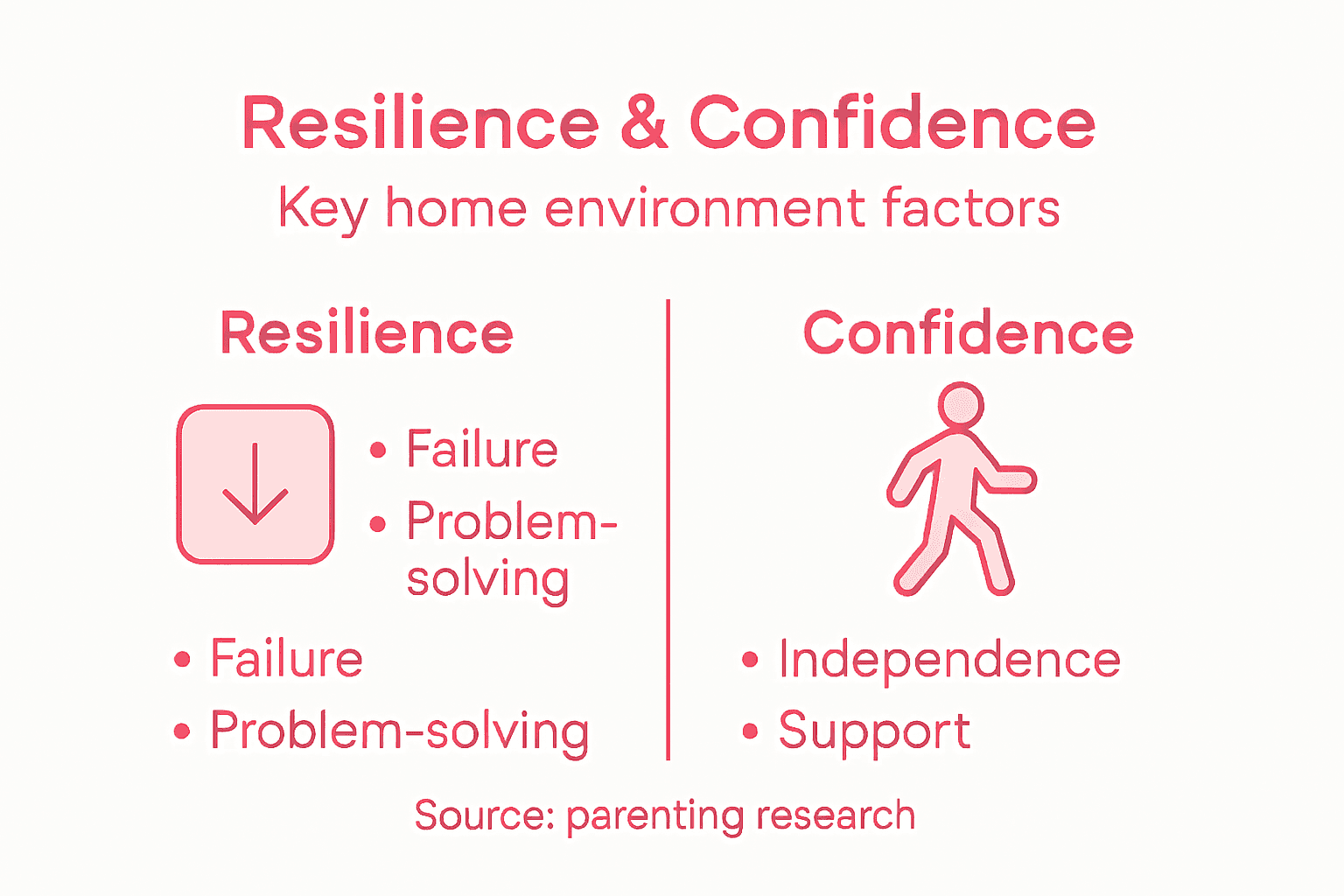
The good news is that every single one of these factors is within your influence. You can’t control everything in your child’s world, but you can control your own response to their struggles. You can create routines that show them they matter and they’re safe. You can teach them problem-solving steps. You can help them recognize when their thoughts are working against them. You can intentionally put them in situations where they stretch a little and discover they’re more capable than they thought. Resilience isn’t something that happens to your child. It’s something you build together, one small interaction at a time.
Key factors that shape a child’s resilience and self-belief:
| Factor | Example at Home | Parental Influence |
|---|---|---|
| Relationship | Family routines, warm connections | Provide support and consistency |
| Skill-Building | Naming emotions, solving problems | Teach steps and allow practice |
| Thought Patterns | Realistic self-talk after setbacks | Help reframe negative thinking |
| Opportunity | Facing challenges, learning from errors | Allow age-appropriate risks |
Pro tip: _When your child faces disappointment, resist the urge to fix it immediately, and instead ask “What could you try differently next time?” This one question teaches them that setbacks aren’t permanent and that they have agency in solving their own problems.
Emotional Regulation and Problem-Solving at Home
Your kitchen is probably not the place where you’re thinking about teaching life skills, but it might be one of the best classrooms you have. That’s where emotional regulation and problem-solving actually happen for most families. These two skills are the backbone of confidence. A child who can’t manage their emotions gets stuck in anger or frustration. A child who can’t solve problems feels helpless. But a child who can do both? That’s a child who believes they can handle what comes their way. Modeling healthy coping skills and helping children face failures is how the Child Mind Institute says we build confident kids. You’re not born knowing how to calm yourself down or work through a tough situation. You learn it by watching someone you trust do it, then practicing it yourself in safe moments.
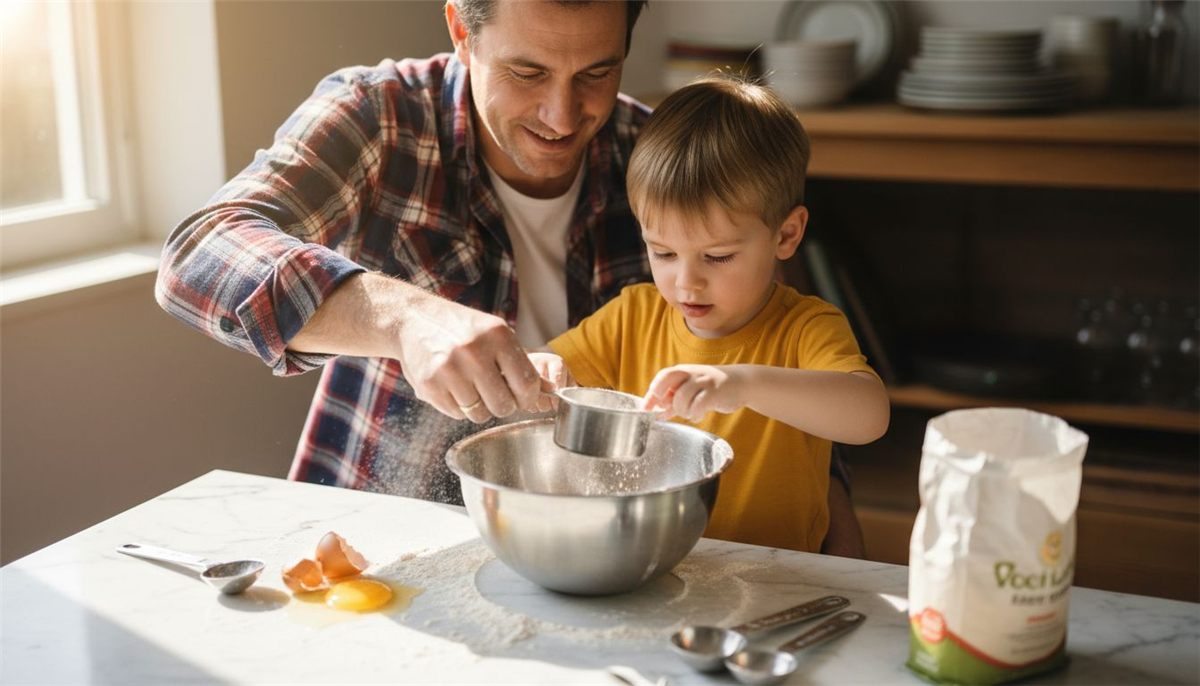
Let’s talk about emotional regulation first, because honestly, this is where most of us get stuck. Your 6-year-old loses their tablet and melts down completely. Your 9-year-old gets a bad grade and shuts down emotionally. These aren’t character flaws. They’re moments where they haven’t yet developed the ability to notice and manage their own feelings. Teaching kids to recognize and express their feelings is how you build this skill. Start small. When your child is upset, instead of trying to fix it immediately, pause and help them name what they’re feeling. “You look really frustrated right now.” “I think you might be feeling disappointed.” This simple act of naming emotions helps their brain recognize the feeling and start to manage it. Over time, your child internalizes this. They start to notice “I’m getting frustrated” before they explode. That’s emotional regulation developing.
Now, pair that with problem-solving, and you’ve got something powerful. When your child faces a challenge, your instinct is probably to jump in and solve it for them. I get it. It’s faster. But that robs them of the chance to discover they can actually figure things out. Instead, try a different approach. When your 7-year-old can’t figure out how to share the toy, resist the urge to referee. Ask questions instead. “What’s the problem right now?” “What could you try?” “What happened when you tried that?” These questions guide them through a problem-solving process without you doing the thinking. It’s slower in the moment, but it builds actual capability. Your child learns that challenges aren’t permanent roadblocks. They’re situations to work through.
Here’s what this looks like in practice. Your 8-year-old comes home upset because they weren’t picked first for dodgeball. Step one: help them regulate. “That sounds disappointing. Tell me what happened.” Let them vent. Listen. Don’t minimize. Step two: help them problem-solve. “What could you do differently next time?” “Is there someone on the team who’s good at dodgeball that you could watch and learn from?” “Do you want to practice together this weekend?” You’re not making the disappointment disappear. You’re teaching them that disappointment is temporary and that they have options. This is how resilience actually builds.
The beautiful thing about doing this at home is that you get to practice with low stakes. Sharing toys with a sibling is a much safer place to learn problem-solving than peer conflicts at school. Expressing frustration about homework is a better test run than managing anxiety about a performance. You’re creating a safe laboratory where your child can develop these skills before they really need them.
Pro tip: _Create a simple problem-solving chart you can reference together: What is the problem? What are three possible solutions? What might happen with each one? Pick one and try it. Did it work? This visual system helps kids slow down when emotions are high and remember the steps they can take.
Fostering Independence and Growth Mindsets
There’s a moment every parent faces where you realize your kid needs to do something without you stepping in. Maybe it’s your 5-year-old wanting to pour their own juice, or your 10-year-old insisting they can handle their own locker at school. Your first instinct might be to help so it goes smoothly. But here’s what actually builds confidence: letting them try, even when it’s messy or takes longer. Independence isn’t about abandoning your child. It’s about creating space for them to learn they can actually do things. When you consistently step in and fix everything, your child gets a subtle message: you don’t think they’re capable. The opposite is true when you let them struggle a bit and figure things out. Fostering independence involves providing balanced support that encourages decision-making within safe boundaries, according to the Child Mind Institute. You’re not throwing them into the deep end. You’re wading with them, but you’re letting them discover they can move through the water.
Now let’s talk about growth mindset, because this is the mental framework that makes everything else possible. A child with a fixed mindset believes their abilities are locked in place. They’re either good at math or they’re not. They’re either athletic or they’re clumsy. They’re either creative or they’re not. This thinking makes failure feel permanent and threatening. A child with a growth mindset sees abilities as something that develops through effort. They believe that struggle means their brain is learning. When they fail, it’s not a judgment on who they are. It’s information about what they need to practice. The difference between these two mindsets is massive. Encouraging children to view challenges as opportunities to learn rather than threats supports persistence and self-belief, as Harvard Health researchers explain. You’re literally rewiring how your child interprets difficulty.
So how do you build both? Start with the language you use. When your child comes home frustrated because something was hard, resist saying “You’re so smart, you’ll get it.” Instead try “You worked really hard on that. What part was tricky? What could you try differently?” When they fail at something, don’t minimize it with “It’s okay, you’ll do better next time.” Instead ask “What did you learn from that? What would you do differently?” These tiny shifts in language teach your child that effort matters and that failure is data, not defeat. Create space for appropriate risk-taking too. Let your 7-year-old decide whether to try out for the school play, even though they might not make it. Let your 9-year-old choose their own club or sport, even if they might discover it’s not for them. These choices, and the occasional disappointments that come with them, teach your child that they can handle uncertainty. They learn to assess risk, make decisions, and live with the consequences. That’s resilience building itself.
Here’s what this looks like in a busy household. Your 8-year-old wants to make lunch for themselves. Instead of letting them make a sandwich that falls apart, or doing it yourself, you stand back. You ask questions. “What do you need?” “How will you keep it from getting too messy?” “What will you do if something doesn’t work the way you expected?” Maybe the sandwich is uneven. Maybe they get peanut butter on the counter. But they did it. Your child just learned they can feed themselves. That’s not a small thing. That’s independence building. That’s a piece of confidence they’ll carry forward. When you do this consistently, your child stops waiting for your approval before trying. They start believing they’re capable of figuring things out.
Pro tip: _When your child faces a challenge, pause before helping and ask “What’s one thing you could try first?” instead of offering solutions immediately. This single question teaches them that they have agency and that problems are solvable with effort and creativity.
Parenting Mistakes That Undermine Confidence
Let’s be honest about something. You’re probably making mistakes right now that are actually working against your child’s confidence, and you don’t even realize it. The thing is, most of these mistakes come from a good place. You want to protect your child. You want them to feel good about themselves. You want to help. But sometimes the things we do with the best intentions actually prevent our kids from developing the skills and beliefs they need to feel truly confident. The first big mistake is overprotection. When you step in and solve every problem before your child even tries, you’re sending a message. You’re saying “I don’t think you can handle this.” Your child internalizes that. They stop believing in their own capability. Overprotection and excessive praise can undermine children’s confidence by limiting opportunities to learn from mistakes, according to the Child Mind Institute. This doesn’t mean you throw your kid into difficult situations unprepared. It means you let them struggle a little. You let them fail at things that matter less so they build the resilience to handle things that matter more.
The second mistake is what looks innocent but is actually damaging: generic praise. You’ve probably done this. Your child shows you a drawing and you say “That’s amazing. You’re so talented.” Sounds good, right? Wrong. Generic praise teaches your child that the outcome is what matters, not the effort. It also makes them nervous about trying things that might not turn out amazing. Overpraising without specificity can weaken confidence because it doesn’t teach children what actually went well. Instead, try this: “I see you used three different colors. Tell me about your choices.” Or “You kept trying even when that part didn’t work the first time.” This feedback teaches them that effort, strategy, and persistence are what matter. It also shows them you actually paid attention to what they did, not just whether it turned out perfect.
The third mistake is rescuing them from consequences. Your child forgets their homework. Your instinct is to run it to school so they don’t get in trouble. Your child is unkind to a friend and feels bad about it. Your instinct is to smooth it over so they don’t experience the discomfort. But here’s what happens when you do this: your child never learns that their choices matter. They never experience the natural consequence that teaches them to change their behavior next time. They also never get to experience recovery, which is actually a huge confidence builder. When your child makes a mistake and then fixes it or learns from it, that’s real confidence. That’s them discovering they can handle hard things. You’re not being mean by allowing consequences. You’re being smart.
The fourth mistake is comparing your child to others. This one kills confidence fast. “Your brother was reading at your age” or “Look how well Emma did on that test.” Every time you do this, your child gets the message that they’re not quite good enough. They start measuring themselves against others instead of noticing their own growth. They become motivated by fear of failure rather than joy in learning.
Here’s the uncomfortable truth: sometimes building your child’s confidence requires you to tolerate their discomfort. It requires you to watch them struggle and not jump in. It requires you to let them experience disappointment so they learn they can survive it. It requires you to give feedback that’s honest but kind, not just positive. When you do these things consistently, your child develops a different kind of confidence. Not the fragile kind that depends on everything going perfectly. The real kind that comes from knowing they can handle challenges, learn from mistakes, and keep going. That’s what actually sticks.
Pro tip: _Before you jump in to help or praise, pause and ask yourself: Am I helping them feel capable, or am I helping them avoid discomfort? If it’s the second one, step back and let them try.
Real-Life Tips for Busy North American Families
Let’s get real for a second. You’re juggling work, household tasks, maybe multiple kids with different schedules, and you’re supposed to be building confidence and resilience too. The good news is that you don’t need fancy programs or extra time you don’t have. The real work happens in the small moments scattered throughout your day. Start with routines. Your brain is already tired from a hundred decisions. When you create predictable routines, you free up mental energy and give your child something stable to count on. That consistency itself builds confidence. Maybe breakfast is always at the same time. Maybe bedtime includes a specific wind-down ritual. Maybe Wednesday nights are family game night, no screens, just connection. These aren’t big productions. They’re simple patterns that tell your child “I show up for you, and you can count on me.” Creating routines and modeling calm behavior helps busy families support their children’s confidence, according to the Child Mind Institute. When your child watches you stay calm during chaos, they learn that problems are manageable. When they experience your consistent presence, they believe they matter to you.
Next, set realistic expectations. This one is huge for busy families because you’re already stretched thin. You can’t be the parent who shows up to every activity, bakes elaborate snacks, and maintains a Pinterest-perfect home while also building resilience. So don’t try. Pick what matters most to your family and do that well. Maybe it’s sitting together at dinner three times a week. Maybe it’s one-on-one time with each child weekly, even if it’s just 20 minutes. Maybe it’s being present during homework without doing it for them. These focused efforts matter more than scattered attempts at perfection. Your child doesn’t need you to be perfect. They need you to be present and intentional about what you’re doing together. Prioritizing warm, responsive relationships and fostering skill-building moments are foundational to resilience development, as Harvard researchers emphasize. That responsiveness doesn’t mean saying yes to everything. It means when you’re with your child, you’re actually with them.
Here’s a practical framework that fits into busy life. When your child faces a challenge, use these steps without making it complicated. First, acknowledge their feeling: “That’s frustrating.” Two sentences max. Second, step back and let them try: “What could you do?” Third, resist the urge to coach them toward your solution. Let them stumble a bit. Fourth, celebrate effort, not outcome: “You kept trying even though it was hard.” That’s it. You’re not adding anything to your plate. You’re just shifting how you respond to moments that are already happening. Your child is going to face problems anyway. You’re just guiding them through the process instead of solving it for them.
One more thing that actually saves time: let some things go. Your 6-year-old’s outfit is mismatched. Your 9-year-old’s backpack is a disaster. Your 7-year-old didn’t finish their vegetables. These are not emergencies. These are opportunities for your child to learn that the world doesn’t end when things aren’t perfect. And they’re opportunities for you to stop fighting battles that don’t matter. Save your energy for the things that actually count. This is also how you model that doing your best doesn’t mean being perfect, which is exactly the message confident kids need to hear.
Pro tip: _Pick one small thing this week that you’ll stop doing for your child, then replace it with asking one question instead. If you usually pick out their clothes, ask what they want to wear. If you usually pack their lunch, ask what sounds good. This one shift teaches them to trust their own judgment without adding work to your day.
Build a Resilient and Confident Home Environment Today
Raising confident kids who bounce back from challenges is about creating supportive routines and encouraging independence in everyday life. This article highlights key struggles like overprotection and managing setbacks that busy families face when developing resilience and self-belief in children. If you are looking for practical solutions to bring calm, order, and intentionality into your home while fostering your child’s growth mindset and problem-solving skills, you are in the right place.
Discover proven organization hacks and simple living strategies that help you set realistic expectations and free up time for meaningful moments with your kids. From easy time management tools to home management systems designed for busy American families, our resources at It’s A Southern Life Y’all empower you to stop feeling overwhelmed and start building that confident, resilient family culture now.
Frequently Asked Questions
How can I build my child’s confidence at home?
Encourage your child to try new things, celebrate their efforts, and help them reflect on their successes. Focus on providing opportunities for competence through practice and mastery.
What are some ways to help my child develop resilience?
Support your child by allowing them to face manageable challenges, teach them problem-solving skills, and encourage them to express their feelings. Highlight their ability to bounce back from setbacks by guiding them through the process.
Why is overpraising harmful to my child’s confidence?
Overpraising can lead children to rely on external validation rather than developing a genuine understanding of their capabilities. It’s more effective to provide specific feedback that acknowledges effort and improvement, rather than generic praise.
How can family routines contribute to my child’s emotional growth?
Consistent family routines create a sense of stability and security, allowing children to feel safe. This supportive environment helps them build confidence and resilience as they encounter and navigate challenges together.
Recommended
- The Top 5 Ways To Save Money While Raising Kids in 2024 – It’s a Southern Life Ya’ll
- 7 Ways to Handle What to Do if Your Teen Refuses to Take Responsibility – It’s a Southern Life Ya’ll
- How to Use Inspirational Quotes to Build Stronger Family Values – It’s a Southern Life Ya’ll
- Understanding Productivity Tips for Parents Guide – It’s a Southern Life Ya’ll
Want a little more help with this? I made a free Age-by-Age Chore Chart that pairs right up with this post — y’all can grab it over on my Free Resources page.