

How to Track Family Expenses: A Simple Guide for 2025
Tracking family expenses can feel overwhelming, especially when most families struggle to keep tabs on where their money actually goes each month. But the thing that surprises most people is that something as simple as a consistent weekly check-in can lead to saving hundreds of dollars without any drastic lifestyle changes. The real breakthrough happens when every family member gets involved and turns budgeting into a team effort instead of a solo chore.
The short answer: Gather your statements, set a budget with real goals, then track spending daily and review it once a month. The step most families skip is the review, and that is exactly where the savings show up. A short weekly check-in with everybody at the table beats any app you can download.
Table of Contents
- Step 1: Gather Financial Documents And Tools
- Step 2: Set A Family Budget And Financial Goals
- Step 3: Track Daily Expenses And Income
- Step 4: Categorize Expenses For Better Insights
- Step 5: Review Monthly Expenses And Adjust Budget
- Step 6: Share Results With Family And Plan Ahead
Quick Summary
| Key Point | Explanation |
|---|---|
| 1. Gather all financial documents first | Collect bank statements, pay stubs, and bills to understand your financial flow. |
| 2. Set a family budget together | Involve all adults to create a budget that aligns with everyone’s goals and spending habits. |
| 3. Track daily expenses consistently | Record every transaction to gain clarity on spending patterns and financial health. |
| 4. Categorize expenses for insights | Develop specific categories to analyze spending behavior and identify areas for improvement. |
| 5. Review and adjust your budget monthly | Schedule regular meetings to discuss financial progress and adapt your budget as needed. |
Step 1: Gather Financial Documents and Tools
Tracking your family expenses starts with collecting all the necessary paperwork and digital tools that will give you a complete picture of your financial landscape. Think of this step as preparing for a financial treasure hunt where you’ll uncover insights about your spending habits.
Begin by gathering critical financial documents that reveal your current money flow. You’ll want to collect recent bank statements, credit card bills, pay stubs, tax returns, and any recurring bill statements. These documents will serve as your financial roadmap, helping you understand where your money comes from and where it goes. Digital banking apps and online account portals can make this process much easier, allowing you to download statements with just a few clicks.
Next, select your tracking method. While some families prefer traditional spreadsheets, modern technology offers more streamlined solutions. Explore budgeting tools that can simplify your financial tracking to make the process smoother. Consider using personal finance apps or software that can automatically categorize expenses and provide visual representations of your spending patterns.
The tools you choose should match your comfort level with technology and your specific family needs. Some excellent options include:
- Spreadsheet software like Microsoft Excel or Google Sheets
- Budgeting apps such as YNAB or Mint
- Dedicated expense tracking applications
- Digital banking tools with built-in expense categorization
As you gather your documents and select your tracking method, be thorough but not overwhelmed. The goal is to create a system that feels manageable and provides clear insights into your family’s financial health. Take your time organizing documents digitally or in a physical folder, ensuring everything is accessible and up to date. This preparation sets a strong foundation for effective expense tracking in the coming months.
Here is a table summarizing common tools and methods for tracking family expenses, along with their main benefits to help you choose the best fit for your needs.
| Tool or Method | Type | Key Benefit |
|---|---|---|
| Spreadsheet (Excel, Sheets) | Manual Tracking | Highly customizable and flexible |
| Budgeting App (YNAB, Mint) | Digital App | Automates tracking and categorization |
| Dedicated Expense Tracker | Digital App | Visualizes spending and trends automatically |
| Digital Banking Portal | Online Banking | Quick access to statements and expense overviews |
| Physical Folder/Journal | Paper/Manual | Intuitive and accessible for all tech levels |
By the end of this step, you should have a comprehensive collection of financial documents and a chosen tracking method that feels intuitive and easy to use. Remember, the best system is the one you’ll actually stick with consistently.
Step 2: Set a Family Budget and Financial Goals
Setting a family budget and establishing clear financial goals transforms your money management from reactive to proactive. This crucial step helps you create a roadmap that guides your family’s financial decisions and turns your money into a tool for achieving your dreams.
Start by having an open and honest family conversation about your financial situation and goals. Involve all adult family members in this discussion to ensure everyone understands the plan and feels invested in its success. Learn how to start a budget that works for your unique family situation by breaking down your income, essential expenses, and potential savings targets.
Calculate your total monthly household income after taxes. This includes salaries, freelance work, investments, and any consistent additional revenue streams. Next, categorize your expenses into essential and non-essential spending. Essential expenses include housing, utilities, groceries, transportation, and healthcare. Non-essential expenses cover entertainment, dining out, subscriptions, and discretionary purchases.
When setting financial goals, think both short-term and long-term. Short-term goals might include building a small emergency fund, paying off a specific credit card, or saving for a family vacation. Long-term goals could involve saving for children’s education, retirement planning, or purchasing a home. Be realistic and specific about these goals, attaching clear dollar amounts and target dates.

A practical budgeting strategy many families find effective is the 50/30/20 rule:
- 50% of income for needs (essential expenses)
- 30% for wants (non-essential spending)
- 20% for savings and debt repayment
Remember that budgeting is an ongoing process. Plan to review and adjust your budget monthly, discussing what worked, what didn’t, and how you can improve. Flexibility is key – life changes, and so should your budget. By the end of this step, you should have a clear, agreed-upon financial plan that reflects your family’s current situation and future aspirations.
Step 3: Track Daily Expenses and Income
Tracking daily expenses and income is the heartbeat of effective family financial management. This step transforms your budget from a theoretical plan into a real-world tracking system that provides crystal-clear insights into your family’s financial health. Discover comprehensive strategies for understanding your family’s budget tracking to make this process smoother and more intuitive.
Consistency is the key to successful expense tracking. Choose a method that feels natural and fits seamlessly into your daily routine. Some families prefer digital apps that automatically categorize expenses, while others might enjoy the tactile experience of manual journaling. The most important factor is selecting a system you’ll actually use every single day.
Start by capturing every single financial transaction, no matter how small. This means recording cash purchases, digital payments, automatic bill payments, and even tiny expenses like morning coffee or school lunch money. Small purchases add up quickly, and tracking them provides a comprehensive view of your spending patterns. Consider using a dedicated notebook, spreadsheet, or mobile app that allows instant expense logging right when the transaction occurs.
Create clear expense categories that match your family’s unique spending profile. Typical categories might include:
- Groceries
- Utilities
- Transportation
- Entertainment
- Personal care
- Children’s expenses
Make it a family activity by scheduling a weekly money check-in. During this time, gather all receipts, review digital transactions, and update your tracking system together. This not only ensures accuracy but also helps teach financial responsibility to children and keeps all family members aligned on financial goals.
Technology can be a powerful ally in this process. Many banking apps and budgeting tools offer automatic expense tracking and categorization. These tools can pull transactions directly from your bank accounts, credit cards, and digital payment platforms, reducing manual entry and providing instant visual representations of your spending.
By the end of this step, you should have a reliable, up-to-date record of all family income and expenses.
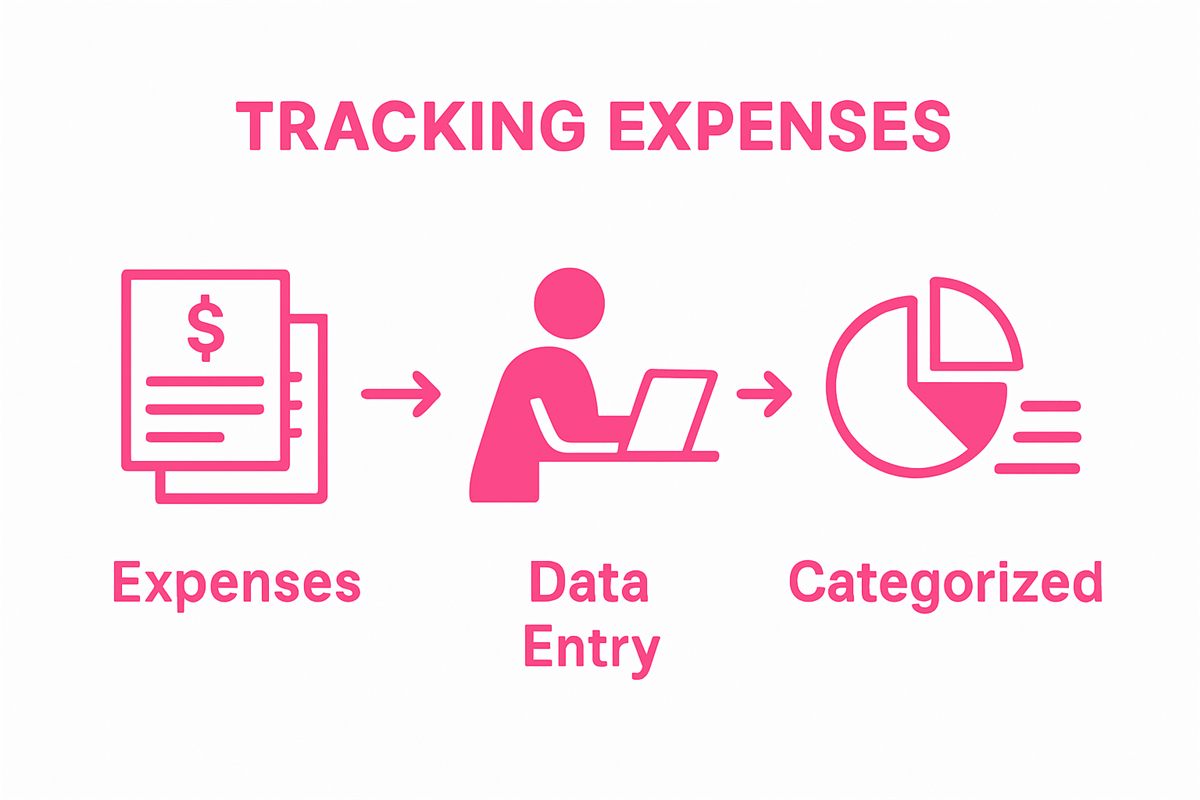 Your tracking system should feel like a natural part of your daily routine, providing clear insights into your financial behavior without becoming a burdensome chore.
Step 4: Categorize Expenses for Better Insights
Categorizing expenses is like creating a financial roadmap that helps you understand exactly where your family’s money is flowing. This step transforms raw numbers into meaningful insights that can guide smarter spending decisions. Learn how to feel good about your spending and saving strategies to make this process more empowering and less stressful.
Effective expense categorization goes beyond basic sorting. It’s about creating a system that tells a story about your family’s financial behavior. Begin by reviewing your tracked expenses and creating comprehensive categories that reflect your unique family spending patterns. While standard categories like groceries and utilities are important, don’t be afraid to get specific with subcategories that provide deeper insights.
Consider developing detailed expense categories that capture the nuanced spending of your household. For instance, instead of a broad “Food” category, break it down into subcategories like “Groceries,” “Dining Out,” “School Lunches,” and “Meal Delivery Services.” This level of detail helps you understand not just how much you’re spending, but where precisely your money is going.
Your core expense categories might include:
- Housing (rent/mortgage, utilities, maintenance)
- Transportation (car payments, fuel, public transit)
- Food (groceries, restaurants, takeout)
- Healthcare (insurance, medications, doctor visits)
- Personal (clothing, entertainment, subscriptions)
- Education (school supplies, tuition, books)
- Savings and Debt (emergency fund, loan payments)
Technology can be a powerful ally in this process. Many budgeting apps and financial tracking tools offer automatic categorization, using machine learning to sort expenses based on vendor and transaction type. These tools can save time and provide visual representations of your spending, making it easier to spot patterns and potential areas for reduction.
Regularly review and adjust your categories. What works perfectly one month might need tweaking the next. Some expenses might shift between categories, and your family’s spending needs will evolve. A quarterly review allows you to refine your categorization system, ensuring it remains accurate and useful.
This table outlines the main categories of family expenses, with typical examples and notes to help organize your spending for more accurate tracking.
| Category | Example Expenses | Notes |
|---|---|---|
| Housing | Rent, mortgage, utilities | Includes maintenance and repairs |
| Transportation | Car payment, gas, transit | Fuel, insurance, public transport |
| Food | Groceries, dining out | Include meal delivery, lunches |
| Healthcare | Insurance, medications | Doctor visits, prescriptions |
| Personal | Clothing, entertainment | Subscriptions, personal care |
| Education | School supplies, tuition | Books, fees, extracurriculars |
| Savings & Debt | Emergency fund, loans | Debt repayment, investment |
By the end of this step, you should have a clear, detailed categorization system that provides genuine insights into your family’s financial habits. These categories will become the foundation for making informed decisions about spending, saving, and achieving your financial goals.

Step 5: Review Monthly Expenses and Adjust Budget
Monthly budget review is the strategic checkpoint where your financial planning meets real-world spending. This crucial step transforms your budget from a static document into a dynamic tool that adapts to your family’s changing needs. Explore innovative budgeting methods that can help you manage your finances more effectively and keep your financial goals on track.
Schedule a consistent monthly family financial meeting to review your expenses together. Choose a time when all key decision makers can participate without rush or distraction. During this meeting, spread out your tracked expenses, income records, and previous budget plan. Look beyond just the numbers to understand the story behind your spending patterns.
Compare your actual spending against the budget you originally set. Identify areas of overspending and underspending with a curious, non-judgmental approach. Some categories might consistently exceed expectations, which signals a need for realistic adjustment rather than strict limitation. For instance, if your grocery budget always runs short, it might mean you need to increase allocation or find more cost-effective shopping strategies.
Consider these key areas during your monthly review:
- Income variations
- Unexpected expenses
- Recurring bill changes
- Savings progress
- Debt reduction
Dynamic budgeting means being willing to make incremental changes. If a particular spending category consistently challenges your original plan, it’s time to recalibrate. Maybe your transportation costs have increased, or utility prices have shifted. Flexibility is the cornerstone of successful financial management. Your budget should feel like a supportive guide, not a restrictive constraint.
Technology can streamline this review process. Many budgeting apps offer automatic month-end reports that highlight spending trends, compare them to previous months, and provide visual breakdowns of your financial activity. These tools can save time and offer objective insights that might otherwise be missed.
By the end of this step, you should have a refined budget that reflects your family’s current financial reality. Your monthly review transforms budgeting from a theoretical exercise into a practical, empowering financial management strategy. Remember, the goal isn’t perfection but continuous improvement and financial awareness.
Step 6: Share Results with Family and Plan Ahead
Sharing your family’s financial journey transforms budgeting from a solitary task into a collaborative adventure. This final step is about transparency, education, and collective goal-setting that empowers every family member. Discover strategies for effective family time management and planning to make your financial discussions more productive and engaging.
Create a positive, judgment-free environment when discussing financial results. This isn’t about criticism but about collective growth and understanding. Choose a comfortable setting where everyone feels safe sharing their thoughts and concerns. Visual aids like charts or interactive digital presentations can make these conversations more engaging, especially for younger family members who might find raw numbers intimidating.
Break down your financial review into clear, understandable segments. Highlight not just the challenges but also the victories. Maybe you saved more this month than expected, or successfully reduced dining out expenses. Celebrate these wins together to build momentum and positive associations with financial planning. Children and teens can learn valuable money management skills by being included in these transparent discussions.
Consider establishing family financial goals that everyone can contribute to:
- Saving for a family vacation
- Funding a special home improvement project
- Creating an emergency savings buffer
- Planning for future education expenses
Technology can make these conversations more interactive and fun. Use budgeting apps that allow multiple family members to view and contribute to financial tracking. Some apps offer gamification elements that can make financial learning more enjoyable for younger family members.
Look ahead and create a forward-looking plan that considers upcoming expenses, potential income changes, and collective family aspirations. This might involve discussing potential side hustles, ways to reduce expenses, or strategies for increasing household income. By making financial planning a team effort, you transform it from a chore into an exciting family mission.
By the end of this step, your family should feel more connected, informed, and empowered about your financial journey. The goal is not just tracking expenses but creating a shared understanding and excitement about your financial future.
Make Family Budgeting Simple and Stress-Free—Start Now
Struggling to keep track of your family expenses or finding that spreadsheets just add to your stress? If setting budgets, categorizing daily costs, and having open money conversations feels overwhelming, you are not alone. Many busy families want to enjoy peaceful, organized homes but run into frustration when trying to manage finances, both big and small. This guide shared actionable steps like using financial tools, tracking every transaction, and reviewing budgets together as a family. But sometimes, the hardest part is starting a system you can actually stick with and getting your household on the same page.
Ready to turn insight into action? Transform your approach to family money management with the full spectrum of organization hacks and budgeting systems designed for real families facing real challenges. Explore more solutions for simple home management and discover time-saving strategies to bring order and calm to your everyday life.
Recommended
Want a little more help with this? I made a free Mental Load Kit that pairs right up with this post — y’all can grab it over on my Free Resources page.