
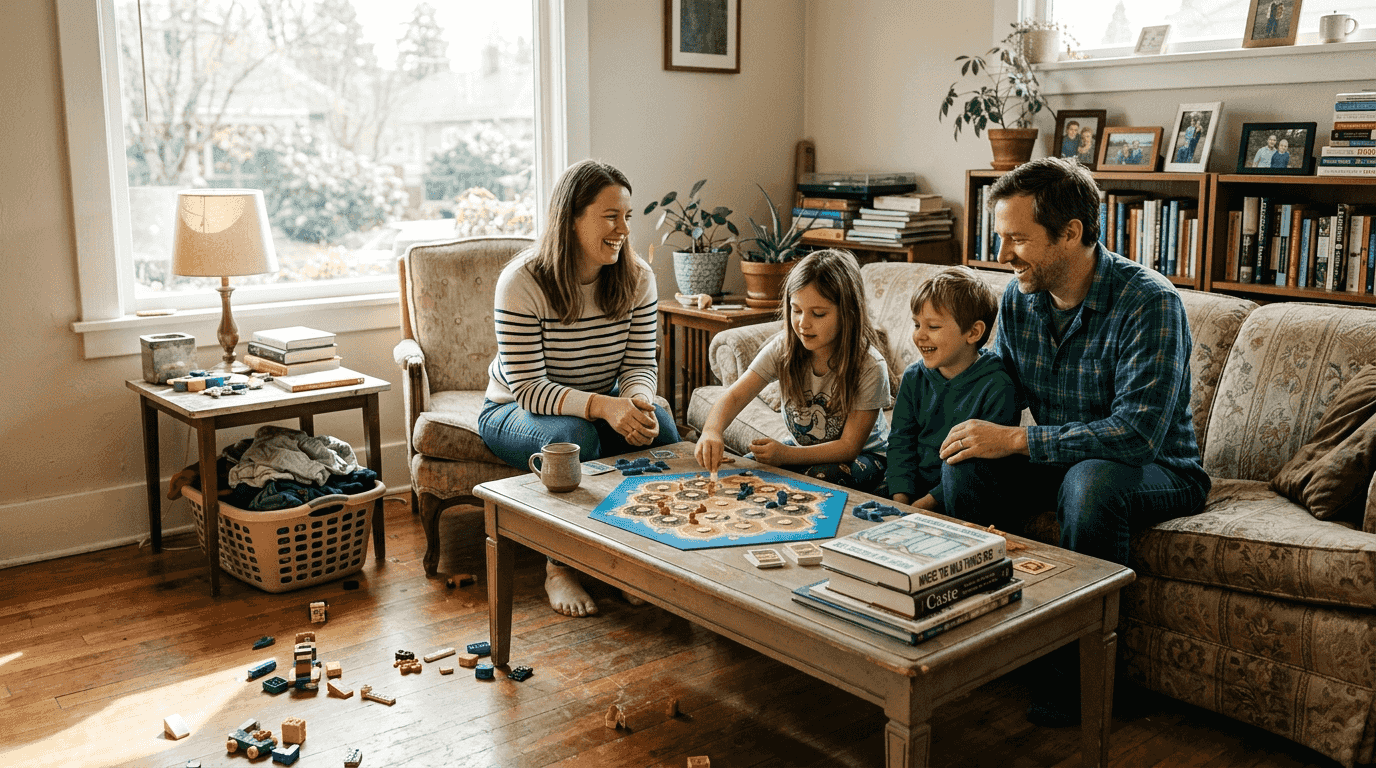
Simple living for families: practical ways to simplify home
Juggling work deadlines, school activities, meal prep, and endless household tasks leaves many families feeling stretched thin and overwhelmed. You might think adding more schedules, apps, or organizational systems is the answer, but what if simplifying your approach actually creates more peace and efficiency? Simple living offers busy families a proven path to reduce stress, strengthen connections, and reclaim time for what truly matters. This guide shares practical strategies backed by research to help you create calm, organized spaces and routines that work for your unique family dynamic.
Table of Contents
- Why Simple Living Reduces Stress In Busy Families
- Creating Effective Routines: Homework, Meals, And Chores
- Organizing Home Spaces For Safety, Calm, And Creativity
- Time Management Strategies To Improve Work-Life Balance
- Discover Simple Solutions For Your Family Today
Key takeaways
| Point | Details |
|---|---|
| Routines reduce stress | Structured daily rhythms decrease family stress by 30% and boost cohesion by 25%. |
| Decluttering creates calm | Organized spaces lead to 15-25% fewer arguments and 10-20% more quality family time. |
| Time blocking improves balance | Dedicated task blocks increase productivity by 20-30% while reducing overwhelm. |
| Family meals strengthen bonds | Regular shared meals improve emotional health, communication, and nutritional habits. |
| Flexibility supports stability | Balancing structure with adaptability helps routines grow with your children. |
Why simple living reduces stress in busy families
The constant juggling act of managing a household with school-aged children creates chronic stress that affects everyone. Research shows that implementing structured routines reduces stress by 30% while increasing family cohesion by 25%. These aren’t just numbers, they represent real improvements in daily life: fewer morning battles, calmer evenings, and more genuine connection.
Predictability forms the foundation of emotional resilience for both children and adults. When your family knows what to expect, anxiety decreases naturally. Kids thrive on consistent patterns that help them understand their world, while parents gain mental space by reducing the constant decision making that drains energy throughout the day.
Simple routines also establish visible leadership that children need to feel secure. When you set clear expectations and follow through consistently, you’re not being rigid, you’re creating the stable framework your family needs to flourish. This structure paradoxically creates more freedom because everyone understands the boundaries and can relax within them.
“Families with established rhythms report significantly better cooperation and fewer daily conflicts, creating a positive cycle that reinforces healthy patterns.”
The benefits extend beyond immediate stress reduction. Families practicing simple living principles experience:
- Better cooperation during transitions between activities
- Reduced frequency and intensity of sibling arguments
- Improved ability to handle unexpected challenges
- More energy for creative play and meaningful conversation
Implementing home management systems doesn’t require perfection or elaborate planning. Start with manageable rhythms around your family’s most challenging times, typically mornings and evenings. Clear boundaries about screen time, homework, and bedtime create the structure, while daily reset routines, like a quick 10 minute tidy before dinner, maintain the simplicity you’ve worked to establish.
Creating effective routines: homework, meals, and chores
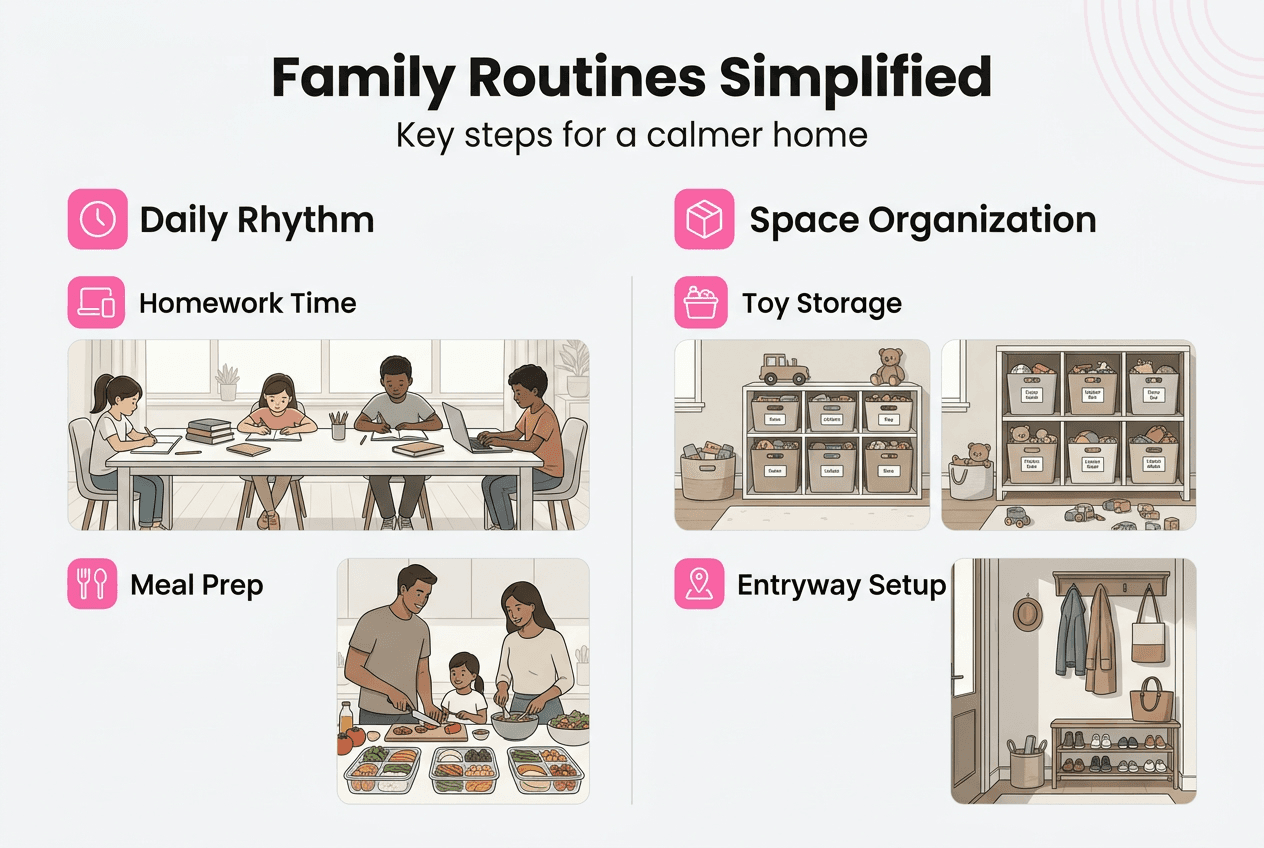
Homework battles drain energy and create unnecessary tension in otherwise peaceful homes. Setting consistent homework times and designated quiet spaces dramatically reduces these conflicts by removing daily negotiations. Choose a time that works for your child’s energy level, whether that’s immediately after school with a snack or after dinner when they’ve had time to decompress.
Location matters more than you might think. Some children focus best at the kitchen table where you’re nearby for quick questions, while others need a separate desk away from distractions. Observe your child’s natural working style and create a space that supports their concentration. Stock it with necessary supplies so they’re not constantly interrupting their flow to find pencils or paper.
For children who struggle with motivation beyond grades, build in meaningful rewards that reinforce effort rather than just results:
- Extra screen time on weekends for completing all assignments
- Special one on one time with a parent doing a favorite activity
- Small privileges like choosing Friday’s dinner menu
- Tangible progress tracking with stickers or charts for younger children
Family meals provide more than nutrition, they’re essential for emotional well-being and communication. Regular shared meals improve children’s social skills, reduce risky behaviors, and create consistent opportunities for connection. Even three to four dinners together weekly makes a measurable difference in family cohesion.
Pro Tip: Prep ingredients on Sunday for three weeknight meals. Store chopped vegetables, marinated proteins, and measured grains in containers so dinner assembly takes 20 minutes instead of an hour.
Involving children in chore routines transforms household tasks from parent burdens into shared responsibilities. This shift gives children ownership and teaches essential life skills while reducing your workload. Match chores to developmental stages:
- Ages 5-7: Make beds, put away toys, set the table, feed pets
- Ages 8-10: Load dishwasher, fold laundry, take out trash, help with meal prep
- Ages 11-13: Complete laundry cycles, prepare simple meals, clean bathrooms, yard work
- Ages 14+: Grocery shopping with lists, deeper cleaning, meal planning, sibling care
Adapt these routines as your children mature, gradually increasing responsibility and independence. What works for a second grader won’t suit a middle schooler. Regular family meetings, even brief 15 minute check-ins, let you adjust systems together and address concerns before they become conflicts. This flexibility within structure represents the heart of sustainable simple living.
Organizing home spaces for safety, calm, and creativity
Clutter creates invisible stress that affects every family interaction. Studies show that decluttering reduces household arguments by 15-25% while freeing up 10-20% more time for meaningful activities together. Physical disorder in your environment translates directly to mental disorder, making it harder to focus, relax, and connect authentically with your children.
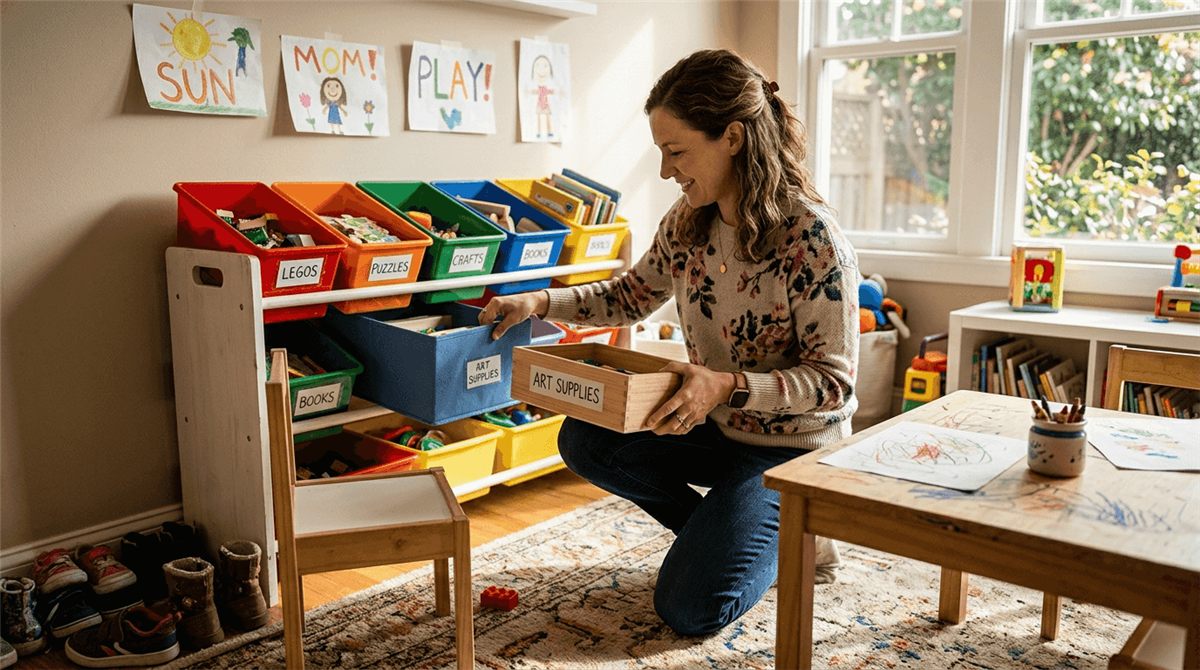
Organized spaces communicate care and safety to children at a fundamental level. When your home has designated places for belongings and those systems are maintained consistently, children internalize that their environment is predictable and secure. This sense of order helps children cooperate more readily because they’re not constantly fighting against chaos.
The goal isn’t magazine-perfect spaces or unrealistic standards of cleanliness. Simple living prioritizes peace and sustainability over performative perfection. Your home should function as a supportive backdrop for family life, not a source of constant maintenance stress.
| Organization Area | Impact on Family Life | Maintenance Time |
|---|---|---|
| Entryway systems | Reduces morning rush stress by 40% | 5 minutes daily |
| Kitchen zones | Cuts meal prep time by 25-30% | 10 minutes daily |
| Toy rotation | Decreases overwhelm, increases focused play | 15 minutes weekly |
| Paper management | Eliminates lost forms and deadline stress | 10 minutes weekly |
Creating designated spaces for open-ended play reduces screen dependency naturally. When children have accessible art supplies, building materials, dress-up clothes, or outdoor play equipment, they’re more likely to choose creative activities over passive entertainment. Organize these materials in clear bins at child height so they can independently access and clean up their chosen activities.
Pro Tip: Implement a one-in, one-out rule for toys and clothes. When something new enters your home, something similar leaves through donation or disposal. This prevents accumulation without requiring massive decluttering sessions.
Natural decluttering approaches work especially well for busy families because they integrate into existing routines rather than requiring dedicated marathon sessions. Try these sustainable practices:
- Five-minute resets before transitions (leaving for school, starting dinner, bedtime)
- Sunday basket system for items that migrated to wrong rooms during the week
- Seasonal clothing swaps that force evaluation of what actually gets worn
- Monthly donation box in each child’s room for outgrown items
For parents managing homes while working or staying home with younger children, flexible systems matter more than rigid perfection. Some days you’ll maintain your routines flawlessly. Other days survival mode wins, and that’s completely normal. The key is having simple systems you can quickly reset when life gets overwhelming. Refreshing your spaces doesn’t require complete overhauls, just consistent small actions that compound over time.
Time management strategies to improve work-life balance
Time blocking transforms chaotic schedules into manageable rhythms by dividing your day into dedicated blocks for specific activities. Research demonstrates that time blocking increases productivity by 20-30% compared to reactive, unstructured approaches while significantly reducing stress. Instead of constantly switching between tasks and losing mental energy to decision fatigue, you know exactly what deserves your attention during each block.
The strategy works because it honors the reality that different activities require different mental states. Deep work like planning lessons or completing projects needs uninterrupted focus, while family time thrives on presence and flexibility. When you assign specific blocks to each, you stop the exhausting mental juggling of trying to do everything simultaneously.
| Tool | Best For | Pros | Cons |
|---|---|---|---|
| Google Calendar | Families sharing schedules | Free, accessible anywhere, color coding | Requires internet, can feel overwhelming |
| Paper planner | Tactile planners preferring analog | No screen time, satisfying to write | Easy to lose, no automatic reminders |
| Trello boards | Visual project management | Flexible, collaborative, free tier | Learning curve, better for tasks than time |
| Time Timer | Children learning time awareness | Visual countdown, builds independence | Limited to single activities, costs money |
Implementing time blocking effectively requires a thoughtful approach that fits your family’s unique rhythm. Follow these steps:
- Track your current time use for one week without judgment to identify patterns and time drains.
- Identify your non-negotiable commitments: work hours, school schedules, essential appointments.
- Block recurring family priorities first: meals together, homework time, bedtime routines.
- Add flexible blocks for household tasks, personal time, and unexpected needs.
- Review weekly on Sunday evenings and adjust blocks based on what actually happened.
- Protect transition time between blocks so you’re not constantly running late and stressed.
Pro Tip: Use different colored blocks for different life areas (work, family, personal, household) so you can see at a glance whether your week is balanced or heavily weighted toward one domain.
Self-care isn’t selfish, it’s essential fuel for sustainable family management. Schedule it as seriously as you schedule dentist appointments. Even 15 minutes of protected time for reading, exercise, or simply sitting quietly makes you more patient and present with your children. Work-life balance improves when you treat your own needs as legitimate rather than optional.
Flexibility within your time-blocking system prevents it from becoming another source of stress. Life with children is inherently unpredictable. Someone gets sick, a school event changes, or you simply need a slower day. Build buffer blocks into your week specifically for handling the unexpected or catching up on tasks that ran long. When you plan for flexibility, disruptions feel manageable instead of catastrophic.
Combining digital calendars with physical reminders increases adherence for many families. A shared digital calendar keeps everyone informed of schedules and activities, while a large wall calendar or whiteboard in a central location provides visual reference that doesn’t require opening an app. Comparing different time management tools helps you choose systems that genuinely support your family rather than adding complexity. The step-by-step implementation process ensures you build sustainable habits instead of abandoning new systems after a few weeks.
Discover simple solutions for your family today
Transforming your family’s daily life doesn’t require massive overhauls or perfect execution. Small, consistent changes in how you approach routines, spaces, and time create remarkable improvements in stress levels and connection. Our website offers practical resources designed specifically for busy families navigating the real challenges of modern life.
Explore our collection of productivity hacks tailored for families to discover quick wins that make immediate differences in your daily flow. These aren’t theoretical concepts, they’re tested strategies from parents who understand the chaos of school-aged children and competing demands.
Our home organization systems guide walks you through proven approaches you can customize to fit your family’s unique needs and living space. Whether you’re working with a small apartment or a larger home, you’ll find actionable frameworks that create lasting order without requiring hours of maintenance.
Ready to tackle the clutter that’s draining your energy? Our comprehensive natural decluttering guide for families provides gentle, sustainable methods that work with your schedule instead of demanding dedicated weekends. Start creating the peaceful, welcoming environment your family deserves.
What are the best routines for reducing homework stress?
How do consistent homework times help?
Establishing the same homework time daily eliminates negotiation and builds automatic habits. Children’s brains adapt to expect focused work during that window, making it easier to transition into homework mode. This consistency reduces resistance and creates predictable structure that decreases stress for everyone.
What if grades alone don’t motivate my child?
Many children need external motivation systems beyond abstract grade goals. Build reward structures around effort and completion rather than just performance. Consider privileges, special activities, or small treats tied to consistent homework completion. Adjust homework time management approaches as you learn what resonates with your specific child.
Should homework routines change as children grow?
Absolutely. Younger children need more parental presence and structure, while older students benefit from increasing independence and ownership. Gradually shift from sitting beside them to being available in another room, then to simply checking in on progress. This evolution builds self-management skills essential for future success.
How can we reduce screen time without causing conflict?
What’s the best way to introduce screen limits?
Start with family discussions about why balanced screen use matters, involving children in setting reasonable limits together. Gradual implementation works better than sudden restrictions. Begin by tracking current use without judgment, then collaboratively set goals that feel achievable. This approach builds buy-in instead of resentment.
What alternatives keep kids engaged?
Offer compelling options that match your children’s interests: art supplies for creative kids, building materials for engineers, outdoor equipment for active children, or books for readers. Make these alternatives as accessible as screens by keeping them organized and visible. Explore our screen-free activities guide for dozens of engaging ideas.
How do we enforce limits without constant battles?
Use positive reinforcement and natural consequences rather than punishment. Praise compliance and offer small rewards for respecting screen time limits. When children exceed limits, the natural consequence is reduced screen time the following day. Stay calm and consistent, treating limit enforcement as matter-of-fact rather than emotional.
What is the role of family meals in simple living?
Why are family meals so important?
Regular family meals strengthen emotional bonds and create consistent opportunities for genuine communication. These shared experiences help children develop social skills, practice conversation, and feel connected to family identity. The predictable rhythm of gathering together provides stability that reduces anxiety.
Do meals really affect children’s behavior?
Research consistently links regular family meals with healthier nutritional choices, better academic performance, and lower rates of risky behaviors in adolescents. The benefits extend beyond the food itself to the relationship building and value transmission that happens during unhurried time together.
How many meals together make a difference?
Even three to four shared meals weekly create measurable improvements in family cohesion and child outcomes. Perfection isn’t required. Focus on making the meals you do share together genuinely pleasant, with minimal distractions and authentic conversation. Quality matters more than quantity when building these connection points into your family rhythm.
Recommended
- How to Declutter Home Naturally for Busy Families –
- 7 Simple Ways to Refresh Your Home for Busy Families –
- How to Create a Peaceful Home for Your Family –
- Why Simplify Meals? Cut Prep Time 40% for Families –
- Cozee Bay – How to Optimize Small Kitchen Space for Eco-Friendly Living
Want a little more help with this? The Whole Home System walks you through simplifying the house room by room, at whatever pace real life allows.