

Time Management Step by Step for Family Success
Juggling family schedules can feel like a never-ending puzzle where everyone has somewhere to be and never enough time to get there. Most families believe the answer is simply a better planner or another reminder app. But surprising research reveals that mapping family activities isn’t just helpful, it’s crucial—families who analyze their daily routines uncover patterns that drive major improvements in organization and reduce chaos. So the real solution goes deeper than another to-do list and starts with understanding how your family actually spends its time.
Table of Contents
- Step 1: Analyze Your Family’s Daily Routine
- Step 2: Set Clear Priorities For Each Family Member
- Step 3: Create A Shared Family Calendar
- Step 4: Implement Time Blocks For Family Activities
- Step 5: Review And Adjust Weekly For Improvements
Quick Summary
| Key Point | Explanation |
|---|---|
| 1. Analyze daily routines thoroughly | Track activities for each family member to identify inefficiencies and bottlenecks in your current schedule. |
| 2. Set clear priorities collaboratively | Hold a family meeting to define individual and collective goals, ensuring respect for each member’s needs. |
| 3. Use a shared family calendar | Implement a digital calendar where all family members enter their schedules, allowing for better planning and coordination. |
| 4. Implement structured time blocks | Designate specific times for essential family activities to promote meaningful interactions and reduce chaos. |
| 5. Conduct weekly reviews for improvements | Hold a regular family meeting to assess time management effectiveness, discuss challenges, and make necessary adjustments. |
Step 1: Analyze Your Family’s Daily Routine
Successful time management begins with understanding how your family currently spends its time. Analyzing your family’s daily routine is like creating a roadmap that reveals inefficiencies, opportunities, and potential strategies for better organization. Research shows that mapping family activities is crucial for developing effective behavioral interventions.
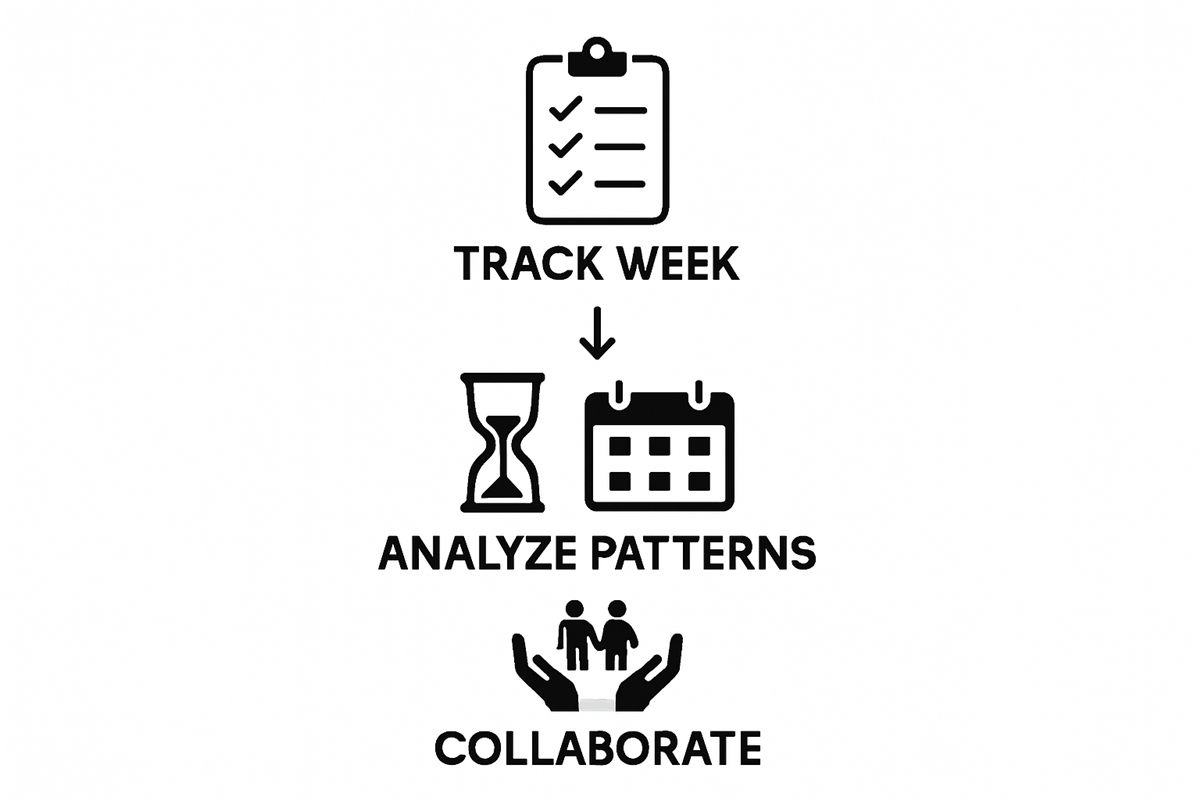
Start by tracking a typical week’s activities for every family member. This means documenting exact times for wake-ups, meals, work, school, extracurricular activities, chores, and personal time. Use a large wall calendar or digital tracking app to capture these details comprehensively. Encourage each family member to participate by noting their individual schedules and commitments.
While recording activities, pay special attention to time-consuming tasks and potential bottlenecks. Look for patterns like overlapping schedules, repeated conflicts, or activities that consistently run longer than anticipated. Are mornings chaotic with everyone rushing? Do evening homework sessions become stressful marathon sessions? Identifying these specific moments helps create targeted time management strategies.
Your tracking should reveal several key insights:
- Periods of high stress or complexity
- Time spent on essential versus non-essential activities
- Individual family members’ peak productivity hours
- Potential time-wasting activities
Once you’ve completed your comprehensive routine analysis, review the documentation together as a family. Discuss observations openly and collaboratively. The goal isn’t to criticize but to understand how your current routine functions and where improvements can be made. This collaborative approach ensures everyone feels heard and invested in creating a more efficient family schedule.
Verify your analysis by confirming you have a complete, week-long snapshot of your family’s activities. Look for granular details like transition times between activities, unexpected delays, and recurring scheduling challenges. A successful routine analysis provides a clear, judgment-free picture of your family’s current time usage—the critical first step toward more intentional time management.
Here is a checklist to help verify a thorough family daily routine analysis, ensuring all critical details are captured before moving forward.
| Checklist Item | Completion Criteria | Verified? |
|---|---|---|
| Whole Week Tracked | Activities for all 7 days recorded for each family member | |
| Exact Activity Times Documented | Wake-ups, meals, work, school, chores, and personal times noted with specific hours | |
| Time-Consuming Tasks Identified | Noted activities that consistently take longer than expected | |
| Bottlenecks and Overlaps Spotted | Patterns of chaos, stress, or schedule conflicts highlighted | |
| Transition Times Noted | Delays or time lost between activities recognized and recorded | |
| Individual Schedules Reviewed | Each family member reviewed their own recorded activities | |
| Family Discussion Conducted | Group discussion held to review routine collaboratively and without criticism |
Step 2: Set Clear Priorities for Each Family Member
Establishing clear priorities transforms family time management from a chaotic scramble into a strategic, collaborative process. Research demonstrates that families who intentionally align individual goals create more harmonious and productive home environments.
Begin by scheduling a dedicated family meeting where everyone can share their most important personal and collective objectives. This isn’t about creating rigid rules, but understanding each family member’s unique needs and aspirations. Younger children should participate too, offering age-appropriate insights into what matters most to them.
Create a visual priority mapping system that everyone can see and understand. Use a large poster board or digital shared document where each family member can list their top three priorities. These might range from academic achievements and career goals to personal hobbies, health objectives, and family commitments. The key is making these priorities transparent and mutually respected.
Prioritize based on different life stages and individual capacities. A high school student’s priorities will differ dramatically from a working parent’s or a young child’s. Consider creating priority tiers:
- Urgent and Important: Tasks with immediate deadlines or critical consequences
- Important but Not Urgent: Long-term goals and personal development activities
- Nice to Have: Supplementary activities that enhance quality of life
Review and adjust these priorities quarterly. Life changes rapidly, and what seemed crucial six months ago might no longer align with current family dynamics. Encourage open discussions about shifting priorities, ensuring everyone feels heard and supported.
The verification of this step isn’t perfection, but mutual understanding. Each family member should be able to articulate not just their own priorities, but also recognize and respect the priorities of others. When you can discuss individual goals without defensiveness and with genuine curiosity, you’ve successfully completed this critical time management step.
Step 3: Create a Shared Family Calendar
A shared family calendar transforms individual schedules into a synchronized, collaborative system that prevents conflicts and reduces communication breakdowns. This visual roadmap allows every family member to understand upcoming commitments, plan effectively, and support one another’s activities.
Digital platforms offer the most flexible and accessible calendar solutions. Choose a platform that allows multiple user access and real-time updates. Google Calendar remains an excellent free option that syncs across devices and permits granular permission settings. Each family member can have their own color-coded entries, making it easy to track individual and collective schedules at a glance.
Set clear ground rules for calendar management. Establish a family protocol where everyone agrees to update their personal commitments promptly. This means entering school projects, work deadlines, extracurricular activities, medical appointments, and social events as soon as they are confirmed. Consistency is key to making the shared calendar truly effective.
Consider creating specific calendar categories to organize different types of activities:
- Personal Commitments: Individual work, school, and personal development events
- Family Activities: Shared meals, vacations, weekly family nights
- Recurring Responsibilities: Chores, homework time, exercise schedules
- Important Dates: Birthdays, anniversaries, upcoming celebrations
Implement a weekly family calendar review. Set aside 15-20 minutes each week, perhaps during a Sunday family meeting, to walk through the upcoming week’s schedule together. This practice allows everyone to anticipate potential scheduling challenges, redistribute responsibilities if needed, and ensure no important events are overlooked.
The ultimate verification of a successful shared calendar is smooth family coordination. When family members can anticipate each other’s schedules, offer support during busy periods, and minimize last-minute scheduling conflicts, you’ve successfully implemented an effective shared calendar system.
 Remember, the goal isn’t perfection but improved communication and mutual understanding.
Step 4: Implement Time Blocks for Family Activities
Time blocking transforms scattered family activities into a purposeful, organized system. Research demonstrates that structured time allocation helps families develop consistent routines and improve overall functioning.
Time blocking is more than scheduling—it’s intentional time management. Start by identifying specific activities that require dedicated family time. These might include shared meals, homework support, exercise, personal development, and pure recreation. The goal is creating predictable, meaningful interaction windows that everyone can anticipate and value.
Begin with foundational time blocks that accommodate each family member’s core responsibilities. Morning preparation times, after-school hours, and evening wind-down periods represent critical scheduling opportunities. Assign specific durations for each block, but remain flexible enough to adapt when unexpected situations arise. Consistency matters more than perfection.
Consider creating different types of time blocks:
- Essential Blocks: Non-negotiable activities like meals, sleep, and core work/school responsibilities
- Collaborative Blocks: Shared family activities that promote connection
- Individual Development Blocks: Personal time for hobbies, learning, and self-improvement
- Buffer Blocks: Flexible time for unexpected tasks or relaxation
Communicate these time blocks clearly using your shared family calendar. Color-code different block types to make the visual representation intuitive. Encourage family members to respect these designated times, understanding that each block serves a specific purpose in maintaining family harmony and individual growth.
The ultimate verification of successful time blocking is improved family rhythm and reduced daily stress. When family members can predict and participate in structured activities without constant negotiation, you’ve successfully implemented an effective time blocking strategy. Remember, the objective isn’t rigid control, but creating a supportive framework that allows everyone to thrive.
This table summarizes different types of time blocks to help families organize their day with intention, as discussed in the time blocking step.
| Time Block Type | Description | Example Activities |
|---|---|---|
| Essential Blocks | Core, non-negotiable routines | Meals, sleep, school/work |
| Collaborative Blocks | Shared activities that build family connection | Family meals, game night |
| Individual Development | Personal time for growth and relaxation | Hobbies, reading, exercise |
| Buffer Blocks | Flexible periods for unexpected needs or downtime | Free time, dealing with delays |
Step 5: Review and Adjust Weekly for Improvements
Research demonstrates that consistent family time management requires ongoing evaluation and flexibility. Weekly reviews transform your initial plan from a static document into a dynamic, responsive system that adapts to your family’s evolving needs.
Schedule a dedicated weekly family meeting specifically for reviewing your time management strategy. Choose a consistent time when everyone can be present and mentally engaged—Sunday evening often works best. This meeting isn’t about criticism but collaborative problem-solving. Create an atmosphere where every family member feels comfortable sharing observations about what’s working and what needs adjustment.
During your review, examine your shared calendar and time blocks with a critical yet compassionate eye. Look for patterns of success and potential bottlenecks. Did everyone meet their committed time blocks? Were there unexpected challenges that disrupted your planned schedules? Identify root causes rather than assigning blame. Perhaps a particular time block needs more flexibility, or a specific routine requires restructuring to accommodate individual needs.
Consider tracking these key performance indicators during your weekly review:
- Percentage of scheduled time blocks successfully completed
- Frequency of schedule conflicts
- Individual stress levels
- Overall family communication quality
- Progress toward personal and collective goals
Be prepared to make incremental adjustments. Radical changes rarely stick, but small, thoughtful modifications can significantly improve your family’s time management. If a strategy isn’t working, experiment with alternative approaches. Treat these reviews as learning opportunities that strengthen family communication and collaborative problem-solving skills.
The ultimate verification of a successful weekly review is increased family harmony and a sense of collective progress. When family members feel heard, supported, and empowered to contribute to the time management process, you’ve transformed a simple scheduling exercise into a powerful tool for family growth and connection.
Ready to Take Control of Your Family’s Routine?
You’ve analyzed routines, set clear priorities, and built a shared family calendar. But if your home still feels chaotic or you keep running into daily bottlenecks, it’s time for a proven system that goes beyond the basics. Discover powerful organization hacks and time management tools that busy families trust to create calmer, more efficient days. Find real solutions for tracking routines, syncing schedules, and staying on top of what matters most—all in one supportive space at It’s a Southern Life Y’all.
Don’t let another week go by with unnecessary stress or last-minute conflicts. Get access to simple living strategies and home management tips, so your family can enjoy peaceful, productive days together. Start building your most organized and rewarding lifestyle now.
Frequently Asked Questions
How can I analyze my family’s daily routine for better time management?
To analyze your family’s daily routine, track a typical week’s activities for each family member, documenting wake-up times, meals, work, school, and personal time. Look for patterns, time-consuming tasks, and areas that cause stress.
What are some effective ways to set family priorities?
Schedule a dedicated family meeting to share personal and collective objectives. Use a visual mapping system where each member can list their top priorities. Review and adjust these priorities quarterly to ensure alignment with everyone’s needs.
How do I create and manage a shared family calendar?
Choose a digital platform, like Google Calendar, that allows multiple user access. Set ground rules for updating personal commitments, categorize activities, and conduct a weekly review to navigate potential scheduling conflicts effectively.
What should I include in my weekly family review for time management?
During your weekly review, examine your shared calendar and time blocks, looking for successes and challenges. Discuss individual stress levels, schedule conflicts, and overall communication quality to make necessary adjustments for the upcoming week.
Recommended
- Time Blocking Schedule – simplify your day | It’s a Southern Life Y’all
- Printables – It’s a Southern Life Y’all
- Merchandise – It’s a Southern Life Y’all
- Habit Tracker Success Landing – It’s a Southern Life Y’all
Want a little more help with this? I made a free 30-Minute Reset that pairs right up with this post — y’all can grab it over on my Free Resources page.