
Role of Family Traditions: Complete Guide for Families
Did you know that families who practice regular traditions are more likely to feel connected and resilient together? These shared rituals, whether simple or elaborate, shape the roots and values of a family for generations. Understanding the true meaning and types of family traditions can reveal why they matter so much and how even busy families can create a strong sense of identity and belonging.
Table of Contents
- Defining Family Traditions and Core Concepts
- Types of Family Traditions in North America
- How Family Traditions Shape Children’s Development
- Benefits of Family Traditions for Busy Families
- Common Challenges and How to Overcome Them
Key Takeaways
| Point | Details |
|---|---|
| Importance of Family Traditions | Family traditions create connection, identity, and a sense of belonging across generations. |
| Types of Traditions | North American families commonly categorize traditions into celebrations, events, and routines, which all foster meaningful relationships. |
| Impact on Child Development | Consistent family traditions enhance children’s emotional security, identity, and communication skills through shared experiences. |
| Adaptation to Challenges | Families should embrace flexibility in traditions to accommodate busy lives and changing dynamics while maintaining meaningful connections. |
Defining Family Traditions and Core Concepts
Family traditions are the heartbeat of connection, creating a unique tapestry that binds generations together. According to elcnorthflorida.org, these traditions provide a powerful sense of family identity and create a shared history passed down through time. Think of them like invisible threads weaving your family’s story – connecting grandparents, parents, children, and future generations.
At their core, family traditions are repeatable customs and activities that organize and celebrate time together. Reentry explains that these can include special foods, celebrations, regular events, and meaningful routines that give structure and meaning to family life. These traditions might look different for every family but share a common purpose: bringing loved ones closer.
Key elements of meaningful family traditions include:
- Regular, predictable activities
- Shared experiences that create memories
- Cultural or personal significance
- Opportunities for connection and communication
- Passed down through generations
Whether it’s a weekly Sunday dinner, an annual holiday celebration, or a special birthday ritual, family traditions create a sense of belonging. They help children understand their roots, feel secure, and develop a strong sense of family identity. More than just repeated actions, these traditions are living stories that tell who you are and where you come from.
Types of Family Traditions in North America
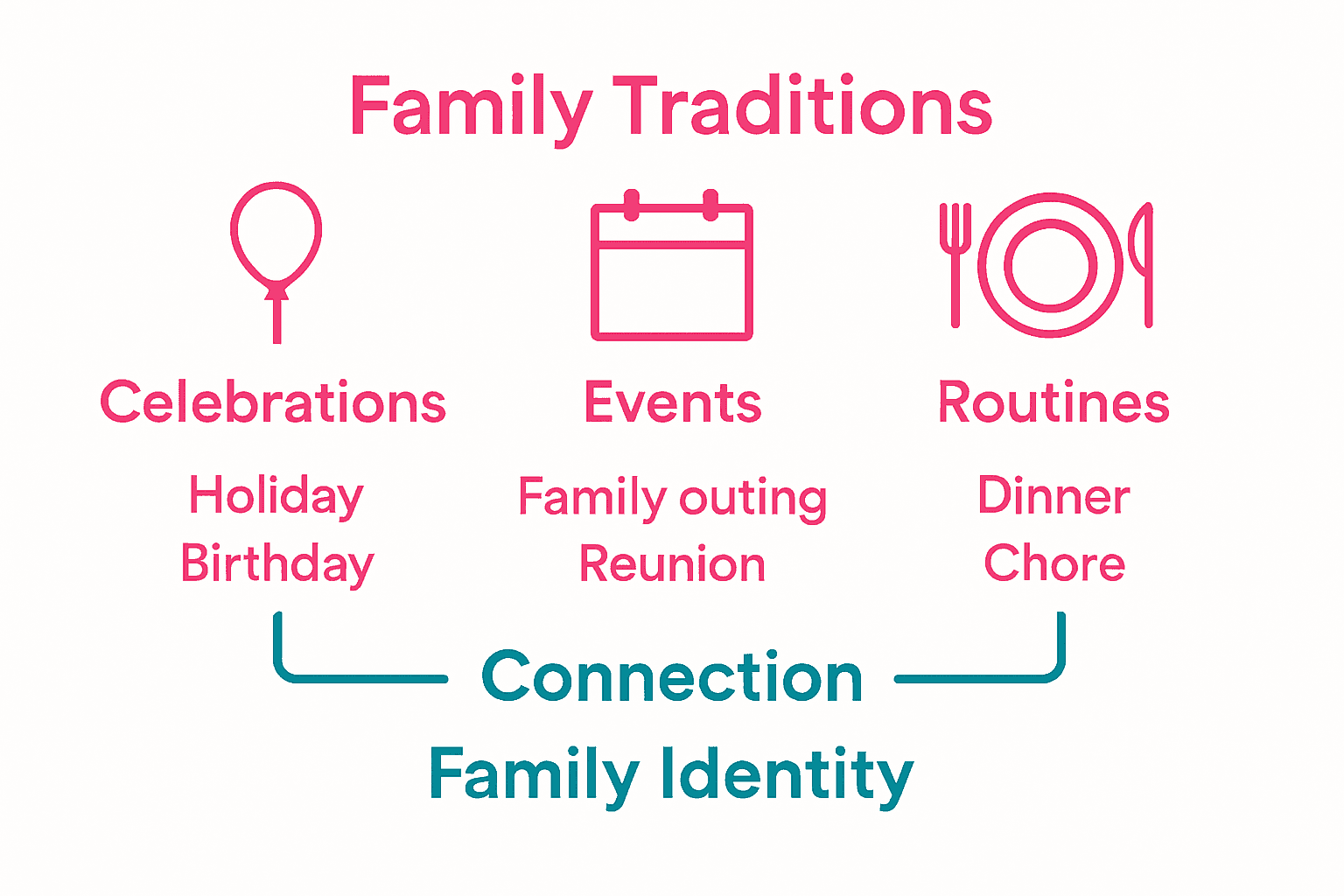
North American families embrace a rich variety of traditions that strengthen connections and create lasting memories. Reentry provides a helpful framework by categorizing these traditions into three distinct types: family celebrations, family events, and family routines. This classification helps us understand the diverse ways families build meaningful connections.
Family celebrations are perhaps the most recognizable traditions. These include milestone events like birthdays, anniversaries, and cultural or religious holidays such as Christmas, Hanukkah, or Thanksgiving. According to elcnorthflorida.org, these celebrations often involve specific cultural practices that help families maintain their unique heritage and create shared experiences.
Key types of family traditions in North America include:
Here’s a summary of the three main types of family traditions in North America:
| Tradition Type | Examples | Main Purpose |
|---|---|---|
| Celebration | Holiday gatherings Birthdays Anniversaries |
Honor milestones Reinforce heritage |
| Event | Family reunions Vacations Weekend outings |
Create memories Strengthen bonds |
| Routine | Sunday dinners Bedtime stories Game nights |
Build stability Foster connection |
- Celebration Traditions
- Holiday gatherings
- Birthday rituals
- Anniversary commemorations
- Event Traditions
- Family reunions
- Vacation trips
- Weekend outings
- Routine Traditions
- Sunday family dinners
- Bedtime storytelling
- Game nights
- Weekend breakfast rituals
Beyond special occasions, everyday family routines play a crucial role in building connection.
 These might include weekly family dinners, monthly game nights, or daily rituals like bedtime stories or morning breakfasts together. These seemingly simple traditions create a sense of predictability and comfort that helps children feel secure and connected to their family’s unique identity.
How Family Traditions Shape Children’s Development
Family traditions play a profound role in children’s emotional and psychological development, serving as a powerful foundation for building self-identity, resilience, and a sense of belonging. When children participate in consistent family rituals, they experience a deep sense of security and predictability that helps them navigate the complex world around them. These traditions become more than just repeated activities – they are emotional anchors that ground children in their family’s unique culture and values.
Through family traditions, children learn critical social and emotional skills that extend far beyond the immediate family circle. Emotional intelligence develops as children observe and participate in family interactions, learning how to express feelings, resolve conflicts, and show empathy. Traditions like shared meals, game nights, or holiday celebrations teach children important communication skills, help them understand family dynamics, and create lasting memories that shape their understanding of relationships.
Key developmental benefits of family traditions include:
- Building emotional security
- Developing strong family bonds
- Creating a sense of identity and belonging
- Teaching cultural heritage and values
- Enhancing communication skills
- Providing predictability and comfort
- Developing resilience through shared experiences
Learn more about family time activities in our guide to strengthening family connections. The most powerful traditions are those that involve active participation, genuine emotional connection, and consistent repetition. Whether it’s a weekly movie night, annual camping trip, or daily bedtime ritual, these moments become the building blocks of a child’s emotional landscape, helping them develop a strong sense of self and understanding of their place within the family unit.
Benefits of Family Traditions for Busy Families
In today’s fast-paced world, busy families need simple yet meaningful ways to stay connected. Reentry highlights that family traditions help tie family members together and organize time spent positively, providing critical stability and belonging even amid hectic schedules. These traditions aren’t about elaborate planning or expensive outings – they’re about creating consistent moments of connection.
elcnorthflorida.org emphasizes that family traditions don’t need to be complicated or costly. Simple activities can bring families closer, transforming everyday moments into cherished memories. Whether it’s a 15-minute morning breakfast ritual, a weekly game night, or a Sunday evening walk, these traditions become anchors that help busy families stay grounded and connected.
Key benefits for busy families include:
- Reducing daily stress
- Creating predictable family time
- Building stronger emotional connections
- Improving communication
- Establishing a sense of security
- Developing family identity
- Providing breaks from digital distractions
Discover time management strategies to support your family traditions. The most powerful traditions are those that fit seamlessly into your existing routine, require minimal preparation, and create maximum connection. For busy families, the goal isn’t perfection – it’s presence. These small, consistent moments become the foundation of lasting family bonds, proving that quality truly matters more than quantity.

Common Challenges and How to Overcome Them
Every family encounters obstacles when trying to establish and maintain meaningful traditions. Reentry emphasizes that overcoming these challenges involves flexible adaptation and understanding that family traditions can be modified to fit evolving family needs. The key is not rigid adherence, but creating meaningful connections that work for your unique family dynamic.
elcnorthflorida.org reminds us that traditions don’t need to be complicated or perfect. Simple activities can bridge gaps and create lasting memories, even when families face significant challenges like busy schedules, generational differences, or conflicting interests. The most successful families approach traditions with creativity, patience, and a willingness to experiment.
Common challenges and strategic solutions include:
- Scheduling Conflicts
- Be flexible with timing
- Create shorter, more frequent traditions
- Use technology to connect when in-person isn’t possible
- Generational Differences
- Involve all family members in planning
- Rotate tradition choices
- Compromise and find common ground
- Resistance to Change
- Start small
- Explain the importance of traditions
- Be open to feedback
Learn how to turn challenges into opportunities with our guide to failing forward. The most important aspect of family traditions isn’t perfection – it’s connection. When challenges arise, view them as opportunities to grow, adapt, and strengthen your family’s unique bond. Remember, traditions are living things that grow and change just like the families who create them.
Strengthen Family Traditions While Simplifying Your Busy Life
The article highlights how maintaining meaningful family traditions can be challenging with busy schedules and competing demands. If you find it hard to create consistent moments of connection or feel overwhelmed by time management and household chaos, you are not alone. Family traditions provide emotional security and build strong bonds but they need a solid foundation of organization and routine to truly flourish.
At itsasouthernlifeyall.com, we understand the struggle to balance family connection with everyday responsibilities. Our expert tips on time management, home organization, and simple living strategies empower you to carve out quality family time without added stress. Imagine transforming your home into a peaceful and functional space where traditions can grow naturally. Start today by exploring our guides on creating lasting family connections and time management for families so you can prioritize what matters most.
Don’t wait to turn your family traditions into cherished memories with less hassle. Take the first step toward a balanced life filled with meaningful connection and joyful moments.
Frequently Asked Questions
What are family traditions?
Family traditions are repeatable customs and activities that bring family members together, creating a sense of identity and shared history. They include things like special foods, celebrations, regular events, and meaningful routines.
Why are family traditions important for children’s development?
Family traditions provide emotional security and help children develop a strong sense of identity and belonging. They teach critical social and emotional skills, like communication and empathy, and create lasting memories that shape their understanding of relationships.
How can busy families maintain their traditions?
Busy families can maintain traditions by creating simple, predictable activities that fit into their existing routines, such as weekly game nights or morning breakfast rituals. These small moments help to strengthen emotional connections despite hectic schedules.
What challenges might families face when establishing traditions?
Families may encounter scheduling conflicts, generational differences, or resistance to change. To overcome these challenges, it’s important to be flexible, involve all family members in planning, and start small to create meaningful connections.
Recommended
- Understanding Why Set Family Traditions Matters
- 7 Types of Family Time Activities You Can Enjoy Together
- How to Use Inspirational Quotes to Build Stronger Family Values
- How to Create a Peaceful Home for Your Family
- 8 Essential Tips for Camping with Children – Hazli Collection
- Understanding Eco Friendly Routines for Modern Families – The Zoofamily
Want a little more help with this? I made a free Mental Load Kit that pairs right up with this post — y’all can grab it over on my Free Resources page.