
Understanding the Role of Budget Forecasting in Family Planning
Family finances can feel overwhelming when every expense seems to pop up out of nowhere. Yet over 60 percent of Americans say they do not use any sort of budget or future financial plan. That sounds risky. The real surprise is that budget forecasting is not just complex spreadsheets and financial jargon. It is a simple tool that can turn monthly chaos into a sense of control and confidence for families who want to get ahead.
Table of Contents
- What Is Budget Forecasting And Why Is It Important?
- The Benefits Of Budget Forecasting For Families
- Key Components Of Effective Budget Forecasting
- How Budget Forecasting Influences Family Financial Decisions
Quick Summary
| Takeaway | Explanation |
|---|---|
| Proactive planning reduces financial stress. | Budget forecasting empowers families to address financial uncertainties, leading to greater confidence and peace of mind. |
| Use historical data for accurate forecasts. | Analyzing past income and expenses helps families create realistic financial projections for future planning. |
| Focus on long-term financial goals. | Aligning budget forecasting with future aspirations allows families to prioritize meaningful investments and track goal progress efficiently. |
| Adapt strategies based on changing circumstances. | Regularly adjusting budget forecasts helps families remain resilient and prepared for unexpected financial shifts or life events. |
| Encourage family communication about finances. | Involving all family members in the budgeting process fosters collaborative discussions and shared accountability in financial decisions. |
What is Budget Forecasting and Why is it Important?
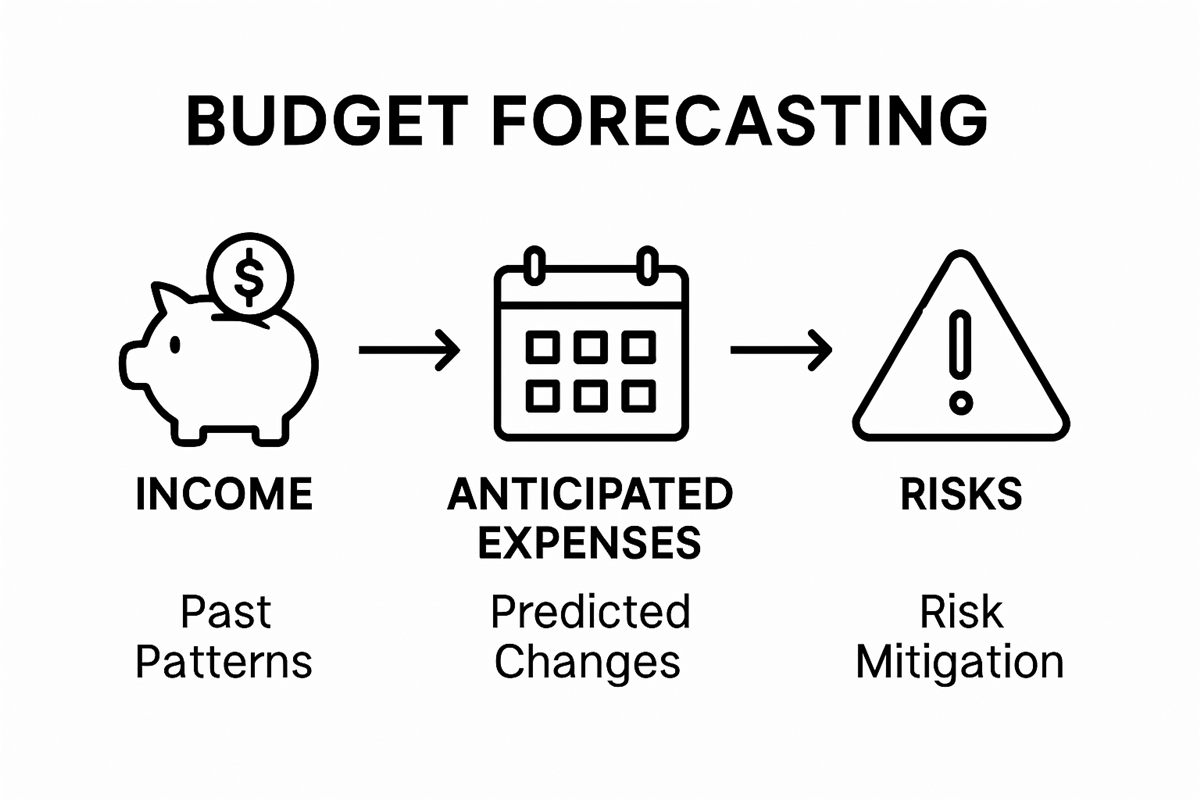
Budget forecasting represents a strategic financial planning approach that helps families anticipate, track, and manage their financial future. It goes beyond simple expense tracking by providing a comprehensive view of potential income, expenses, and financial opportunities. At its core, budget forecasting allows families to transform reactive financial management into proactive financial planning.
Understanding the Fundamental Concept
Budget forecasting involves creating a detailed projection of future financial inflows and outflows based on historical data, current financial conditions, and anticipated changes. According to the Department of Financial Protection and Innovation, this process enables individuals to estimate income and expenses over a specific future period, which can be monthly, quarterly, or annually.
Key components of budget forecasting include:
Below is a table summarizing the key components of effective budget forecasting as described in the article to help readers visualize what must be considered for a solid family financial plan.
| Component | Description |
|---|---|
| Analyzing Past Spending Patterns | Reviewing historical expenses to identify trends and inform future forecasts |
| Predicting Income Variations | Anticipating changes in income due to raises, bonuses, or variable work situations |
| Identifying Financial Risks | Recognizing potential events that could disrupt finances, such as emergencies |
| Setting Realistic Financial Goals | Establishing attainable targets for savings, spending, or investing |
| Creating Flexible Strategies | Allowing budgets to adapt to life changes or unforeseen financial shifts |
- Analyzing past spending patterns
- Predicting potential income variations
- Identifying potential financial risks
- Setting realistic financial goals
- Creating flexible financial strategies
The Importance of Proactive Financial Planning
Budget forecasting is crucial because it transforms financial uncertainty into strategic opportunity. By developing a forward-looking financial blueprint, families can make informed decisions about saving, spending, and investing. This approach helps prevent financial stress and enables more confident financial management.
The primary benefits include improved financial predictability, reduced financial anxiety, and enhanced ability to achieve long-term financial objectives. Families who engage in regular budget forecasting are better equipped to handle unexpected expenses, plan for major life events, and build sustainable financial stability.
Ultimately, budget forecasting is not about restricting spending but about creating a clear roadmap that empowers families to make smart, intentional financial choices that align with their unique goals and lifestyle.
The Benefits of Budget Forecasting for Families
Budget forecasting offers transformative advantages that extend far beyond simple financial tracking. By providing a strategic approach to understanding and managing family finances, this method empowers households to create more secure and intentional financial futures.
Financial Resilience and Stability
Research from the Frontiers in Public Health highlights that systematic budgeting leads to improved household resource allocation and greater financial resilience during unexpected challenges. Families who engage in budget forecasting develop a proactive financial mindset that allows them to anticipate and prepare for potential economic fluctuations.
Key advantages of financial resilience include:
- Creating robust emergency funds
- Reducing financial stress and anxiety
- Developing adaptive financial strategies
- Building long-term financial confidence
- Protecting family economic interests
Strategic Goal Achievement
Budget forecasting serves as a powerful tool for translating financial aspirations into actionable plans. Whether saving for a family vacation, planning for educational expenses, or preparing for major life transitions, this approach provides a clear roadmap for achieving significant financial milestones.
Families can leverage budget forecasting to:

- Align spending with long-term family objectives
- Prioritize meaningful financial investments
- Track progress toward specific financial goals
- Make data-driven financial decisions
- Adjust strategies based on changing family dynamics
Beyond mere number crunching, budget forecasting becomes a collaborative family process that encourages open communication about financial values and shared goals. Check out our guide on breaking the paycheck-to-paycheck cycle for additional insights into creating financial stability.
Ultimately, budget forecasting transforms financial management from a reactive chore into a proactive, empowering family strategy that builds long-term prosperity and peace of mind.
This table compares how budget forecasting benefits family financial resilience/stability versus strategic goal achievement, helping readers see at a glance the distinct, complementary advantages.
| Benefit Area | How Budget Forecasting Helps Families |
|---|---|
| Financial Resilience | Builds emergency funds, reduces stress, develops adaptable plans, safeguards interests, strengthens confidence |
| Goal Achievement | Aligns spending with values, tracks progress, supports data-driven decisions, adjusts for changing circumstances |
Key Components of Effective Budget Forecasting
Effective budget forecasting requires a systematic and comprehensive approach that combines meticulous data analysis, strategic planning, and adaptable financial management. Families must develop a robust framework that goes beyond simple number tracking to create meaningful financial insights and actionable strategies.
Data Collection and Analysis
According to the Pew Charitable Trusts, creating an evidence-based budget involves developing a comprehensive inventory of financial resources and rigorously assessing their effectiveness. This foundational step requires families to gather detailed information about income sources, recurring expenses, and potential financial variations.
Key data collection elements include:
- Tracking monthly income from all household sources
- Documenting consistent and variable expenses
- Recording historical spending patterns
- Identifying seasonal financial fluctuations
- Capturing irregular income or expense events
Strategic Forecasting Techniques
Budget forecasting transcends simple record-keeping by employing sophisticated analytical techniques that transform raw financial data into strategic insights. Families must develop a nuanced understanding of their financial ecosystem, considering both predictable expenses and potential future scenarios.
Critical forecasting techniques involve:
- Utilizing multiple financial projection scenarios
- Creating conservative and optimistic budget models
- Regularly reviewing and adjusting financial predictions
- Incorporating risk assessment and mitigation strategies
- Establishing flexible financial contingency plans
Learn more about breaking the paycheck-to-paycheck cycle to enhance your financial planning approach.
Successful budget forecasting is an ongoing process of learning, adapting, and refining financial strategies. By developing a comprehensive and dynamic approach, families can transform financial uncertainty into a structured pathway toward economic stability and long-term prosperity.
How Budget Forecasting Influences Family Financial Decisions
Budget forecasting serves as a powerful decision-making tool that transforms how families approach financial planning, resource allocation, and long-term economic strategy. By providing a comprehensive view of financial possibilities, families can make more informed, intentional choices about spending, saving, and investing.
Prioritizing Financial Resources
According to the Consumer Financial Protection Bureau, effective budgeting helps families ensure they have sufficient funds for necessities while creating space for strategic financial goals. Budget forecasting enables families to make deliberate decisions about resource allocation, shifting from reactive spending to proactive financial management.
Key considerations in resource prioritization include:
- Distinguishing between essential and discretionary expenses
- Aligning spending with family values and long-term objectives
- Creating a hierarchical approach to financial commitments
- Identifying potential areas for financial optimization
- Balancing immediate needs with future financial aspirations
Strategic Decision-Making Framework
Budget forecasting introduces a structured approach to financial decision-making that goes beyond simple expense tracking. Families develop a holistic perspective on their financial ecosystem, considering potential scenarios, risks, and opportunities before making significant financial commitments.
Strategic decision-making elements encompass:
- Evaluating potential financial investments
- Assessing the long-term impact of major purchases
- Understanding the opportunity costs of financial choices
- Preparing for unexpected economic shifts
- Creating flexible financial contingency plans
Learn more about breaking the paycheck-to-paycheck cycle to enhance your financial decision-making approach.
Ultimately, budget forecasting empowers families to transform financial uncertainty into a strategic, informed process of continuous improvement and intentional resource management.
Ready to Take Control of Your Family’s Financial Future?
If you have ever felt overwhelmed by unpredictable expenses or struggled to create a stable family budget, you are not alone. Many families find themselves trapped in a cycle of uncertainty when it comes to budget forecasting and proactive financial planning. The article you just read uncovers how organized, forward-thinking strategies can help you prioritize resources, achieve your goals, and finally gain peace of mind.

Now is the perfect time to move from learning to action. Explore proven budgeting systems and home management resources that simplify your finances while giving your whole family a fresh start. If you are determined to stop living paycheck-to-paycheck, discover our family-tested hacks for lasting financial stability. Visit itsasouthernlifeyall.com right now to unlock solutions that turn financial stress into financial success. Take charge today and build the secure, organized lifestyle you want.
Frequently Asked Questions
What is budget forecasting?
Budget forecasting is a financial planning method that helps families project future income and expenses based on historical data and current financial conditions. It allows for proactive financial management rather than reactive approaches.
Why is budget forecasting important for families?
Budget forecasting is crucial because it provides a comprehensive view of potential financial scenarios, reduces financial anxiety, and enables families to achieve long-term financial goals. It helps families prepare for unexpected events and fosters informed decision-making.
What are the key components of effective budget forecasting?
Effective budget forecasting involves data collection and analysis, strategic forecasting techniques, and ongoing adjustments. Key components include tracking income, documenting expenses, and assessing financial risks while creating flexible financial strategies.
How can budget forecasting influence family financial decisions?
Budget forecasting influences family financial decisions by prioritizing resources, allowing families to differentiate between essential and discretionary spending. It provides a structured decision-making framework that helps families evaluate financial investments and prepare for economic shifts.
Recommended
- 20 Time-Tested Family Hacks to Break the Paycheck-to-Paycheck Cycle (Strategies That Actually Work with Kids) – It’s a Southern Life Y’all
- How To Start Using A Cash Envelope Budget – Frugal Expert
- Why You Should Try The Half Payment Budget Method – Frugal Expert
- How to Start a Budget (When you don’t know where to start) – Frugal Expert
- How to Budget Effectively: Master Your Finances in 2025 – Finblog
Need a little more than a blog post? The Budget and Savings Planner turns the forecast into pages you can actually keep up with.