7 Types of Family Time Activities You Can Enjoy Together
Spending quality time together as a family can feel challenging in a world packed with screens and packed schedules. But statistics reveal something surprising. Children who regularly participate in family activities show improved cognitive development, stronger emotional health, and even greater academic success. Most families think bonding requires big vacations or expensive events. Turns out, some of the most meaningful connections are built through simple moments—right at home or in your local park.
Table of Contents
- Outdoor Adventures: Exploring Nature Together
- Game Nights: Building Bonds Through Play
- Cooking Together: Creating Delicious Memories
- Crafting Activities: Sparking Creativity in Families
- Volunteer as a Family: Giving Back Together
- Family Movie Nights: Enjoying Films as a Unit
- Family Book Clubs: Fostering a Love for Reading Together
Quick Summary
| Takeaway | Explanation |
|---|---|
| Engage in outdoor adventures | Explore local parks and nature to bond, learn, and create memories with your family. |
| Organize game nights for connection | Choose age-appropriate games to encourage communication and cooperation among family members. |
| Cook together to strengthen bonds | Involve all family members in meal preparation to enhance skills and create lasting memories. |
| Craft as a means of expression | Select enjoyable projects to foster creativity and collaboration within the family. |
| Volunteer as a family unit | Engage in community service together to build empathy and social responsibility among family members. |
1: Outdoor Adventures: Exploring Nature Together
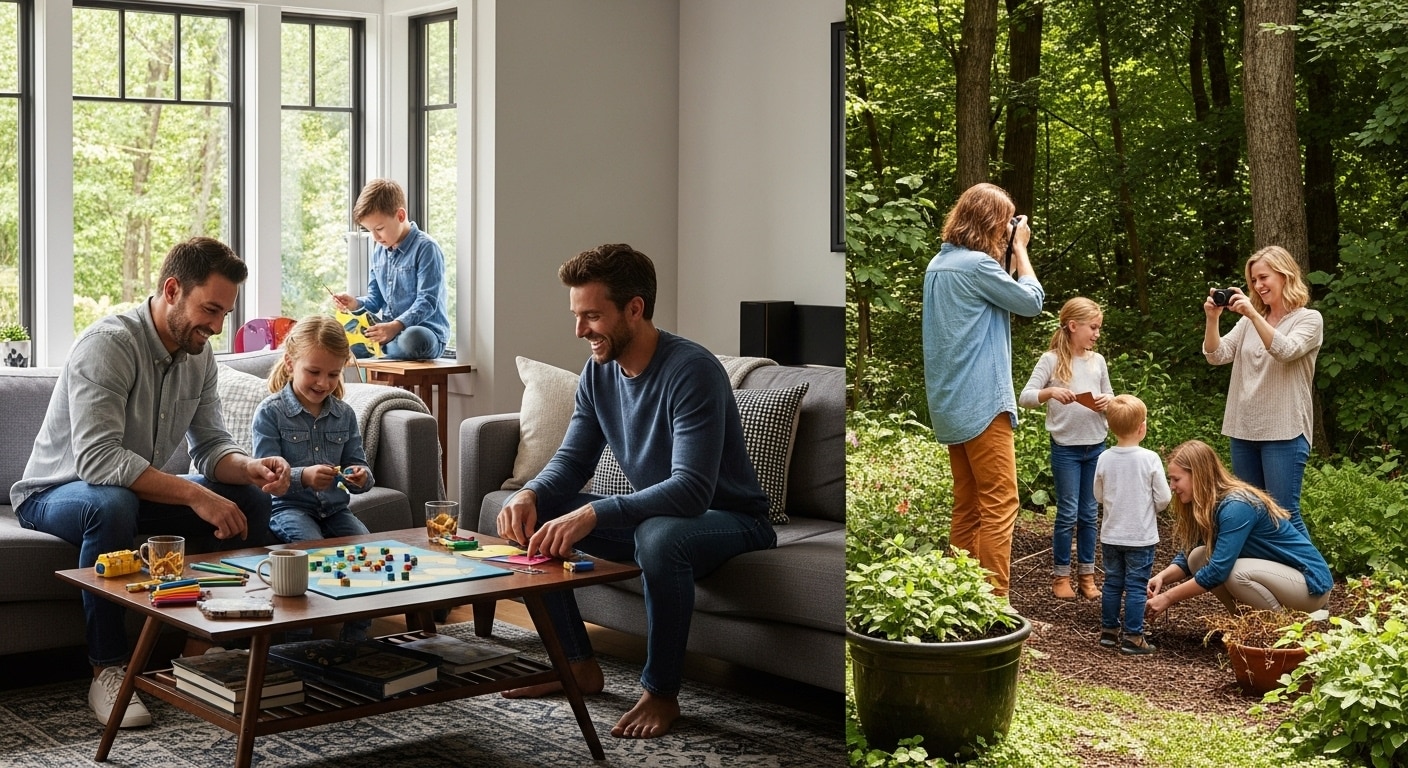
Families seeking meaningful connections and memorable experiences can transform ordinary weekends into extraordinary moments through outdoor adventures. Nature provides an incredible backdrop for bonding, learning, and creating lasting memories with your loved ones.
Outdoor activities offer multiple benefits beyond simple recreation. They provide opportunities for physical exercise, skill development, and exposure to natural environments that many children today miss in our digital age. According to the National Wildlife Federation, children who spend time in nature demonstrate improved cognitive development, enhanced creativity, and reduced stress levels.
Planning successful outdoor family time requires thoughtful preparation. Here are some engaging types of family time activities to explore together:
- Hiking local trails and exploring regional parks
- Camping overnight in state or national forests
- Geocaching as a collaborative treasure hunting experience
- Nature photography expeditions
- Bird watching and wildlife observation
Safety and enjoyment are paramount when embarking on outdoor adventures. Preparation involves selecting age appropriate activities, packing essential supplies, checking weather conditions, and ensuring everyone understands basic outdoor safety protocols. Young children might prefer shorter, less challenging routes, while teenagers could enjoy more demanding trails or wilderness experiences.
Encouraging curiosity about the natural world transforms outdoor activities from simple excursions into educational journeys. Teach children about local ecosystems, identify plant and animal species, and discuss environmental conservation. These moments become powerful learning experiences that extend far beyond traditional classroom settings.
Remember that outdoor adventures do not require expensive equipment or extensive travel. Local parks, community trails, and nearby natural spaces offer wonderful opportunities for family exploration and connection. The key is approaching these experiences with enthusiasm, openness, and a shared sense of discovery.
2: Game Nights: Building Bonds Through Play
Game nights represent a powerful strategy for families seeking meaningful connections and shared experiences. Far more than simple entertainment, these interactive evenings create opportunities for communication, skill development, and genuine relationship building across generations.
Research published in Frontiers in Psychology demonstrates that cooperative game playing significantly enhances family dynamics, reducing interpersonal conflicts and improving emotional understanding. These structured play experiences allow family members to interact in relaxed, enjoyable environments that naturally encourage communication.
Successful game nights require thoughtful selection and preparation. Consider these key strategies for creating memorable family game experiences:
- Choose age appropriate games that engage multiple family members
- Establish clear, fun rules that everyone understands
- Rotate game selection to maintain excitement and variety
- Create a comfortable, distraction free playing environment
- Emphasize enjoyment over competition
Different game types offer unique benefits for family interactions. Board games develop strategic thinking and patience. Trivia games enhance knowledge sharing. Cooperative games build teamwork skills. Card games improve mathematical reasoning and quick thinking.
Parents can transform game nights into subtle learning experiences by selecting games that challenge family members intellectually while maintaining an atmosphere of fun. Younger children learn turn taking, rule following, and emotional regulation. Teenagers practice negotiation and strategic planning. Adults reconnect with playful aspects of their personalities.
Technology provides additional game night options through digital platforms that allow remote play or interactive video game experiences. However, traditional board and card games remain powerful tools for direct, face to face family engagement.
The true magic of game nights lies not in winning or losing, but in the shared laughter, friendly competition, and moments of genuine connection that emerge when families play together. These experiences create lasting memories and strengthen familial bonds in ways few other activities can achieve.

3: Cooking Together: Creating Delicious Memories
Cooking represents more than meal preparation; it is a dynamic family experience that nourishes both body and relationships. When families collaborate in the kitchen, they create far more than just food they create lasting memories, teach valuable life skills, and strengthen familial bonds.
Research published in the International Journal of Behavioral Nutrition and Physical Activity reveals that family cooking experiences contribute significantly to improved dietary habits and deeper interpersonal connections. Children who participate in meal preparation develop better nutritional understanding and increased confidence in their abilities.
Successful family cooking adventures require thoughtful planning and age appropriate involvement. Consider these strategies for engaging every family member:
- Assign roles based on individual skill levels
- Select recipes that allow multiple participation points
- Create a supportive, patient learning environment
- Celebrate individual contributions
- Prioritize safety and supervision
Different age groups bring unique strengths to the cooking experience. Younger children can measure ingredients, mix batters, and wash vegetables. Older children and teenagers might handle more complex tasks like chopping, seasoning, and understanding recipe instructions. Parents serve as guides, teachers, and collaborative partners.
Beyond culinary skills, cooking together teaches critical life lessons. Family members learn patience, following instructions, teamwork, and problem solving. Unexpected moments like kitchen mishaps become opportunities for laughter, learning, and demonstrating resilience.
Cooking can also become a cultural exploration, allowing families to connect with their heritage through traditional recipes. Sharing stories about family recipes, discussing ingredient origins, and understanding culinary traditions transforms meal preparation into a rich, educational experience.
The kitchen becomes a classroom where love is measured in ingredients, connection is stirred into every dish, and memories are seasoned with shared experiences. What begins as a simple meal preparation evolves into a profound opportunity for family bonding and mutual growth.
4: Crafting Activities: Sparking Creativity in Families
Crafting activities represent a powerful avenue for family connection, learning, and creative expression. These hands-on experiences transform ordinary moments into opportunities for imagination, skill development, and shared joy.
Research analyzing creativity in children reveals that collaborative creative activities significantly enhance originality, problem solving skills, and innovative thinking. Families who engage in crafting together create more than just physical objects they build communication, mutual understanding, and lasting memories.
Successful family crafting experiences require thoughtful planning and inclusive approaches. Consider these strategies for meaningful crafting sessions:
- Select projects suitable for multiple skill levels
- Provide clear instructions with room for personal interpretation
- Celebrate individual creativity and unique approaches
- Focus on process over perfect final product
- Create a supportive, judgment free environment
Different craft types offer unique developmental benefits. Paper crafts improve fine motor skills. Textile projects teach patience and precision. Woodworking introduces basic engineering concepts. Painting and drawing encourage emotional expression. Check out our guide on cool crafts for kids to make at home for additional inspiration.
Children of various ages can participate meaningfully. Younger children might focus on simple tasks like selecting colors or applying glue. Older children can handle more complex techniques. Parents serve as facilitators, offering guidance while allowing creative freedom.
Beyond skill development, crafting becomes a metaphor for family dynamics. Learning to appreciate different approaches, supporting each other through challenges, and finding joy in collective creation mirrors broader life lessons. Unexpected craft mishaps become opportunities for laughter, problem solving, and demonstrating resilience.
The true magic of family crafting lies not in producing perfect artifacts, but in the shared experience of creating something together. Each project becomes a tangible representation of family connection, creativity, and love.

5: Volunteer as a Family: Giving Back Together
Volunteering transforms family time into a profound opportunity for learning, compassion, and social responsibility. When families choose to give back together, they create experiences that extend far beyond simple charitable actions, developing empathy, understanding, and shared values.
Research published in the International Journal of Environmental Research and Public Health demonstrates that family volunteering significantly enhances family cohesion, individual well-being, and community engagement. These shared experiences teach children powerful lessons about social connection and personal contribution.
Successful family volunteering requires thoughtful planning and age appropriate involvement. Consider these strategies for meaningful community service:
- Select volunteer opportunities matching family skills and interests
- Choose activities suitable for all age groups
- Discuss the purpose and impact of volunteer work beforehand
- Rotate roles to ensure everyone feels engaged
- Reflect on the experience as a family afterward
Different volunteer activities offer unique learning opportunities. Local food banks teach about food insecurity. Community clean-up projects demonstrate environmental stewardship. Animal shelter assistance develops compassion for living creatures. Learn more about building stronger family values through service, connecting your family’s actions with meaningful principles.
Children benefit immensely from witnessing their parents model civic engagement. Younger children can assist with simple tasks, while teenagers might take more significant leadership roles. Parents serve as guides, demonstrating how individual actions can create meaningful community change.
Volunteering also provides unexpected educational experiences. Families encounter diverse perspectives, learn about complex social issues, and develop communication skills through direct community interaction. These moments become powerful teaching opportunities that textbooks cannot replicate.
The true essence of family volunteering lies not in grand gestures, but in consistent, compassionate actions. Each hour spent serving others weaves threads of empathy, understanding, and shared purpose into the fabric of family life.
6: Family Movie Nights: Enjoying Films as a Unit
Family movie nights transform ordinary evenings into opportunities for connection, learning, and shared emotional experiences. More than simply watching a film, these moments create spaces for dialogue, understanding, and mutual exploration of complex ideas.
Research from Penn State University reveals that co-viewing movies allows parents to discuss nuanced themes, fostering critical thinking and moral development in children. Films become powerful educational tools that extend far beyond entertainment.
Successful family movie nights require thoughtful preparation and engagement. Consider these strategies for meaningful viewing experiences:
- Select age appropriate films with discussion potential
- Create a comfortable viewing environment
- Pause for meaningful conversations during the movie
- Encourage different perspectives and interpretations
- Avoid distractions like phones or additional screens
Different movie genres offer unique opportunities for family learning. Documentaries spark conversations about real world issues. Animation films often contain profound moral lessons. Historical dramas provide windows into different cultural experiences. Science fiction can inspire discussions about technology and human potential.
Children of various ages can participate meaningfully. Younger viewers might focus on basic plot and character understanding. Teenagers can engage in deeper analytical discussions about themes, motivations, and societal implications. Parents serve as facilitators, guiding conversation and helping family members connect film experiences to real life.
Movie nights also provide subtle opportunities for emotional intelligence development. Discussing characters feelings, motivations, and challenges helps family members develop empathy and communication skills. Shared laughter, tears, and moments of surprise create lasting memories.
The true magic of family movie nights lies not in the film itself, but in the connections formed through shared experience. Each movie becomes a bridge connecting family members, inviting them to explore ideas, emotions, and perspectives together.

7: Family Book Clubs: Fostering a Love for Reading Together
Family book clubs transform reading from a solitary activity into a dynamic, shared experience that connects generations through storytelling and imagination. These collaborative reading experiences create profound opportunities for learning, empathy, and mutual understanding.
Research from the ERIC database demonstrates that shared reading initiatives significantly enhance literacy development, reading motivation, and parent-child relationships. By reading and discussing books together, families create meaningful conversations that extend far beyond the printed page.
Successful family book clubs require thoughtful planning and inclusive approaches. Consider these strategies for engaging reading experiences:
- Select books appropriate for multiple reading levels
- Rotate book selection responsibilities among family members
- Create a comfortable, welcoming discussion environment
- Encourage diverse perspectives and interpretations
- Allow everyone to share their thoughts without judgment
Different book genres offer unique opportunities for family exploration. Fiction develops empathy and imagination. Non-fiction introduces real world concepts. Historical narratives provide cultural insights. Science fiction sparks conversations about technology and human potential.
Children of various ages can participate meaningfully. Younger readers might focus on basic story comprehension. Teenagers can engage in deeper literary analysis. Parents serve as facilitators, guiding discussions and helping family members connect narrative experiences to their own lives.
Book clubs also provide subtle opportunities for emotional intelligence development. Discussing characters motivations, challenges, and growth helps family members develop critical thinking and communication skills. Shared reading becomes a powerful tool for understanding different perspectives and building emotional connections.
The true magic of family book clubs lies not in completing a book, but in the conversations, laughter, and moments of shared discovery that emerge through collective reading. Each book becomes a bridge connecting family members, inviting them to explore worlds, ideas, and emotions together.
Below is a comprehensive table summarizing the seven main types of family time activities described in this article, including core benefits and suggested approaches for maximizing each experience.
| Family Activity Type | Main Benefits | Key Approaches or Outcomes |
|---|---|---|
| Outdoor Adventures | Boosts cognitive growth, reduces stress, encourages curiosity | Hike, camp, or explore nature; teach about local ecosystems |
| Game Nights | Builds communication, reduces conflicts, deepens relationships | Pick age-appropriate games; focus on fun and cooperation |
| Cooking Together | Strengthens bonds, teaches life skills, improves eating habits | Assign roles by age; celebrate contributions, foster learning |
| Crafting Activities | Sparks creativity, develops skills, encourages collaboration | Choose inclusive crafts; focus on process, celebrate creativity |
| Volunteering as a Family | Builds empathy, instills responsibility, creates shared values | Pick age-appropriate service; reflect on impact together |
| Family Movie Nights | Promotes learning, emotional growth, connection through dialogue | Pick films with discussion value; share perspectives, minimize distractions |
| Family Book Clubs | Fosters literacy, empathy, family communication | Rotate book choices; discuss openly, encourage all ages to join |
Make Every Family Moment Count—Unlock More Joyful, Organized Togetherness at Home
You want family time to be meaningful and memorable, but busy schedules, clutter, and daily chaos often get in the way. The article “7 Types of Family Time Activities You Can Enjoy Together” highlights how much families crave connection, shared experiences, and a peaceful environment to truly enjoy activities like outdoor adventures, game nights, and volunteering. If you’re feeling stretched thin and longing for more quality time, it may be time to create a home that supports your goals for bonding and simple living.
Discover proven strategies for organization, time management, and creating efficient spaces. Whether you want home management hacks or tips to balance work, school, and family fun, you’ll find practical tools that help busy families get back to what matters most. Visit our main page to start simplifying your routines and transform your home into a place where every family activity—whether it’s crafting, cooking, or a movie night—becomes easier and more meaningful. Don’t miss out on creating your most memorable moments together. Start your journey now and reclaim joyful family time.
Frequently Asked Questions
What are some engaging outdoor activities for families?
Families can enjoy activities such as hiking local trails, camping in national forests, geocaching, nature photography, and bird watching to bond and create lasting memories.
How can families make game nights more enjoyable?
To enhance game nights, choose age-appropriate games, establish clear rules, create a distraction-free environment, and emphasize fun over competition. Rotating game selection also keeps the experience fresh.
What are the benefits of cooking together as a family?
Cooking together fosters teamwork, teaches valuable life skills, and strengthens bonds. It also helps improve dietary habits and increases children’s confidence in the kitchen.
How can volunteering as a family impact relationships?
Family volunteering enhances cohesion, teaches social responsibility, and promotes empathy. It creates shared values and experiences that strengthen family ties while contributing to the community.
Recommended
- Cool Crafts for Kids to Make at Home – It’s a Southern Life Y’all
- 20 Time-Tested Family Hacks to Break the Paycheck-to-Paycheck Cycle (Strategies That Actually Work with Kids) – It’s a Southern Life Y’all
- How to Use Inspirational Quotes to Build Stronger Family Values – It’s a Southern Life Y’all
- How to Host an Amazing Family Party for 30 People Without Breaking Your Budget – It’s a Southern Life Y’all
- Understanding The Family Outing Guide Hawaii Experience | Flight Of Aloha
Want a little more help with this? I made a free Mental Load Kit that pairs right up with this post — y’all can grab it over on my Free Resources page.