

Complete Guide to Home Management Systems
Every household faces a daily whirlwind of chores, budgets, and family schedules. Without a solid plan, things can easily slip through the cracks. Studies show effective home management systems can improve family well-being and happiness by bringing much-needed order and structure. Learning how to build a system tailored to your family unlocks more time together and less stress over daily details.
Table of Contents
- Defining A Home Management System For Families
- Key Components And System Variations Explained
- Step-By-Step Process For System Setup
- Why Every Busy Family Needs A System
- Essential Tools, Apps, And Resources
- Common Mistakes And How To Avoid Them
Key Takeaways
| Point | Details |
|---|---|
| Home Management Importance | A home management system is essential for promoting family well-being by effectively utilizing resources and reducing stress. |
| Key Components | Effective systems include financial tracking, household organization, time management, communication protocols, and resource allocation. |
| Customization is Key | Each family should tailor their home management approach based on unique dynamics and specific needs. |
| Avoid Common Mistakes | Families should create simple systems to prevent confusion, maintain consistent implementation, and encourage open communication. |
Defining a Home Management System for Families
A home management system is more than just a checklist or calendar – it’s your family’s strategic blueprint for running a smooth, efficient household. According to Winmeen, home management is “the vital factor in every family contributing to the overall health, happiness, and well-being of family members.”
At its core, a home management system involves systematically organizing your family’s resources, time, and energy toward achieving shared goals. Think of it like the mission control center for your household – coordinating everything from daily chores to long-term financial planning. Businesslife describes this process as “the administrative aspect of a family, aiding in planning, assessing, integrating, and evaluating human and material resources.”
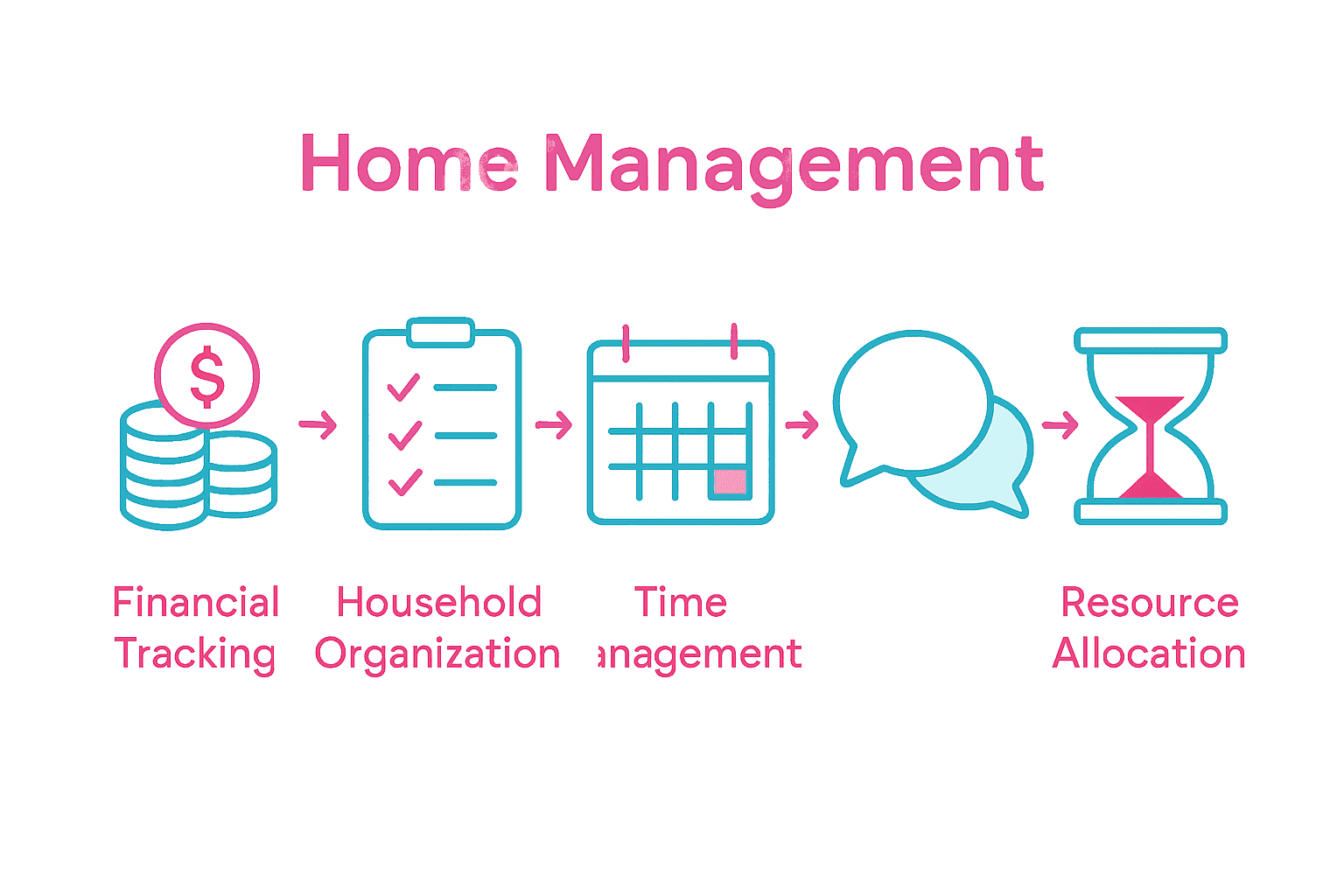
Effective home management systems typically include several key components:
- Financial Tracking: Budgeting, expense monitoring, and financial goal setting
- Household Organization: Chore schedules, cleaning routines, and maintenance tracking
- Time Management: Family calendar, individual schedules, and shared commitments
- Communication Protocols: Regular family meetings, decision-making frameworks
- Resource Allocation: Strategically managing time, money, and energy
By developing a comprehensive home management system, you create a roadmap that reduces stress, increases family harmony, and helps everyone work together more efficiently.
 It transforms household management from a chaotic scramble into a smooth, intentional process.
Key Components and System Variations Explained
Home management systems are not one-size-fits-all solutions. According to Winmeen, effective home management involves “key components such as planning, organizing, controlling, and evaluating the use of family resources to achieve family goals.”
System variations emerge from the unique dynamics of each family. Businesslife notes that these systems can “vary based on family needs and resources,” allowing families to create customized approaches that fit their specific circumstances.
Typical home management system variations include:
- Traditional Structure: Centralized decision-making with clear roles
- Collaborative Model: Shared responsibilities with democratic decision-making
- Technology-Driven Approach: Using apps, digital calendars, and shared platforms
- Flexible Adaptive System: Regularly adjusting strategies based on changing family needs
Successful home management requires understanding your family’s unique rhythm. Whether you prefer a structured approach or a more fluid system, the goal remains the same: creating a harmonious, efficient household that supports everyone’s individual and collective well-being.
Step-by-Step Process for System Setup
Creating a home management system requires thoughtful planning and intentional implementation. Winmeen outlines a clear approach, emphasizing “a series of steps” that transform household management from chaotic to strategic.
Businesslife recommends a comprehensive process for establishing your home management system. Here’s a detailed breakdown of the key steps:
- Family Goal Identification
- Define short-term and long-term family objectives
- Discuss individual and collective aspirations
- Create measurable, achievable goals
- Resource Assessment
- Inventory available time, financial, and human resources
- Identify strengths and potential constraints
- Determine individual family member capabilities
- Comprehensive Planning
- Design structured task allocation
- Create communication protocols
- Develop tracking and accountability mechanisms
- System Implementation
- Introduce systems gradually
- Provide clear instructions and expectations
- Offer support and initial guidance
- Continuous Evaluation
- Schedule regular system review meetings
- Collect feedback from all family members
- Be willing to adapt and modify approaches

Remember, a successful home management system isn’t about perfection – it’s about progress. Stay flexible, communicate openly, and view this as an evolving process that grows with your family.
Why Every Busy Family Needs a System
In today’s fast-paced world, families are juggling more responsibilities than ever before. Winmeen highlights that “a well-managed home contributes to the overall health, happiness, and well-being of family members” by helping them efficiently use their resources and achieve their goals.
Businesslife emphasizes that home management is “essential for families to plan, assess, integrate, and evaluate their resources effectively.” Without a structured system, families often experience:
- Constant Chaos: Missed appointments and last-minute scrambles
- Communication Breakdowns: Misunderstandings about responsibilities
- Unnecessary Stress: Feeling overwhelmed by daily tasks
- Inefficient Resource Use: Wasting time and money
By implementing a home management system, you can transform your family’s time management, creating a more harmonious, less stressful household environment. It’s not about perfection – it’s about creating a framework that supports your family’s unique needs and helps everyone work together more effectively.
Essential Tools, Apps, and Resources
Building an effective home management system requires the right mix of digital and analog tools. Clean House Melbourne emphasizes the importance of “organization, scheduling, and smart storage solutions” in creating a smooth-running home environment for busy families.
Technology can be a game-changer in home management. OpenHAB demonstrates how home automation software can connect various devices and services, allowing families to streamline their daily tasks through a unified interface.
Key tools and resources for effective home management include:
Digital Organization Tools
- Shared family calendars
- Task management apps
- Budget tracking platforms
- Communication and coordination apps
Physical Organization Resources
- Centralized family command centers
- Color-coded filing systems
- Shared bulletin boards
- Household planners and journals
If you’re looking to get started with managing your family finances more effectively, check out our guide on budgeting tools that bring peace of mind. The right tools can transform chaos into harmony, making family management feel less like a chore and more like a collaborative adventure.
Common Mistakes and How to Avoid Them
Clean House Melbourne warns that many families struggle with home management due to “lack of organization, failure to establish routines, and not utilizing available tools.” Understanding these pitfalls is the first step toward creating a more effective system.
OpenHAB highlights another critical insight: families often make the mistake of using default configurations without customization. This one-size-fits-all approach can lead to inefficient and frustrating home management experiences.
Common Home Management System Mistakes:
Strategic Mistakes to Avoid
- Overcomplicating the System: Creating too many complex rules
- Inconsistent Implementation: Not following through with established protocols
- Poor Communication: Failing to keep all family members informed
- Rigid Thinking: Refusing to adapt the system as family needs change
Proactive Solutions
- Start simple and gradually build complexity
- Hold regular family meetings to review and adjust
- Use flexible, adaptable tools and approaches
- Encourage open dialogue about what’s working and what isn’t
Remember, a home management system should reduce stress, not create more of it. Be patient with yourself and your family as you develop a system that truly works for your unique household.
Take Control of Your Home Management Journey Today
Feeling overwhelmed by daily chaos and constant missed opportunities to connect with your family is more common than you think. The Complete Guide to Home Management Systems reveals how key challenges like fragmented communication, unclear roles, and wasted time stop families from reaching their full potential. By embracing concepts like resource allocation, continuous evaluation, and time management, you can turn stress into harmony and build a household where everyone thrives.
If you want to break free from the chaos and foster peace and productivity in your home, explore proven strategies at Its a Southern Life Y’all. From simple living ideas to expert-backed organization hacks and budgeting systems that bring clarity, we provide the tools busy families need to succeed. Don’t wait for another missed appointment or frustrating evening. Start your transformation now by visiting our home management resources and unlock the secrets to a balanced family life.
Frequently Asked Questions
What is a home management system?
A home management system is a strategic blueprint for organizing a household’s resources, time, and energy to achieve family goals and ensure efficient operation.
What are the key components of a home management system?
The key components include financial tracking, household organization, time management, communication protocols, and resource allocation.
How can I set up an effective home management system for my family?
To set up an effective system, identify family goals, assess resources, create a comprehensive plan, implement the system gradually, and continuously evaluate its effectiveness.
What common mistakes should I avoid when managing my home?
Common mistakes include overcomplicating the system, inconsistent implementation of protocols, poor communication among family members, and rigid thinking that doesn’t adapt to changing family needs.
Recommended
- 7 Effective Types of Home Organization Systems – It’s a Southern Life Ya’ll
- Why Use Budgeting Systems: Complete Family Guide – It’s a Southern Life Ya’ll
Want the done-for-you version? The Whole Home System is the finished version of everything in this post.