
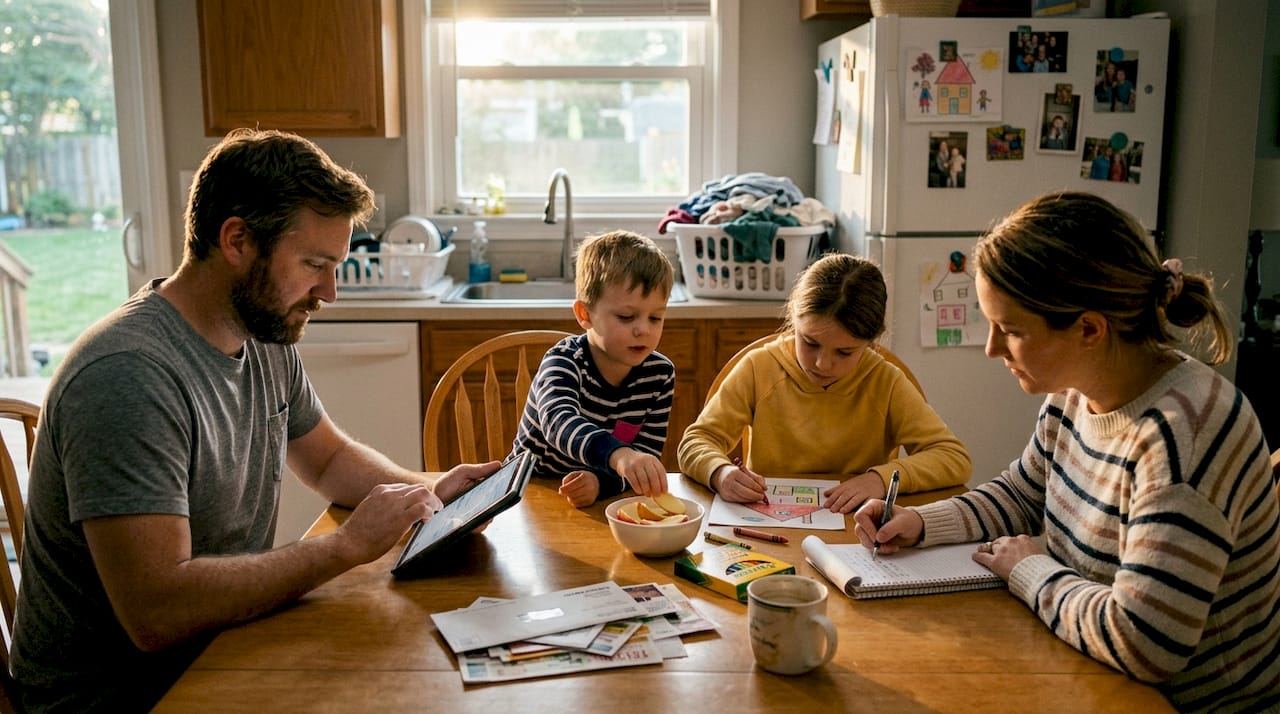
Maximize family time with smart home project planning
Juggling home projects while managing a busy family schedule can feel overwhelming. Between work deadlines, school activities, meal planning, and bedtime routines, tackling that kitchen update or garage organization often gets pushed to the bottom of the list. Yet unfinished projects create visual clutter and mental stress that affect everyone in the household. Strategic planning transforms home improvement from a source of chaos into an opportunity for collaboration and growth. When you approach projects with clear goals, realistic timelines, and family involvement, you create space for both productivity and quality time together. This guide delivers practical strategies to help busy families plan home projects that enhance organization, reduce stress, and support better work-life balance.
Table of Contents
- Key takeaways
- Understanding the role of home project planning for busy families
- Core strategies for effective home project planning with children
- Balancing budgets, schedules, and flexibility for lasting success
- Adapting home projects for safety and inclusion of young children
- Discover tools and systems to streamline your home projects
- FAQ
Key Takeaways
| Point | Details |
|---|---|
| Planning improves family productivity | A structured home project plan helps families stay organized and reduces daily stress by aligning tasks with routines. |
| Prioritize by urgency | Evaluate projects for safety and necessity first, then tackle cosmetic updates only after critical needs are addressed. |
| Involve family in planning | Assign age appropriate tasks to share the workload and build teamwork while keeping disruptions manageable. |
| Plan around schedules and buffers | Build contingency buffers into timelines and budget to adapt to children’s schedules and unexpected costs. |
Understanding the role of home project planning for busy families
Most families struggle to balance home improvement tasks with daily demands. School pickups, homework help, meal prep, and work commitments leave little energy for tackling that bathroom remodel or closet overhaul. Without a structured approach, projects become sources of frustration rather than improvement.
Effective planning transforms chaotic renovation attempts into organized routines that work with your family’s rhythm. Research demonstrates that strategic home renewal improves work performance among dual-earner couples by creating spaces that support productivity and reduce stress. When your physical environment functions smoothly, you gain mental bandwidth for both professional responsibilities and family connection.
Planning fosters collaboration by giving each family member a role in creating a better home. Kids learn responsibility through age-appropriate tasks while adults share the workload more equitably. This shared ownership reduces the burden on any single person and builds teamwork skills that extend beyond the project itself.
“A well-organized home project plan reduces decision fatigue and creates predictable routines that help families manage competing priorities with less stress.”
The benefits extend far beyond the finished project. Strategic planning delivers:
- Better time management through realistic scheduling that respects family commitments
- Reduced financial stress by anticipating costs and building in buffers
- Improved communication as family members coordinate roles and expectations
- Enhanced productivity by eliminating the start-stop pattern of unplanned work
- Proactive problem-solving that addresses obstacles before they derail progress
When you invest time upfront to plan thoroughly, you create a roadmap that guides your family through the project while maintaining the rhythms that keep daily life running smoothly. This foundation makes it possible to improve your home without sacrificing the work-life balance tips for busy families that protect your wellbeing.
Core strategies for effective home project planning with children
Successful home projects start with clear prioritization. Evaluate each potential project based on urgency, safety implications, and how it serves your family’s needs. A leaking roof demands immediate attention, while cosmetic updates can wait. Structural issues or safety hazards should always take precedence over aesthetic improvements.
Breaking projects into small increments makes them manageable for busy schedules. Rather than dedicating entire weekends to work, identify 30 to 60 minute blocks that align with your family’s natural rhythms. Early mornings before kids wake up, naptime windows, or evening hours after bedtime can become productive project time without disrupting family activities.
Organization tools keep everyone on the same page. Use shared digital calendars to block project time, spreadsheets to track budgets and material lists, and staging areas to organize supplies by project phase. Visual systems help family members understand what happens next and when their participation is needed.
Research shows that defining goals and creating detailed timelines with buffers are essential methodologies for successful home renovations. Here’s how to implement these strategies:
- Define specific, measurable project goals with completion criteria everyone understands
- Create a master timeline that maps major milestones to your family calendar
- Build in buffer time of 15 to 20 percent for unexpected delays or complications
- Stage materials in designated areas so supplies are ready when you need them
- Schedule regular family check-ins to review progress and adjust plans as needed
Assigning roles transforms projects from solo efforts into team activities. Even young children can contribute through tasks like sorting hardware, holding flashlights, or cleaning up debris. Older kids and teens can take on more substantial responsibilities that teach valuable skills. Instituting chores for your children and teens creates a foundation for project participation that builds competence and confidence.
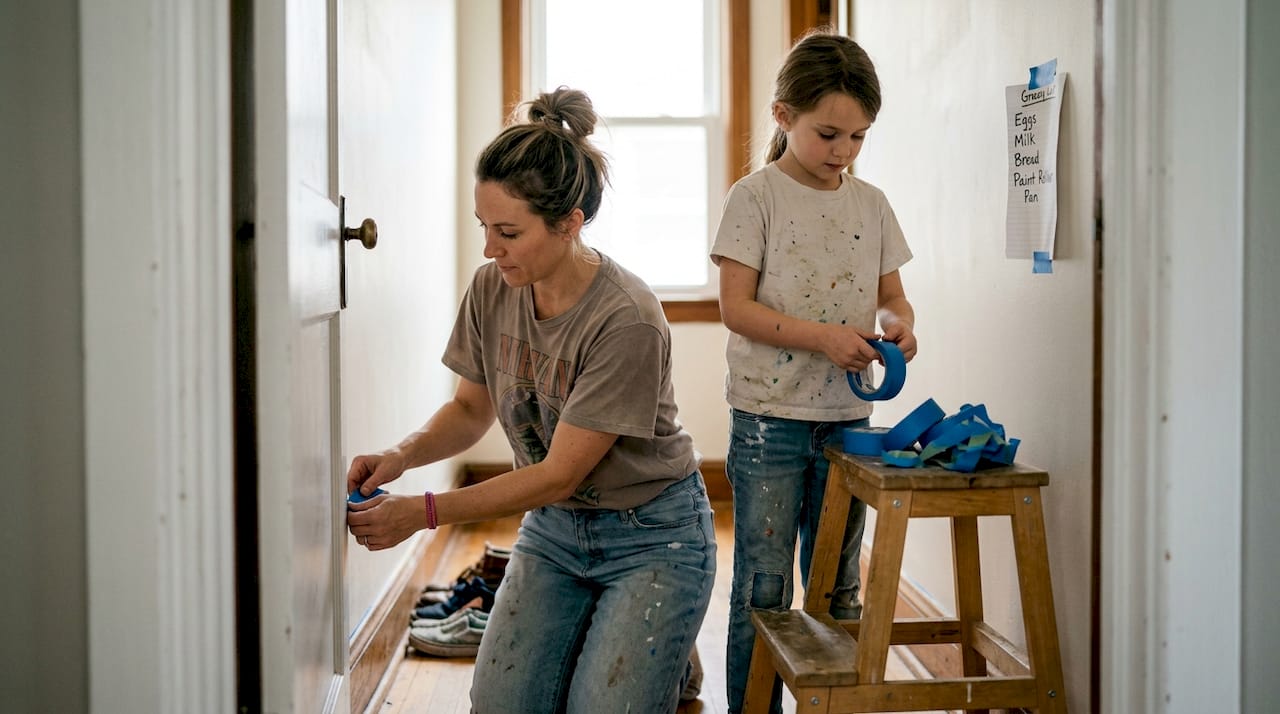
Pro Tip: Create a project board with photos or drawings showing the finished vision. Visual references help children understand the goal and stay motivated through the messy middle stages.
Safety planning is non-negotiable when children are present. Store all tools, chemicals, and sharp objects in locked cabinets or high shelves between work sessions. Establish clear boundaries around work zones using tape or barriers. Communicate noise expectations and provide hearing protection when using loud equipment. Plan dust-generating tasks when children can be elsewhere, or use plastic sheeting to contain debris.
| Project Phase | Family Role | Time Allocation |
|---|---|---|
| Planning | All members input needs and preferences | 2-3 hours over one week |
| Preparation | Adults source materials, kids organize staging area | 3-4 hours |
| Execution | Adults lead work, kids assist with age-appropriate tasks | 30-60 minute increments |
| Cleanup | All members participate in tidying and inspection | 15-30 minutes per session |
Consider family-friendly home renovation approaches that minimize disruption to daily routines. Phased work that tackles one room or area at a time preserves functional spaces for family activities. Block scheduling for families helps you protect time for both project work and essential family activities without constant conflict.
Balancing budgets, schedules, and flexibility for lasting success
Financial planning prevents the stress that derails home projects. Set realistic budgets by researching material costs, labor rates if hiring help, and permit fees. Experts recommend budgeting 1 to 4 percent annually for home maintenance with a 10 to 20 percent contingency buffer to handle surprises. This cushion protects your family from financial strain when you discover hidden damage or need to upgrade materials.
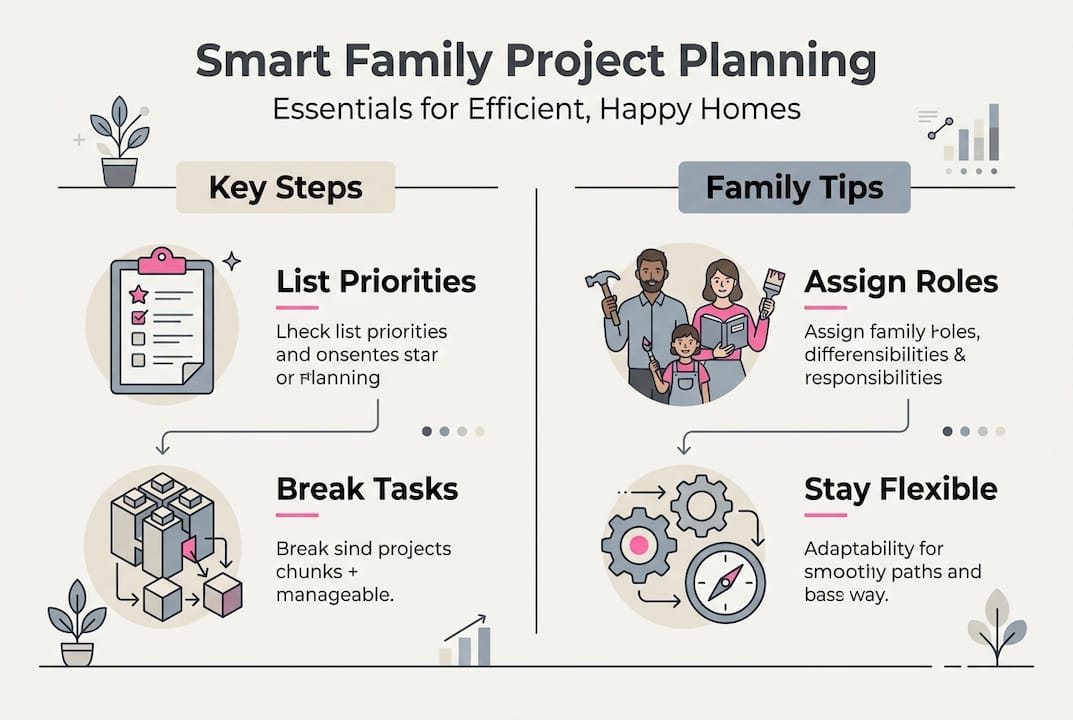
Track every expense in a dedicated spreadsheet or budgeting app. Categorize costs by project phase so you can identify where money goes and adjust spending in real time. Transparency about finances reduces conflict between partners and helps the whole family understand trade-offs between projects and other priorities.
Timeline flexibility keeps projects moving without sacrificing family wellbeing. Align major work phases with natural breaks in your family calendar. School vacations, long weekends, or slower work periods provide windows for intensive effort. Avoid scheduling demanding projects during busy seasons like back-to-school or holiday periods when family stress already runs high.
Phased scheduling with built-in buffers accommodates the unpredictability of family life. When a child gets sick or work demands surge, you can pause without derailing the entire project. Warehouse-style phasing breaks large renovations into distinct stages with clear endpoints, making it easier to stop and restart as needed.
| Budget Category | Recommended Allocation | Purpose |
|---|---|---|
| Materials | 40-50% | Primary supplies and finishes |
| Labor | 30-40% | Professional services if needed |
| Contingency | 10-20% | Unexpected issues and changes |
| Tools/Equipment | 5-10% | Purchase or rental of specialized items |
Communication manages disruptions before they create resentment. Discuss upcoming project phases during family meetings so everyone knows what to expect. Explain how noise, dust, or temporary inconveniences will affect daily routines. When children understand why the bathroom is off-limits or why dinner might be simpler during intensive work periods, they adapt more easily.
Pro Tip: Create a visual countdown calendar for major project milestones. Kids respond well to seeing progress toward completion, and it helps everyone stay motivated through challenging phases.
Flexibility in execution methods preserves family harmony. If weekend work sessions consistently create tension, shift to shorter weekday efforts. If a particular task proves more complex than anticipated, pause to reassess rather than pushing through with frustration. The goal is home improvement that enhances family life, not projects that damage relationships.
Regular check-ins keep everyone aligned and address issues early. Weekly 15 minute family huddles review what’s working, what’s challenging, and what adjustments might help. These conversations build problem-solving skills and ensure no one feels ignored or overwhelmed by project demands.
Consider how projects intersect with your broader family systems. Budgeting for families stability requires balancing home improvement spending with other financial goals like emergency funds and education savings. Why schedule family time becomes even more important during projects to ensure renovation work doesn’t consume all available family connection opportunities.
Adapting home projects for safety and inclusion of young children
Families with young children need specialized approaches that protect safety while maintaining progress. Plan work in 15 to 30 minute increments during naptime or quiet play periods. These focused bursts accomplish meaningful tasks without requiring sustained childcare arrangements. Research on family-friendly home renovation emphasizes planning short work blocks and ensuring tools are stored away between sessions.
Tool storage requires absolute consistency. Invest in locking toolboxes or install high shelving in garages where curious toddlers cannot reach. Never leave power tools, sharp objects, or chemicals accessible, even for a moment. Create a ritual of securing all hazardous items before children enter the work area.
Safe involvement channels children’s natural curiosity into productive participation. Toddlers can hand you paintbrushes, sort large hardware by color, or help with cleanup using child-sized brooms. Preschoolers can measure with tape measures, hold steady items, or apply painter’s tape to baseboards. Elementary age children can learn to use hand tools under close supervision, gaining skills that build confidence and competence.
- Assign specific, age-appropriate tasks that give children ownership without exposing them to danger
- Provide proper safety gear including goggles, gloves, and closed-toe shoes when children participate
- Establish clear rules about work zones and enforce them consistently
- Celebrate contributions to reinforce that their help matters and is valued
- Know when to work alone and when involvement creates more challenges than benefits
Disruption management requires proactive communication. Prepare children for upcoming noise by explaining what sounds to expect and when. Provide noise-canceling headphones or plan noisy work during times when kids can be outside or at activities. Address dust and debris by containing work areas with plastic sheeting and running air purifiers in adjacent spaces.
Some projects require temporary space adjustments. If renovating a bathroom, establish clear schedules for when it’s available versus off-limits. When working on shared spaces like kitchens, create temporary function areas elsewhere so family routines continue. Sometimes relocating to a relative’s home for a weekend allows intensive work that would be impossible with children present.
Pro Tip: Document the project through photos and let children help create a before-and-after album. This involvement builds pride in the finished result and creates lasting memories of family collaboration.
Teaching kids value of hard work happens naturally through project participation. When children see their contributions lead to tangible improvements in their home, they develop work ethic and problem-solving abilities that serve them throughout life. The key is structuring participation so it feels rewarding rather than burdensome.
Discover tools and systems to streamline your home projects
Effective home project planning integrates with broader family organization systems that support daily life. When your household operates with clear structures, adding project work becomes manageable rather than overwhelming. Explore proven strategies that busy families use to maintain order and productivity.
Learn about types of home organization systems that create foundations for successful project execution. From zone-based organization to digital task management, these frameworks help you maintain progress without losing track of daily responsibilities. Understanding different organizational approaches lets you choose systems that match your family’s unique needs and preferences.
Discover productivity hacks for families that maximize efficiency during project work and everyday tasks. Small changes in how you batch activities, automate decisions, and eliminate time wasters create capacity for meaningful home improvements. These practical tips help you accomplish more without extending your already full days.
Understand the role home management systems play in balancing work, family, and home improvement goals. Comprehensive approaches to managing household operations reduce the mental load that makes projects feel impossible. When you have reliable systems handling routine tasks, you free up energy and attention for renovation work that enhances your living space.
FAQ
What is the most important step in home project planning for busy families?
Prioritizing projects by urgency and family impact comes first. Assess which improvements address safety concerns, functional needs, or quality of life issues most pressing for your household. Once you identify the right project, break it into manageable time blocks that fit naturally into your existing schedule without overwhelming daily routines.
How can families involve children safely in home projects?
Plan short 15 to 30 minute work sessions when children are resting or engaged in quiet activities. Store all tools and hazardous materials in locked areas between work sessions. Assign age-appropriate tasks like sorting supplies, holding flashlights, or cleanup that let children contribute without exposure to danger. Always supervise closely and establish clear boundaries around work zones.
What budgeting approach helps avoid financial stress during home renovations?
Allocate 1 to 4 percent of your home’s value annually for maintenance and improvement projects. Build a 10 to 20 percent contingency buffer into every project budget to handle unexpected complications without derailing finances. Track all expenses in real time and communicate openly with your partner about spending to prevent surprises that create conflict.
How does regular communication benefit home project success?
Routine family check-ins create space to discuss progress, address concerns, and adjust plans before small issues become major problems. Weekly 15 minute conversations keep everyone informed about upcoming work phases and their impact on daily routines. This transparency reduces stress by eliminating uncertainty and ensures all family members feel heard and valued throughout the project.
Recommended
- Time Management Step by Step for Family Success –
- How to Plan Family Activities for Memorable Fun –
- Role of automation at home for busy families in 2026 –
- Home Management Systems: How Families Stay Organized –
Want a little more help with this? The Whole Home System keeps the projects and the upkeep in one place, so family time isn’t what gets cut.