

How to prioritize tasks at home for busy parents
If you’re a busy parent, you know the feeling of drowning in an endless to-do list. Between school pickups, meal prep, laundry piles, and work deadlines, it’s easy to feel overwhelmed and scattered. The truth is, not all tasks carry the same weight, and trying to do everything at once leaves you exhausted with little to show for it. Learning how to prioritize tasks at home isn’t just about getting more done; it’s about reclaiming your time, reducing stress, and creating a balanced family life. This guide will walk you through practical strategies to identify what truly matters, organize your responsibilities, and build a system that works for your unique household.
Table of Contents
- Key takeaways
- Understanding the problem: why task prioritization matters at home
- Preparing to prioritize: tools and strategies you need
- How to prioritize tasks effectively at home: step-by-step guide
- Maintaining and adjusting your priorities for lasting balance
- Helpful resources for busy parents managing home tasks
- Frequently asked questions
Key Takeaways
| Point | Details |
|---|---|
| Prioritize by urgency and importance | Focus on tasks that matter most to family wellbeing and time, rather than reacting to every urgent signal. |
| Use a single task system | Gather all tasks into one place and choose a method you will actually use. |
| Delegate and involve family | Delegate and involve family members where possible to share responsibilities. |
| Review and adjust priorities regularly | Set regular reviews to realign tasks with changing family needs. |
Understanding the problem: why task prioritization matters at home
Busy parents juggle competing demands every single day. You’re managing household chores, coordinating schedules, supporting your kids’ activities, and often working full or part time. When everything feels urgent, nothing gets the attention it deserves. This constant state of reactivity drains your energy and steals precious family moments.
Without a clear prioritization system, you end up firefighting instead of planning. You tackle whatever screams loudest, whether that’s a sink full of dishes or a permission slip due tomorrow. Meanwhile, important but less urgent tasks like planning healthy meals or scheduling quality time with your partner fall through the cracks. Poor task prioritization can increase parental stress and reduce family wellbeing, creating a cycle of overwhelm that affects everyone in your household.
Recognizing different types of tasks is the first step toward better management. Some tasks are both urgent and important, like a sick child needing care. Others are important but not urgent, like organizing your home office or planning next month’s budget. Many tasks feel urgent but aren’t truly important, such as responding to every non-critical email immediately. Then there are tasks that are neither urgent nor important, which often waste your limited time and energy.
“The key is not to prioritize what’s on your schedule, but to schedule your priorities. When you understand what truly matters to your family, you can make intentional choices about where your time goes.”
Understanding why prioritization matters creates the motivation you need to build better habits. When you see how intentional task management reduces stress and creates more space for what you love, you’ll commit to the process. The goal isn’t perfection; it’s progress toward a calmer, more organized home life. Consider exploring work-life balance tips for busy families to complement your prioritization efforts and create sustainable routines that support your whole family.
Preparing to prioritize: tools and strategies you need
Before you can effectively prioritize, you need the right tools and a system that fits your lifestyle. Start by gathering all your scattered task lists, sticky notes, and mental reminders into one place. This brain dump reveals the full scope of what you’re managing and prevents important items from slipping through the cracks.

Choosing your task tracking method matters more than you might think. Some parents thrive with digital apps that sync across devices, while others prefer the tactile satisfaction of crossing items off a paper planner. The best system is the one you’ll actually use consistently. Here’s a comparison of common organizational tools:
| Tool Type | Best For | Pros | Cons |
|---|---|---|---|
| Paper planner | Visual learners who like writing | Tangible, no tech required, customizable | Can’t sync with family, easy to misplace |
| Digital apps | Tech-savvy families needing sync | Shared access, reminders, cloud backup | Learning curve, requires devices |
| Kitchen whiteboard | Family visibility and collaboration | Everyone sees it, easy updates, low cost | Limited space, no mobile access |
| Hybrid system | Those wanting flexibility | Combines benefits of multiple methods | Requires maintenance of multiple tools |
Effective home organization systems help busy families stay on top of tasks, so invest time in setting up a method that matches your family’s needs. Consider factors like how many people need access, whether you need mobile notifications, and how much detail you want to track.
Here are essential preparatory steps to set yourself up for prioritization success:
- Collect every task from all sources into your chosen system
- Sync your family calendar with your task list to see time constraints
- Categorize tasks by area such as home maintenance, meal planning, kids’ activities, and work
- Estimate how long each task realistically takes to complete
- Identify tasks that repeat weekly or monthly for batch scheduling
- Note which tasks require other people’s input or availability
- Set up a consistent time each week to review and update your system
Pro Tip: Block 15 minutes every Sunday evening to update your task system and plan the week ahead. This small investment prevents Monday morning chaos and helps you start each week with clarity and control.
Explore home management systems for families to discover comprehensive approaches that integrate task prioritization with other household management needs. You might also find value in a top time management tools comparison to identify digital solutions that fit your tech comfort level and family situation.
How to prioritize tasks effectively at home: step-by-step guide
Now that you have your tools ready, let’s walk through a practical process for prioritizing your home tasks. This systematic approach helps you make clear decisions about what deserves your attention first.
- List every task currently on your plate without filtering or organizing yet
- Assess each task’s urgency by asking when it absolutely must be completed
- Evaluate each task’s importance by considering its impact on family wellbeing and goals
- Assign each task to a priority category based on urgency and importance combined
- Schedule high-priority tasks in your calendar first, protecting time for completion
- Identify tasks you can delegate to your partner, older children, or hired help
- Batch similar tasks together to work more efficiently and reduce mental switching
- Review your priority list daily and adjust as new tasks emerge or situations change
Different prioritization methods work for different families. Here’s how popular frameworks compare:
| Method | How It Works | Best For | Example |
|---|---|---|---|
| Eisenhower Matrix | Four quadrants: urgent/important, important/not urgent, urgent/not important, neither | Visual thinkers who need clear categories | Sick child care (urgent/important) vs meal planning (important/not urgent) |
| ABC Method | Label tasks A (must do today), B (should do soon), C (nice to do) | Simple, quick daily prioritization | A: Pay bills due today, B: Grocery shopping, C: Organize photos |
| Impact vs Effort | Plot tasks on grid of high/low impact and high/low effort | Maximizing results with limited energy | High impact/low effort tasks first, like setting up auto-bill pay |
Prioritizing by urgency and impact leads to better time and energy use at home, so choose a method that makes sense to you and stick with it long enough to see results. Most families benefit from starting simple with the ABC method before graduating to more complex systems.
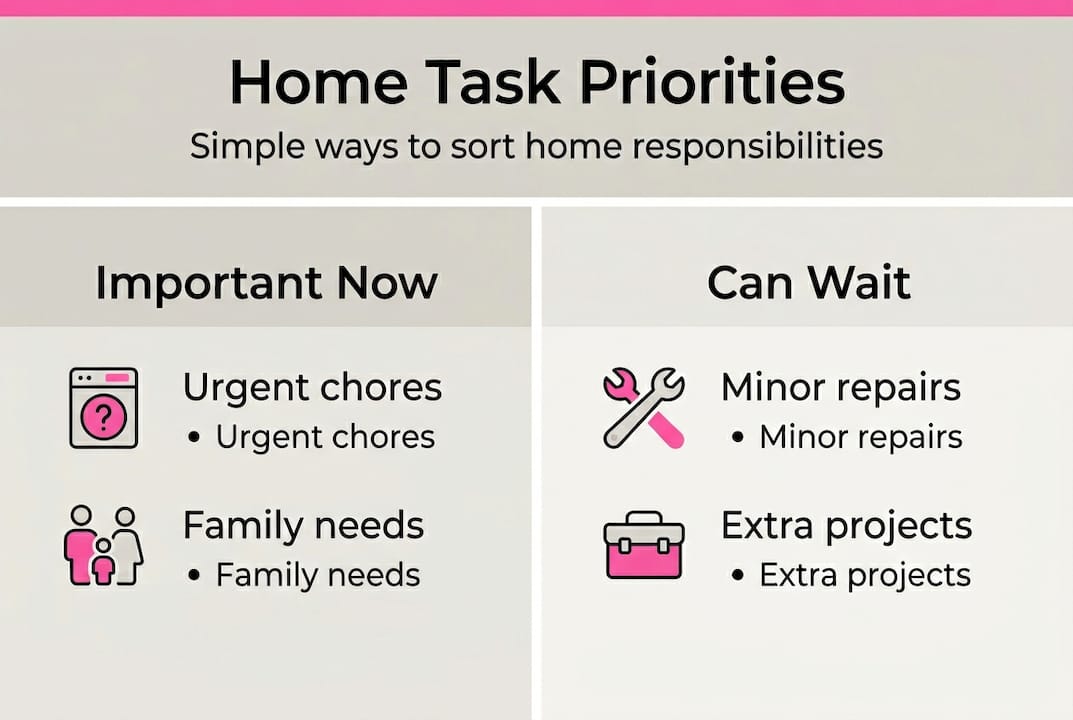
Involving your family in the prioritization process creates buy-in and distributes the workload. Hold a brief family meeting to discuss the week’s priorities and assign age-appropriate tasks to each person. When children understand why certain tasks matter and how they contribute to family functioning, they’re more likely to participate willingly. Check out practical advice on instituting chores for children and teens to build responsibility while lightening your load.
Pro Tip: Resist the temptation to multitask when working on high-priority items. Focus on completing one important task fully before moving to the next. You’ll finish faster and with better quality results than if you split your attention across multiple tasks. This focused approach also models good work habits for your children.
For more strategies on managing your time effectively as a busy parent, explore time management tips for families to complement your prioritization system with practical scheduling techniques.
Maintaining and adjusting your priorities for lasting balance
Prioritization isn’t a one-time project; it’s an ongoing practice that evolves with your family’s changing needs. What worked last month might not fit this month’s schedule. Your daughter started soccer practice twice a week, your son needs help with a big school project, or you took on new work responsibilities. Life shifts constantly, and your prioritization system must flex accordingly.
Regular review sessions keep your priorities aligned with current reality. Regular prioritization reviews prevent burnout and keep families organized, so build this habit into your routine. Weekly check-ins help you spot emerging issues before they become crises, while monthly reviews let you assess bigger patterns and make strategic adjustments.
Here are effective strategies for reviewing and adjusting your priorities:
- Schedule a weekly 20-minute planning session to review upcoming tasks and commitments
- Conduct a monthly family meeting to discuss what’s working and what needs to change
- Track which tasks consistently get postponed and ask why they keep sliding
- Notice when you feel overwhelmed and use that as a signal to reassess your load
- Celebrate completed priorities to maintain motivation and recognize progress
- Adjust your system seasonally as school schedules, holidays, and weather create new demands
- Ask for feedback from family members about whether priorities reflect shared values
Pro Tip: Use Sunday evening family meetings to review the coming week’s priorities together. Let each family member share their important commitments and concerns. This practice builds communication skills, prevents scheduling conflicts, and ensures everyone feels heard and supported.
Watch for warning signs that your priorities need immediate adjustment. Persistent exhaustion, increased family conflict, missed deadlines, or feeling constantly behind all signal that something isn’t working. These aren’t personal failures; they’re data points telling you to recalibrate. Sometimes you need to say no to good opportunities to protect what’s most important.
Building flexibility into your system prevents rigidity that leads to frustration. Life with children is inherently unpredictable. Someone gets sick, school closes unexpectedly, or a work emergency demands immediate attention. When you’ve prioritized effectively, you know which tasks can shift without consequence and which require protection.
Consider how your work at home schedule integrates with family priorities, especially if you’re balancing remote work with household management. Creating clear boundaries and realistic expectations helps prevent work tasks from overwhelming family time.
As your children grow, involve them more deeply in household prioritization. Teenagers especially benefit from learning these skills before leaving home. Teaching them to evaluate urgency, assess importance, and make intentional choices about their time prepares them for independent adult life. For practical approaches, review tips to get your teen to do chores without constant reminders or conflict.
Helpful resources for busy parents managing home tasks
You’ve learned powerful prioritization strategies, but you don’t have to stop here. Our site offers a wealth of practical resources designed specifically for busy families seeking better organization and balance. Discover proven productivity hacks for families that complement your prioritization efforts with time-saving techniques used by real parents.
Explore comprehensive guides on effective home organization systems to create physical and digital structures that support your prioritization goals. When your home environment works with you instead of against you, maintaining priorities becomes significantly easier.
For a holistic approach to managing your household, check out our resources on home management systems that integrate task prioritization with meal planning, budget management, and family scheduling. These interconnected systems help you see the big picture and make decisions that serve your family’s overall wellbeing, not just today’s urgent demands.
Frequently asked questions
How can I involve my kids in prioritizing home tasks?
Start by assigning age-appropriate chores and creating simple visual priority charts that children can understand. Use color coding or numbers to show which tasks need attention first. Instituting chores for children and teens builds responsibility while reducing your workload. Include kids in family planning meetings so they understand how their contributions help everyone. This involvement teaches valuable life skills while creating a team mentality around household management.
What are quick tips to handle urgent last-minute tasks at home?
When an urgent task appears unexpectedly, quickly assess whether it’s truly urgent or just feels that way. Ask yourself what happens if you delay it by a few hours or a day. If it’s genuinely urgent, identify one or two less critical tasks you can temporarily defer and communicate changes to family members. Keep a flexible buffer in your schedule specifically for handling these surprises. Review quick productivity hacks for strategies to handle unexpected demands efficiently.
How often should I review and adjust my home task priorities?
Conduct brief weekly reviews with your family to adjust the coming week’s priorities based on everyone’s commitments and needs. Schedule monthly big-picture reviews to assess whether your overall approach still serves your family’s goals. Emphasize flexibility as children’s activities change, work demands shift, or seasons bring new requirements. Your work at home schedule might need different prioritization strategies during summer break versus the school year, so regular reviews keep your system relevant and effective.
Recommended
- 7 Practical Work-Life Balance Tips for Busy Families –
- Parental Time Management Types for Busy Families –
- Effective Ways to Manage Homework Time for Families –
- 7 Time Management Tips for Families to Balance Life –
Want a little more help with this? The Sunday Blueprint sorts the week’s priorities in fifteen minutes, before Monday gets a vote.